

Cervical Disc Herniation
Cervical Disc Herniation causes neck, shoulder, or arm pain when a neck disc presses on nerves. Learn symptoms, diagnosis, and treatment.

Quick answer
Cervical disc herniation is a neck condition in which a damaged disc presses on nearby nerves or the spinal cord, causing neck pain, arm pain, numbness, or weakness. At Acibadem in Turkey, evaluation typically includes clinical assessment and imaging, and treatment may range from medication, physical therapy, and pain-management procedures to surgery when symptoms are severe or persistent.
Cervical Disc Herniation is a condition in which one of the cushioning discs between the neck vertebrae bulges or ruptures and may irritate nearby spinal nerves or the spinal cord. It can cause neck pain, arm pain, numbness, tingling, or weakness, and many people improve with specialist-guided non-surgical care.
Overview
Cervical Disc Herniation is a neck spine condition in which the soft inner part of an intervertebral disc pushes through a weakened outer layer. The cervical spine is the upper part of the spine, made of seven vertebrae in the neck. Between most of these bones are discs that act as cushions, help absorb movement, and allow the neck to bend and rotate.
When a disc herniates, the displaced disc material can narrow the space around a nerve root or, less commonly, the spinal cord. This may produce local neck pain or symptoms that travel along the path of a nerve into the shoulder, arm, forearm, or hand. The condition is sometimes described as a herniated cervical disc, slipped disc in the neck, or cervical radiculopathy when a nerve root is affected.
Cervical Disc Herniation can occur suddenly after strain or injury, but it often develops gradually as discs lose water content and flexibility with age. Not every disc herniation causes symptoms; some are found on imaging for unrelated reasons. When symptoms do occur, they range from mild discomfort to pain, numbness, tingling, or weakness that affects daily activities.
The outlook is often favorable, especially when there are no signs of spinal cord compression or progressive neurological loss. A specialist assessment helps identify the exact cause of symptoms and decide whether conservative treatment, interventional pain management, or surgery is the most appropriate option.
Symptoms
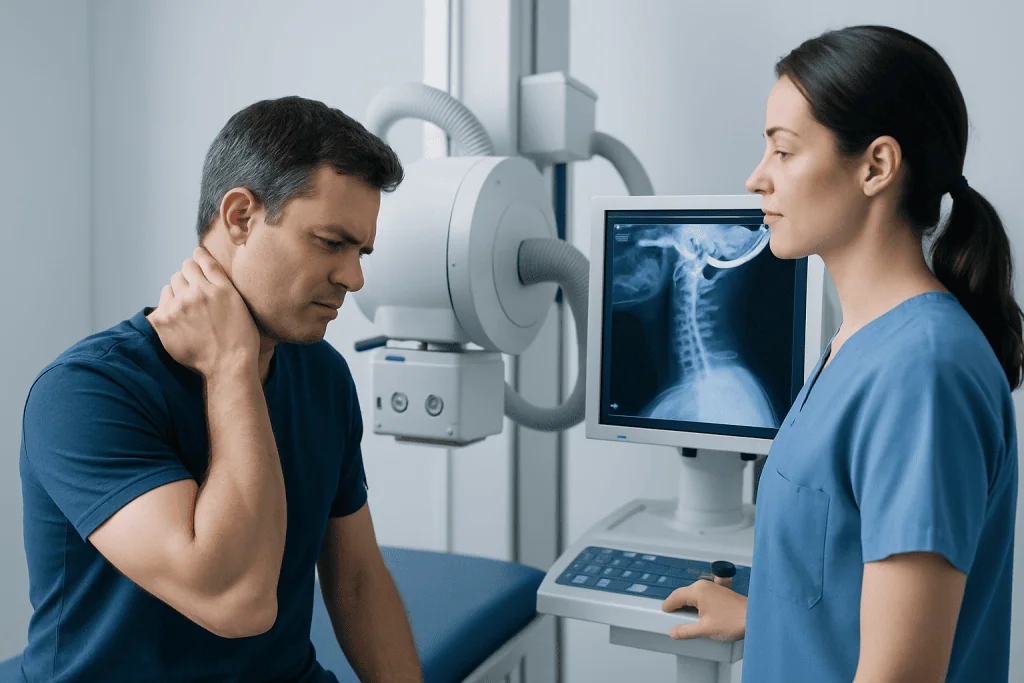
Cervical Disc Herniation symptoms vary according to the disc level involved and which nerve structures are irritated. Neck pain may be central or one-sided and may worsen with certain neck positions, coughing, or prolonged sitting. Pain can also spread to the shoulder blade, upper arm, forearm, or fingers, often following a recognizable nerve pattern.
Common symptoms include arm pain, tingling, numbness, burning sensations, or a pins-and-needles feeling. Some people notice reduced grip strength, difficulty lifting objects, or weakness in specific arm or hand muscles. Headache near the back of the head and stiffness in the neck may also occur, although these symptoms can have many other causes.
When a herniated disc affects the spinal cord rather than only a nerve root, symptoms may be more complex. A person may experience clumsiness in the hands, changes in walking balance, heaviness in the legs, or increased difficulty with fine motor tasks such as buttoning a shirt. These symptoms can suggest cervical myelopathy, which needs prompt medical evaluation.
Symptoms do not always match the size of the herniation seen on imaging. A small herniation in a sensitive location can cause significant nerve irritation, while a larger bulge may cause few symptoms. This is why a careful clinical examination is important in addition to imaging results.
Causes & Risk Factors
The most common underlying cause of Cervical Disc Herniation is disc degeneration, a natural process in which spinal discs gradually lose hydration, elasticity, and height. As the outer ring of the disc becomes weaker, the inner gel-like material can push outward. Repeated small stresses over time may contribute as much as a single sudden injury.
A herniated cervical disc may also follow trauma, sudden twisting, heavy lifting, or an awkward movement of the neck. However, many people cannot identify one clear event. The cervical spine is highly mobile, and everyday posture, occupational strain, and long periods of looking down or forward can increase mechanical stress in some individuals.
Risk factors may include age-related disc wear, previous neck injury, physically demanding work, repetitive lifting or vibration exposure, poor ergonomic positioning, smoking, and reduced general conditioning. Genetic tendency can also influence how early or severely disc degeneration develops. Maintaining neck strength, overall fitness, and healthy movement habits may reduce strain, although it cannot prevent every disc problem.
It is important to distinguish disc herniation from other causes of neck and arm pain, such as shoulder disorders, carpal tunnel syndrome, peripheral nerve problems, arthritis, inflammatory disease, or tumors. A doctor evaluates the full clinical picture to avoid assuming that every neck or arm symptom is caused by a disc.
Diagnosis
Diagnosis of Cervical Disc Herniation begins with a detailed medical history and physical examination. The doctor asks about pain location, how symptoms started, what makes them better or worse, and whether there is numbness, weakness, balance difficulty, or bladder and bowel changes. A neurological examination may assess reflexes, sensation, muscle strength, coordination, and walking pattern.
Imaging is used when symptoms are severe, persistent, progressive, or suggest nerve or spinal cord involvement. Magnetic resonance imaging is commonly used because it shows discs, nerves, the spinal cord, and soft tissues in detail. X-rays may help assess spinal alignment, disc space narrowing, or arthritis, while computed tomography may be useful in selected cases, especially when bone detail is important.
Electrodiagnostic testing may be considered if the diagnosis is unclear or if symptoms could be coming from a peripheral nerve condition rather than the cervical spine. These tests can help evaluate nerve function and identify the level or type of nerve involvement. Blood tests are not usually needed for a straightforward disc herniation, but may be used if infection, inflammatory disease, or another condition is suspected.
The diagnosis is not made from imaging alone. Many adults have disc bulges or degenerative changes that do not cause pain. A reliable diagnosis connects the person’s symptoms, examination findings, and imaging results to determine whether the herniated disc is truly responsible.
Treatment Options
Treatment for Cervical Disc Herniation depends on symptom severity, neurological findings, imaging results, general health, and the impact on daily life. The right approach is decided by a qualified spine specialist, orthopedic surgeon, neurosurgeon, physical medicine specialist, or pain specialist after assessment. Many patients begin with non-surgical care unless there is significant or progressive neurological impairment.
Conservative treatment may include temporary activity modification, education about posture and ergonomics, supervised physical therapy, and exercises to improve neck mobility, shoulder control, and muscle support. Medication may be used to reduce pain, inflammation, or nerve-related discomfort, but the type and duration should be determined by a doctor based on individual risks and medical history. Heat, cold, gentle movement, and short-term use of supportive measures may help some people, but prolonged immobilization is generally avoided unless advised.
If symptoms persist despite appropriate conservative care, interventional pain procedures may be considered for selected patients. Image-guided injections can sometimes reduce inflammation around an irritated nerve and provide a window for rehabilitation. These procedures are not suitable for everyone and should be performed only after proper evaluation of benefits, risks, and alternatives.
Surgery may be recommended when there is progressive weakness, spinal cord compression, severe persistent arm pain, or failure of non-surgical treatment. Surgical treatment generally aims to remove pressure from the nerve or spinal cord and stabilize or preserve motion when appropriate. Options may include decompression procedures, fusion, or disc replacement in selected cases; the specific choice depends on the disc level, spinal alignment, nerve involvement, and the patient’s overall condition.
Living With / Prognosis
Many people with Cervical Disc Herniation improve over time with careful non-surgical management. Pain often decreases as inflammation settles and the body adapts or gradually resorbs part of the herniated disc material. Recovery time varies, and improvement may be gradual rather than immediate.
Living with a cervical disc problem often involves learning how to reduce unnecessary neck strain. Helpful strategies may include adjusting screen height, taking movement breaks, avoiding prolonged forward-head posture, using safe lifting habits, and following a prescribed exercise program. General health measures such as regular low-impact activity, adequate sleep, and avoiding smoking can support spine health and healing.
Some people have recurring episodes of neck or arm pain, especially if they return quickly to heavy strain or do not address contributing ergonomic factors. A rehabilitation plan can help restore function and reduce fear of movement. Patients should follow their clinician’s advice about returning to work, sports, driving, and exercise, particularly if weakness or neurological symptoms have been present.
The long-term outlook depends on the degree of nerve involvement, spinal canal narrowing, overall spine health, and response to treatment. Early assessment is especially important when symptoms suggest spinal cord compression. With appropriate care, many patients can return to normal activities, while a smaller group may need ongoing pain management or surgical treatment.
When to See a Doctor
A person should see a doctor if neck pain is severe, lasts more than a short period, returns frequently, or spreads into the shoulder, arm, or hand. Medical assessment is also recommended when pain is associated with numbness, tingling, weakness, reduced grip strength, or difficulty performing usual activities. Early evaluation helps identify whether symptoms are due to Cervical Disc Herniation or another condition.
Urgent medical care is needed if there is progressive arm or leg weakness, difficulty walking, loss of balance, clumsiness in the hands, or problems with bladder or bowel control. These symptoms may suggest pressure on the spinal cord or another serious condition and should not be ignored. Fever, unexplained weight loss, history of cancer, recent significant trauma, or severe pain at rest also warrants prompt assessment.
Patients who already have a diagnosed herniated cervical disc should seek follow-up if symptoms worsen, new neurological signs appear, or pain does not improve as expected. Treatment plans may need adjustment over time, and persistent symptoms should be reassessed rather than self-managed indefinitely.
Acibadem International’s multidisciplinary specialists and JCI-accredited hospitals diagnose and treat Cervical Disc Herniation for international patients, using coordinated evaluation across orthopedics, neurosurgery, radiology, rehabilitation, and pain management when appropriate. Patients should consult a qualified doctor to understand the safest and most suitable care pathway for their individual condition.
Frequently asked questions
What is Cervical Disc Herniation?
Cervical Disc Herniation is a condition in which a disc in the neck bulges or ruptures and may press on nearby nerves or the spinal cord. It can cause neck pain, arm pain, numbness, tingling, or weakness. Some herniations are found on imaging and do not cause symptoms.
What are the most common symptoms of a herniated cervical disc?
The most common symptoms are neck pain and pain that travels into the shoulder, arm, or hand. Tingling, numbness, burning sensations, or muscle weakness may also occur. Symptoms often depend on which nerve root is irritated.
Can Cervical Disc Herniation heal without surgery?
Many people improve with non-surgical care such as activity modification, physical therapy, and doctor-guided pain management. Symptoms may improve as inflammation decreases and the disc material changes over time. Surgery is considered when symptoms are severe, persistent, or associated with neurological problems.
How is Cervical Disc Herniation diagnosed?
Diagnosis is based on medical history, physical and neurological examination, and imaging when needed. MRI is commonly used because it shows the discs, nerves, and spinal cord. Imaging findings must be matched with symptoms because disc changes can also appear in people without pain.
When is surgery needed for Cervical Disc Herniation?
Surgery may be recommended if there is progressive weakness, spinal cord compression, severe arm pain that does not improve, or significant loss of function. The operation generally aims to relieve pressure on nerves or the spinal cord. The exact procedure is chosen by a spine specialist after a full assessment.
Is arm pain from Cervical Disc Herniation dangerous?
Arm pain can occur when a nerve in the neck is irritated, and it is not always dangerous. However, arm pain with increasing weakness, numbness, balance problems, or hand clumsiness should be assessed promptly. A doctor can determine whether urgent treatment is needed.
What activities should be avoided with Cervical Disc Herniation?
People are generally advised to avoid activities that clearly worsen symptoms, such as heavy lifting, sudden neck twisting, or prolonged awkward posture. Complete rest for long periods is usually not helpful unless specifically advised. A clinician or physiotherapist can recommend safe movements and a gradual return to normal activity.
References
- American Academy of Orthopaedic Surgeons
- North American Spine Society
- American Association of Neurological Surgeons
- National Institute of Neurological Disorders and Stroke
- National Institute for Health and Care Excellence
This article is for general information only and is not a substitute for professional medical advice. Please consult a qualified doctor about your individual situation.
