Cervical Polyps
Cervical Polyps are usually benign growths on the cervix. Learn symptoms, causes, diagnosis, treatment options and when to see a doctor.

Quick answer
Cervical polyps are usually benign growths on the cervix that may cause spotting, bleeding after intercourse, or unusual discharge, though some cause no symptoms. At Acibadem in Turkey, diagnosis is made with a gynecological examination and related tests, and treatment typically involves simple polyp removal with laboratory analysis to confirm the tissue type.
Cervical polyps are small growths that develop on the cervix, the lower part of the uterus that opens into the vagina. They are usually benign, often cause no symptoms, and can commonly be diagnosed during a pelvic examination.
Overview
Cervical polyps are soft, finger-like or rounded growths that form on the cervix. The cervix is the narrow lower part of the uterus that connects the uterine cavity to the vagina. Polyps may grow from the cervical canal, called endocervical polyps, or from the outer surface of the cervix, called ectocervical polyps.
Most cervical polyps are benign, meaning they are not cancer. They are often small, smooth, and red or purple because they contain tiny blood vessels. Some are attached by a thin stalk, while others have a broader base. A person may have one polyp or, less commonly, more than one.
Cervical polyps are frequently found during a routine gynecological examination, cervical screening visit, or assessment for abnormal bleeding. Although they are usually harmless, a doctor may recommend removal or laboratory examination because symptoms can overlap with other cervical or uterine conditions.
Symptoms
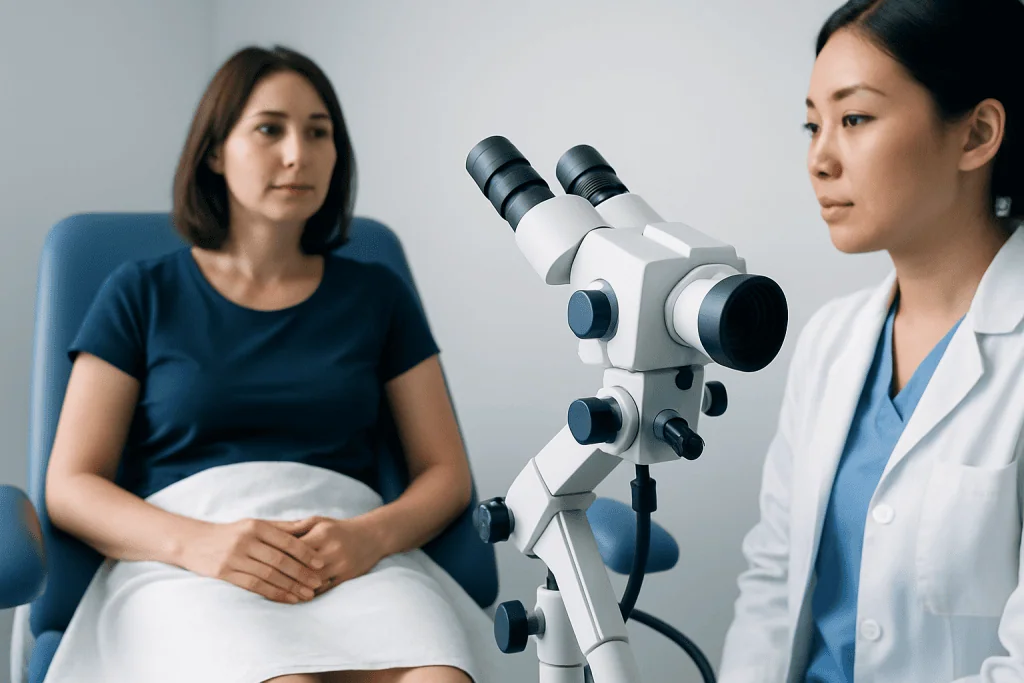
Many cervical polyps do not cause any symptoms. In these cases, the polyp may be discovered only when a clinician examines the cervix with a speculum. When symptoms occur, they are often related to the fragile blood vessels within the polyp or irritation of the cervical surface.
Possible cervical polyp symptoms include:
- Light bleeding or spotting between menstrual periods
- Bleeding after sexual intercourse
- Bleeding after a pelvic examination or cervical screening test
- Heavier or longer menstrual bleeding than usual
- Vaginal bleeding after menopause
- Watery, white, yellow, or mucus-like vaginal discharge
These symptoms are not specific to cervical polyps. Infections, hormonal changes, fibroids, endometrial polyps, cervical cell changes, pregnancy-related conditions, and other gynecological problems can cause similar symptoms. For this reason, abnormal bleeding or persistent discharge should be assessed by a gynecologist rather than assumed to be due to a polyp.
Causes & Risk Factors
The exact cause of cervical polyps is not always known. They are thought to develop when cervical tissue grows more than usual in a localized area. Possible contributing factors include chronic inflammation of the cervix, changes in the cervical blood vessels, hormonal influences, and irritation related to infection or other local conditions.
Cervical polyps are more often seen in adults who have had menstrual cycles and are uncommon before the first period. They may be found more frequently in people who have had pregnancies, although a polyp can occur in anyone with a cervix. Some polyps are associated with inflammation called cervicitis, which may be linked to vaginal or cervical infections.
Risk factors and related situations may include:
- Age in the reproductive or perimenopausal years
- Previous pregnancies
- Chronic cervical inflammation or irritation
- Sexually transmitted or non-sexually transmitted genital infections
- Abnormal uterine or cervical bleeding that leads to evaluation
Having a cervical polyp does not mean a person has cancer. However, because rare abnormal or precancerous changes can occasionally be found in tissue that looks like a polyp, medical evaluation and appropriate follow-up are important.
Diagnosis
Cervical polyps are commonly diagnosed during a pelvic examination. The doctor gently places a speculum in the vagina to view the cervix. A polyp may appear as a smooth red, pink, or purple growth protruding from the cervical opening or lying on the surface of the cervix.
The clinician will ask about menstrual history, pregnancy possibility, contraceptive use, bleeding pattern, discharge, pain, sexual health, and menopausal status. Depending on the situation, tests may include cervical screening, HPV testing, vaginal or cervical swabs for infection, pregnancy testing, or ultrasound to check the uterus and lining of the womb.
If a polyp is removed, it is commonly sent to a pathology laboratory for histological examination. This confirms that the tissue is a benign cervical polyp and helps exclude rare abnormal changes. If bleeding continues after removal, if the polyp has an unusual appearance, or if the patient is postmenopausal, the doctor may recommend further assessment such as colposcopy, hysteroscopy, or sampling of the uterine lining.
Treatment Options
The right treatment for cervical polyps depends on symptoms, polyp size and appearance, age, pregnancy status, menopausal status, and the results of any screening tests. A specialist decides the most appropriate approach after assessment. Small polyps that cause no symptoms may sometimes be monitored, especially if they appear typical and there are no concerning features.
When treatment is recommended, cervical polyp removal is often a brief outpatient procedure. A doctor may gently grasp the polyp and remove it from its stalk, or use a small instrument to remove tissue at the base. The area may be treated to reduce minor bleeding. The removed tissue is usually sent for laboratory analysis.
Larger polyps, broad-based polyps, recurrent polyps, or polyps that appear atypical may require a more structured procedure. This may include removal under local or general anesthesia, colposcopic assessment of the cervix, hysteroscopy to look inside the uterus, or additional sampling if uterine bleeding is suspected. If infection or inflammation is present, treatment may also include appropriate medication selected by a clinician.
Patients should not try to remove a cervical polyp at home. Pulling or irritating cervical tissue can cause bleeding, infection, pain, and delayed diagnosis of other conditions. In pregnancy, management is individualized because the cervix is more sensitive and any procedure must consider maternal and fetal safety.
Living With / Prognosis
The outlook for cervical polyps is generally very good. Most are benign, and many are easily treated when they cause symptoms. After removal, mild spotting or cramping may occur for a short time, but the doctor will give specific instructions about activity, sexual intercourse, tampon use, and when to return for review.
Some people may develop another cervical polyp in the future. Recurrence does not necessarily mean a serious problem, but it should be evaluated. Keeping up with recommended cervical screening, reporting new bleeding patterns, and attending follow-up appointments help ensure that any cervical or uterine changes are identified early.
Emotional reassurance is also important. Being told there is a growth on the cervix can cause anxiety, but cervical polyps are common benign findings in gynecological care. A clear explanation, examination findings, pathology results when available, and an individualized plan can help patients feel informed and supported.
For international patients who need evaluation or treatment, Acibadem International provides gynecology care through multidisciplinary specialists and JCI-accredited hospitals. Care decisions should always be based on the patient’s medical history, examination, test results, and discussion with a qualified doctor.
When to See a Doctor
A person should see a doctor for any unexplained vaginal bleeding, especially bleeding after sex, bleeding between periods, or bleeding after menopause. While cervical polyps are a common benign cause, these symptoms can also be related to infection, cervical cell changes, uterine conditions, or other problems that need evaluation.
Medical advice is also recommended for persistent or foul-smelling vaginal discharge, pelvic pain, pain during sex, fever, or bleeding during pregnancy. Pregnant patients should contact their maternity care provider before assuming symptoms are due to a known polyp.
Urgent medical care may be needed if bleeding is heavy, if there is dizziness or fainting, or if severe pelvic pain occurs. For non-urgent symptoms, booking a gynecology appointment allows a careful examination, appropriate testing, and reassurance or treatment based on the findings.
Frequently asked questions
What are cervical polyps?
Cervical polyps are small growths that develop on the cervix or within the cervical canal. They are usually benign and may be found during a routine pelvic examination. Some cause bleeding or discharge, while many cause no symptoms at all.
Are cervical polyps cancerous?
Most cervical polyps are not cancerous. However, doctors often send removed polyps to a laboratory to confirm the diagnosis and rule out rare abnormal changes. Any unusual-looking polyp, postmenopausal bleeding, or persistent symptoms should be assessed carefully.
What causes bleeding after sex with a cervical polyp?
A cervical polyp can bleed after sex because it contains delicate blood vessels and may be easily irritated. Bleeding after sex can also occur with infections, cervical inflammation, cervical cell changes, or other gynecological conditions. A gynecologist should evaluate this symptom to identify the cause.
How are cervical polyps removed?
Many cervical polyps can be removed in an outpatient clinic using gentle instruments. The procedure is usually short, and the tissue is commonly sent for pathology testing. Larger, broad-based, recurrent, or unusual polyps may need removal in a more specialized setting.
Can cervical polyps come back after removal?
Yes, a cervical polyp can recur, or a new polyp can develop later. Recurrence is not usually dangerous, but it should be checked by a doctor. Follow-up is especially important if there is ongoing bleeding, abnormal screening results, or postmenopausal bleeding.
Do cervical polyps affect fertility or pregnancy?
Most cervical polyps do not significantly affect fertility. During pregnancy, a polyp may cause spotting because the cervix has increased blood flow and is more sensitive. Management in pregnancy is individualized, so any bleeding should be discussed with an obstetrician or gynecologist.
When should a cervical polyp be removed?
Removal may be recommended if the polyp causes bleeding or discharge, is large, has an unusual appearance, occurs after menopause, or needs laboratory confirmation. Some small, typical, symptom-free polyps may be monitored. The decision should be made by a qualified specialist after examination and relevant tests.
References
- American College of Obstetricians and Gynecologists
- Royal College of Obstetricians and Gynaecologists
- MSD Manual Professional Edition
- NHS
- Mayo Clinic
This article is for general information only and is not a substitute for professional medical advice. Please consult a qualified doctor about your individual situation.
Treatments for This Condition
Doctors Who Treat This Condition

Prof. Dr. Alper Fındıkcioğlu
Thoracic Surgery
Assoc. Prof. Dr. Fatih Aygün
Pediatric Intensive Care Unit
Dr. Fatih Çelik
Emergency Service
Dr. Tülin Turan Hizli
Pediatrics
Dyt. Nur Ecem Baydı Özman
Nutrition & DietRelated Articles

Embryo Donation in IVF: Who May Consider It and How the Process Works

Ectopic Pregnancy After IVF: Symptoms, Risk Factors, and Early Monitoring

Ectopic Pregnancy: A Complete Clinical Guide for Patients

IVF Risks and Side Effects: What Patients Should Know Before Treatment

Unexplained Recurrent Miscarriage: When IVF Testing May Help

IVF After Tubal Ligation: Is Treatment Still Possible?

IVF With Blocked Sperm Retrieval: TESE, ICSI, and Treatment Planning

Fertility Tests Before IVF: Which Results Matter Most?

Endometrial Receptivity in IVF: Why the Uterine Lining Matters

When Is IVF a Good Option for Tubal Infertility?

What Happens During Egg Retrieval in IVF?