Genital Warts Treatment
Genital warts are HPV-related growths on genital or anal skin. Treatment focuses on safe wart removal, symptom relief, recurrence monitoring and sexual health guidance.
Quick answer
Genital warts treatment covers a group of medical procedures and prescription medicines used to remove visible warts caused by HPV from the genital, perineal or anal skin. Options include cryotherapy, electrosurgery, laser treatment, surgical excision, doctor-applied chemical solutions and supervised topical medicines. Treatment removes visible warts and relieves symptoms; it does not immediately eliminate the virus, so follow-up is part of good care.
Genital Warts Treatment: Removing HPV-Related Warts With Care and Precision
Genital warts treatment is a group of medical procedures and prescription medicines used to remove visible warts caused by HPV, the human papillomavirus, from the genital, perineal or anal skin. Treatment removes the warts you can see, relieves symptoms such as itching, irritation and bleeding, and reduces the amount of visibly affected tissue. It does not instantly eliminate HPV from the surrounding skin, which is why follow-up is part of the plan rather than an afterthought. It is suitable for anyone with confirmed genital warts, whether the lesions are new, recurrent or long-standing.
Genital warts can be distressing in ways that go beyond the skin. Many people feel anxious about what the diagnosis means, whether the warts will spread, how it may affect a partner, and whether it says something about their overall health. Uncertainty makes those worries heavier: the condition is rarely discussed openly, so many people arrive at their first appointment carrying more myths than facts. This page explains what genital warts are, why HPV causes them, what the treatment methods actually involve, and what honest expectations look like afterwards.
Genital warts, sometimes typed as g warts in online searches, usually appear as small growths on the genital or anal skin, but they may also be flat, clustered or difficult to see without a medical examination. In most cases, genital warts are not cancer. They can, however, cause discomfort, itching, bleeding, emotional stress and concern about transmission. They may also come back after treatment, because treatment removes visible warts but does not always clear HPV from nearby skin straight away. Knowing this in advance saves disappointment later.
The goal of treatment is to remove or reduce visible warts safely, relieve symptoms, lower the chance of local spread, and give you clear guidance on sexual health, partner communication, vaccination and follow-up. At Acibadem, care is planned with attention to privacy, accurate diagnosis and your broader health needs. Depending on where the warts sit and how extensive they are, treatment may involve dermatology, gynaecology, urology, colorectal surgery, infectious diseases or sexual health expertise.
What Is HPV and How Does It Cause Genital Warts?
What is HPV? It is the human papillomavirus: a large family of related viruses that infect skin and mucosal cells. Different HPV types prefer different tissues and behave in different ways. Genital warts are caused most often by low-risk types, especially HPV 6 and HPV 11. These types are called low risk because they are not the main causes of HPV-related cancers. Other HPV types, described as high risk, can cause cell changes in the cervix, anus, penis, vulva, vagina or throat over many years. A person can carry more than one type at the same time, which is why having warts does not tell you anything definite about your cancer risk, and why screening recommendations should still be followed based on your age, sex, anatomy and medical history.
The HPV virus spreads through direct skin-to-skin contact, most commonly during vaginal, anal or oral sex, but penetration is not required. Because the virus lives in skin cells rather than in the blood, contact between genital skin surfaces is enough to pass it on, and condoms reduce transmission without eliminating it: they simply cannot cover all the skin involved. Warts can appear weeks, months or occasionally longer after exposure, so a new diagnosis does not necessarily point to a recent partner. This detail matters for couples: it is often impossible to say who acquired the virus first, or when.
What Causes HPV in Females?
HPV in females is caused by the same skin-to-skin contact that transmits the virus in males: sexual contact with a partner who carries HPV on their genital or anal skin, whether or not that partner has visible warts. There is no separate female-specific cause, and HPV is not linked to hygiene. What differs for women and people with a cervix is the follow-through: because certain HPV types can cause cervical cell changes, a diagnosis of genital warts is a sensible moment to check that cervical screening, Pap testing, HPV testing or both, depending on local guidelines, is up to date.
Does HPV Ever Go Away?
A human papillomavirus infection is often brought under control by the immune system over time, and many people who acquire HPV never develop visible warts at all. However, there is no test that declares the virus permanently gone from an individual’s skin, and the virus can remain quiet for long periods before a wart appears or reappears. This is why clinicians speak of the immune system controlling HPV rather than promising its elimination, and why follow-up after wart treatment focuses on catching small recurrences early rather than declaring the matter closed on day one.
What Happens If You Have HPV?
If you have HPV, three broad outcomes are possible: nothing visible ever happens and the immune system suppresses the virus; low-risk types produce genital warts, which can be treated; or high-risk types cause gradual cell changes that screening programmes are designed to detect long before they become dangerous. Having genital warts places you in the second group, but because more than one HPV type can be present, your doctor may still discuss screening and, where relevant, vaccination. HPV is extremely common among sexually active adults, and a diagnosis says nothing about your character, your relationship or your general health.
HPV Symptoms: How Genital Warts Show Themselves
HPV symptoms are often absent altogether, most people who carry the virus have no idea, because the infection produces no sensation and nothing visible. When symptoms do occur with the wart-causing types, they take the form of skin changes in the genital or anal area, sometimes with itching, irritation or bleeding after friction. Some patients are diagnosed during a gynaecologic, urologic or dermatologic examination even though they noticed nothing themselves.
What Do Genital Warts Look Like?
Genital warts look like small flesh-coloured, pink, white, brown or grey growths on the genital or anal skin, sometimes single, often in clusters with a rough, cauliflower-like surface. Not every wart matches this picture, which is why examination matters. Typical appearances and signs include:
- Small flesh-coloured, pink, white, brown or grey growths on genital or anal skin
- Clusters of bumps that may have a cauliflower-like surface
- Flat lesions that are difficult to see without magnification
- Itching, burning, tenderness or local irritation
- Bleeding after shaving, sexual contact or friction from clothing
- Warts around the anus, even in people who have not had anal intercourse, because HPV spreads through nearby skin contact
- Internal lesions on the cervix, vagina, urethral opening, penile shaft, scrotum or anal canal
Several harmless or unrelated conditions can be mistaken for genital warts, including skin tags, molluscum contagiosum, pearly penile papules, vestibular papillomatosis and inflammatory skin disease. Symptoms such as discharge or odour usually point away from warts, in women, they more often suggest a vaginal infection that needs its own assessment. Because the look-alikes are managed completely differently, self-diagnosis from photographs is unreliable; a clinical examination settles the question far more accurately.
What Are Two Signs of HPV?
The two signs of HPV that most often bring the infection to light are visible genital warts and an abnormal cervical screening result. The first is caused by low-risk types and is something you can see or feel; the second is detected by testing and usually reflects high-risk types, often years before any symptom would appear. Beyond these two, HPV rarely announces itself: there is no rash, fever or general illness associated with acquiring the virus, and no blood test that detects it, because the virus stays within skin and mucosal cells.
Who May Need Treatment for Genital Warts
People seek treatment for genital warts for different reasons. Some notice new bumps and want a diagnosis. Others have itching, irritation, pain during sex, bleeding after friction, or recurrent lesions that return despite previous therapy. Some are diagnosed incidentally during an examination arranged for another reason and want the lesions dealt with before they enlarge. All of these are legitimate grounds for evaluation: there is no threshold of severity you need to reach before a wart deserves attention.
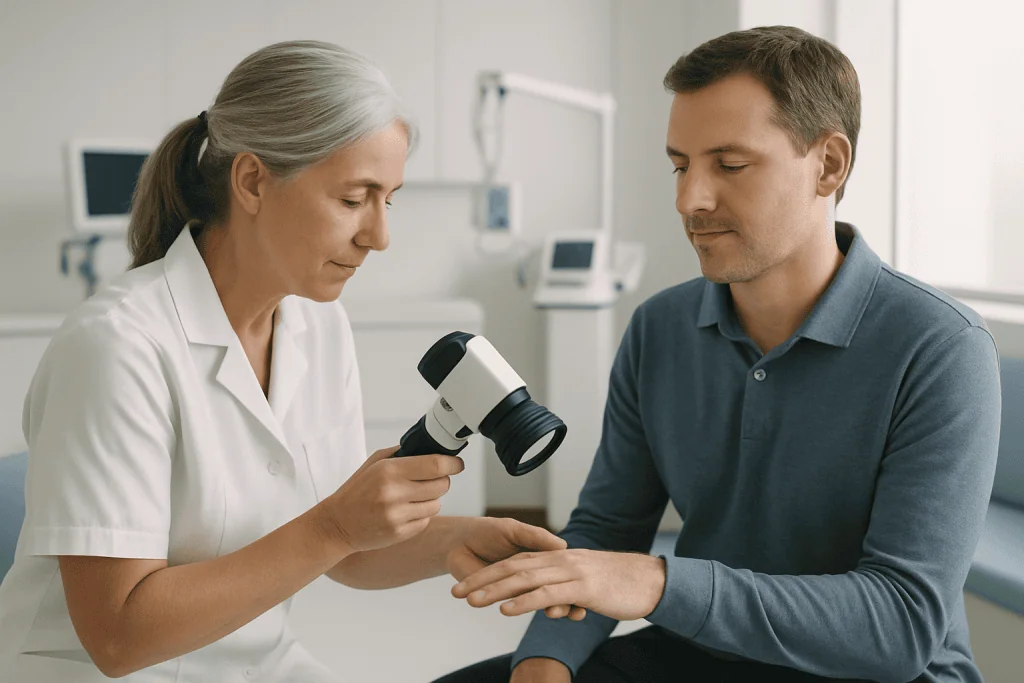
Diagnosis is usually made by physical examination. A physician may use magnification and focused lighting to assess the skin. In women, a pelvic examination may be recommended to evaluate the vulva, vagina and cervix. In men, the penis, scrotum, groin and urethral opening may be examined. If warts sit near or inside the anus, an anorectal examination may be advised. When the appearance is unclear, when lesions are pigmented, ulcerated, bleeding, unusually firm, or not responding as expected: a small biopsy under local anaesthesia can confirm the diagnosis and exclude other conditions.
Warts near the urethral opening deserve a specific mention. They can occasionally irritate urination or alter the urinary stream, and this sometimes gets confused with infection. Burning or urgency on urination is more typically a feature of a urinary tract infection, which is diagnosed and treated separately; an examination distinguishes the two quickly.
Certain patients benefit particularly from specialist evaluation rather than general management: those with recurrent or extensive warts, pregnant patients, people living with HIV or other immune conditions, transplant recipients, patients taking immune-suppressing medications, and individuals with a history of cervical, vulvar, vaginal, penile or anal precancer. In these situations HPV can behave more stubbornly, and careful assessment, method selection and follow-up carry more weight.
Conditions and Indications Addressed by Genital Warts Treatment
Genital warts treatment addresses visible lesions caused most commonly by low-risk HPV types, especially HPV 6 and HPV 11. The clinical situations in which treatment is typically recommended include:
- External genital warts: warts on the vulva, penis, scrotum, groin, perineum or surrounding genital skin.
- Perianal and anal warts: lesions around the anus or within the anal canal, which may require colorectal or proctologic evaluation.
- Vaginal or cervical warts: internal lesions identified during gynaecologic examination, sometimes requiring colposcopic assessment.
- Urethral opening warts: lesions near the urinary opening that may affect urination or require careful procedural planning.
- Symptomatic warts: lesions causing itching, pain, bleeding, discharge from irritation, or discomfort during intimacy.
- Recurrent warts: lesions returning after previous treatment, often prompting a reassessment of method, immune factors and follow-up strategy.
- Extensive wart burden: multiple or large lesions that may need staged treatment to limit discomfort and protect healthy tissue.
- Warts during pregnancy: treatment may be considered when lesions are symptomatic, growing rapidly or likely to interfere with delivery, using pregnancy-appropriate methods.
Genital warts treatment is also a natural opportunity to look at sexual health more broadly. This may include testing for other sexually transmitted infections when appropriate, reviewing cervical cancer screening, discussing HPV vaccination, and talking through condom use and partner notification. These conversations are handled with discretion and clinical sensitivity: the purpose is practical prevention, not judgement.
How Genital Warts Treatment Is Performed
Initial Consultation and Assessment
Treatment begins with a confidential consultation. Your physician will ask when the lesions appeared, whether they have changed, whether you have symptoms, and whether you have had previous HPV-related findings or treatments. You may be asked about pregnancy, immune conditions, medications, allergies and sexual health history. None of this is intended to judge; every answer narrows the choice towards the safest and most effective plan for your situation.
A focused examination follows. Depending on your anatomy and symptoms, this may include a dermatologic skin examination, pelvic examination, urologic examination or anorectal evaluation. Magnification, bright medical lighting and, when indicated, colposcopic or anoscopic assessment help identify small, flat or internal lesions that would otherwise be missed. If another diagnosis is possible, a small biopsy may be taken under local anaesthesia and sent for pathology review.
Your physician may also recommend related testing. For women and people with a cervix, this can mean Pap testing or HPV testing according to screening guidelines. Testing for other sexually transmitted infections may be offered, especially where there has been a new partner, unprotected sex, symptoms such as discharge or ulcers, or concern about a specific exposure. Doing this alongside wart treatment saves separate appointments and gives a fuller picture of your sexual health in one visit.
Planning the Treatment Method
The treatment plan is personalised rather than standardised, because no single method suits every wart. Small external warts may be managed with cryotherapy, a prescription topical medicine or a carefully applied chemical treatment. Larger, thicker or clustered warts may respond better to electrosurgery, laser treatment or surgical excision. Internal warts require methods suited to delicate mucosal tissue and may be treated by a gynaecologist, urologist or colorectal specialist. Several factors shape the decision:
- Number, size and location of warts
- External versus internal lesions
- Skin sensitivity and risk of scarring
- Pregnancy status
- Immune system health
- Previous treatments and the pattern of recurrence
- Your preference, daily schedule and tolerance for repeat visits
Timing also enters the plan. In some cases a procedure can be performed during the same visit after evaluation. In others, particularly when lesions are extensive or internal, staged treatment over several appointments is the more sensible route, because spacing sessions lets each treated area heal before the next is addressed and keeps discomfort manageable. Knowing which pattern applies to you before treatment begins makes the whole course easier to plan around.
How to Treat Genital Warts: The Main Options
How to treat genital warts depends on their size, number and position; in practice, clinicians choose from six established approaches, used alone or in combination.
Cryotherapy uses controlled freezing to destroy wart tissue. It is commonly used for external genital warts and is performed in an outpatient setting. You may feel stinging, burning or pressure during treatment. The treated area may blister, crust or peel as it heals. Several sessions may be needed, especially when there are multiple lesions: this is normal for the method, not a sign of failure.
Electrosurgical treatment uses controlled electrical energy to remove or destroy wart tissue and suits larger or more resistant warts. Local anaesthesia is commonly used. The physician removes the abnormal tissue while protecting surrounding skin as far as possible. Healing time depends on the size and location of the treated area.
Laser treatment may be considered for selected cases, including extensive, recurrent or difficult-to-reach warts. Laser energy targets abnormal tissue precisely and can be helpful in sensitive anatomic areas when performed by experienced clinicians. Protective measures are used during the procedure, including smoke evacuation systems when indicated.
Surgical excision means cutting out warts with a medical instrument, usually under local anaesthesia for limited disease. It may be preferred when a wart is large, when tissue diagnosis is needed, or when rapid removal of a visible lesion matters to the patient. The excised tissue can be sent for pathology if there is any diagnostic uncertainty: a built-in advantage of this method.
Doctor-applied chemical treatments use carefully controlled solutions that destroy wart tissue. They are applied only by trained medical staff, because genital skin is easily injured if the solution is too strong or touches healthy tissue.
Prescription topical medicines may suit selected external warts. These are applied at home according to a strict schedule set by your doctor, with careful handwashing and avoidance of contact with healthy skin or mucous membranes. They work either by gradually breaking down abnormal tissue or by stimulating the local immune response. They are not suitable for everyone and, depending on the medication, may not be used in certain situations such as pregnancy, decisions that belong to the prescribing physician.
How to Get Rid of Genital Warts Safely, and Why Home Products Fail
How to get rid of genital warts safely comes down to one rule: the removal method must be chosen and either performed or prescribed by a doctor who has examined you. Over-the-counter wart products designed for hands or feet are formulated for thick, tough skin; on genital tissue they can burn, ulcerate and scar, and they do nothing to confirm that the lesion is actually a wart. Self-treatment also misses internal lesions and skips the screening conversation entirely. Medical treatment is quicker, safer and more accurate on every count.
During the Procedure
Most genital wart treatments are outpatient procedures, and general anaesthesia is usually unnecessary for limited external warts. Local anaesthetic cream or injection is used where a treatment would otherwise be uncomfortable. For extensive disease, internal lesions or procedures involving the anal canal, sedation or operating room conditions may be considered. A typical procedural visit runs in this sequence:
- Step 1: the area is cleaned and, where needed, local anaesthetic is applied and given time to work.
- Step 2: the physician treats each lesion using the selected method, working to remove visible wart tissue while limiting trauma to normal skin.
- Step 3: if a biopsy or excision is performed, the tissue is prepared for pathology and a small dressing is applied.
- Step 4: you receive specific aftercare instructions, hygiene, bathing, dressings, pain control and when to return for review.
For internal gynaecologic or anal lesions, specialised instruments are used to visualise and treat the area safely. Duration varies: a small number of external warts may be handled in a short office visit, while extensive lesions, multiple anatomic areas or treatment under sedation require a longer appointment. Your care team will explain beforehand whether any of your usual medicines need reviewing with your treating doctor, whether you should arrange transport, and how long to plan away from sexual activity and vigorous exercise.
Technology and Safety Measures
Modern genital wart care relies on accurate visualisation, careful tissue handling and appropriate procedural tools. Magnification systems help clinicians spot small or flat lesions; colposcopic or anoscopic evaluation covers internal areas. Energy-based devices remove or destroy wart tissue at controlled depth, while cooling, local anaesthesia and protective dressings support comfort. When laser or electrosurgical techniques are used, safety protocols matter: smoke evacuation, protective equipment and controlled device settings all reduce unnecessary tissue damage. For recurrent or atypical lesions, pathology review provides diagnostic confirmation rather than assumption.
After Treatment and Early Recovery
After treatment, mild soreness, swelling, redness, spotting or drainage can occur depending on the method. You will be given instructions for hygiene, bathing, dressings, pain control and review appointments. Sexual contact is usually paused until the treated area has healed and discomfort has settled: this protects the healing skin barrier and reduces irritation. Healing takes anywhere from several days to several weeks. Warts often shrink or fall away gradually after freezing or topical therapy; after excision, electrosurgery or laser treatment, the area heals from the treated surface upwards. Where lesions were extensive, staged care is often safer than treating every area aggressively in a single sitting.
Skin changes at the treated site are worth mentioning in advance. Temporary lightening or darkening of the skin can follow freezing or energy-based treatments, particularly on darker skin tones, and usually fades over the following months. Visible scarring is uncommon when treatment depth is well controlled, which is one more reason genital lesions should be treated by clinicians experienced with this delicate anatomy rather than with products designed for tougher skin elsewhere on the body.
Follow-up matters because recurrence is a known feature of this condition, particularly in the first months after treatment. A new wart does not mean the treatment failed; it usually reflects HPV activity in nearby skin that was not visible at the first visit. Treating a small recurrent lesion early is almost always easier and more comfortable than waiting for it to enlarge or multiply.
Do Genital Warts Go Away Without Treatment?
Do genital warts go away on their own? Sometimes, in some people, the immune system controls the virus and visible warts regress without any intervention. The difficulty is that this outcome cannot be predicted for an individual, it can take a long time, and warts left in place may enlarge, multiply or spread to adjacent skin in the meantime. Treatment shortens the timeline you can control: it removes visible lesions now, relieves symptoms now, and reduces the visibly affected tissue now, while the immune response does its longer-term work in the background. Watchful waiting is a legitimate option for some small, asymptomatic warts, but it should be a decision made with a doctor after the diagnosis has been confirmed, not a default adopted because seeking care feels awkward.
Why Acting Early Matters
Genital warts are not usually a medical emergency, but timely evaluation is worthwhile. Early diagnosis confirms that the lesions really are warts and not another condition, molluscum contagiosum, skin tags, pearly penile papules, vestibular papillomatosis, inflammatory skin disease or, rarely, precancerous or cancerous change. The distinction matters because management differs entirely between these diagnoses.
Delaying care gives warts room to increase in number or size. Larger clusters are more uncomfortable, more visible and harder to clear with a single method. Friction from sex, shaving, cycling or tight clothing can cause bleeding and irritation. In patients with weakened immune systems, warts may grow more rapidly or recur more often, which strengthens rather than weakens the case for early, well-planned treatment.
Acting early also supports sexual health more broadly. A clinician can explain how HPV is transmitted, what protection can and cannot achieve, whether partners should be examined, and whether vaccination may still be worthwhile. Condoms reduce HPV transmission risk but do not cover all genital skin, and avoiding sexual contact while visible warts are present or treatment areas are healing is commonly recommended. For women and people with a cervix, the visit reinforces the value of cervical screening: warts themselves usually reflect low-risk HPV types, but because more than one type can be present, keeping screening up to date remains an important part of prevention.
Benefits of Genital Warts Treatment
The benefits of treatment are both physical and emotional, especially when care includes accurate diagnosis and practical prevention guidance.
| Benefit | What It Means for You |
|---|---|
| Removal of visible warts | Reduces or clears growths that may be uncomfortable, irritating or distressing in appearance. |
| Symptom relief | Can improve itching, bleeding, tenderness and discomfort during movement or intimacy. |
| More accurate diagnosis | Helps distinguish genital warts from other skin conditions and identifies lesions that may need biopsy. |
| Reduced local spread | Treating visible lesions may reduce irritation and the amount of affected tissue in the area. |
| Sexual health guidance | Provides clear advice about partners, condoms, HPV vaccination, screening and when to resume sex. |
| Recurrence monitoring | Follow-up allows small recurrent lesions to be treated earlier and more comfortably. |
Recovery Timeline After Genital Warts Treatment
Recovery depends on the treatment method, the extent of lesions and the sensitivity of the treated area, but many patients return to routine activities quickly.
| Time Period | What Patients Can Expect |
|---|---|
| Day 1 | Mild burning, soreness, swelling or redness may occur. Patients receive instructions on cleansing, pain relief and protecting the treated skin. |
| First week | Blistering, crusting, peeling or light drainage can occur depending on the treatment. Sexual contact is usually avoided until healing progresses. |
| First month | Most treated areas continue to heal. Some patients may need another session, particularly after cryotherapy or when multiple warts were present. |
| Three to six months | Follow-up is important because recurrences are more likely during this period. New small lesions can often be treated promptly. |
| Longer term | Many patients have fewer or no visible recurrences over time as the immune system controls HPV. Screening and vaccination guidance remain important. |
Factors That Influence Outcomes
A good result depends on more than the procedure itself. HPV behaves differently from person to person. Some patients clear visible warts after one or two treatments; others experience recurrences that require a longer plan. Neither pattern means the patient did anything wrong: it reflects the biology of the virus and the immune response, not compliance or character.
Anatomical factors matter. The size and number of warts, how long they have been present, whether they are external or internal, and whether the surrounding skin is inflamed from shaving, friction or previous treatments all influence how readily the area heals and how likely lesions are to return. Warts in moist areas or areas exposed to repeated friction tend to be more persistent and slower to heal.
The immune system plays a major role. Smoking, uncontrolled diabetes, HIV infection, transplant medications, long-term corticosteroid use and other immune-suppressing conditions can make HPV harder to control. In these situations, physicians may recommend closer follow-up, testing for associated infections, or coordination with other specialists so that wart treatment fits within the wider medical picture rather than sitting apart from it.
Method selection matters too. An approach that suits a small external wart may be entirely wrong for extensive anal disease or internal vaginal lesions. Overly aggressive treatment increases pain, scarring and delayed healing; undertreatment leaves visible disease behind. This balance is precisely where physician experience earns its keep.
Finally, your own participation shapes the course. Using prescribed topical medicines exactly as directed, pausing sexual activity during healing, not picking at treated areas, attending follow-up visits and reporting new lesions early all improve the treatment journey. Emotional wellbeing belongs on this list as well: many patients feel shame or fear after an HPV diagnosis even though the virus is widespread among sexually active adults, and a respectful clinical environment helps you understand the condition accurately, make informed decisions and talk to partners in a practical, blame-free way.
Prevention, Vaccination and Talking to Partners
HPV vaccination may still be discussed even after you have developed warts, because the vaccine can help protect against HPV types you have not yet acquired. It does not treat existing warts and does not remove virus already present, but it can form part of a broader prevention strategy: a distinction your doctor can explain in relation to your age, history and local vaccination guidance.
Partner conversations are often the hardest part of the diagnosis, and a few facts make them easier. HPV is very common; carrying it is not evidence of infidelity, because the virus can sit silently in skin for long periods before a wart appears. Partners do not automatically need treatment, treatment addresses visible warts, and a partner without lesions has nothing to remove, but an examination can be sensible if they notice skin changes, and vaccination and screening may be relevant to them too. Condoms lower, without abolishing, the chance of passing the virus on, and most clinicians advise avoiding sexual contact while visible warts are present or treated areas are healing.
How Acibadem Approaches Genital Warts Care
Genital warts frequently sit at the junction of several specialties, and this shapes how Acibadem organises the care. A patient with vulvar or cervical lesions may need gynaecologic evaluation; penile or urethral lesions may call for urologic care; anal warts may require colorectal expertise; recurrent or atypical skin findings benefit from dermatology and pathology review. When cases are complex, physicians coordinate across these specialties so that treatment decisions are not made in isolation.
For patients who are also concerned about HPV-related precancer risk, appropriate screening can be integrated into the same episode of care. This may include cervical screening, colposcopic assessment, biopsy of unusual lesions or multidisciplinary discussion when findings warrant it. Established clinical pathways guide these decisions while leaving room for the plan to be adapted to the individual: a patient with one small wart needs a different approach from a patient with recurrent anal warts, pregnancy, immune suppression or abnormal cervical screening.
For a condition as personal as genital warts, clear and confidential communication is not a luxury; it is a precondition for good care. Practical visualisation technology, pathology services and appropriate procedural environments support the clinical side, with the aim of removing warts in a way that protects healthy tissue, manages discomfort and supports healing rather than simply destroying lesions as fast as possible.
Second opinions have a legitimate place here. An independent review can clarify whether lesions are truly genital warts, whether biopsy is advisable, whether prior treatment was appropriate, and which strategy is most likely to reduce repeated flare-ups. For some patients, that confirmation matters as much as the procedure itself, particularly after several rounds of treatment elsewhere.
Living With Genital Warts: A Realistic Outlook
Genital warts are common, treatable and manageable with sound medical guidance. The realistic picture looks like this: examination confirms the diagnosis and rules out look-alike conditions; treatment removes the visible lesions using a method matched to their size and location; healing takes days to weeks; and follow-up over the following months catches any small recurrences while they are still easy to treat. Over the longer term, many patients see recurrences taper off as the immune system keeps HPV in check.
What treatment cannot do is also worth restating plainly. It cannot promise that no wart will ever return, it does not remove the virus from your body on the day of the procedure, and it does not replace cervical or other HPV-related screening where that applies to you. Understanding these limits from the start turns follow-up from a source of anxiety into what it actually is: a routine, undramatic part of managing a very common viral skin condition, one that says nothing about who you are, and one that medicine handles every day.
Preparation
- A specialist examines the lesions and may recommend STI screening or biopsy if the diagnosis is uncertain. Inform your doctor about pregnancy, immune conditions, medications and previous HPV treatments. Avoid applying over-the-counter chemicals or shaving the area before the visit unless instructed.
Aftercare
- Keep the treated area clean and dry, and use prescribed creams or pain relief as directed. Avoid sexual contact until the skin heals and your doctor confirms it is safe. Follow-up is important because genital warts can recur, and partners may need evaluation or counseling about HPV vaccination.
Frequently Asked Questions
What affects the cost of genital wart treatment?
Cost depends on the extent and location of the warts, the removal method, whether laboratory testing or sexual health screening is needed, the specialist involved, medications, anesthesia needs, and follow up for recurrence monitoring.
How can I get a personalised quote from Acibadem?
You can request a free consultation and share your symptoms, medical history, photos if appropriate and requested securely, previous treatments, and travel preferences. A specialist review helps define the likely treatment plan and what the quote can include.
Does the quote usually include testing for other infections?
It depends on your symptoms, risk factors, and specialist recommendation. Some patients may be advised to have additional sexual health tests, and these should be clarified in the personalised quote before treatment.
Will I need more than one treatment visit?
Some genital warts clear with a single procedure or course of medication, while others need repeated sessions or follow up because HPV related warts can recur. Your specialist will explain the expected care pathway after examination.
Are travel and language services included in the package?
International patient packages may include translation, appointment coordination, and support with travel logistics, but inclusions vary. Ask for a written breakdown so you can see what is covered and what may be billed separately.
Medically reviewed by the Acıbadem International Medical Board September 13, 2026
See our medical review board →
Update history
- PublishedJune 8, 2026
- Medical review approvedSeptember 13, 2026
- Last content updateSeptember 13, 2026
References3
- Genital warts nhs.uk
- Genital Warts medlineplus.gov
- Genital HPV Infection – Basic Fact Sheet cdc.gov
Trusted care for international patients
From the Acibadem Blog

Genital Warts: How Long They Take to Appear, Whether They Go Away, and Whether They Stay for Life
Genital warts themselves do not usually stay for life. Many clear on their own, and treatment can remove visible warts, though they often return…