Nasal Polyps
Nasal Polyps are soft, noncancerous growths in the nose or sinuses. Learn symptoms, causes, diagnosis and treatment options.

Quick answer
Nasal polyps are noncancerous soft growths that develop in the lining of the nose or sinuses, often causing blockage, reduced sense of smell, and breathing problems. Treatment depends on their size and underlying inflammation, and at Acibadem in Turkey it may include medical therapy to shrink symptoms and, when needed, minimally invasive endoscopic sinus surgery to remove polyps and improve…
Nasal polyps are soft, painless, noncancerous growths that develop inside the nasal passages or sinuses, usually because of long-term inflammation. They can block airflow, reduce the sense of smell, and contribute to repeated or persistent sinus symptoms.
Overview
Nasal polyps are soft, smooth, noncancerous growths that form in the lining of the nasal passages or paranasal sinuses. They are not the same as cancer, and they are not caused by a simple infection alone. Most nasal polyps develop when the delicate lining of the nose and sinuses remains inflamed for a long time.
Small nasal polyps may cause few or no symptoms. Larger polyps, or clusters of polyps, can narrow the nasal airway and block normal sinus drainage. This may lead to a constantly stuffy nose, reduced sense of smell, a feeling of pressure in the face, and frequent sinus-related discomfort.
Nasal polyps are commonly linked with chronic rhinosinusitis, which means inflammation of the nose and sinuses lasting for many weeks or recurring over time. They may also occur in people with asthma, allergic rhinitis, or sensitivity to certain anti-inflammatory pain medicines. Although nasal polyps can be frustrating, many people improve with careful specialist assessment and a treatment plan focused on reducing inflammation and keeping the nasal passages open.
Symptoms
The symptoms of nasal polyps usually develop gradually. Because polyps are soft and painless, a person may not feel a lump or growth. Instead, the main problem is often blocked airflow and impaired sinus drainage.
Common nasal polyps symptoms include:
- Persistent nasal congestion or a blocked nose
- Runny nose or thick nasal discharge
- Postnasal drip, which is mucus dripping down the back of the throat
- Reduced or lost sense of smell
- Reduced sense of taste, often related to loss of smell
- Facial pressure, heaviness, or a dull headache
- Snoring, mouth breathing, or disturbed sleep
- Frequent sinus infections or symptoms that do not fully clear
Symptoms can overlap with allergies, a common cold, sinus infection, or a deviated nasal septum. For this reason, persistent nasal blockage or smell loss should be assessed by a qualified doctor, especially when symptoms last longer than expected or keep returning.
Causes & Risk Factors
Nasal polyps are believed to form when chronic inflammation changes the nasal or sinus lining. The inflamed lining can become swollen and fluid-filled, eventually forming soft growths. The exact reason this happens is not always clear, and different people may have different inflammatory triggers.
Several conditions and factors are associated with a higher chance of developing nasal polyps. These include chronic rhinosinusitis, asthma, allergic rhinitis, repeated sinus inflammation, and sensitivity to certain anti-inflammatory pain medicines. In some people, nasal polyps are part of a broader airway inflammation pattern involving both the nose and lungs.
Less commonly, nasal polyps may be associated with inherited or long-term medical conditions that affect mucus production or immune function. Environmental irritants such as smoke, strong fumes, and ongoing exposure to allergens may worsen nasal inflammation in susceptible people. However, nasal polyps are not contagious and cannot be passed from one person to another.
Understanding the underlying cause is important because treatment is not only aimed at shrinking or removing polyps. It also focuses on controlling the inflammation that allows them to grow and return.
Diagnosis
Diagnosis of nasal polyps begins with a medical history and a physical examination. The doctor will ask about nasal blockage, smell changes, sinus infections, allergies, asthma, medicine sensitivities, and previous nasal or sinus surgery. This helps distinguish nasal polyps from other causes of nasal obstruction.
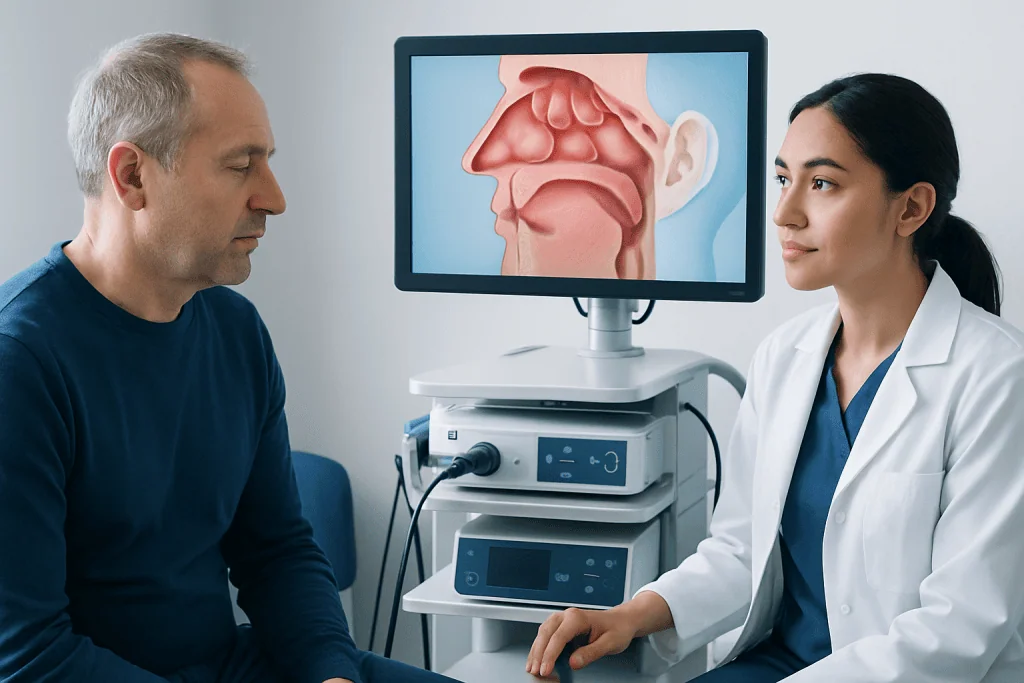
An ear, nose and throat specialist may examine the nasal passages using a lighted instrument and often a nasal endoscope. Nasal endoscopy uses a thin camera to look deeper into the nose and sinus drainage areas. This examination can show whether polyps are present, how extensive they are, and whether there is swelling, discharge, or another structural problem.
Imaging, usually with a sinus scan, may be recommended when symptoms are significant, surgery is being considered, or the doctor needs to understand the anatomy of the sinuses more clearly. Allergy evaluation, asthma assessment, or other tests may also be suggested when related conditions are suspected. If a growth has an unusual appearance, affects only one side, bleeds easily, or does not behave like a typical polyp, further investigation may be needed to rule out other conditions.
Treatment Options
Nasal polyps treatment aims to reduce inflammation, improve breathing, restore sinus drainage, and protect the sense of smell when possible. The right approach depends on the size and location of the polyps, symptom severity, related conditions such as asthma or allergies, previous treatment results, and the person’s overall health. A specialist should decide the safest and most appropriate plan after assessment.
Medical treatment is often the first step. This may include anti-inflammatory nasal sprays, nasal rinsing or irrigation, and short courses of stronger anti-inflammatory medicines in selected cases. If allergies, asthma, or chronic sinusitis are present, these conditions may also need targeted management. In some people with severe or recurrent nasal polyps, specialist-prescribed advanced medicines that act on specific inflammatory pathways may be considered.
Surgery may be recommended when medicines do not provide enough relief, when polyps are large, or when sinus drainage is significantly blocked. Endoscopic sinus surgery is performed through the nostrils using small instruments and a camera, so external cuts are usually not required. The aim is to remove polyps, open blocked sinus pathways, and improve access for ongoing medical treatment.
Surgery can improve symptoms, but it does not cure the tendency to form polyps. Continued follow-up, nasal care, and management of underlying inflammation are often needed to reduce the risk of recurrence. Patients should not start, stop, or combine treatments without guidance from a qualified clinician.
Living With / Prognosis
Many people with nasal polyps live well when inflammation is controlled and follow-up care is maintained. Symptoms may improve significantly with treatment, especially nasal blockage and sinus drainage. Recovery of smell can vary; some people notice improvement, while others have more persistent smell disturbance.
Because nasal polyps are linked to chronic inflammation, they can return after treatment, including after surgery. This does not mean treatment has failed. It means long-term control, similar to the management of asthma or allergic rhinitis, may be necessary.
Helpful daily measures may include using treatments as prescribed, keeping follow-up appointments, avoiding smoke and irritating fumes, and discussing allergy or asthma control with a doctor. Nasal rinsing may be recommended for some patients, but technique and suitability should be reviewed with a clinician, especially after surgery or if there are other nasal conditions.
For international patients who need coordinated assessment, Acibadem International’s multidisciplinary specialists and JCI-accredited hospitals diagnose and treat nasal polyps and related sinus conditions. Care should always be individualized after examination by an ENT specialist.
When to See a Doctor
A person should see a doctor if nasal congestion, runny nose, postnasal drip, facial pressure, or reduced sense of smell lasts for several weeks or keeps returning. Medical evaluation is also important when over-the-counter measures do not help, symptoms interfere with sleep, or sinus infections are frequent.
An earlier ENT assessment is recommended if symptoms are mainly on one side, if there is bleeding, if there is a visible growth in the nose, or if facial swelling or significant eye symptoms occur. These features do not always mean something serious, but they should be checked because not every nasal growth is a typical polyp.
People with asthma, aspirin or anti-inflammatory pain medicine sensitivity, or recurrent sinusitis should mention these conditions during the consultation. Treating the nose and sinuses together with related airway conditions can improve overall symptom control and reduce repeated flare-ups.
Frequently asked questions
What are nasal polyps?
Nasal polyps are soft, noncancerous growths in the lining of the nose or sinuses. They usually develop because of long-term inflammation and may cause blockage, smell loss, and persistent sinus symptoms.
Are nasal polyps dangerous or cancerous?
Typical nasal polyps are benign and are not cancer. However, any unusual nasal growth, especially one that occurs on only one side, bleeds, or grows quickly, should be assessed by an ENT specialist to confirm the diagnosis.
What causes nasal polyps to grow?
Nasal polyps are linked to chronic inflammation of the nasal and sinus lining. They are more common in people with chronic sinusitis, asthma, allergies, and sensitivity to certain anti-inflammatory pain medicines.
Can nasal polyps go away without treatment?
Small polyps may cause few symptoms, but established nasal polyps often persist unless the underlying inflammation is treated. A doctor can recommend appropriate options to reduce swelling, improve airflow, and monitor for recurrence.
How are nasal polyps treated?
Treatment may include anti-inflammatory nasal medicines, nasal rinsing, management of allergies or asthma, and sometimes specialist-prescribed advanced medicines. Surgery may be considered if symptoms remain significant or the sinuses are blocked.
Do nasal polyps come back after surgery?
Nasal polyps can return because the underlying tendency toward inflammation may remain. Ongoing medical care, follow-up with an ENT specialist, and management of related conditions can help reduce the risk of recurrence.
When should someone see an ENT specialist for nasal polyps?
An ENT specialist should be consulted when nasal blockage, smell loss, postnasal drip, or sinus symptoms last for several weeks or keep recurring. Prompt assessment is also important for one-sided symptoms, bleeding, visible nasal growths, or symptoms affecting the eyes.
References
- American Academy of Otolaryngology–Head and Neck Surgery
- European Position Paper on Rhinosinusitis and Nasal Polyps
- Mayo Clinic
- National Institute for Health and Care Excellence
- World Allergy Organization
This article is for general information only and is not a substitute for professional medical advice. Please consult a qualified doctor about your individual situation.
Treatments for This Condition
Doctors Who Treat This Condition

Prof. Dr. Barış Kocaoğlu
Orthopedic Surgery & Traumatology
Prof. Dr. Hakan Özveri
Urology
Assoc. Prof. Dr. Işil Yıldız
Gastrointestinal Oncology Unit Clinical Service
Assoc. Prof. Dr. İlker Özgür Koska
Radiology
Dr. Oktay Şahin
CardiologyRelated Articles

Dizziness With Hearing Loss: When Neurotology Evaluation Is Needed

Vestibular Neuritis: Sudden Vertigo, Balance Problems, and Recovery

Neuro-Otology Tests for Dizziness: What Happens at Your Visit?

Persistent Dizziness After a Viral Illness: When Neuro-Otology Can Help

Tonsillectomy Recovery: What to Expect Each Day After Surgery

Ear Tubes Recovery: How Long Healing Takes and How to Care for the Ear

Common Cold or Sinus Infection: When ENT Assessment Is Needed

ESS vs FESS: Which Sinus Surgery Is Right for You?

When Dizziness Needs a Neurotology Second Opinion

How Ear Tubes Drain Fluid and Relieve Repeated Ear Infections

FESS Surgery for Nasal Polyps: Who May Benefit and What to Expect