Amblyopia
Amblyopia is reduced vision in one eye from abnormal visual development. Learn symptoms, causes, diagnosis and treatment options.
Quick answer
Amblyopia, or “lazy eye,” is reduced vision in one eye that develops when the brain favors the other eye during childhood, often because of misalignment, unequal refractive error, or blockage of vision. Treatment focuses on correcting the underlying cause and encouraging use of the weaker eye with methods such as glasses, patching, eye drops, or surgery when needed, guided by…
Amblyopia, often called lazy eye, is reduced vision in one or both eyes caused by abnormal visual development in childhood. It is most treatable when detected early, because the brain and eye need clear, balanced visual input while the visual system is still developing.
Overview
Amblyopia is a condition in which vision does not develop normally in one eye, or less commonly in both eyes, during childhood. The eye itself may appear healthy, but the brain learns to rely more on the clearer or better-aligned eye and pays less attention to the weaker eye. Over time, this reduced use can limit visual development.
Amblyopia is commonly known as lazy eye, although this phrase can be misleading. The child is not being lazy, and the affected eye may not look different from the other eye. In many cases, amblyopia is found only during a vision screening or eye examination because children often adapt very well to seeing with one stronger eye.
Normal vision development depends on both eyes sending clear, focused and similar images to the brain. If one eye is blurred, misaligned or blocked from seeing clearly during the early years of life, the brain may suppress that eye’s input. This can affect depth perception, eye teaming and long-term visual sharpness if not treated.
Amblyopia is important because it is often reversible or improvable when diagnosed and managed early. Treatment aims to correct the underlying cause and encourage the brain to use the weaker eye. The right approach depends on the child’s age, the cause of amblyopia, the degree of vision difference and the results of a full eye assessment.
Symptoms
Amblyopia may cause few obvious symptoms, especially in young children. A child may read, play and move around normally because the stronger eye provides enough visual information for everyday activities. For this reason, routine vision screening and pediatric eye examinations are important even when parents do not notice a problem.
Possible signs of amblyopia include poorer vision in one eye, squinting, closing one eye, tilting the head, bumping into objects on one side, difficulty judging distance or problems with activities that require depth perception. Some children may avoid close work, become tired during visual tasks or show reduced performance in sports that require accurate tracking.
In amblyopia related to strabismus, one eye may turn inward, outward, upward or downward. However, not every child with amblyopia has a visible eye turn. In refractive amblyopia, the eyes can look completely normal because the problem is related to focusing differences such as farsightedness, nearsightedness or astigmatism.
Infants and toddlers cannot reliably describe blurred vision, so caregivers may notice behavior rather than complaints. Any persistent eye misalignment, white reflection in the pupil, drooping eyelid, abnormal eye movement, strong light sensitivity or apparent vision difficulty should be assessed by an eye specialist promptly.
Causes & Risk Factors
Amblyopia develops when the brain receives unequal, unclear or disrupted visual information during the period when vision is developing. The brain may favor one eye and suppress signals from the other eye to avoid confusion or double vision. If this pattern continues, the weaker eye does not develop normal visual sharpness.
The main causes of amblyopia include refractive differences, eye misalignment and deprivation of clear vision. Refractive amblyopia occurs when one eye has a much stronger prescription than the other, or when both eyes have a significant uncorrected prescription. Strabismic amblyopia occurs when the eyes are not properly aligned. Deprivation amblyopia occurs when something blocks vision, such as a congenital cataract, significant drooping eyelid or corneal opacity.
Risk factors can include a family history of amblyopia or strabismus, premature birth, low birth weight, developmental delay and certain eye conditions present at birth or early childhood. Children with neurologic or genetic conditions may also need closer visual monitoring. Amblyopia can affect any child, including children who appear to see well in daily life.
Because the developing visual system is most flexible in early childhood, delays in diagnosis can make treatment more difficult. However, improvement may still be possible in older children and, in selected cases, adolescents or adults. An ophthalmologist or optometrist can explain what is realistic based on the cause and severity.
Diagnosis
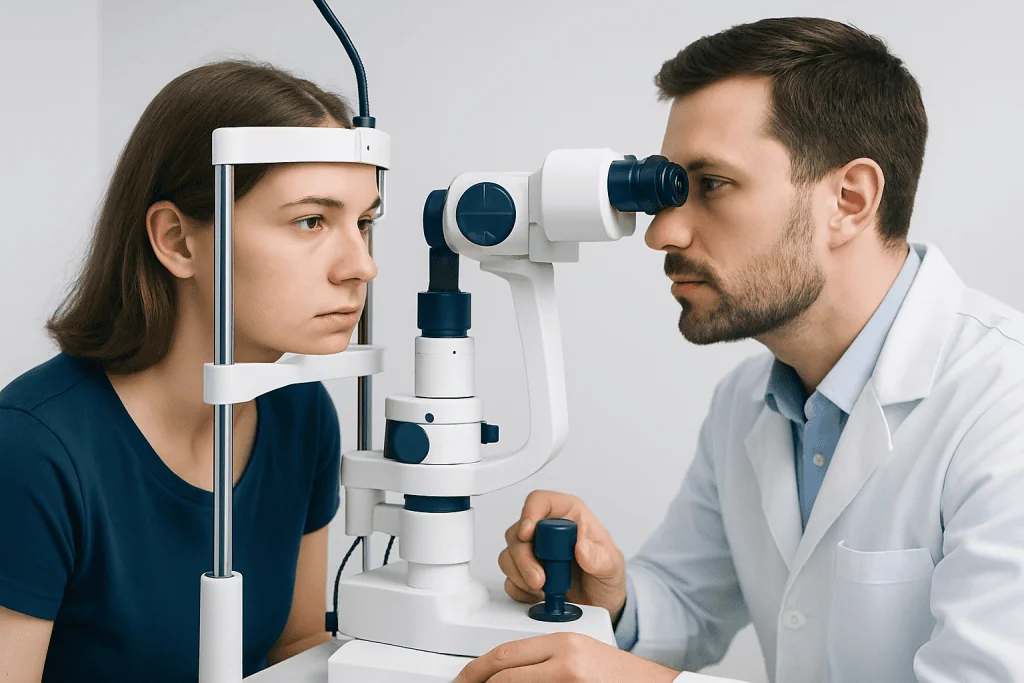
Amblyopia is diagnosed through a comprehensive eye examination, not by appearance alone. The examination usually checks visual acuity, eye alignment, eye movements, focusing power and the health of the front and back of the eyes. The tests are adapted to the child’s age, communication ability and level of cooperation.
Visual acuity testing measures how clearly each eye sees. In very young children, this may involve matching pictures, using age-appropriate symbols or observing fixation behavior. In older children, letter or number charts may be used. Testing each eye separately is essential because a child may see well with both eyes open while one eye is significantly weaker.
Refraction testing determines whether glasses are needed and whether one eye has a different prescription from the other. Eye drops may be used to relax focusing temporarily, especially in children, so the most accurate prescription can be measured. The doctor may also check for strabismus, cataract, retinal disease or other conditions that can reduce vision.
Diagnosis often includes identifying the type of amblyopia and the underlying cause. This distinction guides treatment planning. For example, a child with amblyopia caused by unequal refractive error may need glasses as the first step, while a child with a cataract or significant eyelid obstruction may need treatment of the blockage before the brain can receive clear images.
Treatment Options
Treatment for amblyopia has two main goals: correcting the cause of blurred or unequal vision, and encouraging the brain to use the weaker eye. The best treatment plan is decided by an ophthalmologist or qualified eye specialist after a full assessment. Age, visual acuity, eye alignment, refractive error, eye health and the child’s ability to follow treatment all influence the approach.
Glasses or contact lenses may be recommended when amblyopia is related to farsightedness, nearsightedness, astigmatism or unequal prescriptions between the eyes. In some children, consistent use of the correct optical prescription can lead to meaningful improvement by providing the brain with a clearer image. Regular follow-up is important because prescriptions and vision can change as a child grows.
If the weaker eye needs additional stimulation, the stronger eye may be temporarily blurred or covered to encourage use of the amblyopic eye. This may involve patching or special eye drops, depending on the child’s situation and specialist recommendation. These treatments require careful guidance, because too little treatment may be ineffective and too much can affect the stronger eye.
When amblyopia is linked to an underlying structural or alignment problem, additional treatment may be needed. This can include surgery for cataract, eyelid obstruction or certain forms of strabismus, followed by visual rehabilitation. Some children may benefit from supervised binocular or vision therapy approaches as part of a broader plan, but these should be selected and monitored by qualified professionals.
Living With / Prognosis
Many children with amblyopia improve with timely diagnosis, consistent treatment and regular follow-up. Progress is usually gradual, and families may need encouragement and practical strategies to maintain treatment routines. The goal is to achieve the best possible vision in the weaker eye and support comfortable use of both eyes together when possible.
Adherence is one of the most important parts of treatment. Children may resist patches, glasses or drops at first because the treatment makes them rely on the weaker eye. Parents and caregivers can help by building treatment into daily routines, using positive reinforcement and choosing safe, engaging near-vision activities during patching when advised by the specialist.
Follow-up visits allow the eye care team to monitor visual improvement, adjust glasses, change patching schedules or revise the plan if progress slows. They also help prevent overtreatment of the stronger eye. Families should bring glasses, patches, treatment records and any concerns to appointments so decisions can be based on accurate information.
Long-term outlook depends on the cause, severity and age at treatment. Early childhood treatment often gives the greatest opportunity for improvement, but older children should not be assumed untreatable without assessment. At Acibadem International, multidisciplinary ophthalmology teams in JCI-accredited hospitals evaluate and treat amblyopia and related eye conditions for international patients using individualized, evidence-based care.
When to See a Doctor
A child should have an eye assessment if there is any concern about vision, eye alignment or visual behavior. Parents should seek evaluation if a child frequently squints, closes one eye, tilts the head, sits very close to screens or books, has difficulty catching objects, or seems to see better from one side. Even mild or intermittent signs can be important.
Prompt medical attention is especially important for a constant eye turn, a new eye turn, a drooping eyelid that covers the pupil, a cloudy eye, a white pupil reflection, eye injury or sudden change in vision. These signs may indicate conditions that need urgent diagnosis and treatment to protect visual development and eye health.
Routine vision screening is recommended during childhood because amblyopia may be silent. Screening can identify children who need a complete eye examination, but it does not replace specialist assessment when symptoms or risk factors are present. Children with a family history of amblyopia, strabismus or significant childhood eye disease may need earlier or more frequent evaluations.
Adults who were told they had lazy eye as a child, or who notice long-standing reduced vision in one eye, can also benefit from an eye examination. While treatment goals may differ from those in childhood, an assessment can confirm the diagnosis, rule out other eye disease and discuss options for visual function, eye protection and overall eye health.
Frequently asked questions
What is amblyopia?
Amblyopia is reduced vision caused by abnormal visual development, usually in early childhood. The brain favors one eye and does not fully use input from the weaker eye. It may occur even when the eye looks normal.
Is amblyopia the same as strabismus?
No. Strabismus means the eyes are misaligned, while amblyopia means vision has not developed normally in one or both eyes. Strabismus can cause amblyopia, but amblyopia can also result from unequal glasses prescriptions or anything that blocks clear vision.
Can amblyopia be treated?
Amblyopia can often be improved, especially when treated early. Treatment may include glasses, patching, eye drops, treatment of an underlying eye condition or other specialist-guided approaches. The exact plan should be chosen after a complete eye examination.
At what age should children be checked for amblyopia?
Children should have age-appropriate vision screening during early childhood, and sooner if there are concerns or risk factors. Babies or children with visible eye misalignment, abnormal pupil appearance, drooping eyelid or suspected poor vision should be examined promptly by an eye specialist.
Will a child outgrow amblyopia?
Amblyopia usually does not resolve reliably on its own. Some improvement can occur after proper glasses correction, but many children need structured treatment and monitoring. Waiting without assessment can reduce the opportunity for visual improvement.
Can adults have amblyopia treatment?
Adults can have amblyopia that began in childhood, and an eye examination is still useful. Vision improvement may be more limited than in young children, but the specialist can confirm the diagnosis, check for other causes of reduced vision and discuss practical options.
Does patching the stronger eye harm vision?
Patching is used to encourage the weaker eye to work, but it should be done only as directed by an eye care professional. Follow-up is important to measure progress and protect the stronger eye. Families should not start, extend or stop patching schedules without medical guidance.
References
- American Academy of Ophthalmology
- American Association for Pediatric Ophthalmology and Strabismus
- National Eye Institute
- Royal College of Ophthalmologists
- World Health Organization
This article is for general information only and is not a substitute for professional medical advice. Please consult a qualified doctor about your individual situation.
Doctors Who Treat This Condition

Prof. Dr. Altan Göktaş
Ophthalmology
Prof. Dr. Ayşe Öner
Ophthalmology
Prof. Dr. Banu Coşar
Ophthalmology
Prof. Dr. Berna Özkan
Ophthalmology
Prof. Dr. Dilaver Erşanlı
Ophthalmology
Prof. Dr. Dilek Güven
Ophthalmology
Prof. Dr. G. Ertuğrul Mirza
Ophthalmology
Prof. Dr. Gökhan Pekel
Ophthalmology
Prof. Dr. Haluk Esgin
Ophthalmology
Dr. Safiye Küçükgül
Ophthalmology
Dr. Sevda Arık Tekin
Ophthalmology