

Septoplasty in Turkey: Treatment Guide

Septoplasty is surgery to straighten a deviated nasal septum and improve breathing by reshaping or removing the parts of cartilage and bone that block airflow. In Turkey, it is typically performed through the nostrils under anesthesia without external incisions, and care includes evaluation by an ENT specialist, surgical correction, and follow-up during recovery.
This guide explains septoplasty in Turkey for international patients, including when it is recommended, how the procedure is performed, what recovery may involve, and how travel and follow-up are organized. It is designed to help you prepare for a safe, informed consultation with an ENT specialist.
At a glance
- Procedure type: Functional nasal surgery to correct a deviated septum
- Purpose: To improve nasal airflow, reduce obstruction, and support breathing comfort
- Anesthesia: Usually general anesthesia; the final decision is made by your physician and anesthesiology team
- Hospital stay: Often same-day discharge or one overnight stay, depending on your case
- Estimated recovery: Initial recovery is commonly 1-2 weeks; internal healing continues for several months
- Return to daily life: Many patients return to light daily activities within several days, after medical approval
- Final result timeline: Breathing improvement may develop gradually as swelling decreases, often over weeks to months
- Suitable department: Ear, Nose and Throat (ENT) / Otorhinolaryngology
- International patient support: Online coordination, interpreters, airport transfers, accommodation guidance, and remote follow-up
What is this treatment?
Septoplasty is a surgical procedure that straightens or repositions the nasal septum, the wall of cartilage and bone that separates the right and left sides of your nose. When the septum is significantly bent, displaced, or irregular, it can narrow one or both nasal passages and make breathing through the nose more difficult.
The goal of septoplasty is functional: to improve airflow and reduce nasal obstruction. It is usually performed through the inside of the nose, so visible external scars are not typically expected when septoplasty is done alone. Your ENT specialist may remove, reshape, or reposition parts of the septal cartilage or bone while preserving adequate support for the nose.
Septoplasty is different from cosmetic rhinoplasty. It does not aim to change the external shape of your nose, although it may be combined with rhinoplasty or other nasal procedures when both breathing and appearance are being addressed. At Acibadem International, your plan is based on examination findings, symptoms, imaging when needed, and your personal priorities.
When is it recommended?
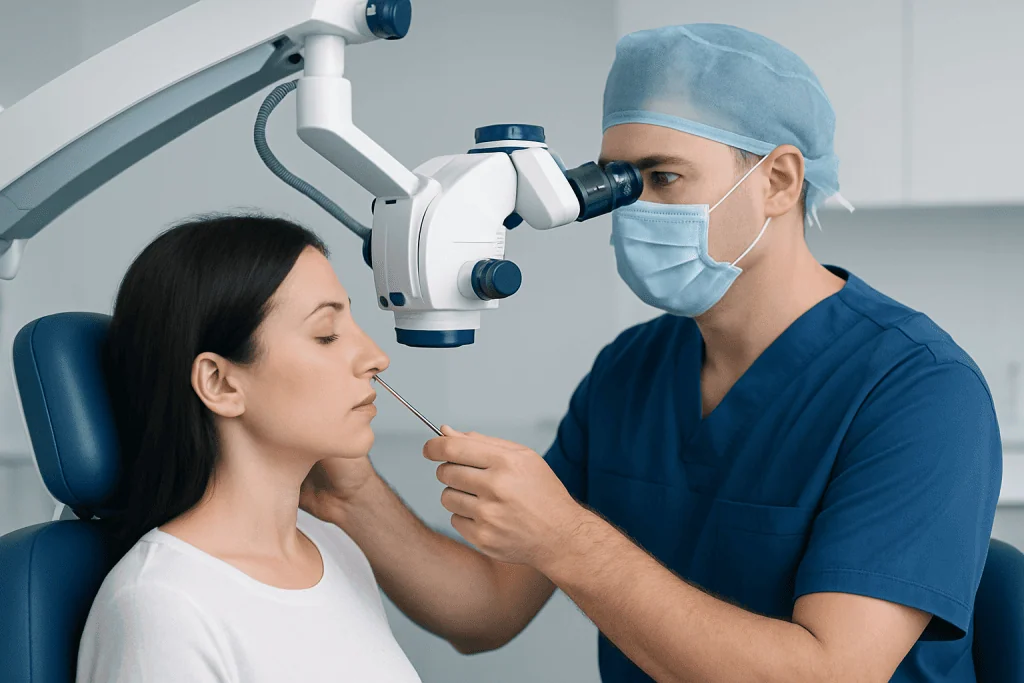
Septoplasty may be recommended when a deviated septum contributes to persistent nasal obstruction that does not improve enough with non-surgical care. Some people are born with a deviated septum, while others develop it after nasal trauma, sports injuries, or previous surgery. A mild deviation is common and may not require treatment unless it causes symptoms.
Your doctor may consider septoplasty if you experience blocked breathing through one or both nostrils, frequent mouth breathing, sleep disruption related to nasal blockage, difficulty using nasal sprays effectively, or recurrent sinus problems associated with poor nasal drainage. It may also be considered before or together with other procedures, such as sinus surgery or turbinate reduction, if septal deviation limits access or contributes to obstruction.
Not every breathing problem is caused by the septum. Allergic rhinitis, enlarged turbinates, nasal polyps, chronic sinusitis, valve collapse, and other conditions can create similar symptoms. A careful ENT evaluation is important so that the treatment targets the real cause of your nasal blockage.
Who is a good candidate?

You may be a good candidate for septoplasty if you have bothersome nasal obstruction linked to a deviated septum and your symptoms affect your comfort, sleep, exercise, or daily life. Good candidates are generally healthy enough for anesthesia and surgery, understand the functional purpose of the procedure, and are willing to follow aftercare instructions during healing.
Your ENT specialist will review your medical history, previous nasal injuries or surgeries, current medications, allergies, smoking status, and any bleeding tendency. If you have uncontrolled medical conditions, active infection, or certain medication-related risks, surgery may need to be postponed or adjusted until it is safer.
Septoplasty can help improve airflow, but it cannot guarantee perfect breathing in every situation. If your obstruction has more than one cause, your doctor may recommend additional treatment, such as allergy management, turbinate reduction, nasal valve support, or sinus treatment. Realistic expectations are an important part of being a good candidate.
Treatment options
Septoplasty can be tailored to your anatomy and symptoms. In many cases, it is performed as an internal procedure through the nostrils, with the surgeon lifting the lining of the septum and reshaping or removing the deviated portions while maintaining structural support. The specific technique depends on where the deviation is located and how it affects airflow.
Some patients need septoplasty alone, while others benefit from combined procedures. Turbinate reduction may be discussed if the soft tissues inside the nose are enlarged and contribute to blockage. Functional endoscopic sinus surgery may be considered if chronic sinus disease is also present. If external nasal shape, nasal valve weakness, or a previous operation is involved, your doctor may discuss functional rhinoplasty or septorhinoplasty.
Common treatment pathways include:
- Septoplasty alone for a clearly deviated septum causing obstruction.
- Septoplasty with turbinate reduction when both the septum and turbinates narrow airflow.
- Septoplasty with sinus surgery when chronic sinus disease needs surgical treatment.
- Septorhinoplasty when functional correction and external nasal reshaping are planned together.
- Revision septoplasty for selected patients with persistent obstruction after previous nasal surgery.
Your treatment option is confirmed only after examination, and sometimes after nasal endoscopy or imaging. The aim is to choose the least invasive effective plan that addresses the cause of your symptoms and supports safe healing.
Online evaluation before travel
For international patients, the first step is usually an online evaluation. You share your symptoms, medical history, previous test results, and photos or imaging if available. This helps the Acibadem International team understand your needs and direct your case to the appropriate ENT specialist.
An online review can help estimate whether septoplasty may be relevant, whether additional tests may be needed, and how long you may need to stay in Turkey. It can also identify factors that may affect surgery planning, such as previous nasal trauma, previous rhinoplasty, sleep-related breathing problems, allergies, chronic sinus symptoms, or medication use.
Online evaluation is helpful, but it does not replace an in-person consultation. A final diagnosis and surgical plan require physical examination, and your doctor may perform nasal endoscopy or request imaging depending on your symptoms. Your treatment is confirmed only after this clinical assessment and pre-operative safety checks.
Before the treatment
Before septoplasty, you will meet your ENT specialist for a detailed consultation. The doctor will ask about your nasal blockage, which side is worse, whether symptoms change with seasons or position, and whether you have snoring, sleep concerns, facial pressure, nosebleeds, allergies, or previous nasal injury. A nasal examination helps identify the location and severity of the septal deviation.
You may have pre-operative blood tests, anesthesia assessment, and other investigations based on your age, health, and medical history. If chronic sinusitis or complex anatomy is suspected, imaging may be requested. Your doctor will also review any medications or supplements that may affect bleeding or anesthesia safety and advise what should be stopped or continued.
In the days before treatment, it is important to follow the instructions given by your care team. These may include fasting before anesthesia, avoiding smoking, managing allergies or infection, and arranging a companion if recommended. If you develop fever, respiratory infection, active nasal infection, or a new medical issue before travel or surgery, inform your coordinator as soon as possible.
What happens during the treatment
Septoplasty is usually performed in an operating room under anesthesia. After you are safely anesthetized, the surgeon works through the inside of the nose. The lining that covers the septum is gently lifted, and the bent or obstructing areas of cartilage and bone are corrected by reshaping, repositioning, or removing selected parts.
The surgeon aims to improve airflow while keeping enough septal support to maintain nasal stability. In some cases, internal stitches, soft splints, or packing may be used to support healing and reduce bleeding. If turbinate reduction or another planned procedure is being performed at the same time, it is completed during the same session.
After surgery, you are taken to a recovery area where your breathing, comfort, and vital signs are monitored. You may feel congested, drowsy, or have mild pressure in the nose. Your team will explain what has been done, what to expect overnight, and how to care for your nose during the first days.
Hospital stay and discharge
Many septoplasty patients can go home or return to their hotel on the same day after adequate observation, while some may stay in the hospital overnight. The decision depends on your overall health, anesthesia recovery, bleeding risk, the extent of surgery, whether combined procedures were performed, and your doctor’s preference.
Before discharge, your team will review your medications, nasal care instructions, activity limits, and control appointment timing. If internal splints or packing are used, you will be told when they will be removed or checked. You should not drive after anesthesia, and international patients should have transport arranged in advance.
Acibadem International coordinators can help organize hospital admission, discharge logistics, interpreter support, and hotel transfer planning. You should remain reachable after discharge and follow the emergency contact instructions provided by your medical team.
Recovery timeline
Recovery after septoplasty is usually gradual. It is normal to feel blocked at first because of swelling, crusting, splints, or internal healing, even though the structural correction has been completed. Breathing often improves step by step as the tissues settle.
Your exact timeline depends on your anatomy, whether additional procedures were performed, your healing response, and how closely you follow aftercare instructions. The table below gives a general overview, but your doctor’s advice should always take priority.
| Timeframe | What to expect |
|---|---|
| First 24 hours | You may feel sleepy after anesthesia, with nasal congestion, mild bleeding or oozing, pressure, and the need to rest with your head elevated. |
| First week | Congestion, crusting, mild swelling, and fatigue are common. A control visit may be scheduled, and splints or packing may be checked or removed if used. |
| Weeks 2-4 | Many patients return to light routines, while avoiding heavy exercise and nose trauma. Breathing may begin to feel more open, but swelling can fluctuate. |
| Months 1-3 | Internal healing continues. Nasal airflow often becomes more stable, and crusting or dryness usually decreases with appropriate care. |
| Final result | Functional improvement is assessed over time as swelling fully settles. Results vary, and persistent symptoms may require further evaluation if other causes are present. |
Your care team may recommend saline sprays, gentle cleaning, or other supportive measures based on your condition. Do not insert objects into your nose or change medications without medical approval.
What to avoid after treatment
After septoplasty, protecting your nose helps reduce bleeding, swelling, and irritation. You will usually be advised to avoid blowing your nose for a period of time, especially in the early days. If you need to sneeze, try to sneeze with your mouth open to reduce pressure inside the nose.
You should avoid heavy lifting, intense exercise, bending forward for long periods, contact sports, swimming, sauna, steam rooms, smoking, and alcohol until your doctor says it is safe. These activities may increase swelling, bleeding risk, or delayed healing. Air travel should also be timed according to your surgeon’s advice, especially if you had combined procedures or ongoing bleeding.
Do not take non-prescribed medications, herbal supplements, or blood-thinning products without checking with your doctor, as some may increase bleeding risk. Avoid dusty or smoky environments where possible, and follow nasal care instructions carefully. If you are unsure whether an activity is safe, contact your coordinator or medical team before doing it.
Risks and possible complications
Septoplasty is commonly performed, but like any surgery, it has potential risks. These may include bleeding, infection, reaction to anesthesia, persistent swelling or congestion, temporary numbness of the upper teeth or nose, altered smell, crusting, dryness, or discomfort during healing. Most early symptoms improve with time and proper care.
Less common complications can include septal perforation, persistent or recurrent nasal obstruction, changes in nasal shape, scar tissue, fluid collection, or the need for revision surgery. If nasal obstruction has multiple causes, septoplasty may improve one part of the problem but may not fully resolve all symptoms.
Your surgeon will explain the risks that apply to your individual anatomy and health status. Choosing an experienced ENT team, completing pre-operative assessment, and following aftercare instructions can help reduce preventable risks, but no procedure can be guaranteed. A balanced discussion during consultation is important before you decide.
Warning signs: when to contact a doctor
Some congestion, mild oozing, pressure, and tiredness can be expected after septoplasty. However, certain symptoms should be reported promptly because they may need medical assessment. You will receive contact instructions before discharge, and international patients should keep these details accessible during their stay in Turkey and after returning home.
- Heavy bleeding that does not slow with the measures recommended by your doctor.
- Fever, chills, or feeling increasingly unwell.
- Severe or worsening pain that is not controlled with prescribed medication.
- Increasing swelling, redness, warmth, or foul-smelling discharge from the nose.
- Difficulty breathing that feels urgent or different from expected congestion.
- Vision changes, severe headache, confusion, or neck stiffness.
- Persistent vomiting, fainting, chest pain, or shortness of breath.
- Any concern about splints, packing, stitches, or accidental injury to the nose.
If symptoms feel urgent, seek emergency medical care rather than waiting for a scheduled appointment. When in doubt, it is safer to contact your care team early.
Results and expectations
The main expected result of septoplasty is improved nasal airflow. Many patients notice better breathing after swelling decreases and the inside of the nose heals, but improvement is not always immediate. In the first days or weeks, congestion may make the nose feel temporarily blocked even though the septum has been corrected.
Results vary because nasal breathing depends on several structures and conditions. Allergies, turbinate enlargement, sinus disease, nasal valve weakness, scarring, or environmental triggers may still affect breathing after septoplasty. If these are present, your doctor may recommend medical treatment or additional procedures as part of a broader plan.
Septoplasty alone is not intended to create a cosmetic change. If you are also concerned about the shape of your nose, discuss this openly before surgery so your doctor can determine whether a combined approach is appropriate. Revision surgery is not common for everyone, but it may be considered in selected cases if symptoms persist or anatomy requires further correction.
International patient travel planning
Planning your trip for septoplasty in Turkey should include enough time for arrival, in-person consultation, pre-operative tests, surgery, early recovery, and a first control visit. Your recommended length of stay will depend on your medical history, the planned procedure, whether splints or packing are used, and how quickly you recover.
Before booking flights, share your preferred travel dates with your international patient coordinator so the medical and logistics teams can align appointments. If you are traveling from a long distance, consider arriving with time to rest before consultation. You should also plan for a companion if you feel more comfortable having support after anesthesia.
After surgery, you should not rush travel clearance. Flying too soon may be uncomfortable and may not be appropriate if you have ongoing bleeding, significant swelling, or complications. Your ENT specialist will advise when you can travel based on your examination and recovery progress.
Cost and package information
The cost of septoplasty in Turkey depends on several factors, including the complexity of the septal deviation, whether additional procedures are needed, the type of anesthesia, hospital stay, pre-operative tests, specialist consultations, and any imaging or pathology requirements. Revision cases and combined procedures may involve different planning than a straightforward septoplasty.
A typical treatment quotation may include items such as the surgeon and hospital services, operating room use, anesthesia services, standard pre-operative tests, hospital stay if planned, nursing care, and early control appointments. For international patients, coordination services may also help with scheduling, interpreter arrangements, transfers, and accommodation guidance depending on the package structure.
Items that may not be included can vary and may include flights, accommodation, companion expenses, additional consultations unrelated to the planned treatment, extra imaging, medications after discharge, unexpected extended hospital stay, or treatment for unrelated medical conditions. Your coordinator will explain what is included and what is not included before you travel, without relying on estimates that have not been medically reviewed.
Why choose Acibadem
Acibadem International supports patients who travel to Turkey for medical care by coordinating clinical review, appointments, hospital admission, interpretation, transfers, and follow-up communication. For septoplasty, your care is provided through ENT specialists and hospital teams experienced in evaluating nasal obstruction and planning functional nasal surgery.
Acibadem hospitals include JCI-accredited facilities, and care pathways are designed to prioritize patient safety, pre-operative assessment, infection control, anesthesia evaluation, and clear discharge instructions. If your symptoms involve allergies, sinus disease, sleep-related concerns, or previous nasal surgery, multidisciplinary input can be arranged when appropriate.
International care is not only about the surgery itself. It is also about understanding your questions, helping you navigate a different healthcare system, and ensuring you know whom to contact during recovery. The team aims to provide clear information and practical support from online evaluation to remote follow-up after you return home.
Medical review and disclaimer
This guide has been reviewed by the Acibadem International medical team and is intended to provide general information about septoplasty for international patients. It is not a diagnosis, treatment recommendation, or substitute for a consultation with a qualified physician.
Every patient is different. Suitability for septoplasty depends on your symptoms, nasal anatomy, medical history, examination findings, and pre-operative assessment. Only an ENT specialist can confirm whether this procedure is appropriate for you and which technique or additional treatment may be needed.
Medical outcomes vary, and no guide can guarantee a specific result. If you have urgent symptoms, severe breathing difficulty, heavy bleeding, or signs of infection, seek medical attention promptly. Always follow the instructions given by your treating physician.
Step by step
- Initial contact. You contact Acibadem International and describe your main symptoms, preferred dates, language needs, and any previous diagnosis related to nasal obstruction or deviated septum.
- Medical record / photo submission. You share your medical history, medication list, allergy information, previous surgery details, test results, nasal photos if requested, and sinus or nasal imaging if available.
- Preliminary medical review. An ENT-related preliminary review helps determine whether septoplasty may be relevant and whether additional information is needed before travel.
- Treatment plan and quotation. You receive a proposed care pathway and a quotation based on the information available, with clear notes about what is included and what may require in-person confirmation.
- Travel planning. Your coordinator helps align appointment dates, estimated stay, airport transfer options, accommodation guidance, interpreter needs, and practical arrival details.
- Arrival. When you arrive in Turkey, the international patient team supports your transfer and helps you navigate hospital registration and scheduled appointments.
- In-person consultation. Your ENT specialist examines your nose, reviews symptoms and records, and confirms whether septoplasty alone or a combined approach is suitable.
- Pre-operative tests. You complete the required blood tests, anesthesia assessment, and any additional imaging or evaluations requested for safety and planning.
- Treatment. Septoplasty is performed in the operating room under the anesthesia plan selected for your case, with correction of the deviated septum and any planned additional procedures.
- Hospital stay. You are monitored after surgery for comfort, bleeding, breathing, and anesthesia recovery. Depending on your case, you may be discharged the same day or stay overnight.
- First control. Your doctor checks healing, reviews nasal care, and may remove or assess splints or packing if they were used.
- Discharge / travel clearance. Your surgeon confirms whether you are recovering as expected and advises when it is safe to travel home.
- Remote follow-up. After you return home, the international patient team can help coordinate follow-up communication and share your questions with the medical team when needed.
Your checklist
- Valid passport and travel documents
- Summary of your nasal symptoms, including which side is blocked and how long symptoms have been present
- Medical history, including chronic illnesses and previous hospitalizations
- List of current medications, vitamins, supplements, and blood-thinning products
- Known allergies, especially to medications, latex, foods, or anesthesia-related agents
- Details of previous nasal trauma, septoplasty, rhinoplasty, sinus surgery, or facial surgery
- Relevant test results, nasal endoscopy reports, sleep study results, or allergy test results if available
- Sinus CT, nasal imaging, or other radiology files if previously performed
- Clear nasal and facial photos if requested during online evaluation
- Information about smoking, alcohol use, and recent infections
- Questions about recovery, travel timing, work return, and activity restrictions
- Emergency contact details and companion information if someone is traveling with you
Key takeaways
- Septoplasty may be suitable if a deviated septum causes persistent nasal blockage, mouth breathing, sleep disturbance, or recurrent sinus-related symptoms.
- The procedure is functional, not cosmetic; if you also want to change the appearance of your nose, your doctor may discuss septorhinoplasty.
- International patients usually need enough time in Turkey for consultation, pre-operative tests, surgery, early recovery, and a first control visit.
- Temporary congestion, swelling, mild bleeding, and crusting can occur after surgery; breathing typically improves gradually as healing progresses.
- You should contact your care team promptly for heavy bleeding, fever, worsening pain, breathing difficulty, visual symptoms, or concerning discharge.
- Suitability, technique, expected recovery, and travel clearance must be confirmed by an ENT specialist after reviewing your history and examination findings.
Frequently asked questions
Is septoplasty in Turkey suitable for me?
Septoplasty may be suitable if a deviated septum is causing persistent nasal obstruction and non-surgical measures are not enough. Your suitability can only be confirmed after an ENT examination, review of your medical history, and any required tests.
Will septoplasty change the shape of my nose?
Septoplasty alone is a functional operation and is not designed to change the outside appearance of the nose. If you also want cosmetic changes or need structural nasal support, your doctor may discuss septorhinoplasty or functional rhinoplasty.
How long should I stay in Turkey for septoplasty?
Your stay should allow time for consultation, pre-operative tests, the procedure, early recovery, and at least one control visit. The exact duration depends on your case, whether additional procedures are performed, and your surgeon’s travel clearance.
Is septoplasty painful?
Most patients describe pressure, congestion, and discomfort rather than severe pain. Your doctor will provide an appropriate pain-control plan, and you should report worsening or uncontrolled pain because it may need assessment.
When will I breathe better after septoplasty?
Breathing improvement is usually gradual. The nose may feel blocked during the first days or weeks due to swelling, crusting, or splints, and airflow often becomes clearer as healing progresses.
Can I fly home soon after septoplasty?
You should fly only after your surgeon confirms that it is safe. Travel timing depends on bleeding control, swelling, whether packing or splints were used, and whether you had any combined procedures.
What affects the cost of septoplasty?
Cost depends on the complexity of the deviation, whether turbinate reduction or other procedures are needed, anesthesia, hospital stay, tests, imaging, and follow-up requirements. Your quotation should clearly explain included and excluded services before you travel.
Is septoplasty safe?
Septoplasty is a commonly performed ENT procedure, but all surgery has risks such as bleeding, infection, anesthesia-related issues, persistent obstruction, or the need for further treatment. Safety depends on proper patient selection, pre-operative assessment, surgical planning, and aftercare.
What if I have allergies as well as a deviated septum?
Allergies can continue to cause swelling, sneezing, and congestion even after the septum is corrected. Your doctor may recommend allergy treatment alongside or after septoplasty to support the best functional outcome.
Will I need nasal packing?
Some surgeons use soft splints, packing, or internal stitches, while others may not need packing in every case. Your ENT specialist will explain what is planned for your anatomy and how any packing or splints will be managed.
Can septoplasty be combined with sinus surgery?
Yes, septoplasty may be combined with sinus surgery when chronic sinus disease is present and surgical treatment is appropriate. This decision requires examination and sometimes imaging, because not all sinus symptoms need surgery.
How does remote follow-up work after I return home?
Acibadem International can help you share recovery questions, photos if requested, and updates with the medical team. If you develop urgent symptoms, you should seek local emergency care immediately rather than waiting for remote communication.
Add us as a Preferred Source to see more of our trusted health content across Google Search, AI Overviews and Discover.
More Patient Guides
Day Surgery in Turkey: Can You Leave Hospital the Same Day?
Day surgery in Turkey often lets you go home the same day if your procedure and recovery are suitable and your doctor…
11 min read
General Anesthesia in Turkey: How to Prepare and What Happens Before You Sleep
General anesthesia in Turkey helps you sleep safely through surgery. Learn preparation, recovery, risks, and travel planning in Istanbul.
11 min read
Choosing Between Outpatient and Inpatient Treatment in Turkey: What Affects the Decision
Choosing Between Outpatient and Inpatient Treatment in Turkey depends on your procedure, health, recovery needs and travel plans.
11 min read