

Receding Gums: Causes, Symptoms, and Treatment Choices

Receding gums can be caused by gum disease, aggressive brushing, tooth position, smoking, teeth grinding, and other factors. Common signs include longer-looking teeth, tooth sensitivity, visible roots, gum inflammation, and notches near the gumline.
Key Takeaways
- Receding gums can be caused by gum disease, aggressive brushing, tooth position, smoking, teeth grinding, and other factors.
- Common signs include longer-looking teeth, tooth sensitivity, visible roots, gum inflammation, and notches near the gumline.
- Gum tissue usually does not grow back on its own, but treatment can stop or slow progression and improve comfort.
- Treatment may include improved oral hygiene, professional cleaning, periodontal therapy, bite correction, or gum grafting.
- Seeing a dentist early is important because gum recession can increase the risk of tooth decay, root damage, and tooth mobility.
Receding gums occur when the gum tissue around the teeth pulls back, exposing more of the tooth or its root. Early dental care can help manage sensitivity, reduce further gum loss, and protect long-term oral health.
Overview
Receding gums, also called gum recession, happen when the gum margin moves away from the crown of the tooth and exposes more tooth surface or the tooth root. This can make teeth look longer than before and may cause sensitivity to cold, heat, sweet foods, or brushing. Gum recession can affect one tooth, several teeth, or the whole mouth.
Healthy gums form a protective seal around the teeth. When the gum tissue is lost, the exposed root surface is more vulnerable because it does not have the same hard enamel covering as the crown of the tooth. This can increase the chance of root cavities, discomfort, and, in advanced cases, problems with tooth support.
Gum recession is common in adults, but it is not something to ignore. The goal of dental care is to identify the cause, reduce ongoing damage, improve daily habits, and choose treatment when needed. With timely care, many people can keep their teeth comfortable and stable for many years.
Symptoms of Receding Gums
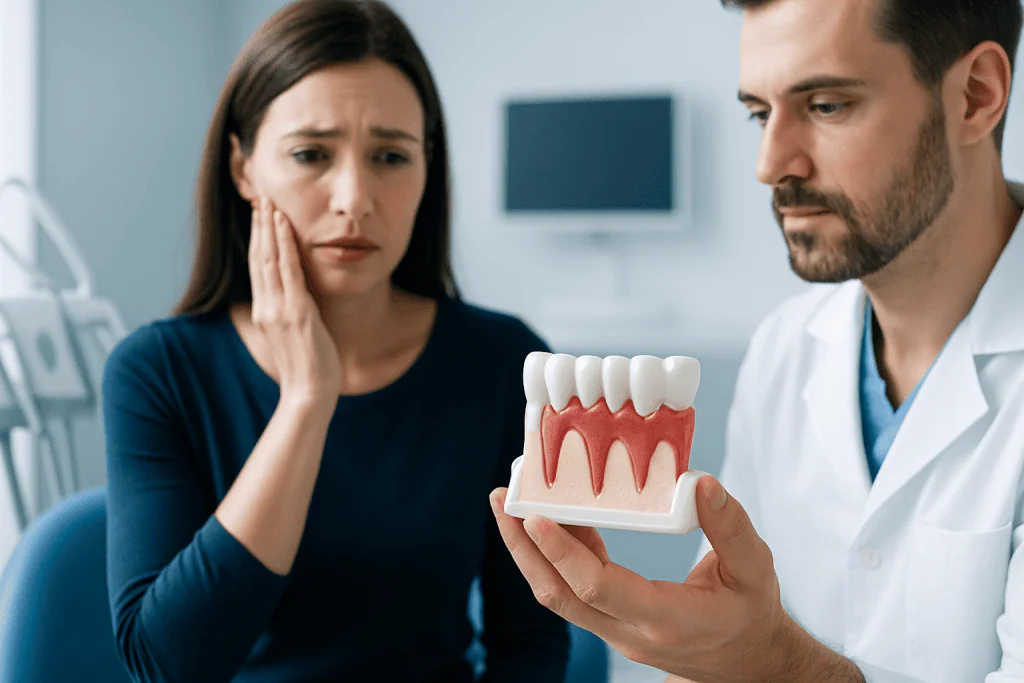
Gum recession may develop slowly, so it can be difficult to notice at first. Some people only become aware of it when a dentist points it out during an examination. Others notice changes in appearance, tooth sensitivity, or discomfort around the gumline.
Possible signs and symptoms include:
- Teeth that look longer than they used to
- Visible yellowish root surfaces near the gumline
- Sensitivity to cold, hot, sweet, or acidic foods and drinks
- Pain or stinging when brushing near the gumline
- A small notch or groove where the tooth meets the gum
- Red, swollen, bleeding, or tender gums
- Bad breath or a persistent bad taste if gum disease is present
- Looseness or shifting of teeth in more advanced periodontal disease
Not every person with receding gums has pain. Some cases are mainly cosmetic or are detected by measuring gum levels and gum pockets. However, even painless gum recession should be assessed because exposed roots need protection and the underlying cause may continue to progress.
Causes and Risk Factors

Receding gums often have more than one cause. One major cause is periodontal disease, a chronic infection and inflammation of the tissues that support the teeth. When plaque bacteria build up along and under the gumline, the gums can become inflamed and the supporting bone may gradually be affected. As support changes, gums can pull away from the teeth.
Mechanical irritation is another important factor. Brushing too hard, using a hard-bristled toothbrush, or scrubbing with a harsh horizontal motion can wear away gum tissue over time. Tooth position also matters; teeth that are crowded, rotated, or positioned outside the ideal bone envelope may have thinner gum coverage and may be more prone to recession.
Other risk factors may include smoking or tobacco use, teeth grinding or clenching, poorly fitting dental restorations, lip or tongue piercings that rub the gums, orthodontic tooth movement in susceptible areas, and a family tendency toward thin gum tissue. Hormonal changes, dry mouth, and medical conditions that affect oral health may also influence gum vulnerability. A dentist or periodontist can help determine which factors are most relevant for each patient.
How Receding Gums Are Diagnosed
Diagnosis begins with a dental examination. The dentist checks the gumline, looks for exposed root surfaces, and measures recession in millimeters. They may also measure periodontal pockets, which are the spaces between the teeth and gums, to determine whether gum disease is present.
Dental X-rays may be recommended to evaluate the bone that supports the teeth. This is especially important if there is bleeding, deep pockets, tooth mobility, or a history of periodontal disease. The dentist will also assess plaque levels, bite forces, brushing technique, tooth alignment, and any dental work that might be contributing to irritation.
In some cases, referral to a periodontist, a dentist who specializes in gum and supporting bone conditions, may be advised. A specialist can evaluate whether gum recession is stable or progressive and whether surgical treatment such as gum grafting is appropriate. The diagnosis is not only about naming the condition; it is about understanding why it is happening.
Treatment Options
Treatment depends on the cause, severity, symptoms, and whether the recession is getting worse. Mild recession may be managed with education and monitoring. This can include switching to a soft-bristled toothbrush, improving brushing technique, using toothpaste for sensitivity, applying fluoride when appropriate, and attending regular professional cleanings.
If gum disease is involved, periodontal treatment is needed to reduce inflammation and bacterial buildup. This may include scaling and root planing, which is a deep cleaning below the gumline. In some cases, additional periodontal procedures, antimicrobial therapy, or maintenance visits at shorter intervals may be recommended. The exact plan depends on the gum measurements, bone levels, and overall health of the mouth.
For more significant recession, persistent sensitivity, root exposure, or cosmetic concerns, surgical treatment may be considered. Gum grafting can use tissue from the patient or a suitable grafting material to cover exposed roots or thicken thin gum tissue. Other procedures may involve repositioning nearby gum tissue. These treatments are planned carefully, and results depend on factors such as tooth position, root shape, gum thickness, oral hygiene, smoking status, and the amount of supporting bone.
Prevention and Self-Care
Daily habits play a key role in preventing gum recession from worsening. Gentle, thorough brushing is better than forceful scrubbing. Many patients benefit from a soft-bristled toothbrush or an electric toothbrush with a pressure sensor. The brush should be angled toward the gumline and moved with small, controlled motions rather than aggressive back-and-forth pressure.
Interdental cleaning is also important because plaque often collects between the teeth. Depending on the size of the spaces, a dentist may recommend dental floss, interdental brushes, or water flossing as part of a routine. Regular dental checkups allow early detection of gum changes and professional removal of hardened plaque that cannot be removed at home.
Other protective steps include avoiding tobacco, limiting frequent acidic drinks, using a night guard if grinding is diagnosed, and asking a dentist to check any restorations that feel rough or trap food. Patients considering orthodontic treatment should have their gum health assessed first, especially if they already have thin gums or areas of recession. Self-care cannot replace professional treatment, but it can greatly support long-term gum stability.
When to See a Dentist
A dentist should be consulted if the teeth appear longer, roots are visible, sensitivity is increasing, gums bleed during brushing, or there is a notch near the gumline. It is also important to seek care if there is gum swelling, persistent bad breath, loose teeth, or changes in the way the teeth fit together. These signs may suggest gum disease or bite-related stress.
Prompt evaluation is especially helpful because gum recession is usually easier to manage in its early stages. While lost gum tissue does not typically regrow by itself, the underlying cause can often be treated and further progression may be reduced. The dentist can also recommend options to relieve sensitivity and protect exposed roots.
For patients traveling for care, Acibadem International offers access to multidisciplinary dental and medical specialists in JCI-accredited hospitals for diagnosis and treatment planning. International patients should bring previous dental records and X-rays when available, and should follow up with their local dentist after treatment to maintain results.
Frequently asked questions
Can receding gums grow back naturally?
Gum tissue that has receded usually does not grow back on its own. However, treatment can help stop or slow further recession, reduce sensitivity, and protect the exposed root surface. In selected cases, gum grafting may improve coverage and gum thickness.
Is gum recession always caused by gum disease?
No. Periodontal disease is a common cause, but gum recession can also result from aggressive brushing, thin gum tissue, tooth position, grinding, tobacco use, piercings, or irritation from dental restorations. A dental examination is needed to identify the main cause.
Are receding gums painful?
Receding gums may or may not be painful. Some people have no discomfort, while others develop tooth sensitivity when roots are exposed. Pain, swelling, bleeding, or loose teeth should be checked promptly by a dentist.
What toothbrush is best for receding gums?
A soft-bristled toothbrush is usually recommended. Some people benefit from an electric toothbrush with a pressure sensor to avoid brushing too hard. The most important factor is gentle technique and consistent cleaning along the gumline.
When is gum grafting needed?
Gum grafting may be considered when recession is advanced, worsening, causing sensitivity, affecting appearance, or leaving the root at risk for decay or wear. A periodontist evaluates gum thickness, tooth position, bone support, and oral hygiene before recommending surgery.
Can sensitive toothpaste help receding gums?
Sensitive toothpaste may help reduce discomfort from exposed roots, especially when used consistently. It does not replace the lost gum tissue or treat gum disease. A dentist should still check the area to make sure the cause is properly managed.
References
- American Academy of Periodontology
- American Dental Association
- Mayo Clinic
- National Institute of Dental and Craniofacial Research
- World Health Organization
This article is for general information only and is not a substitute for professional medical advice. Please consult a qualified doctor about your individual situation.
Hair transplant in Turkey — costs, graft counts & a free assessment
JCI-accredited · board-certified surgeons · reply within 24h
Add us as a Preferred Source to see more of our trusted health content across Google Search, AI Overviews and Discover.

Dental & Oral Health
Full-scope dental care from implants and aesthetics to oral and maxillofacial surgery.
158 specialists in this unitRelated Treatments
More from the Health Library



Related Specialists

Assoc. Prof. Dr. Ferit Bayram
Oral & Dental Health
Dt. Alara Naz Kenir
Oral & Dental Health
Dt. Gonca Katmer
Oral & Dental HealthDt. Doğa Baysal
Oral & Dental Health