

Bad Breath: Oral Causes, Medical Links, and Treatment

Most persistent bad breath begins in the mouth, especially from bacteria on the tongue, between teeth, or around inflamed gums. Dry mouth, smoking, certain foods, dentures, cavities, and gum disease can make odor worse or harder to control.
Key Takeaways
- Most persistent bad breath begins in the mouth, especially from bacteria on the tongue, between teeth, or around inflamed gums.
- Dry mouth, smoking, certain foods, dentures, cavities, and gum disease can make odor worse or harder to control.
- Medical conditions such as sinus infections, reflux, diabetes-related complications, and some kidney or liver disorders can sometimes contribute to unusual breath odor.
- Effective treatment depends on the cause and may include professional dental cleaning, periodontal care, tongue cleaning, saliva support, and treatment of related medical conditions.
- A dentist should evaluate bad breath that continues despite good home care, is accompanied by bleeding gums or loose teeth, or causes significant worry.
Bad breath, also called halitosis, is common and usually related to oral hygiene, gum disease, dry mouth, or tongue coating. In some cases, persistent odor may be linked to sinus, digestive, metabolic, or medication-related factors, so a structured dental and medical assessment can help identify the cause.
Overview
Bad breath is the everyday term for an unpleasant odor from the mouth. The medical term is halitosis. It can happen briefly after eating certain foods, during fasting, or on waking in the morning, but it may also become persistent and affect confidence, social comfort, and quality of life.
In many people, the source is inside the mouth. Bacteria naturally live on the tongue, teeth, gums, and dental appliances. When these bacteria break down food particles, saliva proteins, and shed cells, they can release sulfur-containing compounds that smell unpleasant. The back of the tongue is a particularly common source because it has grooves that can trap debris.
Bad breath is not a diagnosis by itself; it is a symptom with several possible causes. The reassuring point is that most causes are identifiable and treatable. A dentist can evaluate common oral factors, while a physician may be involved if the odor suggests a non-dental cause or if other symptoms are present.
Common Symptoms and How Bad Breath Is Noticed
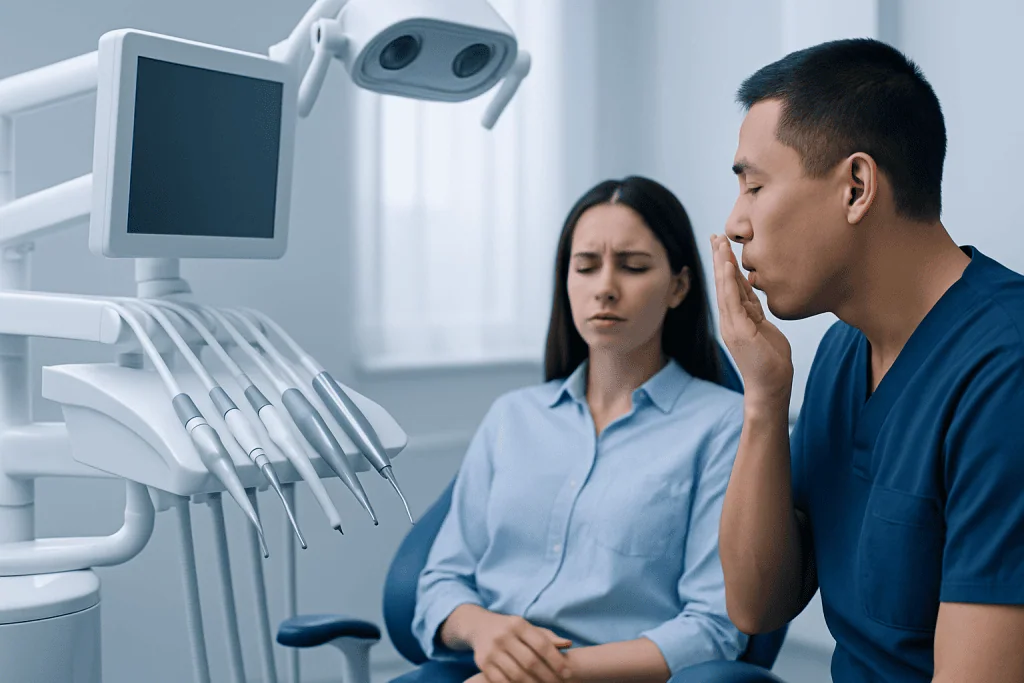
Bad breath may be noticed by the person, by family members, or during a dental visit. Some people experience a bad taste, a coated tongue, a dry or sticky feeling in the mouth, or odor that returns soon after brushing. Others may be unsure because it is difficult to judge one’s own breath accurately.
Temporary bad breath is often linked to garlic, onions, alcohol, coffee, smoking, fasting, or dehydration. Morning breath is also common because saliva flow decreases during sleep, allowing odor-producing bacteria to become more active. This usually improves after drinking water, brushing, and eating breakfast.
Persistent halitosis is different. It tends to continue for weeks, returns quickly after oral care, or is associated with visible plaque, bleeding gums, mouth sores, tooth pain, loose teeth, thick nasal drainage, reflux symptoms, or ongoing dry mouth. These patterns are useful clues for the dentist or doctor.
Oral Causes of Bad Breath

The mouth is the most common starting point for bad breath. Plaque, a sticky film of bacteria, can collect along the gumline and between teeth. If not removed regularly, it may contribute to cavities, gingivitis, or periodontitis. Gum inflammation can create deeper spaces around the teeth where bacteria and debris accumulate, leading to stronger odor.
The tongue is another major source. A white, yellow, or thick coating on the back of the tongue may contain bacteria, food residue, and dead cells. Tongue cleaning, when done gently, can reduce this coating and improve breath in many people.
Other oral contributors include poorly fitting dentures, orthodontic appliances that trap food, old or leaking dental restorations, untreated cavities, oral infections, and healing wounds after dental procedures. Dry mouth, also called xerostomia, is especially important because saliva normally helps wash away debris and neutralize acids.
- Inadequate brushing or flossing
- Gum disease and bleeding gums
- Coated tongue
- Dry mouth from dehydration, mouth breathing, or medications
- Smoking or tobacco use
- Food trapped under dentures, bridges, or braces
Medical Links and Risk Factors
Although most cases begin in the mouth, some medical conditions can contribute to breath changes. Sinusitis, postnasal drip, tonsil stones, and chronic throat irritation can produce odor from the nose or throat. People may notice mucus, frequent throat clearing, nasal blockage, or a sensation of something stuck in the throat.
Gastroesophageal reflux disease, often called GERD, may be associated with sour taste, belching, regurgitation, or throat symptoms. However, reflux is not the most common cause of bad breath, and it should not be assumed without proper assessment. Treating oral causes first is often the most practical approach unless digestive symptoms are clear.
Some systemic conditions may produce distinctive breath changes, particularly when not well controlled. For example, diabetes-related ketoacidosis can cause a fruity odor, while advanced kidney or liver disease may affect breath in specific ways. These situations are much less common than dental causes, but they matter when bad breath is accompanied by fatigue, weight loss, excessive thirst, frequent urination, jaundice, swelling, confusion, or feeling acutely unwell.
Risk factors include tobacco use, frequent alcohol intake, low fluid intake, high-sugar diets, irregular dental visits, poorly controlled diabetes, mouth breathing, and medications that reduce saliva. Many common medicines, including some antihistamines, antidepressants, blood pressure medicines, and decongestants, may contribute to dry mouth; patients should not stop prescribed medication without medical advice.
Diagnosis: Finding the Source
Diagnosis starts with a detailed history. A dentist may ask when the odor began, whether it is constant or occasional, what home care is used, whether the mouth feels dry, and whether there are symptoms such as bleeding gums, nasal discharge, reflux, or changes in taste. Food habits, tobacco use, and medications are also relevant.
A dental examination checks the teeth, gums, tongue, saliva flow, dental appliances, and signs of infection. The dentist may measure gum pockets, look for plaque and tartar, assess cavities or defective fillings, and examine the tongue coating. In some cases, dental X-rays are needed to detect hidden decay, bone loss, or infections around tooth roots.
Special breath tests exist in some clinics, but many cases can be diagnosed through careful examination and history. If the dentist does not find an oral cause, or if the odor appears to come from the nose, throat, lungs, or digestive tract, referral to an ENT specialist, gastroenterologist, or other physician may be appropriate.
Treatment Options
Treatment depends on the underlying cause. For most people, the first step is improving plaque control and removing bacterial buildup. This may include professional dental cleaning, treatment for gum disease, repair of cavities or leaking restorations, and cleaning or adjusting dentures and appliances. If periodontitis is present, deeper periodontal therapy may be needed.
Daily home care is central to long-term control. Brushing twice daily with fluoride toothpaste, cleaning between the teeth with floss or interdental brushes, and gently cleaning the tongue can reduce odor-producing bacteria. Mouth rinses may help some patients, especially those containing antibacterial ingredients, but they should support—not replace—brushing, interdental cleaning, and dental care.
For dry mouth, treatment may include more frequent water intake, sugar-free chewing gum or lozenges to stimulate saliva, saliva substitutes, and review of medications with a doctor when appropriate. Alcohol-containing mouthwashes may worsen dryness in some people. People who wear dentures should remove and clean them daily and avoid sleeping in them unless specifically advised by a dental professional.
If a medical contributor is identified, care should target that condition. For example, sinus disease, tonsil stones, reflux symptoms, or diabetes control may require medical evaluation. Because several causes can overlap, coordinated care between dental and medical professionals often gives the best results.
Prevention, Self-Care, and When to See a Doctor
Prevention focuses on reducing bacterial buildup and supporting healthy saliva flow. Regular dental checkups and professional cleanings help detect early gum disease, cavities, and appliance problems before they become harder to manage. A balanced diet, adequate hydration, and limiting tobacco products also support oral health and fresher breath.
Helpful self-care habits include brushing the gumline carefully, cleaning between teeth daily, cleaning the tongue gently from back to front, drinking water regularly, and replacing toothbrushes when worn. People with braces, implants, bridges, or dentures may need special cleaning tools and individualized instruction from a dental professional.
A dentist should be consulted if bad breath lasts more than a few weeks despite good oral care, if gums bleed, teeth feel loose, there is persistent mouth pain, or dentures no longer fit well. A doctor should be consulted if bad breath is accompanied by fever, persistent nasal or throat symptoms, reflux symptoms, unexplained weight loss, excessive thirst, frequent urination, jaundice, swelling, or feeling very unwell.
For international patients who need evaluation, Acibadem International’s multidisciplinary specialists and JCI-accredited hospitals can assess dental and related medical causes of persistent bad breath and guide appropriate treatment planning. Patients should seek personalized advice from qualified clinicians rather than relying on self-diagnosis.
Frequently asked questions
What is the most common cause of bad breath?
The most common cause is bacterial buildup in the mouth, especially on the tongue, between teeth, and around inflamed gums. Food particles, plaque, dry mouth, and gum disease can all increase odor-producing compounds. A dental examination is usually the best first step for persistent bad breath.
Can bad breath come from the stomach?
It can, but stomach-related causes are less common than oral causes. Reflux may contribute when there is sour taste, regurgitation, belching, or throat irritation. If dental causes have been treated and symptoms suggest reflux or another digestive issue, a doctor may recommend further evaluation.
Why does breath smell worse in the morning?
Saliva flow decreases during sleep, and the mouth may become drier, especially in people who breathe through the mouth. Bacteria then break down debris more actively, creating morning breath. Drinking water, brushing, interdental cleaning, and tongue cleaning usually improve it.
Do mouthwashes cure bad breath?
Mouthwashes may temporarily reduce odor and some antibacterial rinses can help as part of a treatment plan. However, they do not cure gum disease, cavities, tongue coating, or dry mouth by themselves. If bad breath continues, the underlying cause should be identified by a dentist or doctor.
How can someone tell if they have bad breath?
It can be difficult to judge one's own breath because the nose adapts to familiar smells. A trusted person may help, or a dentist can assess breath, tongue coating, gum health, and possible sources of odor. Persistent bad taste, dry mouth, or a coated tongue can also be clues.
When is bad breath a sign of something serious?
Most bad breath is not serious and is treatable with dental care and improved oral hygiene. Medical assessment is important if it occurs with symptoms such as fever, severe dry mouth, unexplained weight loss, excessive thirst, frequent urination, jaundice, swelling, or feeling acutely unwell. Sudden unusual breath odor in someone with diabetes or significant illness should be evaluated promptly.
References
- American Dental Association
- World Health Organization
- Mayo Clinic
- National Institute of Dental and Craniofacial Research
- European Federation of Periodontology
This article is for general information only and is not a substitute for professional medical advice. Please consult a qualified doctor about your individual situation.
Explore treatments in Turkey — costs, top hospitals & a free quote
JCI-accredited · board-certified surgeons · reply within 24h
Add us as a Preferred Source to see more of our trusted health content across Google Search, AI Overviews and Discover.
Check your numbers in seconds
BMI, calories, due date, blood pressure and 30+ more clinical calculators — free, instant, doctor-reviewed ranges.

Dental & Oral Health
Full-scope dental care from implants and aesthetics to oral and maxillofacial surgery.
158 specialists in this unitRelated Treatments
More from the Health Library



Related Specialists

Assoc. Prof. Dr. Ferit Bayram
Oral & Dental Health
Dt. Alara Naz Kenir
Oral & Dental Health
Dt. Gonca Katmer
Oral & Dental HealthDt. Doğa Baysal
Oral & Dental Health