Meniscus Tear: Knee Locking, Swelling, and Arthroscopy Decisions

The meniscus is a C-shaped cartilage cushion that helps distribute load and stabilize the knee. Symptoms may include joint-line pain, swelling, clicking, catching, reduced motion, or knee locking.
Key Takeaways
- The meniscus is a C-shaped cartilage cushion that helps distribute load and stabilize the knee.
- Symptoms may include joint-line pain, swelling, clicking, catching, reduced motion, or knee locking.
- Not every meniscus tear needs surgery; many degenerative tears improve with guided rehabilitation and time.
- Arthroscopy may be considered when there is true mechanical locking, a repairable traumatic tear, or persistent symptoms despite appropriate non-surgical care.
- Meniscus repair preserves tissue when possible, while partial meniscectomy removes only unstable torn fragments.
- Prompt medical evaluation is important after a twisting injury, major swelling, inability to bear weight, or a locked knee.
A meniscus tear is a common knee injury that can cause pain, swelling, catching, or true locking of the knee. Treatment may involve rehabilitation, activity modification, injections in selected cases, or arthroscopy depending on the tear pattern, symptoms, age, activity level, and overall knee health.
Overview
A meniscus tear is an injury to one of the two crescent-shaped cartilage pads inside the knee. Each knee has a medial meniscus on the inner side and a lateral meniscus on the outer side. These structures act like shock absorbers, help spread body weight across the joint, support smooth movement, and contribute to knee stability.
Meniscus tears can happen suddenly during sports or daily activities, especially with twisting, pivoting, squatting, or a direct force to the knee. They can also develop gradually as part of age-related wear, sometimes with little or no clear injury. This difference matters because a traumatic tear in a younger active person may be treated differently from a degenerative tear in a knee with early osteoarthritis.
Patients often ask whether knee locking, swelling, and pain mean they need arthroscopy. The answer depends on the exact symptoms, examination findings, imaging results, and the type of tear. Some tears heal or become comfortable with non-surgical treatment, while others may benefit from arthroscopic repair or removal of unstable torn tissue.
Symptoms: Pain, Swelling, Catching, and Knee Locking
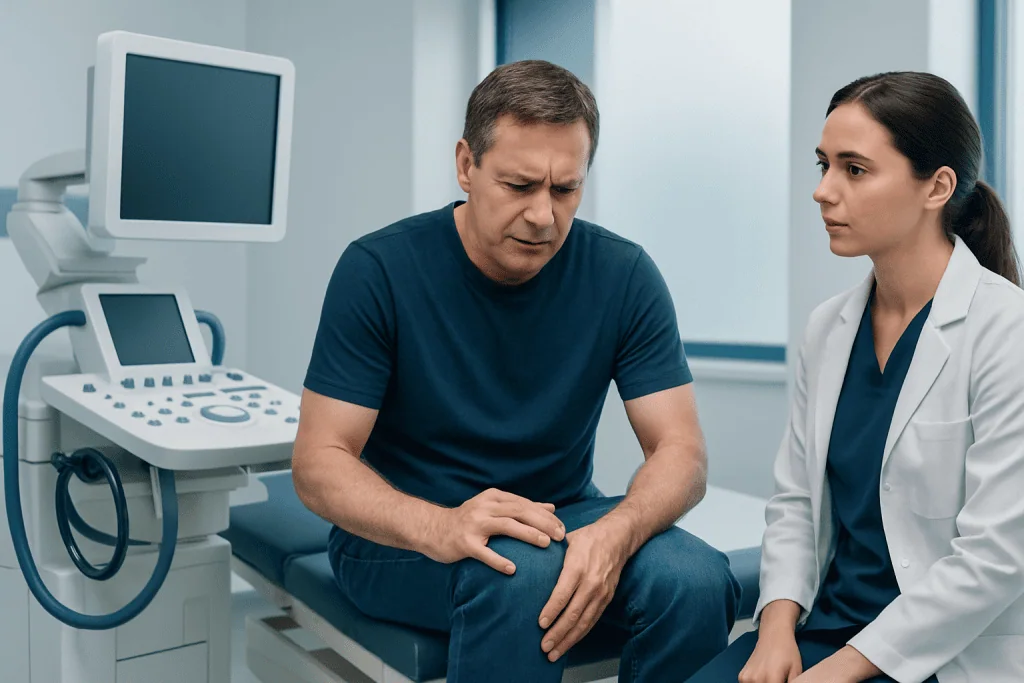
Symptoms of a meniscus tear vary widely. Some people feel a sudden sharp pain at the time of injury, while others notice gradual discomfort along the inner or outer joint line. Pain may worsen with twisting, deep bending, stairs, kneeling, squatting, or getting up from a chair.
Swelling can appear within hours after an acute injury or develop more slowly over a day or two. A swollen knee may feel tight, warm, or difficult to fully bend and straighten. Some patients also describe clicking, popping, catching, or a sensation that the knee may give way, particularly during turning movements.
Knee locking deserves special attention. A true locked knee means the person cannot fully straighten or bend the knee because something is physically blocking motion, such as a displaced bucket-handle meniscus tear. This is different from temporary stiffness, pain-related guarding, or a feeling of catching that resolves with gentle movement.
- Common symptoms include: joint-line pain, swelling, tenderness, clicking, catching, reduced range of motion, and pain with twisting.
- Possible urgent symptoms include: inability to bear weight, major swelling after injury, visible deformity, fever with a hot swollen knee, or a knee that remains locked.
Causes and Risk Factors
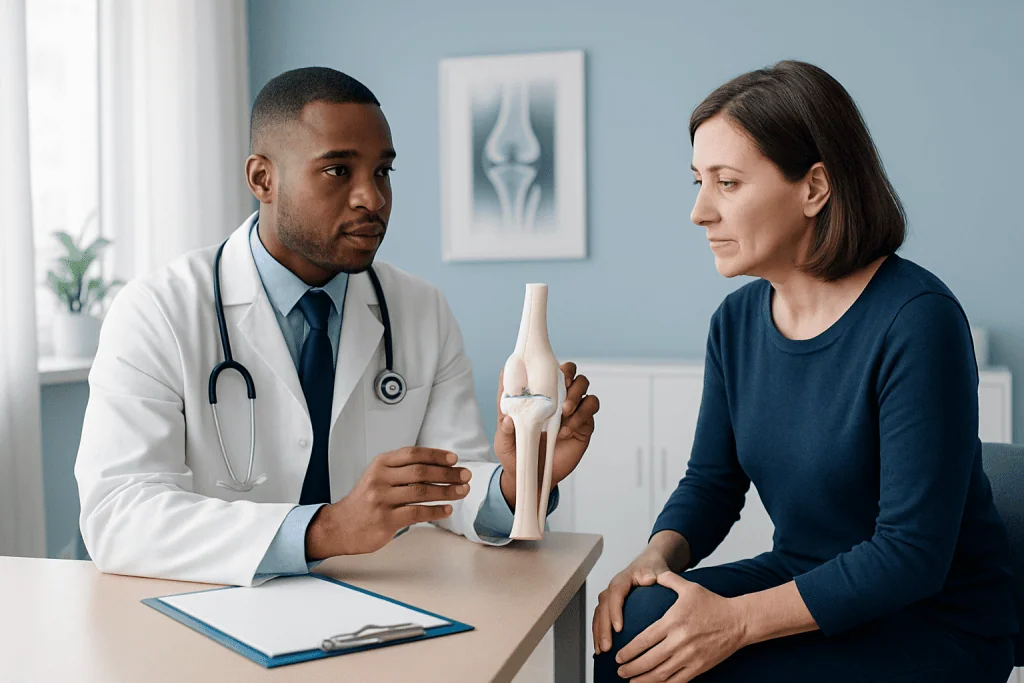
Traumatic meniscus tears often occur when the foot is planted and the knee twists. This is common in football, basketball, skiing, tennis, running sports, and activities involving quick changes of direction. Tears may occur together with other injuries, such as anterior cruciate ligament injuries, depending on the mechanism and force.
Degenerative meniscus tears are more related to gradual changes in the cartilage tissue over time. In these cases, the meniscus may become less elastic and more prone to fraying. A person may notice pain after a simple movement such as rising from a squat, turning while walking, or stepping down from a curb.
Risk factors include previous knee injury, repetitive squatting or kneeling, high-impact sports, reduced muscle strength around the hip and knee, higher body weight, and underlying osteoarthritis. Age is also important: the blood supply to much of the meniscus is limited, and healing potential is generally better in the outer vascular zone than in the inner portion.
The tear pattern helps guide treatment. Vertical longitudinal tears, radial tears, flap tears, root tears, complex degenerative tears, and bucket-handle tears behave differently. For example, a displaced bucket-handle tear may cause locking and may require timely surgical assessment, while a stable degenerative tear may be managed with exercise-based treatment.
Diagnosis
Diagnosis begins with a careful history and physical examination by a qualified clinician. The doctor asks how the symptoms began, where the pain is located, whether swelling occurred, and whether there is locking, catching, instability, or difficulty walking. Examination may include assessment of knee alignment, swelling, tenderness, range of motion, ligament stability, muscle strength, and specific meniscus tests.
X-rays do not show the meniscus directly, but they are often useful to assess bone alignment, fracture after injury, or signs of osteoarthritis. This is especially important in middle-aged and older adults because meniscus tears and arthritis-related changes may coexist, and treatment decisions should consider the whole joint rather than only the MRI finding.
Magnetic resonance imaging, or MRI, is the most commonly used imaging test for evaluating meniscus tears. It can show the location and pattern of the tear, associated cartilage damage, ligament injury, bone bruising, fluid, and other possible causes of knee pain. However, MRI findings must be matched with symptoms because some meniscus tears are found in people who have little or no pain.
In selected cases, additional evaluation may be needed if symptoms suggest another condition. Knee pain and swelling may also come from ligament sprains, cartilage injuries, arthritis flare-ups, inflammatory joint disease, infection, bursitis, tendon injuries, or referred pain. A balanced diagnosis helps avoid both undertreatment and unnecessary procedures.
Treatment Options: Rehabilitation, Injections, and Surgery
Many meniscus tears can be treated without surgery, especially degenerative tears without true locking. Non-surgical care usually includes activity modification, short-term rest from painful twisting or deep squatting, ice, compression, elevation, and appropriate pain relief under medical guidance. Physical therapy is often central, focusing on restoring motion, reducing swelling, strengthening the quadriceps and hip muscles, improving balance, and gradually returning to activities.
In some patients, a doctor may discuss injections to reduce inflammation or pain, particularly when meniscus symptoms occur together with osteoarthritis. These treatments do not stitch the meniscus back together, but they may help symptoms enough to support rehabilitation. The choice depends on the person’s diagnosis, medical history, and goals.
Surgery is considered when symptoms and findings suggest that the tear is unlikely to settle with conservative care or when the knee is mechanically blocked. Arthroscopy is a minimally invasive surgical technique using small incisions, a camera, and specialized instruments. The surgeon may repair the meniscus, remove an unstable fragment, or treat associated injuries depending on what is found.
The aim is to preserve as much healthy meniscus tissue as possible. Meniscus preservation is important because removing too much meniscus can increase stress on the joint over time. For that reason, the decision is individualized rather than based only on the presence of a tear on MRI.
Arthroscopy Decisions: Repair vs Partial Meniscectomy
Meniscus repair means stitching the torn tissue so it can heal. It is most suitable for certain tear patterns, especially in the outer part of the meniscus where blood supply is better, and in patients with traumatic tears or tears associated with ligament reconstruction. Repair protects meniscus tissue but usually requires a longer rehabilitation period and temporary restrictions on weight-bearing, bending, or sports.
Partial meniscectomy means trimming and removing only the unstable torn portion that is causing symptoms, while leaving as much normal meniscus as possible. It may be considered when a tear is not repairable, such as some complex, frayed, or degenerative tears, or when a loose flap repeatedly catches in the joint. Recovery may be faster than repair, but tissue removal is not the same as restoring a normal meniscus.
Arthroscopy is more likely to be discussed when there is true locking, a displaced tear, persistent swelling and pain after a structured rehabilitation program, or a repairable tear in an active person. It is less likely to be helpful when knee pain is mainly due to widespread osteoarthritis, generalized aching, or MRI changes that do not match the symptoms.
Shared decision-making is important. The orthopedic specialist should explain the expected benefits, limitations, rehabilitation commitment, possible risks, and alternatives. Patients may wish to ask whether the tear is repairable, what part of the meniscus is involved, whether arthritis is present, and how treatment may affect return to work, sport, or daily activities.
Prevention and Self-Care
Not all meniscus tears can be prevented, but healthy movement habits can reduce risk and support recovery. Strong muscles around the knee, hip, and core help control alignment during walking, running, jumping, and turning. Warm-up routines, balance training, and gradual progression of exercise are particularly helpful for people returning to sport.
People with knee pain should avoid forcing through deep squats, twisting under load, or sudden increases in training intensity. Supportive footwear, safe playing surfaces, and appropriate technique in sports and lifting can also reduce stress on the knee. For those with degenerative knee changes, low-impact activities such as cycling, swimming, elliptical training, and walking on level ground may be more comfortable than repeated jumping or pivoting.
Early self-care after a suspected tear may include rest from aggravating activities, ice for swelling, compression, elevation, and gentle range-of-motion exercises if they do not worsen pain. Over-the-counter pain medicines should be used only as appropriate for the person’s medical history, especially in those with stomach, kidney, heart, bleeding, or medication-related concerns.
Rehabilitation should be progressed carefully. Returning too quickly to pivoting sports while the knee is swollen, weak, or unstable can prolong symptoms. A physiotherapist or sports medicine professional can help set milestones such as full motion, minimal swelling, good single-leg control, and sport-specific confidence before higher-demand activities resume.
When to See a Doctor
A medical evaluation is recommended if knee pain follows a twisting injury, swelling develops, walking is difficult, the knee gives way, or symptoms do not improve with a short period of sensible self-care. People should seek prompt care if the knee is locked, cannot fully straighten, becomes very swollen soon after injury, or cannot bear weight.
Urgent assessment is also important if the knee is red, hot, and swollen with fever or feeling unwell, because infection or inflammatory disease must be considered. A major fall, direct trauma, or visible deformity should also be assessed quickly to rule out fracture or serious ligament injury.
Patients preparing for an appointment can bring details about how the injury happened, previous knee problems, sports or work demands, medicines, and any imaging already performed. Clear communication helps the clinician decide whether rehabilitation, imaging, injections, bracing, or referral to an orthopedic surgeon is appropriate.
For international patients, Acibadem International provides access to multidisciplinary orthopedic, radiology, rehabilitation, and sports medicine teams in JCI-accredited hospitals for diagnosis and treatment planning. As with any knee condition, the most suitable approach should be based on an individual medical assessment and a discussion of realistic goals.
Frequently asked questions
Can a meniscus tear heal on its own?
Some meniscus tears become comfortable without surgery, especially small stable tears or degenerative tears managed with rehabilitation. Healing potential is better in the outer part of the meniscus, where blood supply is stronger. A doctor can assess whether the tear pattern and symptoms are suitable for non-surgical care.
What does true knee locking mean?
True locking means the knee cannot fully bend or straighten because something is mechanically blocking movement. This can happen with a displaced meniscus fragment, such as a bucket-handle tear. It is different from stiffness or pain-related guarding and should be assessed promptly.
Does every meniscus tear need an MRI?
Not always. A clinician may diagnose and start treatment based on symptoms, examination, and sometimes X-rays, especially if symptoms are mild or improving. MRI is useful when the diagnosis is uncertain, symptoms persist, surgery is being considered, or other injuries need to be evaluated.
Is arthroscopy always the best treatment for a meniscus tear?
No. Many degenerative meniscus tears improve with physical therapy, activity changes, and time. Arthroscopy may be more appropriate for true locking, displaced tears, repairable traumatic tears, or persistent mechanical symptoms that do not improve with appropriate non-surgical treatment.
What is the difference between meniscus repair and meniscectomy?
Meniscus repair uses stitches to preserve and heal the torn tissue when the tear is suitable. Partial meniscectomy removes only the unstable torn fragment that cannot be repaired. Repair usually has a longer recovery but preserves tissue, while meniscectomy may allow quicker early recovery but removes part of the cushioning structure.
How long does recovery take after a meniscus tear?
Recovery varies depending on the tear, treatment type, age, activity level, and whether other knee structures are injured. Non-surgical rehabilitation may take several weeks to a few months. After surgery, recovery is usually shorter after partial meniscectomy than after repair, but the surgeon and physiotherapist should provide a personalized timeline.
Can someone exercise with a meniscus tear?
Many people can stay active with modified, low-impact exercise if it does not increase pain or swelling. Cycling with low resistance, swimming, and guided strengthening may be helpful, while twisting, jumping, and deep squatting may need to be avoided at first. Exercise plans should be adjusted by a healthcare professional when symptoms are significant or persistent.
References
- American Academy of Orthopaedic Surgeons
- British Orthopaedic Association
- National Institute for Health and Care Excellence
- Mayo Clinic
- Arthroscopy Association of North America
This article is for general information only and is not a substitute for professional medical advice. Please consult a qualified doctor about your individual situation.
Arthroscopy in Turkey — costs, top hospitals & a free quote
JCI-accredited · board-certified surgeons · reply within 24h
Add us as a Preferred Source to see more of our trusted health content across Google Search, AI Overviews and Discover.

Orthopedics & Spine
Care for bones, joints and the musculoskeletal system, including joint replacement, sports injuries and trauma.
125 specialists in this unitMore from the Health Library



Related Specialists

Dr. Hafsa Hicret Bülbül Göktaş
Neurology
Asst. Prof. Dr. Gökhan Arslanhan
Cardiovascular Surgery
Dr. Seda Aras Gürcan
Pediatrics
Prof. Dr. Burak Pamukçu
Cardiology