Scoliosis in Adults: Back Pain, Curve Progression, and Treatment Planning
Adult scoliosis may cause back pain, posture imbalance, leg pain, numbness, or walking difficulty, but some people have mild symptoms. Standing full-spine X-rays help measure the curve and assess overall spinal balance.
Key Takeaways
- Adult scoliosis may cause back pain, posture imbalance, leg pain, numbness, or walking difficulty, but some people have mild symptoms.
- Standing full-spine X-rays help measure the curve and assess overall spinal balance.
- Most adults begin with non-surgical care such as targeted exercise, pain management, physical therapy, and lifestyle changes.
- Surgery may be considered when pain, nerve compression, deformity, or curve progression significantly affects daily life.
- Regular follow-up helps doctors monitor curve progression and adjust the treatment plan safely.
Scoliosis in adults is a sideways spinal curve that may be a continuation of childhood scoliosis or develop later due to age-related changes. Treatment planning depends on pain, curve pattern, nerve symptoms, overall health, and whether the curve is progressing.
Overview
Scoliosis in adults is a condition in which the spine curves sideways and may also rotate. Unlike the natural curves seen from the side, scoliosis is viewed from the front or back as a C-shaped or S-shaped curve. In adults, it can involve the upper back, lower back, or both, and it may affect posture, balance, comfort, and mobility.
Adult scoliosis generally falls into two broad groups. Some adults have scoliosis that began in childhood or adolescence and continues into later life. Others develop a new curve in adulthood, often called degenerative or de novo scoliosis, related to age-related wear of spinal discs, joints, and supporting structures.
The condition varies widely. One person may notice only a mild shoulder or waist asymmetry, while another may have persistent back pain, leg symptoms, or difficulty standing upright for long periods. A careful medical assessment helps distinguish pain caused by the curve itself from pain related to arthritis, disc degeneration, spinal stenosis, or other conditions.
Symptoms and Daily Impact
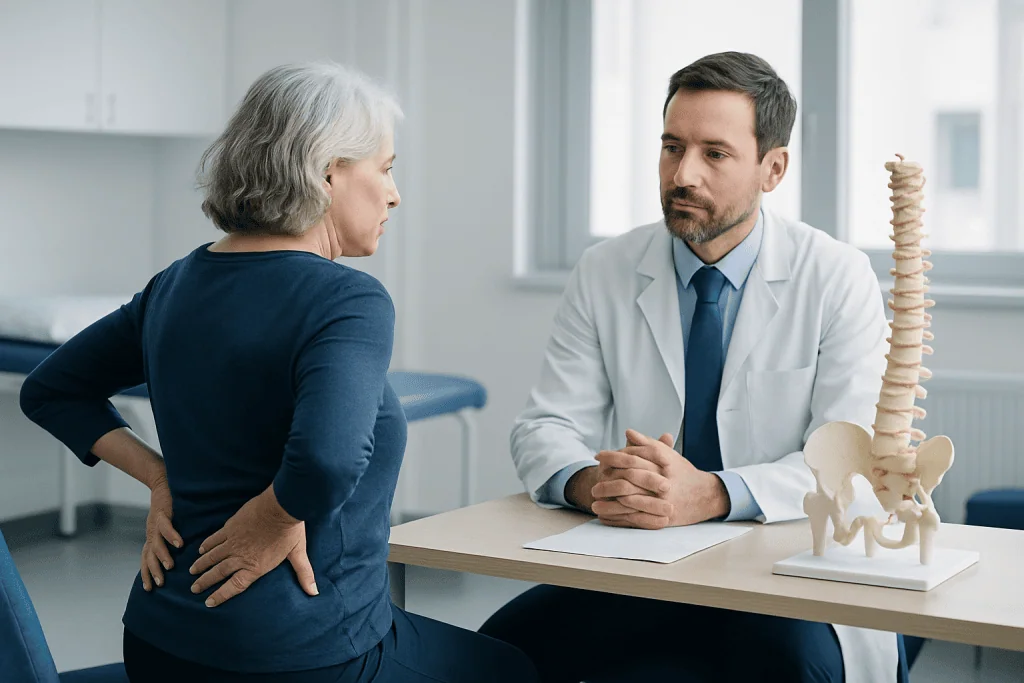
Back pain is the most common reason adults with scoliosis seek medical care. Pain may be felt in the lower back, mid-back, hips, or around the ribs. It can be dull and aching after activity, or sharper with certain positions. Some people feel more comfortable leaning forward, sitting, or using support when standing.
Postural changes may also become noticeable. These can include uneven shoulders, one hip appearing higher, a rib prominence, a tilted waistline, or the feeling that the body leans to one side. In more advanced cases, the head and trunk may no longer be well centered over the pelvis, making walking and balance more tiring.
Adult scoliosis can also contribute to nerve-related symptoms if the curved and degenerative spine narrows spaces around nerves. This may cause pain traveling into the buttock or leg, numbness, tingling, weakness, or heaviness in the legs during walking. These symptoms often reflect spinal stenosis or nerve compression and should be evaluated by a spine specialist.
Causes and Risk Factors
Adult scoliosis may be linked to adolescent idiopathic scoliosis that was mild or untreated earlier in life. Some curves remain stable for many years, while others progress gradually, especially if the curve is larger or spinal balance changes with aging. A prior history of scoliosis is therefore important information for the doctor.
Degenerative scoliosis develops when spinal discs lose height, joints develop arthritis, ligaments loosen or thicken, and vertebrae shift unevenly. These changes can create an asymmetric collapse of the spine, most often in the lumbar region. Osteoporosis, previous spine surgery, spinal fractures, and leg length differences may also contribute to imbalance or curve development.
Risk factors for symptoms or progression include advancing age, low bone density, smoking, poor muscle conditioning, excess body weight, physically demanding work, and coexisting spinal conditions such as spondylolisthesis or spinal stenosis. Genetics may also play a role, particularly in people whose scoliosis began earlier in life.
Diagnosis and Monitoring Curve Progression
Diagnosis begins with a detailed history and physical examination. The doctor asks about pain location, duration, walking tolerance, leg symptoms, previous scoliosis diagnosis, past treatments, and medical conditions. The examination checks posture, spinal flexibility, shoulder and pelvic balance, nerve function, muscle strength, reflexes, and gait.
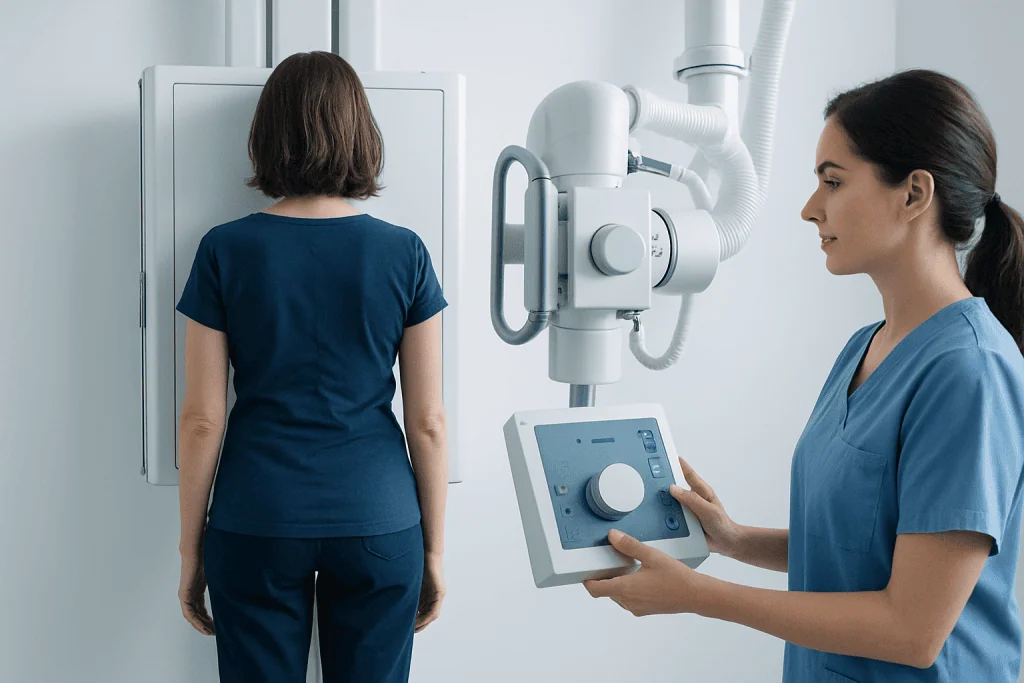
Standing X-rays of the full spine are central to diagnosis. They allow the physician to measure the Cobb angle, assess the curve pattern, and evaluate sagittal and coronal balance, which describe how the head and trunk align over the pelvis. Previous X-rays are useful because comparing images over time is the best way to understand whether a curve is progressing.
Additional imaging may be recommended depending on symptoms. MRI can show discs, nerves, spinal canal narrowing, and soft tissues, especially when there is leg pain, numbness, weakness, or concern for another cause of symptoms. CT scans may help define bone anatomy, particularly in surgical planning or when previous implants are present. Bone density testing may be important because osteoporosis influences both treatment decisions and surgical safety.
Treatment Options
Treatment is individualized. Many adults with scoliosis do not need surgery and can manage symptoms with a structured non-surgical plan. This may include physical therapy focused on core and hip strength, posture training, flexibility, balance, and safe conditioning. Scoliosis-specific exercises may help some patients improve body awareness and function, although they do not usually straighten an established adult curve.
Pain management may include short-term use of doctor-recommended medications, heat or cold therapy, activity modification, and treatment of associated arthritis or nerve irritation. In selected cases, spinal injections may be used to reduce inflammation or help identify the main source of pain. Bracing is sometimes used for comfort and support in adults, but it is not typically expected to permanently correct the curve.
Surgery may be considered when non-surgical care does not provide enough relief, when there is significant nerve compression, progressive deformity, severe imbalance, or worsening function. Surgical options may include decompression of nerves, spinal fusion, correction of the curve, or osteotomy in complex cases. The goals are usually to reduce pain, improve alignment, relieve nerve pressure, and support function, but the risks and recovery process must be carefully discussed.
Planning surgery for adult scoliosis is detailed and highly personal. Doctors consider the curve size and flexibility, spinal balance, bone quality, nerve symptoms, overall health, age, expectations, and previous treatments. A person with mainly leg pain from stenosis may need a different plan from someone with major trunk imbalance and curve progression.
Prevention and Self-Care
Adult scoliosis cannot always be prevented, especially when it is related to earlier spinal development or natural aging. However, many steps can support spinal health and reduce symptom flares. Regular low-impact exercise, such as walking, swimming, cycling, or guided strengthening, helps maintain endurance, muscle support, and balance.
Good self-care also includes maintaining a healthy weight, avoiding smoking, improving sleep posture, and using safe lifting techniques. People with osteoporosis risk should discuss bone health with a doctor, because strong bones are important for preventing fractures and supporting any future treatment. Adequate calcium, vitamin D, weight-bearing activity, and prescribed osteoporosis therapies may be recommended when appropriate.
Helpful daily strategies may include:
- Taking breaks from prolonged sitting or standing.
- Using supportive footwear and avoiding sudden heavy lifting.
- Practicing exercises taught by a qualified physiotherapist.
- Monitoring changes in posture, height, walking distance, and leg symptoms.
- Keeping copies of imaging reports to help compare changes over time.
When to See a Doctor
A medical evaluation is recommended if an adult notices increasing back pain, a visible change in posture, loss of height, leaning to one side, or reduced ability to walk or stand comfortably. Early assessment can help identify whether symptoms are related to scoliosis, disc degeneration, arthritis, nerve compression, or another condition.
Prompt medical attention is especially important for new or worsening leg weakness, numbness spreading down the legs, problems with balance, loss of bladder or bowel control, fever, unexplained weight loss, history of cancer, or severe pain after a fall or injury. These symptoms do not always mean a serious problem is present, but they need timely evaluation.
Adults with known scoliosis should also seek follow-up if symptoms are changing or if previous imaging is several years old. At Acibadem International, multidisciplinary specialists in JCI-accredited hospitals diagnose and treat adult scoliosis for international patients, including non-surgical care, imaging-based monitoring, and surgical planning when needed.
Frequently asked questions
Can scoliosis start for the first time in adulthood?
Yes. Adult-onset scoliosis, often called degenerative scoliosis, can develop because spinal discs and joints wear unevenly with age. This is different from scoliosis that began in adolescence and continued into adulthood.
Does adult scoliosis always get worse?
Not always. Some curves remain stable for many years, while others progress gradually. Progression risk depends on curve size, spinal balance, disc degeneration, bone quality, and overall health, so periodic monitoring may be recommended.
Is back pain always caused by the scoliosis curve?
No. Back pain in adults with scoliosis may come from the curve, but it may also be caused by arthritis, disc degeneration, muscle strain, spinal stenosis, or hip problems. A clinical examination and appropriate imaging help identify the main pain source.
Can exercises correct adult scoliosis?
Exercises usually do not permanently straighten an established adult spinal curve. However, physical therapy can improve strength, flexibility, posture control, balance, and pain management. A tailored program is safer and more effective than unsupervised intense exercise.
When is surgery considered for adult scoliosis?
Surgery may be considered when pain, nerve compression, deformity, or curve progression significantly limits daily life despite appropriate non-surgical care. The decision depends on imaging findings, symptoms, health status, bone density, and personal goals.
Is a brace useful for adults with scoliosis?
A brace may help some adults by providing support and reducing pain during certain activities. In adults, bracing is generally not expected to correct the curve permanently. It is usually considered part of symptom management rather than a cure.
References
- Scoliosis Research Society
- American Academy of Orthopaedic Surgeons
- North American Spine Society
- National Institute of Arthritis and Musculoskeletal and Skin Diseases
- Mayo Clinic
This article is for general information only and is not a substitute for professional medical advice. Please consult a qualified doctor about your individual situation.
Joint and spine care in Turkey — expert assessment & treatment
JCI-accredited · board-certified surgeons · reply within 24h
Add us as a Preferred Source to see more of our trusted health content across Google Search, AI Overviews and Discover.

Orthopedics & Spine
Care for bones, joints and the musculoskeletal system, including joint replacement, sports injuries and trauma.
125 specialists in this unit