Amblyopia: Lazy Eye Diagnosis and Treatment in Children

Amblyopia is a brain-and-eye development problem, not simply an eye that looks different. It may be caused by eye misalignment, unequal focusing power between the eyes, or anything that blocks clear vision early in life.
Key Takeaways
- Amblyopia is a brain-and-eye development problem, not simply an eye that looks different.
- It may be caused by eye misalignment, unequal focusing power between the eyes, or anything that blocks clear vision early in life.
- Children may not complain because the stronger eye can compensate, so routine vision screening is important.
- Treatment may include glasses, patching, atropine eye drops, vision activities, or surgery for specific underlying causes.
- The earlier treatment begins, the better the chance of improving vision, but older children may still benefit from care.
- Parents should seek an eye evaluation if a child squints, tilts the head, closes one eye, has crossed eyes, or fails a vision screening.
Amblyopia, often called lazy eye, is a common childhood vision problem in which one eye does not develop normal sight because the brain relies more on the other eye. Early diagnosis and consistent treatment can help many children improve vision and protect long-term eye development.
Overview
Amblyopia is reduced vision in one or, less commonly, both eyes that develops during childhood because the brain and the eye are not working together normally. It is often called “lazy eye,” but this term can be misleading. The eye is not lazy, and the child is not doing anything wrong. Instead, the developing brain receives a clearer image from one eye and gradually favors that eye, while the other eye does not build normal visual pathways.
Vision develops rapidly in the first years of life and continues to mature throughout childhood. If one eye sends a blurry, misaligned, or blocked image during this important period, the brain may suppress that image to avoid confusion or double vision. Over time, the weaker eye may lose the opportunity to develop sharp vision unless the problem is identified and treated.
Amblyopia is one of the most important reasons for early childhood eye examinations. Many children with amblyopia appear to see well because they use the stronger eye for daily activities. With timely diagnosis and consistent treatment, many children achieve meaningful improvement in vision and better use of both eyes together.
Symptoms and Signs Parents May Notice
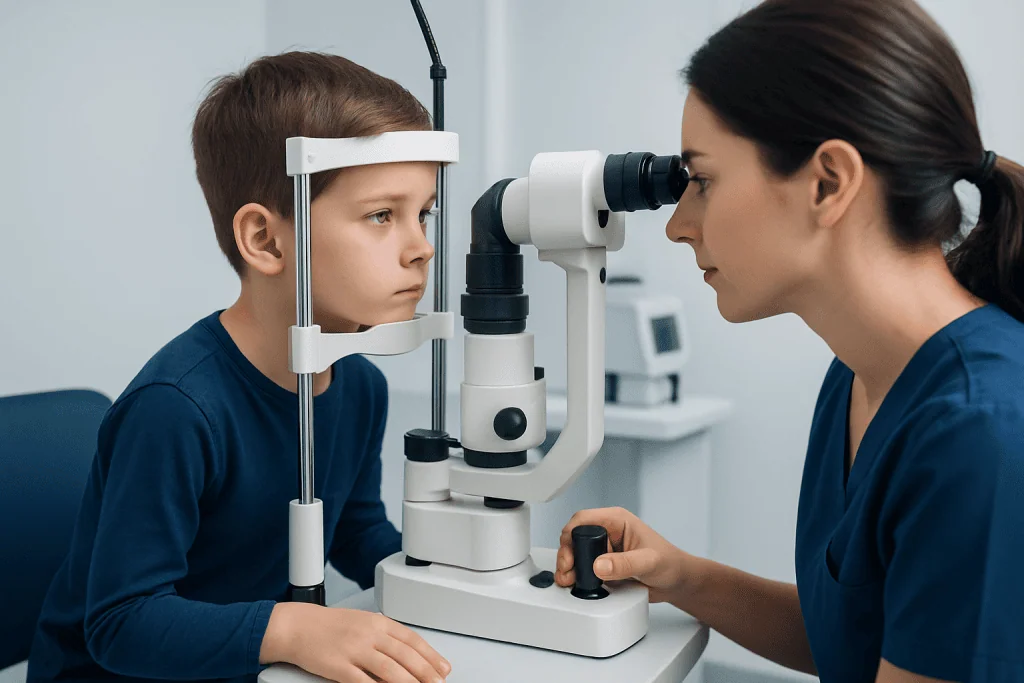
Amblyopia can be difficult for families to detect because young children may not know what normal vision should feel like. A child may read, play, and move around normally using the stronger eye. For this reason, amblyopia is often discovered during a routine vision screening at preschool, school, or a pediatric visit.
When signs are present, they may be subtle. A child may squint, close one eye, tilt the head, sit very close to screens or books, bump into objects on one side, or have trouble judging distance. Some children become frustrated with activities that require fine visual focus, such as puzzles, drawing, catching a ball, or early reading tasks.
Possible signs of amblyopia or an underlying eye problem include:
- One eye that turns inward, outward, upward, or downward
- Frequent squinting or closing one eye
- Head tilting or face turning to use one eye more than the other
- Poor depth perception or clumsiness during play
- Unequal reflection in the pupils in photographs
- Complaints of blurred vision, eye strain, or headaches in older children
Any visible eye misalignment, white pupil reflection, drooping eyelid that covers the pupil, or sudden change in vision should be evaluated promptly by a qualified eye specialist. These findings may have causes other than amblyopia and deserve careful assessment.
Causes and Risk Factors
Amblyopia develops when the brain receives an image from one eye that is less useful than the image from the other eye. The brain may then suppress the weaker image. The main causes are strabismus, refractive differences between the eyes, and deprivation of vision. Sometimes more than one factor is present.
Strabismic amblyopia occurs when the eyes are not aligned. One eye may turn inward or outward, and the brain may ignore that eye to avoid double vision. Refractive amblyopia occurs when one eye has a stronger need for glasses than the other, such as more nearsightedness, farsightedness, or astigmatism. Because the eye can look normal from the outside, this type may be missed without a vision test.
Deprivation amblyopia is less common but can be more urgent. It happens when something blocks light from entering the eye clearly during early development. Causes may include a congenital cataract, significant drooping of the eyelid, corneal clouding, or other structural problems. Treatment focuses first on removing or managing the blockage when possible, then encouraging the weaker eye to develop vision.
Risk factors include a family history of amblyopia or strabismus, premature birth, low birth weight, developmental delays, and certain medical or neurological conditions. However, amblyopia can also occur in otherwise healthy children with no obvious risk factors, which is why routine screening remains important.
Diagnosis and Eye Examination
Diagnosis begins with a child-friendly eye examination. The doctor evaluates visual acuity, eye alignment, how the eyes move, and how each eye focuses. For babies and very young children who cannot read letters, special methods such as pictures, matching symbols, light reflex testing, fixation behavior, and age-appropriate visual assessment can be used.
A complete pediatric eye exam often includes checking the need for glasses with cycloplegic eye drops. These drops temporarily relax the focusing muscles so the doctor can measure the child’s true refractive error. The examination may also include a dilated look inside the eyes to check the retina, optic nerve, lens, and other structures.
Screening recommendations vary by country and health system, but vision checks are generally encouraged during early childhood and before school entry. Children with a family history of childhood eye disease, visible eye turning, premature birth, or developmental concerns may need earlier or more frequent examinations. A failed vision screening does not always mean a child has amblyopia, but it should be followed by a comprehensive eye evaluation.
Diagnosis also involves identifying the cause. This matters because treatment is most effective when the underlying reason is addressed. For example, a child with unequal focusing power may need glasses, while a child with a cataract or significant eyelid droop may need additional specialist treatment.
Treatment Options
Amblyopia treatment aims to give the weaker eye a clear image and encourage the brain to use it. The plan depends on the child’s age, the severity of vision loss, the cause, and how well the child tolerates treatment. Parents should expect follow-up visits because treatment often needs adjustment over time.
Glasses are often the first step when amblyopia is related to refractive error. In some children, wearing the correct glasses consistently can significantly improve vision by itself. Glasses also help both eyes receive clearer images, which supports further therapy if needed. Families should be reassured that children usually adapt well when glasses are fitted properly and introduced positively.
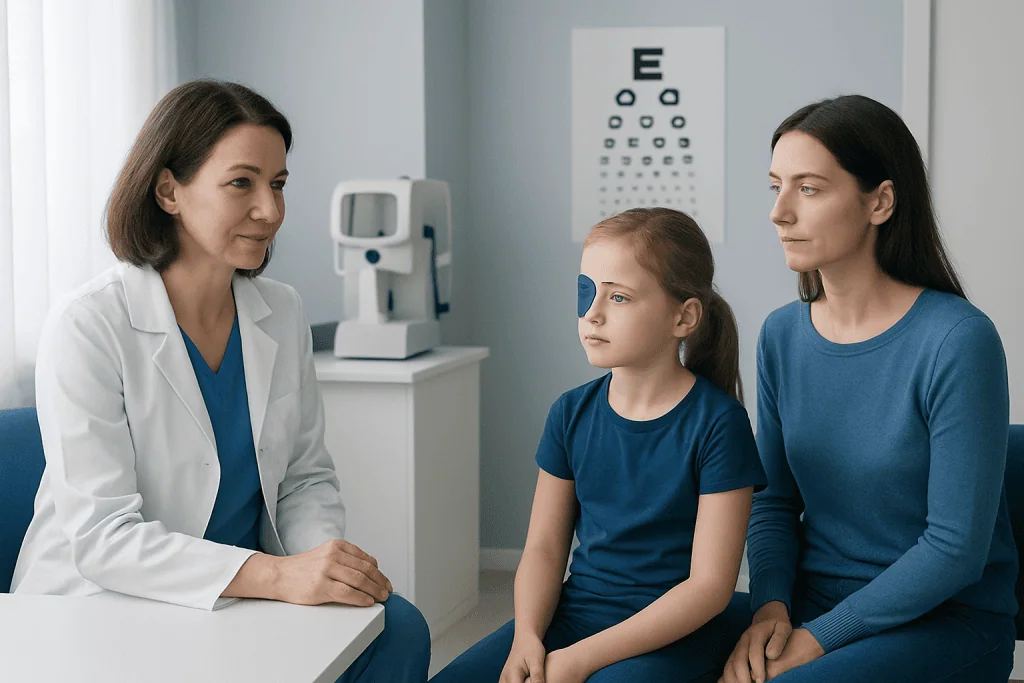
If glasses alone are not enough, the doctor may recommend patching the stronger eye for a set amount of time each day. This encourages the brain to pay attention to the weaker eye. Another option for some children is atropine eye drops in the stronger eye, which temporarily blurs near vision and encourages use of the amblyopic eye. The choice between patching and drops depends on the child’s vision, age, lifestyle, and medical suitability.
Some children need treatment for the underlying condition as well. Strabismus surgery may help align the eyes, although amblyopia therapy is still often needed because surgery does not automatically restore vision. Cataract surgery, eyelid surgery, or other procedures may be required in deprivation amblyopia. Vision exercises or binocular vision activities may be used in selected cases as part of a supervised plan, but they should not replace proven treatments unless advised by an eye specialist.
Helping a Child Succeed With Treatment
Consistency is one of the most important parts of amblyopia care. Patching or using eye drops can be challenging because the child is asked to rely on the weaker eye, which may feel frustrating at first. Parents can help by keeping the routine calm, predictable, and age-appropriate.
It may help to pair patching time with enjoyable close-up activities such as coloring, building blocks, age-appropriate reading, puzzles, or supervised tablet games recommended by the doctor. These activities stimulate the weaker eye while the stronger eye is patched. Praise, reward charts, and allowing the child to decorate patches can make treatment feel less like a punishment and more like a normal part of the day.
Parents should follow the prescribed schedule rather than increasing patching time without medical advice. Too much patching can rarely reduce vision in the stronger eye, especially in younger children, so regular follow-up is important. If skin irritation, strong resistance, headaches, or concerns about school performance occur, families should contact the eye care team for practical adjustments.
Treatment progress may be gradual. Some children improve quickly, while others need months or longer. Even after improvement, the doctor may recommend a maintenance plan and continued monitoring because amblyopia can return if treatment stops too early.
Prevention, Follow-up, and When to See a Doctor
Not all cases of amblyopia can be prevented, but long-term vision loss can often be reduced by early detection and timely care. Parents should attend recommended child health visits, follow school screening advice, and seek an eye examination if there are concerns about vision or eye alignment. Children who need glasses should wear them as prescribed and return for follow-up visits even if they seem to see well.
A child should be evaluated by an ophthalmologist or qualified eye care professional if one eye turns, if the child fails a vision screening, if there is a family history of amblyopia or childhood strabismus, or if parents notice squinting, head tilting, or closing one eye. Urgent assessment is recommended for a white pupil reflection, a cloudy cornea, a drooping eyelid covering the pupil, eye injury, or sudden vision changes.
Although treatment is generally most effective when started early, families should not assume it is too late for an older child. Many children beyond preschool age can still benefit from treatment, especially when it is carefully supervised. The best approach is to have a complete examination and discuss realistic goals with the specialist.
For international families seeking coordinated care, Acibadem International’s multidisciplinary specialists and JCI-accredited hospitals diagnose and treat pediatric eye conditions, including amblyopia, with individualized plans for children and families. Regardless of where care is received, parents should work with a qualified doctor who can monitor vision safely over time.
Frequently asked questions
Is amblyopia the same as strabismus?
No. Strabismus means the eyes are not aligned, while amblyopia means reduced vision because the brain has not developed normal use of one eye. Strabismus can cause amblyopia, but some children with amblyopia have eyes that look straight.
Can amblyopia be corrected with glasses alone?
Sometimes, especially when the cause is unequal focusing power between the eyes. Glasses give the weaker eye a clearer image and may improve vision over weeks or months. If improvement is not enough, patching, atropine drops, or other treatments may be added.
At what age should treatment begin?
Treatment should begin as soon as amblyopia is diagnosed. The strongest response is usually seen in younger children because the visual system is still developing. However, older children may still improve, so evaluation is worthwhile even after early childhood.
Does patching hurt or damage the good eye?
Patching does not hurt, but it can feel frustrating because the child must use the weaker eye. When used exactly as prescribed and monitored with follow-up visits, patching is considered a safe and common treatment. Parents should not change the schedule without medical advice.
Will surgery fix a lazy eye?
Surgery may be needed to treat certain causes, such as cataract, significant eyelid droop, or eye misalignment. However, surgery alone usually does not correct amblyopia because the brain still needs to learn to use the weaker eye. Glasses, patching, drops, or other therapies may still be required.
Can amblyopia come back after treatment?
Yes, amblyopia can return in some children, especially if treatment stops suddenly or if glasses are not worn as prescribed. Follow-up appointments help the doctor check stability and decide whether maintenance treatment is needed. Parents should continue monitoring vision and eye alignment as the child grows.
References
- American Academy of Ophthalmology
- American Association for Pediatric Ophthalmology and Strabismus
- National Eye Institute
- Royal College of Ophthalmologists
- World Health Organization
This article is for general information only and is not a substitute for professional medical advice. Please consult a qualified doctor about your individual situation.
Explore treatments in Turkey — costs, top hospitals & a free quote
JCI-accredited · board-certified surgeons · reply within 24h
Add us as a Preferred Source to see more of our trusted health content across Google Search, AI Overviews and Discover.

Ophthalmology
Comprehensive eye care from laser vision correction to retina, cornea and cataract surgery.
75 specialists in this unit