Thin Endometrium in IVF

The endometrium is the inner lining of the uterus and must be receptive for embryo implantation. Many fertility teams consider an endometrial thickness of about 7 mm or more reassuring, but thickness is only one part of implantation readiness.
Key Takeaways
- The endometrium is the inner lining of the uterus and must be receptive for embryo implantation.
- Many fertility teams consider an endometrial thickness of about 7 mm or more reassuring, but thickness is only one part of implantation readiness.
- Possible causes include low estrogen response, uterine adhesions, chronic inflammation, previous uterine procedures, and reduced blood flow.
- Diagnosis usually involves ultrasound monitoring and, when needed, hormone tests, hysteroscopy, or evaluation for infection or uterine cavity problems.
- Treatment is personalized and may include adjusting estrogen support, changing cycle protocols, treating adhesions or inflammation, and postponing embryo transfer when appropriate.
A thin endometrium in IVF means the uterine lining has not developed as expected before embryo transfer. Many causes can be assessed and managed with careful monitoring, individualized medication plans, and treatment of underlying uterine or hormonal factors.
Overview
The endometrium is the soft, hormone-responsive lining inside the uterus. During a menstrual cycle, estrogen helps it grow and progesterone helps it mature so that an embryo can implant. In IVF treatment, the lining is monitored closely because implantation depends on both embryo quality and a receptive uterine environment.
A thin endometrium in IVF generally refers to a uterine lining that remains below the expected thickness near the time of embryo transfer. Many clinics use about 7 mm as a practical reference point, although successful pregnancies can sometimes occur with thinner linings and not all thicker linings are necessarily receptive. The pattern of the lining, hormone levels, medical history, and the timing of progesterone exposure all matter.
For patients, hearing that the lining is thin can feel disappointing, especially after injections, scans, and waiting. However, it is not a final diagnosis or a single fixed problem. It is a finding that prompts the fertility team to look for correctable causes, adjust the plan, and decide whether it is safer to proceed, modify the protocol, or freeze embryos for transfer in a later cycle.
Symptoms and How It Is Detected
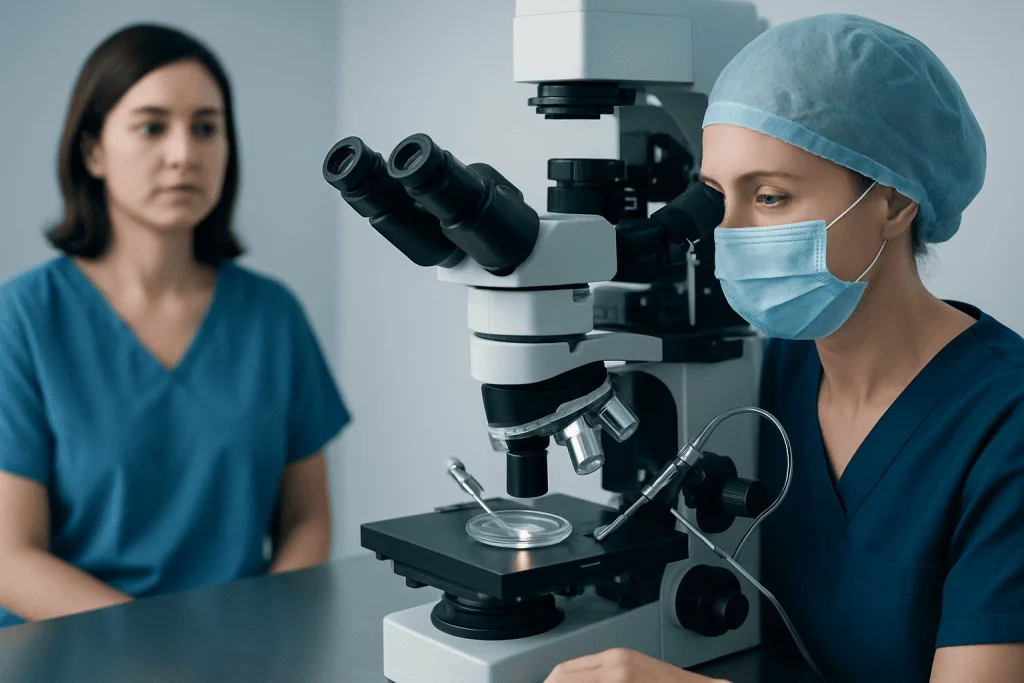
A thin endometrium often causes no symptoms. Most patients learn about it during transvaginal ultrasound monitoring before ovulation, egg retrieval, or frozen embryo transfer. The ultrasound measures the endometrial thickness and may also describe its appearance, such as a trilaminar or three-line pattern during the estrogen phase.
Some people may have clues in their menstrual history. Very light periods, absent periods, or bleeding that changed after a uterine procedure can suggest that the lining is not building well. Others may have normal periods but still show a thin lining during a monitored fertility cycle.
It is important to understand that the ultrasound measurement is a helpful marker, not a complete test of endometrial receptivity. Measurement can vary slightly depending on timing, the ultrasound angle, and the person performing the scan. Fertility specialists interpret the result together with cycle day, medications, estrogen level, ovulation status, and previous treatment outcomes.
Causes and Risk Factors
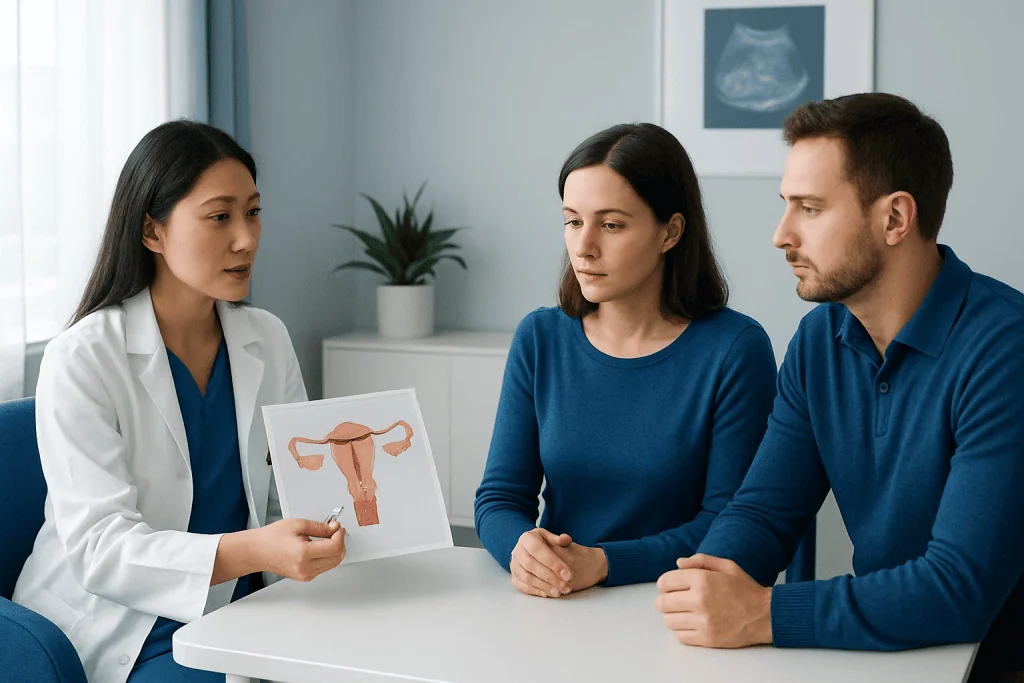
The endometrium grows mainly in response to estrogen. If estrogen levels are low, if the lining does not respond well to estrogen, or if medication timing is not ideal, the lining may remain thin. In some patients, ovulation induction medicines or specific stimulation protocols can affect the endometrial environment, which is why the approach may be adjusted from one cycle to another.
Structural or inflammatory uterine factors can also contribute. Scar tissue inside the uterus, sometimes called intrauterine adhesions or Asherman syndrome, may develop after dilation and curettage, uterine surgery, infection, or complicated pregnancy-related procedures. Chronic endometritis, a low-grade inflammation of the uterine lining, may also affect receptivity and is sometimes investigated in patients with repeated implantation failure or persistent thin lining.
Other associated factors include previous pelvic infection, fibroids that distort the uterine cavity, congenital uterine differences, reduced uterine blood flow, smoking, and medical conditions that affect hormones or circulation. Conditions linked with ovulation problems, such as polycystic ovary syndrome, may require a tailored plan because the ovaries, hormones, and endometrium need to be synchronized.
Sometimes no single cause is found. In these cases, doctors may describe the problem as refractory or resistant thin endometrium. Even then, careful review of the medication plan, previous scans, uterine cavity findings, and embryo transfer timing can often identify practical next steps.
Diagnosis and Fertility Assessment
Diagnosis begins with a detailed fertility history. The doctor asks about menstrual patterns, previous pregnancies, miscarriages, uterine procedures, pelvic infections, fertility treatments, medications, and lifestyle factors such as smoking. The aim is to determine whether the lining is thin because of a hormone issue, a uterine cavity issue, or a response pattern seen during assisted reproduction.
Transvaginal ultrasound is the main tool for monitoring endometrial thickness. It may be repeated over several days to see whether the lining is still growing or has plateaued. Blood tests may be used to check estradiol, progesterone, thyroid function, prolactin, or other hormones depending on the clinical situation.
If a cavity problem is suspected, the fertility specialist may recommend saline infusion sonography, hysterosalpingography, or hysteroscopy. Hysteroscopy allows direct viewing of the uterine cavity and, in some cases, treatment of adhesions or small lesions at the same time. If chronic endometritis is considered, an endometrial biopsy may be discussed.
A broader female infertility evaluation may also include ovarian reserve testing, tubal assessment, semen analysis for the partner when relevant, and review of embryo development. This wider view matters because implantation depends on the interaction between the embryo and the endometrium, not on lining thickness alone.
Treatment Options in IVF
Treatment depends on the suspected cause and the type of IVF cycle. If estrogen exposure appears inadequate, the fertility team may adjust the estrogen dose, route, or duration. Estrogen can be given in different forms, and some patients respond better to one approach than another. Medication changes should always be supervised because the goal is not simply to increase thickness, but to create the right timing between the lining and the embryo.
In frozen embryo transfer cycles, doctors may consider a natural cycle, modified natural cycle, or hormone-prepared cycle depending on ovulation patterns and previous response. Some patients with good natural ovulation develop a better lining when their own hormones lead the cycle. Others benefit from a programmed approach that allows closer control of estrogen and progesterone timing.
If adhesions, polyps, fibroids affecting the cavity, or retained tissue are found, hysteroscopic treatment may be recommended before another transfer. When chronic endometritis is confirmed, appropriate treatment may improve the uterine environment. If a medication is suspected of impairing lining development, the doctor may revise the stimulation or transfer plan.
Several add-on treatments, such as low-dose aspirin, vaginal sildenafil, platelet-rich plasma, granulocyte colony-stimulating factor, acupuncture, or vitamin supplementation, are sometimes discussed for thin endometrium. Evidence for these approaches is mixed, and they are not suitable for everyone. Patients should ask their fertility specialist which options are supported in their situation and which remain experimental.
Deciding Whether to Proceed With Embryo Transfer
One of the most common questions is whether an embryo transfer should go ahead when the lining is thin. There is no universal answer. The decision depends on endometrial thickness, lining pattern, embryo quality, patient age, number of embryos available, previous IVF outcomes, and whether the lining is still improving.
In some cases, proceeding may be reasonable, particularly if the lining is close to the clinic’s threshold and there are other reassuring findings. In other cases, the team may recommend cancelling or postponing transfer, freezing embryos if needed, and trying a different preparation plan in a later cycle. This can be emotionally difficult, but it may protect valuable embryos from being transferred in a less favorable window.
Patients should feel comfortable asking their care team to explain the reasoning in clear terms. Helpful questions include: What was the exact thickness and pattern? Is the lining still growing? Are hormone levels appropriate? Could a uterine cavity problem be present? What would change in the next cycle if transfer is postponed?
Prevention and Self-Care
Not all causes of thin endometrium can be prevented, but general reproductive health can support fertility treatment. Avoiding smoking, limiting alcohol, maintaining a balanced diet, staying physically active in a moderate way, and managing chronic conditions can help create a healthier overall environment for conception. Patients should also tell their doctor about all prescription medicines, supplements, and herbal products they use.
Self-care during IVF also includes emotional support. Repeated scans and changing plans can increase stress, even when the medical situation is manageable. Speaking with the fertility team, a counselor, or a support group may help patients cope with uncertainty and make informed decisions without feeling rushed.
Supplements are often marketed for endometrial thickness, but more is not always better. Some products can interact with fertility medications or may not be safe around embryo transfer and pregnancy. Patients should use supplements only after discussing them with a qualified clinician.
At Acibadem International, multidisciplinary fertility specialists in JCI-accredited hospitals evaluate and treat causes of infertility for international patients, including uterine lining concerns during IVF. Care plans are individualized after medical history, imaging, laboratory assessment, and discussion of previous fertility treatment results.
When to See a Doctor
Patients undergoing IVF should speak with their fertility doctor whenever endometrial thickness is repeatedly below the clinic’s expected range or when a cycle is cancelled because the lining does not grow. A review is also appropriate after repeated failed embryo transfers, especially if embryo quality has been good or if no clear explanation has been found.
Medical evaluation is particularly important for people with very light or absent periods, a history of dilation and curettage, uterine surgery, pelvic infection, tuberculosis exposure in regions where it is common, recurrent miscarriage, or suspected uterine adhesions. These factors may point toward conditions that can be diagnosed and sometimes treated before another transfer attempt.
Urgent assessment is not usually needed for thin endometrium alone, but symptoms such as severe pelvic pain, fever, foul-smelling discharge, heavy bleeding, or a positive pregnancy test with pain should be evaluated promptly. A qualified doctor can distinguish routine fertility concerns from problems that require timely care.
Frequently asked questions
What is considered a thin endometrium in IVF?
Many fertility clinics consider an endometrium below about 7 mm near embryo transfer to be thin, but exact thresholds vary. Thickness is only one part of the decision; the lining pattern, hormone levels, embryo quality, and previous results are also important.
Can IVF work with a thin uterine lining?
Pregnancy can sometimes occur with a thinner lining, but implantation rates may be lower when the endometrium is not well developed. The fertility specialist will weigh the individual circumstances before recommending whether to proceed or postpone transfer.
How can doctors improve endometrial thickness before embryo transfer?
Doctors may adjust estrogen dose, route, or duration, change the type of transfer cycle, treat uterine adhesions or inflammation, or revise medications that may affect the lining. The best option depends on the cause and should be personalized rather than chosen from a standard list.
Does a thin endometrium mean the uterus cannot carry a pregnancy?
Not necessarily. A thin lining is a sign that the uterine environment needs careful assessment, but it does not automatically mean pregnancy is impossible. Many causes are treatable or can be managed with a different IVF strategy.
Can lifestyle changes thicken the endometrium?
Healthy habits such as not smoking, eating a balanced diet, and managing chronic illness can support reproductive health, but they may not correct a medical cause of thin lining on their own. Patients should avoid unproven supplements or high doses unless approved by their doctor.
Should embryo transfer be cancelled if the lining is thin?
Sometimes postponing transfer is recommended, especially when the lining is clearly below the clinic’s target or a correctable cause is suspected. In other cases, proceeding may be reasonable. The decision should be made after discussing the expected benefits, uncertainties, and alternatives with the fertility team.
References
- American Society for Reproductive Medicine
- European Society of Human Reproduction and Embryology
- National Institute for Health and Care Excellence
- Royal College of Obstetricians and Gynaecologists
- World Health Organization
This article is for general information only and is not a substitute for professional medical advice. Please consult a qualified doctor about your individual situation.
IVF & fertility treatment in Turkey — success rates and costs
JCI-accredited · board-certified surgeons · reply within 24h
Check your numbers in seconds
BMI, calories, due date, blood pressure and 30+ more clinical calculators — free, instant, doctor-reviewed ranges.

Related Treatments
Related Conditions
More from the Health Library



Related Specialists

Prof. Dr. Bülent Tıraş
Gynecology & Obstetrics
Prof. Dr. Mete Güngör
Gynecology & Obstetrics
Prof. Dr. Faruk Suat Dede
Gynecology & Obstetrics
Prof. Dr. Tansu Küçük
Gynecology & Obstetrics