

Drinking Water and Hydration During Recovery in Turkey

Drinking Water and Hydration During Recovery in Turkey: use bottled or advised water, sip regularly, and follow your care team’s fluid guidance.
Staying well hydrated can make your recovery in Turkey feel more comfortable, but the right amount and type of fluids depend on your treatment and medical instructions. This guide helps you manage drinking water, bottled water, electrolytes, hotel routines, travel days, and when to ask your care team for advice.
At a glance
- Best everyday option: Use sealed bottled water unless your care team or accommodation confirms another safe source.
- Recovery approach: Sip small amounts regularly rather than drinking large volumes at once.
- Ask first if: You have heart, kidney, liver, swelling, or fluid restriction instructions.
- Helpful support: International patient teams can help with interpreter support and practical recovery questions.
- Travel tip: Carry water for transfers, airport waits, and flights, especially after discharge.
Why hydration matters during your recovery stay
During recovery, your body may be adjusting to treatment, medication, travel, sleep changes, and a different climate. Drinking enough fluids can help you feel steadier, support normal digestion, and reduce the discomfort of a dry mouth, headache, or tiredness that can come from not drinking enough. Hydration is not a treatment by itself, but it is one of the simple daily habits that can make your recovery routine feel more manageable.
The safest approach is to follow the advice of your doctor, nurse, or dietitian, especially if your procedure affects your stomach, intestines, kidneys, heart, or fluid balance. Some patients are encouraged to drink regularly, while others may be told to limit fluids for a period of time. If your medical team has given you a specific plan, that plan should come before general travel advice.
At Acibadem International hospitals, your care team can explain your hydration instructions before discharge and, when needed, with interpreter support. If you are unsure whether you should drink more, drink less, avoid certain beverages, or use an oral rehydration solution, ask before making changes. A short question can prevent confusion and help you feel more confident once you return to your hotel.
Drinking water in Turkey: what to choose
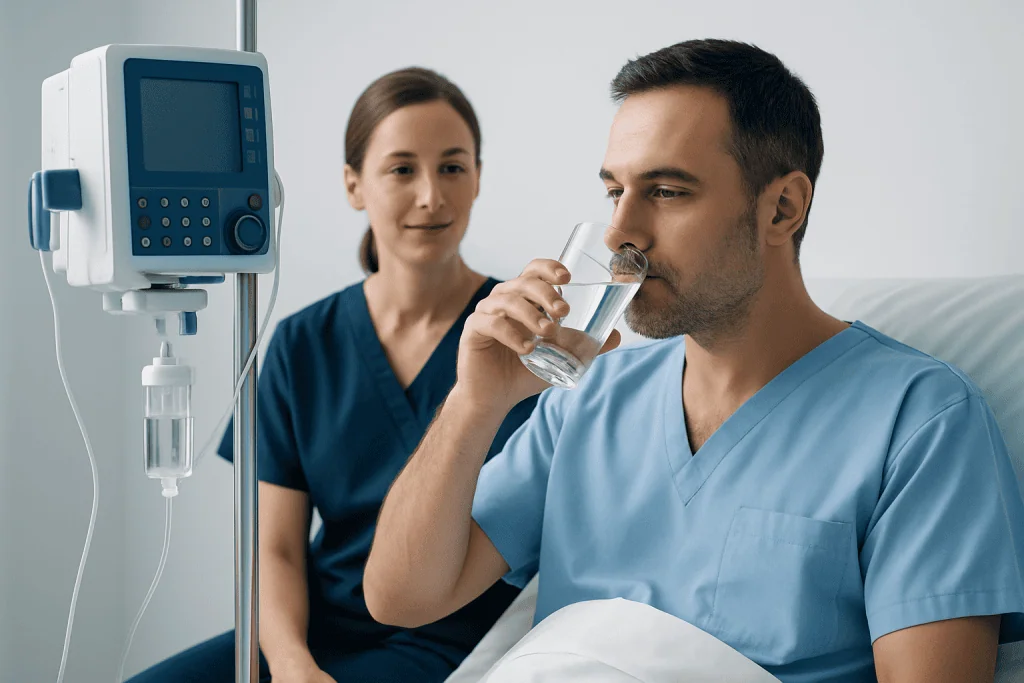
In many parts of Turkey, tap water is used for washing and general household needs, but international patients often prefer sealed bottled water for drinking during recovery. This is practical because it is widely available, easy to carry, and helps you avoid uncertainty while your body is healing. Choose bottles with an intact seal, and keep a few small bottles near your bed so you do not need to get up often.
If you are staying in Istanbul or another large city, bottled still water is easy to find in hospitals, hotels, cafés, pharmacies, and markets. You can also ask your hotel reception, companion, or patient coordinator to arrange extra bottles for your room. If you have difficulty lifting heavy packs after your treatment, request smaller bottles or delivery assistance rather than carrying them yourself.
Be careful with ice, open pitchers, and drinks prepared from unknown water sources, especially in the first days after a procedure or if your digestion is sensitive. In reputable hospitals and hotels, water safety is managed carefully, but if you are unsure, it is reasonable to ask. A simple question such as whether the water is bottled or filtered can help you make a comfortable choice.
How much should you drink after treatment?

There is no single amount that is right for every recovering patient. Your needs may depend on your body size, medications, temperature, activity level, diet, and type of treatment. A practical starting point for many people is to sip water regularly through the day and check whether your urine is very dark, whether your mouth feels dry, or whether you feel lightheaded when standing.
Some procedures require a gradual return to drinking, beginning with small sips or clear fluids before moving on to larger amounts or a normal diet. Other patients may be asked to avoid drinking too much at once because it can worsen nausea or discomfort. If you have had anesthesia, digestive treatment, bariatric surgery, or any procedure with specific dietary stages, follow the schedule given by your care team.
You should also ask for individual guidance if you have heart failure, kidney disease, liver disease, significant swelling, low sodium, blood pressure concerns, or instructions to measure fluid intake. In these situations, drinking more is not always better. Your Acibadem care team can help clarify whether you should aim for a general hydration routine or a measured fluid plan.
Making hydration easy in your hospital room and hotel
Recovery days can feel busy, especially when you are moving between checkups, medication times, meals, and rest. The easiest hydration routine is visible and simple: keep water within reach, use a bottle size you can lift comfortably, and take small sips whenever you wake up, take approved medication, or finish a short walk. If bending or reaching is uncomfortable, ask your companion or nurse to place water on the side that is easiest for you.
At your hotel, create a small recovery station with water, approved snacks, medication instructions, tissues, a thermometer if recommended, and your hospital contact information. This avoids unnecessary movement and helps you notice how much you are drinking. If you are using several small bottles, you can track intake by counting empty bottles, unless your medical team has asked you to record exact amounts.
Helpful hotel and room habits include:
- Keep sealed bottled water by the bed and in the bathroom for tooth brushing if you prefer.
- Ask housekeeping or reception for extra bottles before evening, so you are not searching at night.
- Use a straw only if it is allowed for your procedure, as some treatments may restrict it.
- Avoid placing bottles in direct sun or near heat.
- Take water with you to follow-up appointments and transfers.
Electrolytes, soups, tea, and what to avoid
Water is usually the simplest choice, but fluids also come from soups, diluted juices, herbal teas, milk drinks, and some foods. If your appetite is reduced, warm soup or broth may feel easier than plain water, but check your dietary instructions if you have salt limits, swallowing precautions, stomach sensitivity, or a staged diet. Fresh fruit and watery foods can also help, provided they are allowed and prepared safely.
Electrolyte drinks or oral rehydration solutions may be useful after vomiting, diarrhea, heavy sweating, or long travel, but they are not necessary for everyone. Some contain sugar, salt, caffeine, or ingredients that may not suit your condition. If you are diabetic, on a low-salt plan, or managing kidney or heart problems, ask your medical team before using electrolyte products.
Limit alcohol during recovery unless your doctor specifically says it is safe, because it can interact with medications, affect sleep, and increase dehydration risk. Caffeinated drinks such as coffee and strong tea may be acceptable for some patients, but they should not replace water, and they may worsen palpitations, reflux, or sleep disruption in sensitive people. When in doubt, choose plain bottled water and ask your care team what else is suitable for you.
Signs you may need more help
Mild thirst after travel or a long hospital day is common, but some symptoms should be taken seriously. Contact your care team if you cannot keep fluids down, have repeated vomiting or diarrhea, feel faint, become confused, pass very little urine, or notice a racing heartbeat that does not settle. You should also seek advice if you have fever, worsening pain, new swelling, shortness of breath, or sudden weight gain, as these may need medical assessment rather than simple hydration changes.
Dehydration and overhydration can both be concerns in certain patients. Drinking large amounts very quickly can cause nausea and may be unsafe for people with fluid restrictions. On the other hand, drinking too little because you are resting, sleeping, or worried about using the bathroom can make you feel weaker and may slow your return to normal routines.
If you are recovering with Acibadem International, keep your discharge papers and contact details accessible in your phone and in printed form. International patient services can help you communicate concerns, arrange interpreter assistance, and guide you to the appropriate department if a question cannot wait until your next appointment.
Hydration on transfer days and the flight home
Travel days often create accidental dehydration because you may skip fluids to avoid bathroom stops, security lines, or discomfort during transfers. Plan ahead by drinking steadily in the hours before travel and carrying sealed bottled water whenever permitted. For airport security, you may need to buy water after screening, so allow time before boarding.
If you have been advised to walk during travel, take small sips after each short walk or movement break. If you are wearing compression stockings, taking medication on a schedule, or managing nausea, keep water and approved light snacks in your hand luggage. Do not pack all fluids or medication in checked baggage.
Before you leave Turkey, ask your care team what to do if you become nauseated, develop diarrhea, or cannot drink normally during the journey. Also confirm whether there are any restrictions on carbonated drinks, straws, caffeine, alcohol, or fluid volume for your specific recovery. Clear travel instructions are especially helpful if your flight is long or includes a connection.
Step by step
- Confirm your personal fluid instructions. Before discharge, ask your doctor or nurse whether you should drink freely, sip gradually, or follow a measured fluid plan. This is especially important if your procedure involved the digestive system, anesthesia, kidneys, heart, or a special diet.
- Choose sealed bottled water for simplicity. Use sealed bottled water unless your care team or accommodation confirms another suitable source. Check that the seal is intact, and choose bottle sizes that are easy to open and lift.
- Set up water within easy reach. Place water by your bed, chair, and medication area so you do not need to stretch or walk unnecessarily. If you are alone in your hotel room, ask reception or your coordinator to help arrange extra bottles before night.
- Sip regularly instead of drinking quickly. Small, frequent sips are often more comfortable than large amounts at once, particularly if you feel nauseated or tired. If your care team has given a staged drinking plan, follow that timing carefully.
- Match fluids with your medication schedule. Use water when taking medications unless you were told otherwise. Avoid alcohol and ask before using grapefruit juice, herbal products, or supplements, as some can interact with medicines.
- Watch for warning signs. Call your care team if you cannot keep fluids down, pass very little urine, feel faint, or have repeated vomiting or diarrhea. Do not try to solve severe symptoms by drinking large amounts without medical advice.
- Prepare for appointments and travel. Carry water to follow-up visits, hotel transfers, and the airport. For flights, buy water after security and keep it in your hand luggage with medications and discharge instructions.
Your checklist
- Sealed bottled water for your room, transfer car, and appointments
- Clear written hydration or diet instructions from your care team
- Hospital contact number saved in your phone and kept on paper
- Interpreter or patient coordinator contact details if you need language support
- Small bottles or a lightweight refill routine approved by your accommodation
- Approved snacks, soups, or oral rehydration products if recommended
- Medication list with instructions on what to take with water
- Plan for airport security, including buying water after screening
- Companion or hotel support if you should not carry heavy water packs
Key takeaways
- Sealed bottled water is the simplest choice for many international patients recovering in Turkey.
- Sip regularly and keep water within reach, but follow any procedure-specific fluid limits or diet stages.
- Electrolyte drinks can help in some situations, but they are not suitable for everyone and should be checked if you have medical conditions.
- Avoid alcohol during recovery unless your doctor says it is safe, and do not let coffee or tea replace water.
- Plan hydration for transfers and flights, as travel days often lead to skipped fluids.
- Acibadem International patient services can help with practical questions, interpreter support, and follow-up communication.
Frequently asked questions
Is tap water safe to drink during recovery in Turkey?
Many residents use tap water for daily needs, but international patients often choose sealed bottled water for drinking during recovery because it is simple and consistent. If your hospital, hotel, or care team confirms that another source is suitable, follow their guidance. When you are unsure, bottled water is the practical choice.
Can I brush my teeth with tap water in Istanbul?
Many people do, but if you are cautious or your immune system or digestion is sensitive, you can use bottled water for brushing your teeth. This is an easy way to reduce worry during the first recovery days. Ask your care team if you have specific infection-risk instructions.
How do I know if I am dehydrated after treatment?
Possible signs include strong thirst, dry mouth, dark urine, passing urine less often, dizziness when standing, headache, or unusual tiredness. These signs can also overlap with medication effects or normal post-treatment fatigue. Contact your care team if symptoms are significant, persistent, or linked with vomiting, diarrhea, fever, faintness, or confusion.
Should I drink electrolyte drinks after surgery or treatment?
Electrolyte drinks may be helpful if you have lost fluids through vomiting, diarrhea, or heavy sweating, but they are not automatically needed. Some contain sugar or salt and may not be appropriate for people with diabetes, kidney disease, heart conditions, or fluid restrictions. Ask your doctor, nurse, or dietitian before using them regularly.
What if drinking water makes me feel nauseated?
Try very small sips, sit upright, and avoid drinking large amounts quickly. If nausea continues, if you vomit repeatedly, or if you cannot keep fluids down, contact your care team rather than forcing fluids. Your team may need to review your medications, diet stage, or symptoms.
Can I drink tea, coffee, or Turkish tea during recovery?
Some patients can enjoy tea or coffee in moderation, but it depends on your procedure, medications, sleep, reflux, blood pressure, and stomach comfort. These drinks should not replace plain water, especially on travel days. If you were given dietary restrictions, follow those first.
Do I need to track exactly how much water I drink?
Most patients only need a simple routine, such as keeping water nearby and sipping through the day. However, if your doctor asks you to measure fluid intake, urine output, or weight, follow those instructions carefully. Counting bottles can help, but measured records may be needed for some conditions.
Who can help if I am unsure about hydration after leaving the hospital?
Use the contact details on your discharge documents and reach out to your care team or international patient coordinator. Acibadem International can support communication with the relevant department and help arrange interpreter assistance when needed. Do not wait until your next appointment if you have warning symptoms or cannot drink normally.
Add us as a Preferred Source to see more of our trusted health content across Google Search, AI Overviews and Discover.
More Patient Guides

How to Sleep Better in Turkey Before and After Treatment
Sleep better in Turkey before and after treatment with simple tips on timing, room comfort, routines and recovery planning in Istanbul.
9 min read
How to Plan Meals Around Surgery and Recovery in Turkey
Plan meals around surgery and recovery in Turkey with simple timing, hydration, shopping, and hotel tips for a smoother treatment trip.
9 min read
Medical Power Adapters and Device Charging in Turkey: Patient Guide
Medical power adapters and device charging in Turkey usually require Type C or F plugs and 220–240V power. Bring the right adapter…
8 min read