Essential Tremor vs Parkinsonian Tremor: Key Differences in Diagnosis

Essential tremor is usually an action tremor, meaning it is most noticeable when a person uses the hands or holds a posture. Parkinsonian tremor often begins at rest, commonly on one side, and is usually accompanied by slowness, stiffness, or changes in walking.
Key Takeaways
- Essential tremor is usually an action tremor, meaning it is most noticeable when a person uses the hands or holds a posture.
- Parkinsonian tremor often begins at rest, commonly on one side, and is usually accompanied by slowness, stiffness, or changes in walking.
- Diagnosis is mainly clinical and depends on a detailed history and neurological examination by a qualified doctor.
- Blood tests, brain imaging, or dopamine transporter imaging may be used when the diagnosis is unclear or another cause must be excluded.
- Treatment is different for each condition, so an accurate diagnosis is important for symptom control and long-term planning.
Essential tremor and Parkinsonian tremor can look similar at first, but they often differ in when the shaking appears, which body parts are affected, and what other neurological signs are present. A careful neurological examination, supported by selected tests when needed, helps doctors distinguish between them and choose appropriate care.
Overview
Tremor is an involuntary, rhythmic shaking movement that can affect the hands, arms, head, voice, legs, or other parts of the body. Two common causes are essential tremor and Parkinsonian tremor. Although both may involve hand shaking, they are different conditions with different patterns, associated symptoms, and treatment approaches.
Essential tremor is one of the most common movement disorders. It is often most visible during action, such as writing, drinking from a cup, eating with utensils, or holding the arms outstretched. It may run in families and can affect people at many ages, although it often becomes more noticeable with age.
Parkinsonian tremor is most often linked to Parkinson disease, a neurodegenerative disorder that affects movement control. It commonly appears when the hand or arm is relaxed at rest and may lessen when the person starts to move. Importantly, Parkinsonian tremor is usually considered alongside other signs, especially slowness of movement, muscle stiffness, and changes in posture or walking.
Key Differences in Tremor Pattern
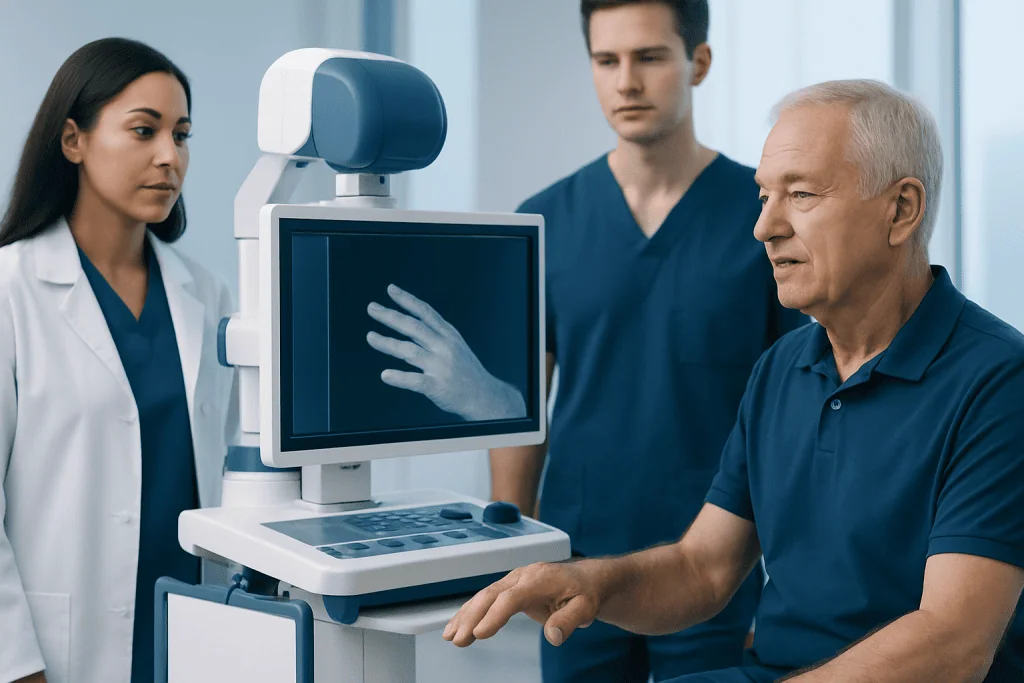
The most helpful first distinction is when the tremor occurs. Essential tremor is typically an action tremor. It may appear during voluntary movement, such as reaching for an object, or while maintaining a posture, such as holding a phone or a piece of paper. Parkinsonian tremor is classically a resting tremor, meaning it is more obvious when the limb is supported and not actively being used.
The distribution of tremor also provides clues. Essential tremor often affects both hands, although one side can be worse. It may also involve the head with a yes-yes or no-no movement, and it can affect the voice, causing a shaky or quavering quality. Parkinsonian tremor often starts on one side of the body, commonly in one hand, and may later involve the other side as the condition progresses.
The appearance of the tremor can differ as well. Parkinsonian tremor may have a pill-rolling quality, where the thumb and fingers appear to rub together. Essential tremor more often causes a shaking that interferes with precision tasks, such as handwriting, buttoning clothes, or using a spoon. These descriptions are helpful, but they are not enough on their own; an examination is needed because tremor patterns can overlap.
Symptoms Beyond the Tremor

Essential tremor is usually considered an isolated tremor syndrome, especially in its early or typical form. Many people are otherwise neurologically well. The main concern may be embarrassment, difficulty with fine motor tasks, or reduced confidence in social and professional situations. Tremor may become more noticeable with stress, fatigue, caffeine, or situations that require concentration.
Parkinsonian tremor is often only one part of a broader movement disorder. Doctors look for bradykinesia, which means slowness and reduced amplitude of movement. A person may notice smaller handwriting, reduced facial expression, softer speech, difficulty turning in bed, or a slower pace when walking. Muscle rigidity, reduced arm swing, stooped posture, and balance changes may also be present.
Non-motor symptoms can further support a Parkinsonian diagnosis. These may include constipation, reduced sense of smell, sleep disturbance, mood changes, or lightheadedness on standing. Such symptoms can occur for many reasons, so they do not confirm Parkinson disease by themselves. However, when they occur together with a typical resting tremor and movement changes, they help guide the diagnostic assessment.
Causes and Risk Factors
The exact cause of essential tremor is not fully understood. It appears to involve abnormal communication within brain networks that coordinate movement, including pathways related to the cerebellum. Family history is common, and some people have relatives with similar tremor. Essential tremor is not caused by anxiety, although anxiety can make the shaking more visible.
Parkinsonian tremor is commonly related to loss of dopamine-producing nerve cells in areas of the brain that help regulate movement. Parkinson disease is the best-known cause, but Parkinsonian features can also occur in other neurological conditions or, less commonly, as a side effect of certain medicines. For this reason, doctors ask carefully about medication use, toxin exposure, and the full symptom history.
Several factors can make any tremor more noticeable. These include stress, poor sleep, caffeine or stimulant use, thyroid overactivity, low blood sugar, alcohol withdrawal, and some medications such as certain asthma medicines, antidepressants, or anti-nausea drugs. Identifying these contributors is important because treating or adjusting an underlying trigger may reduce tremor without the need for long-term tremor-specific therapy.
How Doctors Diagnose the Difference
Tremor diagnosis begins with a detailed medical history. The doctor asks when the tremor started, whether it began on one side or both, what activities make it worse, whether it occurs at rest, and whether there are symptoms such as stiffness, slowness, balance difficulty, voice changes, or changes in handwriting. Family history, alcohol response, caffeine intake, and medication history are also reviewed.
The neurological examination is central. The doctor may observe the hands resting in the lap, ask the person to stretch the arms forward, perform finger-to-nose testing, write a sentence, draw spirals, tap the fingers, open and close the hands, stand, and walk. These simple tasks can reveal whether the tremor is mainly resting, postural, kinetic, or mixed, and whether Parkinsonian signs such as bradykinesia or rigidity are present.
Tests may be used when the picture is unclear or when another condition must be ruled out. Blood tests can check for thyroid disease, metabolic changes, or other reversible contributors. Brain MRI may be considered if symptoms are unusual, rapidly progressive, or accompanied by other neurological findings. Dopamine transporter imaging, sometimes called DaT imaging, can help distinguish Parkinsonian syndromes from essential tremor in selected cases, but it is not required for every patient.
Treatment Options
Treatment depends on the diagnosis, severity, and impact on daily life. Mild essential tremor may not require medication if it does not interfere with eating, writing, work, or social comfort. When treatment is needed, commonly used medicines include beta-blockers or anti-seizure medicines prescribed by a doctor. Occupational therapy, weighted utensils, adaptive pens, and practical strategies can also help many people function more comfortably.
For Parkinsonian tremor, treatment usually focuses on the broader Parkinsonian syndrome rather than the tremor alone. Medications that improve dopamine signaling, such as levodopa-based therapy or other Parkinson medicines, may improve tremor, stiffness, and slowness in many patients. Physiotherapy, balance training, speech therapy, and regular exercise are also important parts of care because they support mobility, posture, confidence, and independence.
Some people with severe tremor that remains disabling despite appropriate medication may be evaluated for advanced treatments. Options may include deep brain stimulation or, in selected cases, focused ultrasound procedures targeting specific movement circuits. These treatments are not suitable for everyone and require careful assessment by a movement disorders team. The goal is always individualized care that balances benefit, safety, daily function, and the person’s preferences.
Prevention and Self-Care
Essential tremor and Parkinson disease are not usually preventable in a simple way, but self-care can reduce triggers that worsen shaking and improve overall well-being. Adequate sleep, regular meals, hydration, and limiting excess caffeine may help some people notice fewer fluctuations. Stress-management techniques, such as paced breathing, gentle exercise, or mindfulness practices, can also be useful because tension often amplifies tremor.
Practical adjustments can make daily tasks easier. People may benefit from using cups with lids, heavier cutlery, electric toothbrushes, slip-on shoes, voice-to-text tools, or wrist supports when appropriate. Planning challenging tasks for times when tremor is usually milder can help. For those with Parkinsonian symptoms, regular physical activity and exercises guided by a physiotherapist can support gait, flexibility, and balance.
Medication review is an important safety step. A person should not stop prescribed medicines suddenly, but they should tell their doctor if tremor began after a new medication or dose change. Alcohol should not be used as a treatment strategy, even if tremor seems to improve temporarily, because it may create health risks and can worsen tremor when it wears off.
When to See a Doctor
A medical assessment is recommended for any new, persistent, worsening, or unexplained tremor. It is especially important to seek evaluation if the tremor starts on one side, occurs at rest, interferes with eating or writing, or is accompanied by stiffness, slowness, walking changes, falls, weakness, numbness, speech changes, or sudden neurological symptoms. Prompt assessment helps identify treatable causes and ensures that the right diagnosis is not delayed.
People who already have a tremor should also consult a doctor if symptoms change, medication side effects occur, or daily activities become more difficult. Keeping a short symptom diary can be helpful. Notes about when the tremor appears, what improves or worsens it, and whether it affects work, meals, handwriting, or sleep can make the clinical visit more productive.
At Acibadem International, multidisciplinary neurology teams and JCI-accredited hospitals evaluate and treat tremor disorders for international patients, including essential tremor and Parkinsonian syndromes. Care may involve neurologists, movement disorder specialists, rehabilitation professionals, imaging teams, and other clinicians when needed. A qualified doctor can explain the likely diagnosis, discuss testing if appropriate, and guide safe treatment choices.
Frequently asked questions
How can a person tell essential tremor from Parkinsonian tremor at home?
A general clue is that essential tremor is usually more noticeable during action, while Parkinsonian tremor is often more noticeable at rest. However, tremors can overlap, and some people have mixed patterns. A neurological examination is the safest way to tell the difference.
Does essential tremor turn into Parkinson disease?
Essential tremor and Parkinson disease are separate conditions. Most people with essential tremor do not develop Parkinson disease. If new symptoms such as slowness, stiffness, reduced arm swing, or a resting tremor appear, a doctor should reassess the diagnosis.
Is a brain scan always needed for tremor diagnosis?
No. Many tremors can be diagnosed through history and a neurological examination. Imaging or specialized tests may be recommended if symptoms are unusual, the diagnosis is uncertain, or the doctor needs to rule out another cause.
Can anxiety cause essential tremor or Parkinsonian tremor?
Anxiety does not usually cause these neurological conditions, but it can make almost any tremor more visible. Stress, fatigue, caffeine, and poor sleep may all increase shaking. Treating anxiety or reducing triggers may help symptoms, but persistent tremor should still be medically evaluated.
Which tremor affects handwriting more?
Both can affect handwriting, but in different ways. Essential tremor may make writing shaky or large and uneven because it worsens with action. Parkinsonian handwriting may become smaller and more cramped, a pattern called micrographia.
Are tremor treatments curative?
Most treatments aim to reduce symptoms and improve daily function rather than cure the underlying condition. Medicines, therapy, lifestyle adjustments, and selected advanced procedures can help many people. The best plan depends on the diagnosis, symptom severity, overall health, and personal goals.
References
- International Parkinson and Movement Disorder Society
- National Institute of Neurological Disorders and Stroke
- American Academy of Neurology
- Parkinson’s Foundation
- Mayo Clinic
This article is for general information only and is not a substitute for professional medical advice. Please consult a qualified doctor about your individual situation.
Tremor in Turkey — costs, top hospitals & a free quote
JCI-accredited · board-certified surgeons · reply within 24h
Add us as a Preferred Source to see more of our trusted health content across Google Search, AI Overviews and Discover.