

Nerve and Muscle Biopsy: When Neuromuscular Diagnosis Needs Tissue Testing

A nerve or muscle biopsy is usually considered only when less invasive tests do not provide a clear diagnosis. The procedure removes a very small tissue sample, most often from a carefully selected sensory nerve or muscle.
Key Takeaways
- A nerve or muscle biopsy is usually considered only when less invasive tests do not provide a clear diagnosis.
- The procedure removes a very small tissue sample, most often from a carefully selected sensory nerve or muscle.
- Biopsy results may guide treatment decisions for conditions such as vasculitic neuropathy, inflammatory myopathy, muscular dystrophy, and selected metabolic disorders.
- Possible risks include soreness, bleeding, infection, scarring, and, after nerve biopsy, numbness in the sampled area.
- Careful patient selection, expert pathology review, and good aftercare improve the usefulness and safety of the test.
Nerve and muscle biopsy are specialized tissue tests used when a neuromuscular condition remains unclear after clinical examination, blood tests, imaging, and electrical studies. They can help identify inflammation, inherited disease, metabolic disorders, infection, or other changes affecting nerves and muscles.
Overview
Nerve and muscle biopsy are diagnostic procedures in which a doctor removes a tiny sample of nerve or muscle tissue for detailed laboratory examination. These tests are most often used in neuromuscular medicine, a field that focuses on disorders of the peripheral nerves, muscles, neuromuscular junction, and related structures. The goal is not simply to confirm that symptoms are real; it is to look for specific patterns of tissue change that may explain weakness, pain, numbness, cramps, or loss of function.
Most people with suspected nerve or muscle disease do not need a biopsy. Doctors usually begin with a medical history, neurological examination, blood tests, imaging, nerve conduction studies, electromyography, and sometimes genetic testing. A biopsy may be recommended when those tests suggest a condition that can only be confirmed, classified, or treated appropriately with tissue information.
The procedure is planned carefully because the tissue sample must come from the right place. A muscle that is too severely damaged may show only scarring, while a muscle that is barely affected may look normal. Similarly, a nerve biopsy is usually taken from a sensory nerve where a small area of numbness is expected and acceptable, rather than from a major nerve needed for movement.
When Tissue Testing May Be Needed
A biopsy may be considered when the diagnosis remains uncertain and the result is likely to change treatment. For example, some inflammatory nerve or muscle disorders require immunotherapy, while inherited or metabolic conditions may require a different approach. Tissue testing can help avoid unnecessary treatment and support more individualized care.
Muscle biopsy may be used to evaluate suspected inflammatory myopathies, muscular dystrophies, certain metabolic muscle diseases, mitochondrial disorders, and unexplained muscle weakness with abnormal blood or electrical test results. It may also help distinguish active muscle inflammation from chronic damage, medication-related muscle injury, or changes related to other systemic illnesses.
Nerve biopsy is less common and is reserved for selected situations. It may be helpful when doctors suspect vasculitic neuropathy, amyloid neuropathy, sarcoidosis affecting nerves, certain infections, or unusual inflammatory neuropathies. Because nerve biopsy can leave permanent numbness in a small area, specialists weigh its expected benefit very carefully before recommending it.
- Biopsy is most useful when there is a focused clinical question.
- It is not usually the first test for numbness, tingling, cramps, or weakness.
- It should be interpreted together with examination findings and other tests.
Symptoms and Conditions That May Lead to Biopsy

Neuromuscular symptoms vary widely. Some people develop gradually worsening weakness, difficulty climbing stairs, trouble rising from a chair, frequent falls, or fatigue with daily activities. Others may notice numbness, burning pain, tingling, imbalance, foot drop, muscle wasting, muscle tenderness, cramps, or dark urine after exertion. These symptoms can come from many causes, so biopsy is considered only after a structured evaluation.
Muscle biopsy may be considered when weakness is persistent, especially if it affects the shoulders, hips, thighs, or neck; if muscle enzymes in the blood are elevated; or if electromyography suggests a primary muscle disorder. Inflammatory myopathies can sometimes affect swallowing, breathing muscles, skin, joints, or lungs, so doctors also look for features outside the muscles.
Nerve biopsy is more likely to be considered when neuropathy is asymmetric, painful, rapidly progressive, or associated with systemic signs such as unexplained weight loss, rash, kidney involvement, or abnormal inflammatory blood tests. In such cases, the question may be whether blood vessel inflammation or tissue deposits are damaging the nerves. A biopsy can sometimes provide the evidence needed to start targeted therapy.
How Doctors Prepare for the Procedure
Preparation begins with choosing the biopsy site. For muscle biopsy, the doctor may select a moderately weak muscle based on physical examination, MRI, ultrasound, or electromyography. Common sites include the thigh, upper arm, or shoulder region, depending on the pattern of weakness. The selected muscle should be affected enough to show disease but not so damaged that useful details are lost.
For nerve biopsy, the sural nerve near the ankle is a commonly chosen sensory nerve, although other sensory nerves may be selected in specific cases. The doctor explains that loss of feeling in the area supplied by the sampled nerve is expected and may be permanent. This numb patch is usually preferable to taking tissue from a nerve involved in movement.
Before the procedure, patients are asked about medications, allergies, bleeding problems, previous surgery, diabetes, infections, and use of blood thinners or supplements that may affect bleeding. The medical team may give instructions about eating, drinking, wound care, and whether any medicines should be adjusted. Patients should not stop prescribed medication unless their doctor specifically advises it.
What Happens During Nerve and Muscle Biopsy
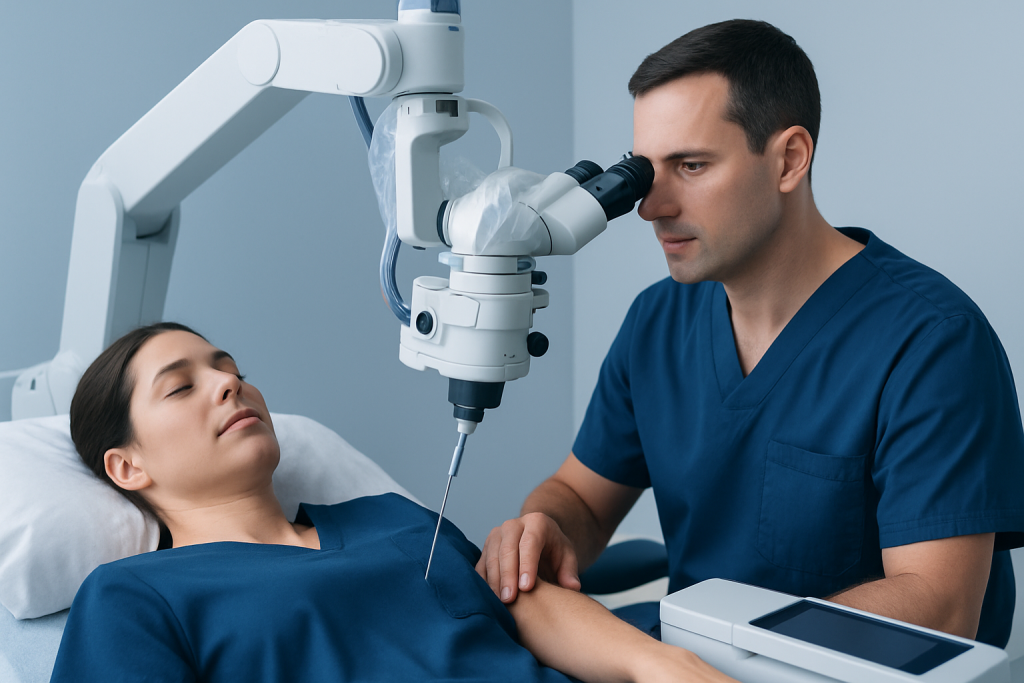
A biopsy is usually performed as a minor surgical procedure, often with local anesthesia and sometimes with sedation depending on the site, the patient’s health, and the clinical plan. The skin is cleaned, the area is numbed, and the doctor makes a small incision. A small piece of muscle or nerve is removed, the incision is closed, and a dressing is applied.
Muscle biopsy may be performed through an open technique or with a needle technique in selected cases. Open biopsy allows the surgeon to remove a small sample under direct view, which may be useful when multiple laboratory studies are planned. Needle biopsy uses a specialized needle and a smaller incision, but it may provide less tissue and is not suitable for every diagnostic question.
The sample is handled very carefully because different analyses may be needed. Tissue may be examined under a microscope, stained for proteins and enzymes, tested for inflammation or deposits, frozen for specialized studies, or sent for genetic and biochemical testing when appropriate. Proper processing is essential; a well-chosen sample can lose diagnostic value if it is not handled correctly.
Most patients go home the same day. Mild discomfort, bruising, or tightness near the incision is common and usually improves with simple care. The doctor provides instructions about keeping the area clean, limiting strenuous activity for a short time, and watching for signs that require medical advice.
Understanding Results and Limitations
Biopsy results are reviewed by pathologists with experience in nerve and muscle disease, often in discussion with neurologists, rheumatologists, geneticists, or other specialists. Reports may describe inflammation, fiber damage, nerve fiber loss, blood vessel changes, abnormal protein deposits, mitochondrial changes, dystrophic patterns, storage material, or features of chronic denervation. These findings are matched with the patient’s symptoms and other tests before a final diagnosis is made.
A biopsy can be very helpful, but it does not always provide a single clear answer. Some diseases affect tissue unevenly, so a small sample may miss the most active area. In other cases, findings may be nonspecific, showing that damage has occurred but not exactly why. Prior treatment with corticosteroids or immunosuppressive medicines can also reduce visible inflammation in some conditions.
Sometimes a biopsy supports a diagnosis that still requires additional testing, such as genetic analysis, autoimmune blood tests, imaging, or evaluation for cancer, infection, or systemic disease. Patients should ask their doctor what the result means, what uncertainties remain, and how the result will affect treatment or monitoring. A useful biopsy is one that helps guide the next step, even if it does not answer every question.
Treatment Options After Diagnosis
Treatment after nerve or muscle biopsy depends entirely on the diagnosis. If inflammation is found, therapy may include corticosteroids, immunosuppressive medicines, intravenous immunoglobulin, or other immune-directed treatments under specialist supervision. If a metabolic, mitochondrial, or inherited condition is identified, care may focus on genetic counseling, physical therapy, energy conservation, exercise guidance, symptom control, and screening for related organ involvement.
For vasculitic neuropathy or other systemic inflammatory diseases, treatment often involves a multidisciplinary team because nerves may be affected along with the skin, kidneys, joints, lungs, or blood vessels. For muscular dystrophies and other genetic myopathies, management may include rehabilitation, heart and breathing assessments, mobility support, and family counseling. For toxic, medication-related, infectious, or endocrine causes, addressing the underlying trigger is central.
Rehabilitation is important for many neuromuscular disorders. Physiotherapists and occupational therapists can help preserve strength, balance, flexibility, safety, and independence. Exercise programs must be individualized, because some conditions benefit from carefully paced activity while others require avoidance of overexertion or muscle injury. Patients should follow a plan created by clinicians familiar with their diagnosis.
Risks, Recovery, and When to See a Doctor
Nerve and muscle biopsy are generally well tolerated when performed for the right reasons by an experienced team, but all procedures have risks. Possible complications include bleeding, infection, delayed wound healing, scarring, localized pain, bruising, or sensitivity around the incision. After nerve biopsy, numbness in the nerve’s sensory area is expected and may be permanent; occasionally, patients may develop tingling or nerve pain near the scar.
Patients should contact their healthcare team if they develop increasing redness, warmth, swelling, drainage, fever, worsening pain, excessive bleeding, new weakness, or symptoms that feel unusual for their recovery instructions. They should also seek medical evaluation for progressive weakness, difficulty walking, swallowing problems, breathing difficulty, rapidly worsening numbness, or severe neuropathic pain, even if a biopsy has not yet been discussed.
Prevention and self-care depend on the underlying disorder, but general measures support nerve and muscle health: managing diabetes and thyroid disease, avoiding excessive alcohol, reviewing potentially nerve- or muscle-toxic medicines with a doctor, maintaining balanced nutrition, and staying active within safe limits. At Acibadem International, multidisciplinary specialists in JCI-accredited hospitals evaluate and treat neuromuscular disorders for international patients, including cases where biopsy and advanced pathology review are appropriate.
Frequently asked questions
Is nerve and muscle biopsy painful?
The biopsy area is numbed with local anesthesia, so patients usually feel pressure or pulling rather than sharp pain during the procedure. Mild soreness, bruising, or tightness afterward is common and typically improves with the aftercare plan provided by the medical team.
Does everyone with neuropathy or muscle weakness need a biopsy?
No. Most neuropathy and muscle weakness evaluations begin with less invasive tests such as blood work, imaging, nerve conduction studies, electromyography, and sometimes genetic testing. Biopsy is usually reserved for cases where tissue information is likely to change diagnosis or treatment.
What is the difference between a nerve biopsy and a muscle biopsy?
A muscle biopsy examines a small sample of muscle to look for inflammation, inherited muscle disease, metabolic changes, or muscle fiber injury. A nerve biopsy examines a small sensory nerve sample to look for nerve fiber loss, blood vessel inflammation, deposits such as amyloid, infection, or other nerve-specific changes.
Can a biopsy give a false normal result?
Yes, it is possible. Some neuromuscular diseases affect tissue unevenly, so the sampled area may not show the main abnormality. This is why doctors select the biopsy site carefully and interpret results together with the examination, imaging, electrical studies, and laboratory findings.
How long does it take to get biopsy results?
Timing varies depending on the tests required. Basic microscopic examination may be available sooner, while specialized staining, enzyme studies, electron microscopy, genetic testing, or referral to an expert laboratory can take longer. The treating doctor can explain what analyses are being performed and when results are expected.
Will a nerve biopsy cause permanent numbness?
A nerve biopsy is usually taken from a sensory nerve, so numbness in the area supplied by that nerve is expected and may be permanent. Doctors recommend it only when the potential diagnostic value outweighs this risk. The exact area and likely sensation changes should be discussed before the procedure.
What should patients ask before agreeing to biopsy?
Helpful questions include why the biopsy is needed, what diagnosis is being considered, how the biopsy result may change treatment, what risks apply, and which tissue will be sampled. Patients may also ask how the sample will be processed and whether a neuromuscular pathology specialist will review it.
References
- American Academy of Neurology
- National Institute of Neurological Disorders and Stroke
- European Academy of Neurology
- Muscular Dystrophy Association
- Mayo Clinic
This article is for general information only and is not a substitute for professional medical advice. Please consult a qualified doctor about your individual situation.
Oncology care in Turkey — second opinion and treatment plan
JCI-accredited · board-certified surgeons · reply within 24h
Add us as a Preferred Source to see more of our trusted health content across Google Search, AI Overviews and Discover.

More from the Health Library



Related Specialists

Assoc. Prof. Dr. Önder Doksöz
Pediatric Cardiology
Prof. Dr. Güralp Onur Ceyhan
General Surgery
Prof. Dr. Sinan Dağdelen
Cardiology
Dr. İlke Karagöz
Aesthetic Plastic & Reconstructive Surgery