Autonomic Testing: Evaluating Fainting, Sweating, and Nerve Function

Autonomic testing evaluates involuntary body functions, including heart rate, blood pressure, sweating, and sometimes breathing or digestion-related responses. It is often used when symptoms such as fainting, lightheadedness, abnormal sweating, or suspected autonomic neuropathy need a clearer explanation.
Key Takeaways
- Autonomic testing evaluates involuntary body functions, including heart rate, blood pressure, sweating, and sometimes breathing or digestion-related responses.
- It is often used when symptoms such as fainting, lightheadedness, abnormal sweating, or suspected autonomic neuropathy need a clearer explanation.
- Common tests include tilt table testing, heart rate response to deep breathing, the Valsalva maneuver, and specialized sweat testing.
- Most autonomic tests are noninvasive; some may feel briefly uncomfortable because they reproduce dizziness, sweating changes, or pressure sensations.
- Results are interpreted together with medical history, examination findings, medications, and other tests to guide treatment and self-care.
Autonomic testing is a group of noninvasive tests that checks how well the autonomic nervous system controls functions such as heart rate, blood pressure, sweating, and digestion. It can help doctors understand symptoms like fainting, dizziness, abnormal sweating, and nerve-related changes in people with conditions such as diabetes, Parkinsonian disorders, or unexplained syncope.
Overview
Autonomic testing refers to a set of medical tests that evaluate the autonomic nervous system, the part of the nervous system that works automatically. It helps regulate blood pressure, heart rate, body temperature, sweating, digestion, bladder function, and certain aspects of breathing. Because these functions happen without conscious control, problems in this system can be difficult to identify from symptoms alone.
Doctors may recommend autonomic testing when a person has fainting episodes, near-fainting, dizziness on standing, unexplained sweating changes, heat intolerance, palpitations, or symptoms suggesting small fiber or autonomic neuropathy. The tests can show whether the body is responding normally to position changes, controlled breathing, mild strain, or temperature-related sweat stimulation.
Autonomic testing does not usually provide a diagnosis by itself. Instead, it offers objective information about nerve and cardiovascular responses. This information is combined with the patient’s medical history, neurological examination, blood tests, heart evaluation, and sometimes imaging or nerve studies to understand the cause of symptoms and choose an appropriate care plan.
What the Autonomic Nervous System Does
The autonomic nervous system has two main branches: the sympathetic and parasympathetic systems. The sympathetic system helps the body respond to activity, stress, standing, heat, and other demands by adjusting blood vessel tone, heart rate, and sweating. The parasympathetic system supports rest, digestion, and heart rate slowing, especially through the vagus nerve.
When a person stands up, gravity pulls some blood toward the legs and abdomen. A healthy autonomic system responds quickly by tightening blood vessels and adjusting heart rate so that enough blood continues to reach the brain. If this response is too slow or too weak, the person may feel lightheaded, develop blurred vision, become weak, or faint.
The same system also controls sweat glands. Too little sweating may cause heat intolerance and dry skin in certain areas, while excessive or patchy sweating can occur with some nerve conditions. Autonomic testing helps map these responses, allowing clinicians to see whether symptoms match a pattern of autonomic dysfunction.
Symptoms That May Lead to Autonomic Testing

Autonomic symptoms can be subtle, intermittent, or influenced by hydration, meals, temperature, medications, and stress. For this reason, patients are often asked to describe when symptoms occur, how long they last, what improves them, and whether they are related to standing, exercise, eating, or heat exposure.
Autonomic testing may be considered for symptoms such as:
- Fainting, near-fainting, or recurrent lightheadedness, especially after standing.
- Rapid heartbeat, palpitations, or fatigue with upright posture.
- Low blood pressure when standing, known as orthostatic hypotension.
- Excessive, reduced, or uneven sweating.
- Numbness, burning, or tingling that suggests small fiber nerve involvement.
- Unexplained exercise intolerance, heat intolerance, or temperature regulation problems.
- Digestive symptoms such as early fullness, nausea, constipation, or diarrhea when autonomic neuropathy is suspected.
These symptoms have many possible causes, including dehydration, anemia, heart rhythm disorders, medication effects, anxiety-related physical responses, endocrine conditions, and neurological disease. Autonomic testing helps narrow the possibilities but is most useful when ordered after a careful clinical assessment.
Common Autonomic Tests
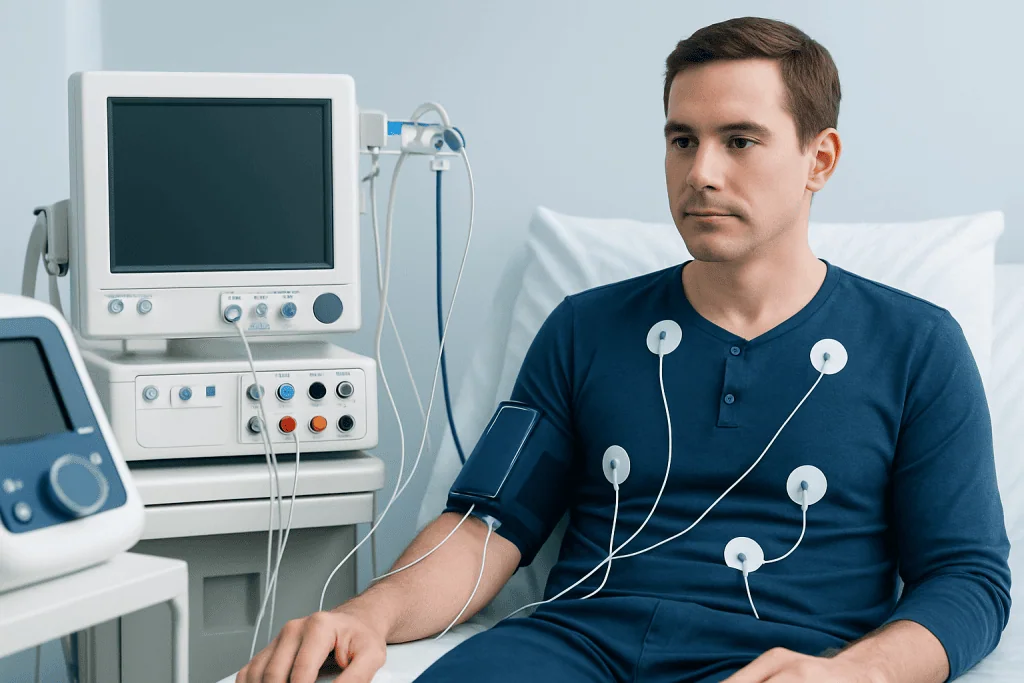
A typical autonomic laboratory may perform several tests during the same visit. The exact combination depends on the patient’s symptoms and the clinician’s question. Monitoring often includes heart rate, blood pressure, oxygen level, and sometimes breathing patterns while the patient rests and performs simple maneuvers.
A tilt table test evaluates how the body responds to a change from lying down to an upright position. The patient lies on a table with safety straps, and the table is tilted upward while heart rate and blood pressure are monitored. This can help identify patterns such as vasovagal syncope, orthostatic hypotension, or postural tachycardia syndrome, although interpretation depends on the full clinical picture.
Heart rate response to deep breathing measures how the heart speeds up and slows down with controlled breathing. The Valsalva maneuver asks the patient to exhale against resistance for a short period, which tests blood pressure and heart rate reflexes. Sweat testing, such as quantitative sudomotor axon reflex testing or thermoregulatory sweat testing where available, evaluates how sweat glands respond to nerve signals.
Some patients may also undergo additional evaluations, such as electrocardiography, echocardiography, ambulatory heart rhythm monitoring, blood tests, skin biopsy for small fiber neuropathy, or nerve conduction studies. These are not all autonomic tests, but they may help identify related or alternative causes of symptoms.
Preparation and What to Expect
Preparation instructions vary by clinic and by the specific tests being performed. Patients are commonly advised to avoid caffeine, nicotine, alcohol, or heavy meals for a period before testing, because these can affect heart rate, blood pressure, and sweating. Some medications may need to be paused or adjusted before the test, but this should only be done with medical guidance, especially for blood pressure, heart, psychiatric, or neurological medicines.
During testing, the patient may be asked to lie quietly, breathe at a set rhythm, blow into a tube, or be tilted upright. For sweat testing, small areas of the skin may be stimulated or monitored for moisture response. The tests are designed to be controlled and supervised, and staff can stop or modify a test if symptoms become difficult to tolerate.
It is helpful to wear comfortable clothing and bring a current medication list, including supplements. Patients should tell the team if they are pregnant, have significant heart disease, have recently been ill, or have experienced severe fainting episodes. After testing, many people can return to usual activities, but if dizziness was provoked, resting and arranging transportation may be recommended.
Understanding Results
Autonomic test results are interpreted by clinicians trained in neurology, cardiology, clinical neurophysiology, or autonomic disorders. The report may describe heart rate variability, blood pressure changes with position or strain, and sweat responses in different body areas. Results may be normal, show a mild abnormality, or reveal a pattern suggesting specific autonomic involvement.
For example, a drop in blood pressure after standing may support orthostatic hypotension, while an excessive heart rate rise without a major blood pressure fall may suggest a postural tachycardia pattern. Reduced sweating in certain regions can suggest small fiber or autonomic nerve involvement. A vasovagal pattern may occur when blood pressure and heart rate fall during upright tilt in a way that matches typical fainting symptoms.
Normal results do not always mean symptoms are not real. Autonomic symptoms can fluctuate, and some conditions may not appear during a single test session. Conversely, an abnormal test must be interpreted in context because medications, hydration status, recent illness, deconditioning, and other health conditions can influence results.
Treatment Options and Self-Care
Treatment depends on the underlying cause and the specific autonomic problem. If symptoms are related to diabetes, autoimmune disease, Parkinsonian disorders, medication effects, dehydration, or another condition, addressing that condition is an important part of care. In some cases, medication changes, physical conditioning, compression garments, or targeted medicines may be considered by the treating doctor.
Many people with posture-related dizziness benefit from practical strategies. These may include drinking adequate fluids, rising slowly, avoiding prolonged standing, using physical counter-maneuvers such as leg crossing or calf tensing, and discussing salt intake with a clinician if appropriate. Smaller meals may help people whose symptoms worsen after eating, while heat avoidance and cooling strategies may help those with heat intolerance or reduced sweating.
For abnormal sweating, treatment depends on whether sweating is excessive, reduced, or uneven. Reduced sweating may require careful heat protection, while excessive sweating can sometimes be treated with topical, oral, procedural, or neurological approaches depending on severity and cause. Patients should avoid starting supplements or changing prescribed medicines without a doctor’s advice, as some products can affect blood pressure and heart rhythm.
When to See a Doctor
A medical evaluation is recommended when fainting is recurrent, occurs during exertion, causes injury, happens while lying down, or is associated with chest pain, shortness of breath, a new neurological symptom, or a known heart condition. Prompt assessment is also important for persistent dizziness on standing, unexplained falls, severe heat intolerance, or new sweating changes accompanied by numbness, weakness, or weight loss.
People with diabetes, autoimmune conditions, Parkinsonian symptoms, chemotherapy exposure, or a family history of neuropathy should mention autonomic symptoms to their healthcare provider. Early recognition can help guide symptom management, reduce fall risk, and identify treatable contributors such as medication effects, dehydration, anemia, thyroid disease, or vitamin deficiencies.
International patients seeking coordinated evaluation may find support through centers where neurology, cardiology, endocrinology, and rehabilitation teams work together. Acibadem International’s multidisciplinary specialists and JCI-accredited hospitals diagnose and treat autonomic symptoms and related neurological conditions for international patients, with care plans tailored to the individual’s medical findings.
Frequently asked questions
Is autonomic testing painful?
Most autonomic testing is not painful. Some parts may feel mildly uncomfortable, such as breathing against resistance, standing on a tilt table, or having sweat glands stimulated. The team monitors the patient closely and can pause or stop testing if symptoms become difficult.
How long does autonomic testing take?
The length depends on which tests are ordered. A focused test may take less than an hour, while a full autonomic evaluation can take longer. The clinic usually provides instructions about timing, food, fluids, and medications before the appointment.
Can autonomic testing diagnose the cause of fainting?
Autonomic testing can help identify patterns that explain some types of fainting, such as vasovagal syncope or orthostatic blood pressure changes. However, fainting can also be caused by heart rhythm problems, structural heart disease, seizures, medication effects, or metabolic issues. Doctors interpret the test together with the history, examination, and other investigations.
What is the difference between a tilt table test and autonomic testing?
A tilt table test is one type of autonomic test that evaluates heart rate and blood pressure responses to upright posture. Autonomic testing is broader and may also include deep breathing, the Valsalva maneuver, and sweat testing. The combination gives a more complete view of autonomic nerve function.
Should medications be stopped before autonomic testing?
Some medications can affect test results, but patients should not stop prescribed medicines unless the ordering doctor or testing center advises it. This is especially important for blood pressure medicines, heart medicines, antidepressants, seizure medicines, and Parkinson’s medicines. The safest approach is to provide a complete medication list before the test.
Can children have autonomic testing?
Yes, autonomic testing may be used in children and adolescents when symptoms suggest an autonomic problem, such as recurrent fainting or significant dizziness on standing. Pediatric testing is adapted to the child’s age, size, and ability to cooperate. A pediatric specialist can decide which tests are appropriate.
What happens if autonomic test results are abnormal?
An abnormal result does not automatically mean a serious disease is present. It shows that one or more autonomic responses did not behave as expected during testing. The doctor will review possible causes, consider additional tests if needed, and recommend treatment or self-care steps based on the full clinical picture.
References
- National Institute of Neurological Disorders and Stroke
- American Autonomic Society
- Mayo Clinic
- Cleveland Clinic
- American Academy of Neurology
This article is for general information only and is not a substitute for professional medical advice. Please consult a qualified doctor about your individual situation.
Heart care in Turkey — expert evaluation and treatment
JCI-accredited · board-certified surgeons · reply within 24h
Add us as a Preferred Source to see more of our trusted health content across Google Search, AI Overviews and Discover.
Check your numbers in seconds
BMI, calories, due date, blood pressure and 30+ more clinical calculators — free, instant, doctor-reviewed ranges.