How Is Cancer Diagnosed? Tests, Biopsy, and Staging Explained

A biopsy is often the main test used to confirm whether cancer is present. Imaging and laboratory tests can suggest cancer, but they may not be enough on their own to make a final diagnosis.
Key Takeaways
- A biopsy is often the main test used to confirm whether cancer is present.
- Imaging and laboratory tests can suggest cancer, but they may not be enough on their own to make a final diagnosis.
- Cancer staging describes the size of the tumor and whether it has spread to lymph nodes or other parts of the body.
- Accurate diagnosis often involves a team of specialists, including radiologists, pathologists, surgeons, and oncologists.
- Early medical evaluation for persistent symptoms can help speed diagnosis and treatment planning.
Cancer diagnosis usually involves several steps, including a medical history, physical exam, imaging, laboratory tests, and often a biopsy. Staging then shows how far the cancer has spread and helps doctors plan the most suitable treatment.
Overview: How cancer is diagnosed
Cancer diagnosis is a step-by-step process rather than a single test. Doctors begin by learning about a person’s symptoms, medical history, and family history, then combine this information with a physical examination and carefully chosen tests. The goal is to find out whether cancer is present, what type it is, and how advanced it may be.
Not every abnormal symptom or scan result means cancer. Many non-cancerous conditions can cause lumps, pain, bleeding, fatigue, or changes on imaging tests. For that reason, diagnosis usually moves from general assessments to more specific tests until the cause becomes clear.
In many cases, a tissue sample called a biopsy is needed to confirm the diagnosis. After cancer is confirmed, doctors perform staging tests to see whether the disease is limited to one area or has spread. This information is essential for choosing treatment and discussing prognosis in a clear, individualized way.
Symptoms and warning signs that may lead to testing
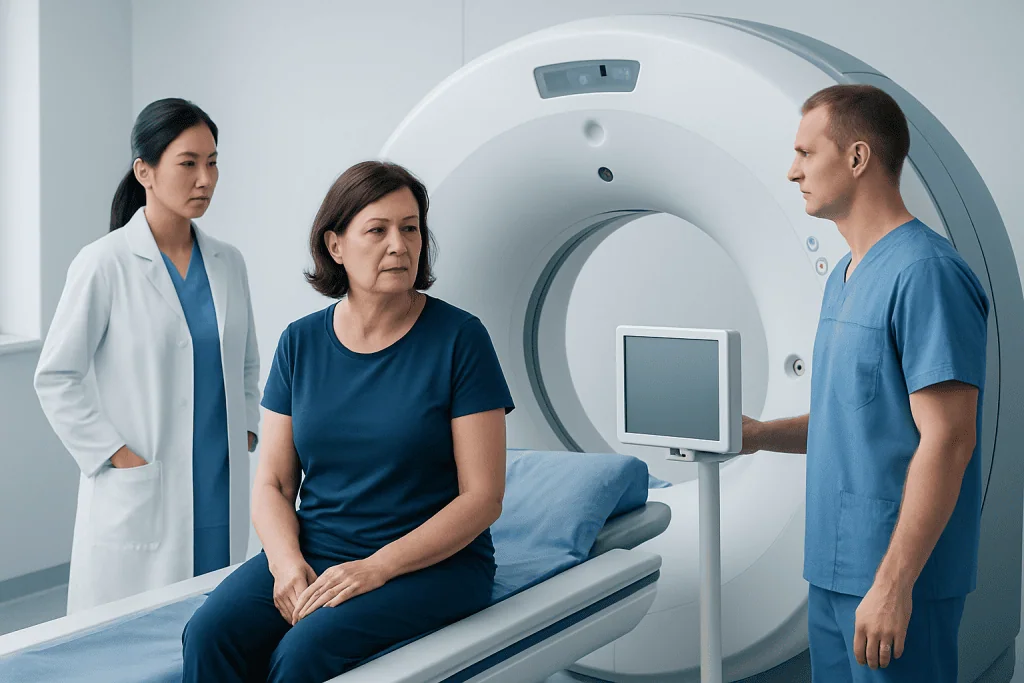
Cancer can cause many different symptoms, and these depend on the organ involved. Some people notice a lump, unexplained weight loss, unusual bleeding, a persistent cough, ongoing pain, changes in bowel or bladder habits, difficulty swallowing, or a sore that does not heal. Others may have no symptoms at all, and the cancer is found during a routine screening test or an exam for another reason.
Many of these symptoms are common and are more often caused by non-cancerous conditions. Even so, symptoms that are new, persistent, worsening, or unexplained should be assessed by a doctor. A timely evaluation can help identify whether the cause is harmless, needs treatment, or requires further investigation for cancer.
Doctors also consider risk factors when deciding which tests are appropriate. These may include age, tobacco use, alcohol use, certain infections, family history of cancer, previous radiation exposure, occupational exposures, and personal history of conditions that increase cancer risk. The pattern of symptoms and risk factors helps guide the next steps.
Medical history, physical exam, and first-line tests

The first part of cancer diagnosis is usually a detailed conversation about symptoms and general health. A doctor may ask when symptoms began, whether they are constant or intermittent, whether there has been weight loss or fatigue, and whether any close relatives have had cancer. Information about medications, past illnesses, and lifestyle factors also helps shape the diagnostic plan.
A physical examination may reveal clues such as a visible lump, enlarged lymph nodes, changes in the skin, abdominal tenderness, or signs of fluid buildup. Depending on the symptoms, the exam may focus on the breast, abdomen, chest, skin, pelvis, mouth, throat, or rectum. The findings may suggest the need for more specific tests.
Initial tests often include blood tests, urine tests, or stool tests. These may show anemia, abnormal liver function, blood in the stool, or other changes that point to a possible underlying problem. However, laboratory tests rarely diagnose cancer by themselves. They are mainly used to look for warning signs, evaluate overall health, and prepare for further testing.
For some cancers, screening tests may be the first step before symptoms develop. Depending on age and risk, doctors may recommend tests such as mammography, cervical screening, colonoscopy, or low-dose CT for certain people at high risk of lung cancer. If screening shows an abnormal area, additional tests are needed to determine exactly what it is.
Imaging tests and endoscopic procedures
Imaging tests help doctors look inside the body without surgery. Common imaging methods include X-rays, ultrasound, computed tomography (CT), magnetic resonance imaging (MRI), and positron emission tomography (PET). These tests can show the size, shape, and location of an abnormal area and may reveal whether nearby structures or lymph nodes are involved.
Each imaging test has a different purpose. Ultrasound is often useful for examining soft tissues and guiding biopsies. CT scans provide detailed cross-sectional images and are widely used to investigate suspected tumors in the chest, abdomen, and pelvis. MRI can be especially helpful for the brain, spine, liver, prostate, and soft tissues. PET scans may help identify metabolically active areas that need closer evaluation.
Some cancers are assessed using endoscopic procedures, which allow a doctor to examine the inside of an organ with a thin camera. Examples include colonoscopy, bronchoscopy, cystoscopy, and upper gastrointestinal endoscopy. During these procedures, the doctor may see abnormal tissue directly and often take samples for testing. This is especially important when a lesion is small or located in a place that is difficult to assess from outside the body.
Imaging and endoscopy are powerful tools, but they usually cannot confirm cancer on their own. A scan may show a suspicious mass, yet only tissue analysis can determine whether it is cancer, what type it is, and how aggressive it may be.
Biopsy and pathology: confirming the diagnosis
A biopsy is the removal of cells or tissue so they can be examined under a microscope. In many cases, this is the most important step in confirming cancer. The sample is studied by a pathologist, a doctor who specializes in identifying disease in tissues and cells. The pathology report can show whether cancer is present and, if so, what type and grade it is.
There are several kinds of biopsy. A fine needle aspiration uses a thin needle to collect cells. A core needle biopsy removes a small cylinder of tissue and often provides more detail. An endoscopic biopsy is taken during a procedure such as colonoscopy or bronchoscopy. In some situations, a surgical biopsy is needed to remove part or all of the suspicious area. The best method depends on the tumor’s location, size, and accessibility.
Pathology testing may include more than standard microscopy. Doctors may request immunohistochemistry, molecular testing, or genetic profiling of the tumor to better classify the cancer and identify features that could influence treatment. This information may help determine whether therapies such as chemotherapy, targeted therapy, immunotherapy, or hormone-based treatment are likely to be useful.
Waiting for biopsy results can feel stressful, but careful analysis is essential. Sometimes the tissue sample needs additional staining or a second review to make the diagnosis as accurate as possible. A precise pathology result helps avoid unnecessary treatment and supports better planning from the beginning.
Cancer staging and what it means
After cancer is confirmed, doctors determine its stage. Staging describes the extent of the disease, including the size of the main tumor, whether nearby lymph nodes are involved, and whether cancer has spread to other organs. This helps the medical team choose the most appropriate treatment and gives patients a clearer understanding of their condition.
Many solid tumors are staged using the TNM system. “T” refers to the primary tumor, “N” to lymph node involvement, and “M” to metastasis, meaning spread to distant parts of the body. These details are often grouped into overall stages such as Stage I, II, III, or IV. In general, lower stages mean the cancer is more localized, while higher stages indicate more extensive disease.
Staging may involve imaging tests, blood work, endoscopy, and sometimes additional procedures such as lymph node sampling or surgery. In some cancers, the final stage is confirmed only after an operation, for example during cancer surgery. Blood cancers such as leukemia and some lymphomas are staged differently from solid tumors because they do not form a single mass in the same way.
Stage is important, but it is not the only factor that guides treatment. Doctors also consider the cancer type, grade, molecular features, the patient’s age and general health, and personal treatment goals. For people with breast cancer or lung cancer, for example, treatment planning often depends on both stage and specific tumor markers.
How diagnosis guides treatment planning
Once the diagnosis and stage are clear, the medical team develops a treatment plan tailored to the individual. This may involve one treatment or a combination of treatments. Common options include surgery, radiation therapy, systemic drug treatment, or careful monitoring in selected situations. The right approach depends on the type of cancer and how far it has progressed.
For localized cancers, treatment may focus on removing or destroying the tumor in one area, often with surgery or radiation therapy. For cancers that have spread or have a high risk of spreading, treatment may also include medicines that travel through the body. These can include chemotherapy, targeted therapy, hormone therapy, or immunotherapy.
Many hospitals use a multidisciplinary tumor board to review new cancer diagnoses. This means specialists in pathology, radiology, surgery, medical oncology, and radiation oncology discuss the case together. This team-based approach can help ensure that imaging, biopsy results, and staging are interpreted accurately and that the treatment plan reflects current standards of care.
Near the end of the diagnostic process, patients often have questions about urgency, treatment choices, and whether second opinions are helpful. These questions are appropriate and important. Acibadem International’s multidisciplinary specialists in JCI-accredited hospitals diagnose and treat cancer for international patients, and comprehensive evaluation may include advanced imaging, pathology review, and access to therapies such as immunotherapy when suitable.
When to see a doctor and how to prepare
A person should see a doctor if they notice symptoms that are persistent, unexplained, or worsening over time. Examples include a new lump, blood in stool or urine, unexplained weight loss, long-lasting fatigue, ongoing cough, unusual bleeding, or changes in a mole or skin lesion. It is also wise to keep up with recommended cancer screening, even when there are no symptoms.
Preparing for an appointment can make the process easier. It helps to write down symptoms, note when they began, list medications, and gather information about family history of cancer. Bringing previous scan reports, blood test results, or pathology reports can help avoid repeat testing and speed decision-making.
Patients should feel comfortable asking practical questions, such as what each test is looking for, whether a biopsy is needed, how long results will take, and what the next steps may be if cancer is found. Clear communication can reduce uncertainty and help patients take an active role in their care.
Even when cancer is suspected, a diagnosis should never be assumed without proper testing. Prompt evaluation, careful confirmation, and accurate staging create the foundation for informed treatment decisions and more personalized care.
Frequently asked questions
What is the most important test for confirming cancer?
In many cases, the most important test is a biopsy. A biopsy provides tissue or cells that a pathologist can examine under a microscope to confirm whether cancer is present and identify the exact type.
Can a blood test diagnose cancer by itself?
Usually not. Blood tests can show abnormalities that suggest a possible problem, but they generally cannot confirm cancer on their own. They are most useful when combined with imaging, examination, and tissue testing.
Why are imaging tests needed if a biopsy is done?
Imaging tests help doctors locate the abnormal area, assess its size, and see whether other parts of the body may be involved. They also help guide biopsies and are often used for staging after cancer is confirmed.
What does cancer staging mean?
Cancer staging describes how large the cancer is and whether it has spread to lymph nodes or other organs. Staging helps doctors choose treatment and discuss the outlook more clearly.
Does Stage IV cancer always mean there are no treatment options?
No. Stage IV means the cancer has spread to distant parts of the body, but treatment may still help control the disease, relieve symptoms, and sometimes shrink tumors for long periods. The best approach depends on the type of cancer and the patient’s overall health.
How long does it take to get biopsy results?
The timing varies by hospital and by the complexity of the testing needed. Some routine results may return within a few days, while others take longer if special stains, molecular tests, or second reviews are required.
References
- World Health Organization
- National Cancer Institute
- American Cancer Society
- National Comprehensive Cancer Network
- Centers for Disease Control and Prevention
This article is for general information only and is not a substitute for professional medical advice. Please consult a qualified doctor about your individual situation.
Oncology care in Turkey — second opinion and treatment plan
JCI-accredited · board-certified surgeons · reply within 24h
Add us as a Preferred Source to see more of our trusted health content across Google Search, AI Overviews and Discover.