All-on-4 vs All-on-6: Which Full-Arch Option Fits You Best?

Both options replace a full arch of teeth using dental implants that support a fixed bridge. All-on-4 uses four implants, while All-on-6 uses six implants for added support and load distribution.
Key Takeaways
- Both options replace a full arch of teeth using dental implants that support a fixed bridge.
- All-on-4 uses four implants, while All-on-6 uses six implants for added support and load distribution.
- Bone volume, bite strength, jaw anatomy, and oral health help determine the best choice.
- Some people may need bone grafting or other preparatory care before implant treatment.
- Careful hygiene, regular dental visits, and smoking avoidance help protect long-term results.
All-on-4 and All-on-6 are full-arch dental implant approaches used to replace a complete upper or lower set of teeth with a fixed prosthesis. The right option depends on jawbone quality, chewing needs, long-term support goals, and a dentist’s detailed evaluation.
Overview: what All-on-4 and All-on-6 mean
All-on-4 and All-on-6 are treatment concepts for replacing all teeth in one jaw with a fixed prosthesis supported by implants. Instead of placing one implant for every missing tooth, a dentist strategically places either four or six implants in the jawbone and attaches a full-arch bridge to them. This can provide a stable alternative to removable dentures for many people.
In both approaches, the implants act like artificial tooth roots. They are placed into the jawbone, where they gradually bond with the bone in a process called osseointegration. After healing, the implants support a custom-made set of replacement teeth designed to restore chewing, appearance, and speech.
The main difference is in the number of implants used. All-on-4 treatment relies on four implants, often with angled back implants to maximize available bone. All-on-6 treatment uses six implants, which can provide broader support across the arch. Neither option is automatically better for everyone; the most suitable choice depends on the person’s anatomy and treatment goals.
How the two options differ
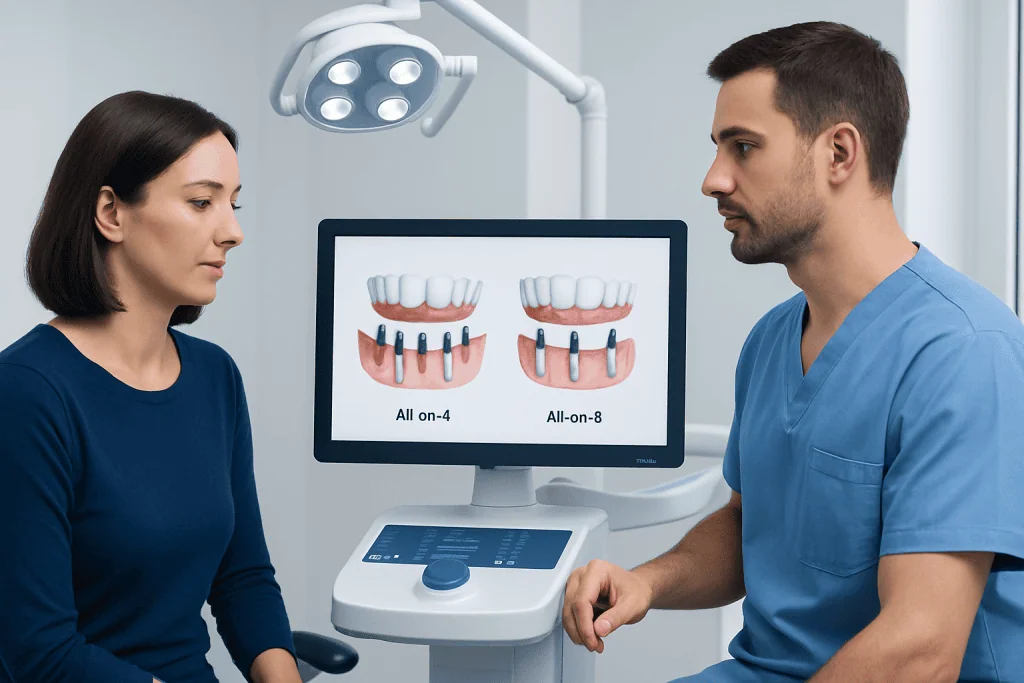
All-on-4 is often considered when a person has reduced bone volume, especially in the back of the jaw, because the rear implants can sometimes be angled to avoid important structures and use available bone more efficiently. This may reduce the need for additional procedures in selected patients. It can be a practical option for people seeking a fixed full-arch restoration with fewer implants.
All-on-6 uses two additional implants, which may improve support and distribute chewing forces more evenly. This can be especially helpful for people with stronger bite forces, wider arches, or bone conditions that allow placement of more implants. In some cases, the extra implants may also provide more flexibility in prosthesis design.
However, more implants do not always mean better results for every patient. The quality of the bone, the shape of the jaw, gum health, and the way the upper and lower teeth meet can matter more than the implant count alone. An experienced implant dentist looks at the whole picture rather than choosing a method based only on preference or trend.
- All-on-4: fewer implants, often useful when bone is limited
- All-on-6: more support points, often useful when anatomy allows
- Both: designed for fixed full-arch replacement, not one-to-one tooth replacement
Who may be a good candidate
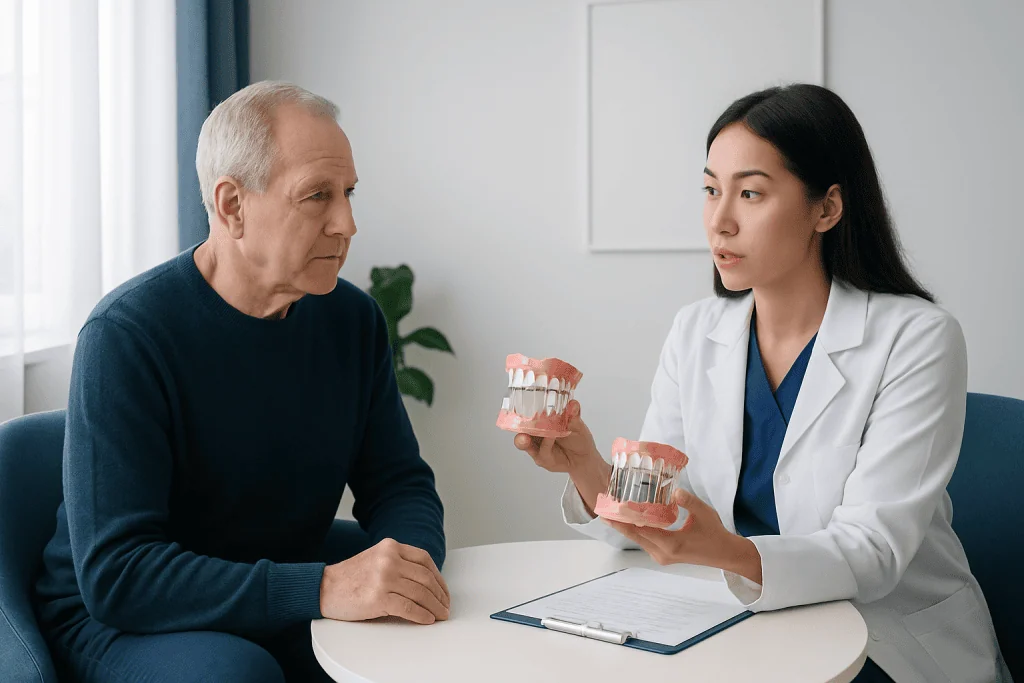
People who have lost most or all teeth in one arch, or who have teeth that cannot be saved, may be candidates for either option. Full-arch implants are commonly considered for individuals with advanced tooth loss, severe decay, worn dentition, or unstable dentures that interfere with eating and confidence.
A good candidate usually has enough jawbone to anchor implants or is willing to undergo preparatory treatment if needed. Healthy gums, manageable medical conditions, and a commitment to oral hygiene are also important. Conditions such as uncontrolled diabetes, active gum infection, and heavy smoking can affect healing and may need to be addressed first.
Age alone does not usually rule out treatment. What matters more is general health, medication use, bone condition, and the ability to attend follow-up visits. Some people may also benefit from supportive care in geriatric dentistry if age-related oral health needs are part of the treatment plan.
In some cases, a person considering full-arch implants may also have underlying gum disease or tooth-root problems that need evaluation before surgery. General assessment and stabilization of oral health are essential to improve the chances of long-term success.
What dentists evaluate before choosing All-on-4 or All-on-6
Treatment planning begins with a detailed examination. The dentist reviews the health of the teeth, gums, jaw joints, and bite, and asks about medical history, medications, smoking, and previous dental treatment. Imaging, often including panoramic X-rays or 3D scans, is used to measure bone height, width, and density and to identify important structures such as the sinus or nerve canal.
Bone volume is one of the biggest deciding factors. If the jaw has enough healthy bone, six implants may be possible and beneficial. If bone is reduced in certain areas, four strategically placed implants may be more realistic. When bone is too limited for either plan, dental bone grafts or other preparatory procedures may be discussed.
The dentist also considers bite strength and habits. A person who clenches or grinds the teeth may place greater forces on a fixed prosthesis, which can influence implant number, prosthesis material, and the need for a protective night guard. Jaw shape, smile line, speech, and the desired appearance of the teeth and gums are also part of planning.
Cost and treatment time may also influence the decision, but they should not be the only factors. A durable, functional result depends on selecting the option that matches the person’s anatomy and long-term oral health needs rather than choosing the least complex route.
The treatment process and recovery
The process usually starts with extractions if failing teeth are still present, followed by implant placement and a temporary fixed prosthesis in suitable cases. This is why some people describe the approach as “teeth in a day,” although the final teeth are typically made after a healing period. Not everyone is a candidate for immediate loading, and the dentist decides this based on implant stability and bone conditions.
During surgery, implants are placed into the jawbone under local anesthesia, sedation, or other appropriate anesthesia methods. After placement, the gum tissues heal around the implants while the bone bonds to them over several months. Once healing is complete, the final prosthesis is attached and adjusted for fit, bite, comfort, and appearance.
Early recovery commonly involves some swelling, bruising, mild bleeding, and temporary dietary restrictions. Soft foods are often recommended while healing progresses. Good home care and regular reviews are important during this period to monitor the gums, implants, and temporary restoration.
Many treatment plans also involve dental implants as the broader foundation of care, with digital planning and prosthetic design tailored to the individual. A dentist may recommend additional procedures if infection, inflammation, or bite problems need correction before the final teeth are delivered.
Benefits, limitations, and possible risks
Both All-on-4 and All-on-6 can improve chewing ability, stability, comfort, and confidence compared with loose dentures. Because the prosthesis is fixed in place, many people find it feels more secure during eating and speaking. A well-designed full-arch restoration can also support facial contours and provide a natural-looking smile.
At the same time, these treatments have limitations. Full-arch implants still require careful maintenance, regular professional cleaning, and periodic adjustments. They do not feel exactly like natural teeth, and some patients need time to adapt to speech changes or the sensation of a fixed bridge.
Possible risks include infection, implant failure, gum inflammation around implants, prosthesis fracture or loosening, and healing problems in people with significant risk factors. When gum disease or poor oral hygiene is present, problems around implants may become more likely. Long-term success depends on healthy tissues, good planning, and consistent aftercare.
Some people may also need evaluation for related oral health concerns such as bleeding gums or nighttime grinding before proceeding. Identifying and managing these issues can help protect the implants and surrounding tissues over time.
How to decide which option fits best
The best choice comes from a balance of clinical findings and personal priorities. In general, All-on-4 may suit people who want a fixed full-arch solution with fewer implants and who have less bone in the back of the jaw. All-on-6 may suit those with enough bone to place more implants and who may benefit from increased support across the arch.
Questions that often help guide the discussion include: How much healthy bone is available? Is additional surgery likely? How strong is the bite? What material will be used for the final bridge? How easy will it be to clean? What is the long-term maintenance plan if screws loosen, parts wear, or tissue changes occur over time?
People should feel comfortable asking their dentist to explain why one approach is recommended over the other. A high-quality plan should include imaging review, expected treatment stages, healing time, maintenance needs, and a realistic discussion of benefits and limits. Informed decision-making is especially important for a treatment designed to last many years.
Near the end of the planning process, a multidisciplinary dental team may coordinate surgical, prosthetic, and hygiene care. Acibadem International’s multidisciplinary specialists in JCI-accredited hospitals diagnose and treat full-arch implant cases for international patients when this type of care is appropriate.
Self-care and when to see a dentist
Daily cleaning remains essential even with fixed implant-supported teeth. Patients are usually advised to brush carefully, clean under the bridge with recommended tools such as interdental aids or water-flossing devices, and attend regular professional maintenance visits. Avoiding tobacco is strongly encouraged because smoking can impair healing and increase the risk of implant complications.
Diet and habits also matter. Following the dentist’s instructions about soft foods during healing can help protect newly placed implants. Long term, avoiding very hard objects, managing teeth grinding, and keeping routine reviews can reduce the risk of damage to the prosthesis and surrounding tissues.
A person should contact a dentist if there is persistent pain, swelling, pus, bad taste, unusual mobility of the prosthesis, difficulty chewing, or signs that the bite has changed. Bleeding that continues, gums that look inflamed, or repeated breakage of prosthetic parts also deserve attention. Prompt assessment can often address minor issues before they become more complex.
Even when implants feel comfortable, they still need monitoring over time. Regular follow-up helps the dental team check implant stability, bone levels, cleaning access, and the condition of the prosthesis so that the restoration continues to function well.
Frequently asked questions
Is All-on-6 always better than All-on-4?
No. All-on-6 offers more implant support points, but the best choice depends on bone quantity, jaw anatomy, bite force, and overall treatment goals. For some people, All-on-4 is the more practical and appropriate option.
How long do All-on-4 and All-on-6 implants last?
Implants can last many years when they heal well and are maintained properly. The prosthetic teeth may need repairs, adjustments, or replacement over time due to normal wear. Long-term care and regular dental reviews are important for both systems.
Do people always get teeth on the same day as implant surgery?
Not always. Some patients can receive a temporary fixed bridge soon after implant placement, but others need a different timeline based on bone quality and implant stability. The final prosthesis is usually placed after healing is complete.
Is bone grafting required before full-arch implants?
Not in every case. One reason All-on-4 is often considered is that it may work in some patients with reduced bone, especially when implants are angled strategically. However, if bone is very limited, grafting or another preparatory procedure may still be recommended.
Can someone with dentures switch to All-on-4 or All-on-6?
Yes, many denture wearers explore fixed full-arch implants because they want more stability and confidence when eating or speaking. A dental examination and imaging are needed to check bone support, gum health, and overall suitability before a plan is made.
Are full-arch implants painful?
The procedure is typically performed with anesthesia and, when appropriate, sedation, so discomfort during surgery is controlled. Afterward, mild to moderate soreness, swelling, and bruising are common for a short time. The dental team will explain how to manage recovery safely.
References
- American Dental Association
- National Institute of Dental and Craniofacial Research
- European Association for Osseointegration
- International Team for Implantology
- Mayo Clinic
This article is for general information only and is not a substitute for professional medical advice. Please consult a qualified doctor about your individual situation.
Explore treatments in Turkey — costs, top hospitals & a free quote
JCI-accredited · board-certified surgeons · reply within 24h
Add us as a Preferred Source to see more of our trusted health content across Google Search, AI Overviews and Discover.

Dental & Oral Health
Full-scope dental care from implants and aesthetics to oral and maxillofacial surgery.
158 specialists in this unit