Cancerous Lung Tumors: Biopsy, Staging, and Treatment Planning
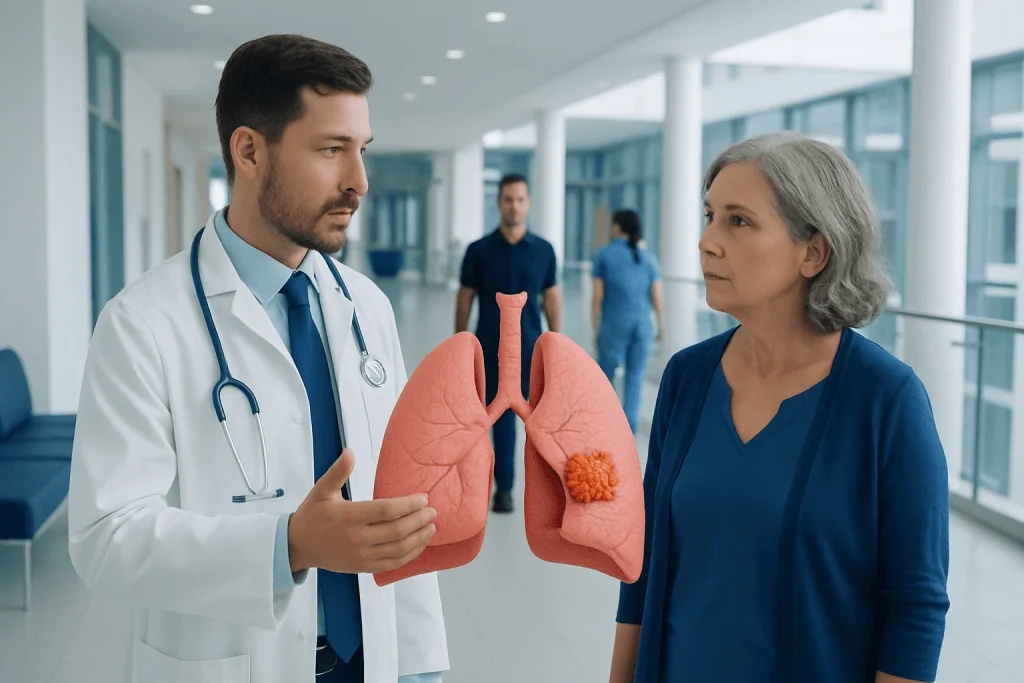
A biopsy is usually needed to confirm whether a lung tumor is cancerous and to identify the exact cancer type. Staging shows how far the cancer has spread and helps doctors choose the most appropriate treatment.
Key Takeaways
- A biopsy is usually needed to confirm whether a lung tumor is cancerous and to identify the exact cancer type.
- Staging shows how far the cancer has spread and helps doctors choose the most appropriate treatment.
- Treatment planning often involves a multidisciplinary team and may include surgery, radiation therapy, chemotherapy, immunotherapy, or targeted therapy.
- Early evaluation of persistent symptoms such as cough, chest pain, or coughing up blood can help speed diagnosis.
- Supportive care, smoking cessation, nutrition, and follow-up are important parts of treatment and recovery.
Cancerous lung tumors are growths in the lung that can invade nearby tissue or spread to other parts of the body. Care usually begins with imaging and biopsy, followed by staging and a personalized treatment plan based on the tumor type, extent, and the patient’s overall health.
Overview of cancerous lung tumors
Cancerous lung tumors are abnormal growths that begin in lung tissue or, less commonly, are cancers that have spread to the lungs from another part of the body. When doctors use the term lung cancer, they most often mean a primary lung cancer that started in the lungs. The two main categories are non-small cell lung cancer and small cell lung cancer, and each behaves differently and may require a different treatment approach.
Not every lung nodule or lung mass is cancer. Some are caused by infection, inflammation, scar tissue, or noncancerous growths. Because imaging alone cannot always tell the difference, doctors often recommend further testing when a suspicious tumor is found.
The goals of evaluation are to answer three main questions: whether the tumor is cancerous, what specific type it is, and whether it has spread. These answers shape treatment planning and help the care team discuss realistic options and next steps in a clear, personalized way.
Symptoms and how lung tumors may be found
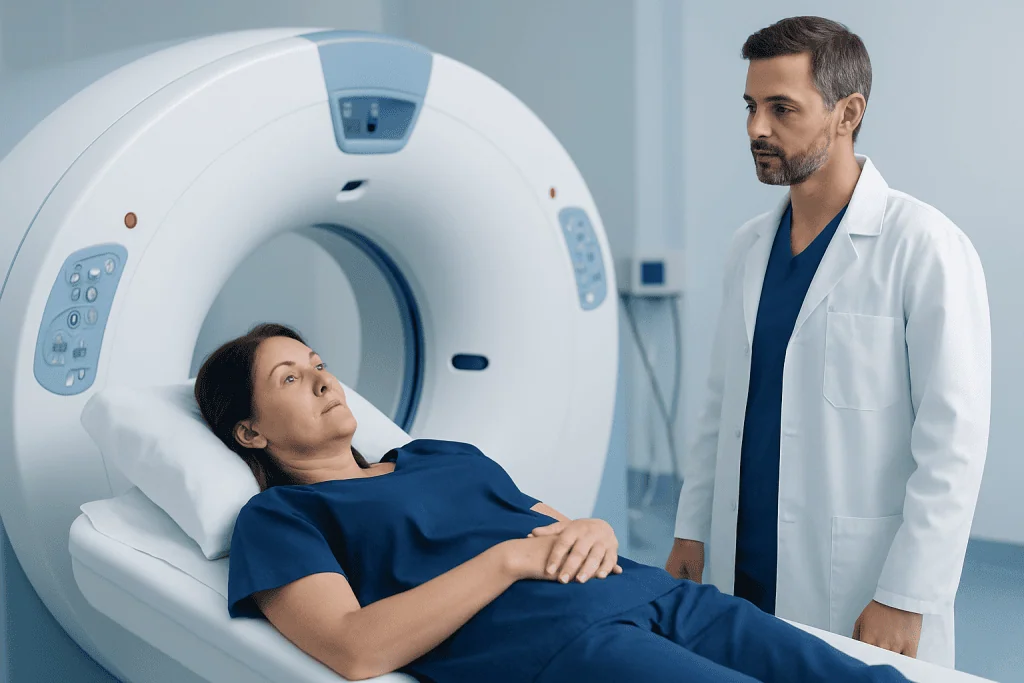
Cancerous lung tumors may cause symptoms, but some are found incidentally during imaging done for another reason. A person may feel completely well at first, especially when a tumor is small. As the tumor grows, it may affect breathing, irritate the airways, or involve nearby structures.
Common symptoms can include a cough that does not go away, shortness of breath, chest pain, wheezing, unexplained weight loss, fatigue, or repeated chest infections. Some people notice hoarseness or cough up blood. These symptoms do not always mean cancer, but they should be assessed by a doctor, particularly if they are new, persistent, or worsening.
In some cases, symptoms are related to spread beyond the lungs, such as bone pain, headaches, or swelling in the face and neck. Because these signs can overlap with many other conditions, the diagnosis depends on careful imaging, examination, and biopsy rather than symptoms alone.
- Persistent cough or a change in a long-standing cough
- Shortness of breath or reduced exercise tolerance
- Chest discomfort, shoulder pain, or wheezing
- Coughing up blood
- Unexplained weight loss, low appetite, or tiredness
Causes and risk factors
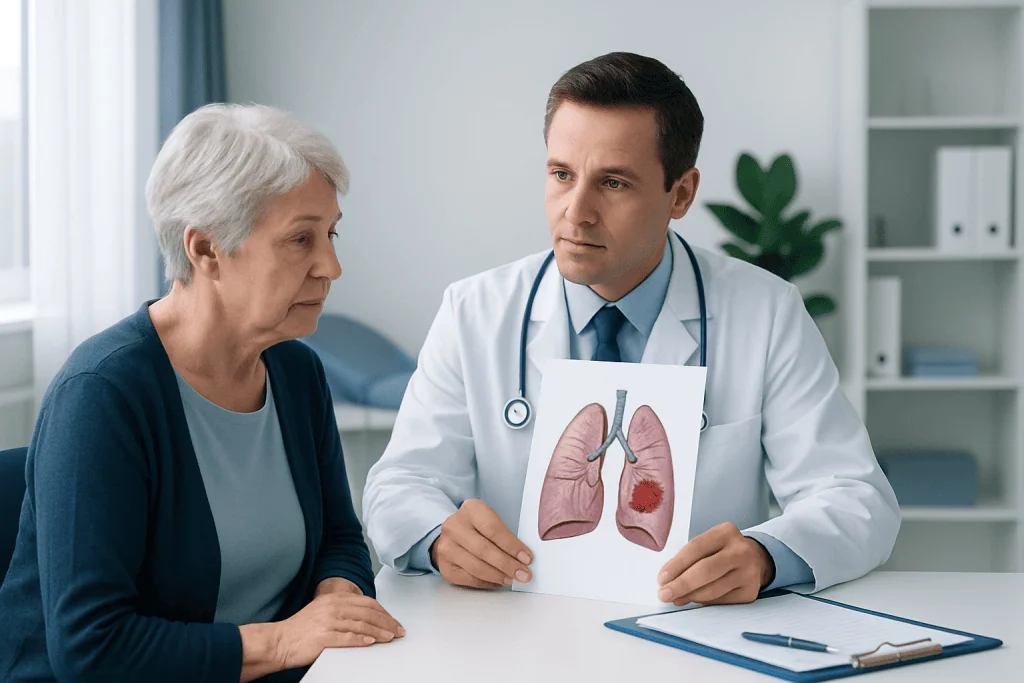
The most important risk factor for primary lung cancer is tobacco exposure, including cigarette smoking and long-term secondhand smoke exposure. However, cancerous lung tumors can also develop in people who have never smoked. This is one reason doctors take a broad view of risk and do not rely on smoking history alone.
Other risk factors include exposure to radon gas, air pollution, asbestos, silica, diesel exhaust, and some workplace chemicals. A personal history of lung disease, prior chest radiation, or a family history of lung cancer may also increase risk. Age is another factor, as lung cancer becomes more common later in life.
Risk factors help explain why a tumor may have developed, but they do not confirm a diagnosis. Likewise, the absence of obvious risk factors does not rule cancer out. Once a suspicious tumor is seen on imaging, the next steps focus on confirming the diagnosis and understanding the tumor’s behavior.
Biopsy and diagnostic tests
A biopsy is the key test used to confirm whether a lung tumor is cancerous. During a biopsy, a small sample of tissue or cells is taken and examined under a microscope by a pathologist. This not only confirms cancer but also identifies the cancer subtype, which is essential for treatment planning.
Doctors choose the biopsy method based on the tumor’s size and location, as well as the patient’s general health. Options may include bronchoscopy, where a thin flexible tube is passed into the airways; needle biopsy through the chest wall guided by CT or ultrasound; or a surgical biopsy when less invasive methods are not suitable. Suspicious lymph nodes may also be sampled because they can help determine stage.
Imaging is usually done before and after biopsy. A chest X-ray may detect an abnormality, but CT scanning provides more detail about the tumor and surrounding structures. PET-CT can help show whether cancer is active in lymph nodes or other organs, and MRI may be used when there is concern about spread to the brain or nearby tissues. Pulmonary function tests and blood tests may also be requested to assess treatment fitness.
In many cases, the biopsy sample is also tested for biomarkers or genetic changes. These molecular tests may identify whether lung cancer is likely to respond to targeted therapy or immunotherapy. This additional information can be especially important in advanced disease and helps make treatment more personalized.
What staging means and why it matters
Staging describes how far a cancer has spread. In broad terms, doctors look at the size and location of the main tumor, whether nearby lymph nodes are involved, and whether the cancer has spread to distant organs. This process helps determine prognosis and guides decisions about which treatments are most likely to help.
For non-small cell lung cancer, staging commonly uses the TNM system: T for the primary tumor, N for lymph node involvement, and M for metastasis. Small cell lung cancer may be described as limited stage or extensive stage, although detailed staging can also be used. Staging combines information from scans, biopsy results, and sometimes surgical findings.
Early-stage cancers may be treated with the aim of cure, often with surgery or highly focused radiation. More advanced stages may require combinations of systemic treatment, radiation, and supportive care. Accurate staging helps avoid under-treatment and over-treatment, making it a central part of treatment planning.
Treatment planning and available options
Treatment planning for cancerous lung tumors usually involves a multidisciplinary team that may include a pulmonologist, thoracic surgeon, medical oncologist, radiation oncologist, radiologist, and pathologist. The team considers the cancer type, stage, molecular test results, symptoms, lung function, other medical conditions, and the patient’s goals and preferences.
Surgery may be recommended for selected early-stage tumors when the cancer appears confined and the person is fit for an operation. Depending on the location and size of the tumor, this may involve removal of a small part of the lung, a lobe, or more extensive surgery. For patients who are surgical candidates, lung cancer surgery may offer the best chance of complete removal.
Radiation therapy is often used when surgery is not suitable, after surgery in some situations, or to relieve symptoms. Highly focused approaches can treat small tumors precisely while limiting exposure to healthy tissue. In selected cases, doctors may discuss radiation therapy as a main treatment or as part of a combined plan.
Systemic treatments travel through the body and are especially important when cancer has spread or when there is a higher risk of microscopic disease. These include chemotherapy, immunotherapy, and targeted therapy. The choice depends on the biopsy results and biomarker testing. For some people, treatments are given in sequence, while for others they are combined. Throughout care, symptom relief, nutrition support, rehabilitation, and smoking cessation are also important parts of treatment.
Prevention, self-care, and follow-up
Not all cancerous lung tumors can be prevented, but risk can be reduced. Avoiding smoking is the single most effective step, and quitting smoking after diagnosis can still improve treatment tolerance, recovery, and overall health. Reducing exposure to secondhand smoke, radon, and occupational inhaled toxins also matters.
People at higher risk may benefit from discussing screening with a doctor. In appropriate candidates, low-dose CT screening can help find some lung cancers earlier, before symptoms appear. Screening is not for everyone, so eligibility should be assessed individually.
After diagnosis or treatment, self-care remains important. Eating well, staying physically active within personal limits, keeping vaccinations up to date when appropriate, and attending scheduled follow-up visits can support recovery. Follow-up commonly includes imaging and clinical review to monitor treatment response, manage side effects, and check for recurrence.
Near the end of the care pathway, some patients also seek coordinated international care. Acibadem International’s multidisciplinary specialists and JCI-accredited hospitals diagnose and treat cancerous lung tumors for international patients, with evaluation tailored to the individual case.
When to see a doctor
A doctor should assess symptoms such as a cough lasting several weeks, worsening shortness of breath, unexplained chest pain, repeated chest infections, or coughing up blood. Prompt evaluation is also important if there is unexplained weight loss, persistent fatigue, or new hoarseness, especially in a person with smoking history or other risk factors.
People who have been told they have a lung nodule or suspicious mass should follow through with recommended scans and specialist visits, even if they feel well. Early clarification can reduce uncertainty and allow treatment to begin sooner if needed.
Urgent medical attention is needed for severe breathing difficulty, significant bleeding when coughing, chest pain with distress, or sudden neurological symptoms such as weakness, confusion, or severe headache. These symptoms do not always mean cancer progression, but they do need immediate assessment.
Frequently asked questions
Is a biopsy always needed for a cancerous lung tumor?
In most cases, yes. A biopsy is usually needed to confirm that a tumor is cancerous and to identify the exact type of lung cancer. In some special situations, treatment decisions may be based on imaging and overall clinical findings, but tissue diagnosis is generally the standard.
What is the difference between a lung nodule and a cancerous lung tumor?
A lung nodule is a general term for a small spot or lesion seen on imaging, and many nodules are not cancer. A cancerous lung tumor is a growth proven or strongly suspected to be malignant. Further imaging, follow-up, or biopsy may be needed to tell the difference.
How long does lung cancer staging take?
The timing varies depending on which scans, biopsy procedures, and laboratory tests are needed. Some people complete staging within days, while others need a little longer if additional biopsies or molecular tests are required. Although waiting can feel difficult, accurate staging is important for choosing the best treatment.
Can cancerous lung tumors be cured?
Some can, especially when they are found at an early stage and can be fully treated with surgery, radiation, or a combined approach. Even when cure is not possible, treatment may still slow the disease, relieve symptoms, and improve quality of life. The outlook depends on the cancer type, stage, and response to treatment.
What treatments are used if surgery is not possible?
If surgery is not suitable, doctors may recommend radiation therapy, chemotherapy, targeted therapy, immunotherapy, or combinations of these treatments. The choice depends on the type and stage of the cancer, as well as the person’s lung function and general health. Supportive care is also an important part of treatment.
Does smoking cessation still help after diagnosis?
Yes. Quitting smoking after a diagnosis can help breathing, support healing, and improve how well some treatments are tolerated. It also benefits heart and lung health overall, so it remains worthwhile at any stage.
References
- World Health Organization
- National Cancer Institute
- American Cancer Society
- National Comprehensive Cancer Network
- European Society for Medical Oncology
This article is for general information only and is not a substitute for professional medical advice. Please consult a qualified doctor about your individual situation.
Oncology care in Turkey — second opinion and treatment plan
JCI-accredited · board-certified surgeons · reply within 24h
Add us as a Preferred Source to see more of our trusted health content across Google Search, AI Overviews and Discover.