Cancerous Lung Tumors: What They Are and How Doctors Evaluate Them

Cancerous lung tumors may cause cough, shortness of breath, chest pain, or no symptoms at all. Doctors usually evaluate suspicious lung tumors with imaging tests, biopsy, and staging studies.
Key Takeaways
- Cancerous lung tumors may cause cough, shortness of breath, chest pain, or no symptoms at all.
- Doctors usually evaluate suspicious lung tumors with imaging tests, biopsy, and staging studies.
- Not every lung mass or nodule is cancer, but any concerning finding should be assessed promptly.
- Treatment depends on tumor type, stage, overall health, and whether surgery, radiation, or systemic therapy is most suitable.
- Stopping smoking and keeping follow-up appointments are important parts of prevention and early detection.
Cancerous lung tumors are abnormal growths in the lungs that can behave differently depending on their type, size, and stage. Careful evaluation helps doctors confirm whether a tumor is cancerous and guide the most appropriate treatment plan.
Overview
Cancerous lung tumors are abnormal growths in lung tissue that have the potential to invade nearby structures or spread to other parts of the body. They are often discussed under the broader term lung cancer, but the exact diagnosis depends on what the cells look like under a microscope and how the tumor behaves. Some start in the lungs, while others represent cancer that has spread from another organ.
Doctors often first discover a suspicious lung tumor on a chest X-ray or CT scan done for symptoms such as cough or for another reason entirely. In some people, the abnormality is a small lung nodule. In others, it may be a larger mass or a tumor linked with enlarged lymph nodes, fluid around the lung, or airway blockage.
Not every lung growth is cancer. Infections, inflammation, scar tissue, and certain benign tumors can also appear on imaging. Because of this, the goal of evaluation is not simply to find a spot in the lung, but to determine exactly what it is, how serious it may be, and what next steps are safest and most effective.
Types of Cancerous Lung Tumors
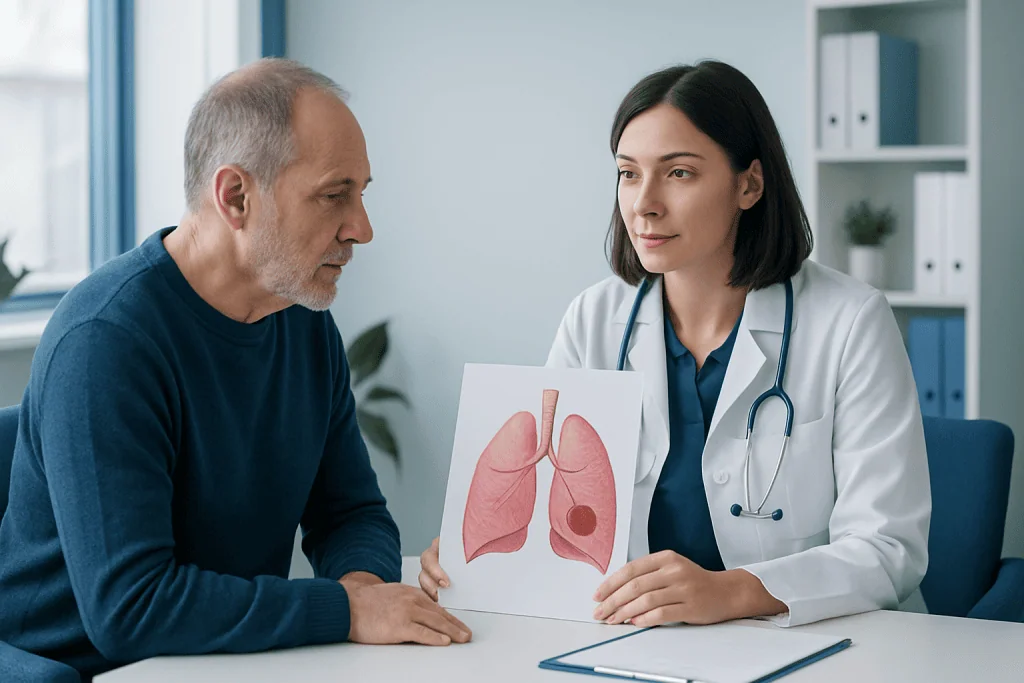
The main types of cancerous lung tumors are non-small cell lung cancer and small cell lung cancer. Non-small cell lung cancer is more common and includes subtypes such as adenocarcinoma, squamous cell carcinoma, and large cell carcinoma. These tumors can differ in where they begin in the lung, how quickly they grow, and which treatments may work best.
Small cell lung cancer is less common but tends to grow and spread more quickly. It is strongly associated with smoking and is often treated with systemic therapies and radiation rather than surgery alone. A doctor may also evaluate whether a tumor is a primary lung cancer or a metastatic lesion that has spread from a different cancer elsewhere in the body.
Some patients are told they have a suspicious lung cancer lesion before a biopsy confirms the diagnosis. Others may have related findings such as a lung nodule or enlarged lymph nodes in the chest. Identifying the exact tumor type is essential because modern treatment decisions increasingly depend on pathology and, in many cases, molecular or genetic testing of the tumor cells.
Symptoms and Warning Signs
Cancerous lung tumors can cause symptoms, but they may also be silent in the early stages. A persistent cough is one of the most common concerns. Other symptoms may include coughing up blood, shortness of breath, wheezing, chest discomfort, repeated chest infections, hoarseness, or unexplained weight loss.
Symptoms often depend on the tumor’s size and location. A tumor near a major airway may trigger cough, wheezing, or recurrent pneumonia because it narrows or blocks airflow. A tumor near the outer part of the lung may cause little to no breathing-related symptoms at first and may only be found on imaging.
More advanced disease can sometimes lead to fatigue, loss of appetite, bone pain, headaches, or swelling in the face or neck if important blood vessels are compressed. These symptoms do not always mean cancer is present, but they are reasons to seek medical attention. Early evaluation helps doctors determine whether symptoms are due to cancer, infection, chronic lung disease, or another treatable condition.
Causes and Risk Factors
Smoking is the leading risk factor for cancerous lung tumors. This includes current smoking, past smoking, and long-term exposure to secondhand smoke. However, people who have never smoked can also develop lung cancer, especially certain types such as adenocarcinoma.
Other risk factors include exposure to radon gas, asbestos, air pollution, diesel exhaust, and some workplace chemicals. A personal history of chronic lung disease, prior radiation to the chest, or a family history of lung cancer may also increase risk. Age is another factor, as cancerous tumors become more common later in life.
Risk factors help doctors understand who may be more vulnerable, but they do not confirm a diagnosis. Some people with several risk factors never develop cancer, while others with few recognized risks do. For this reason, any suspicious lung finding should be assessed based on imaging appearance, symptoms, and medical history rather than assumptions alone.
How Doctors Evaluate a Suspected Lung Tumor
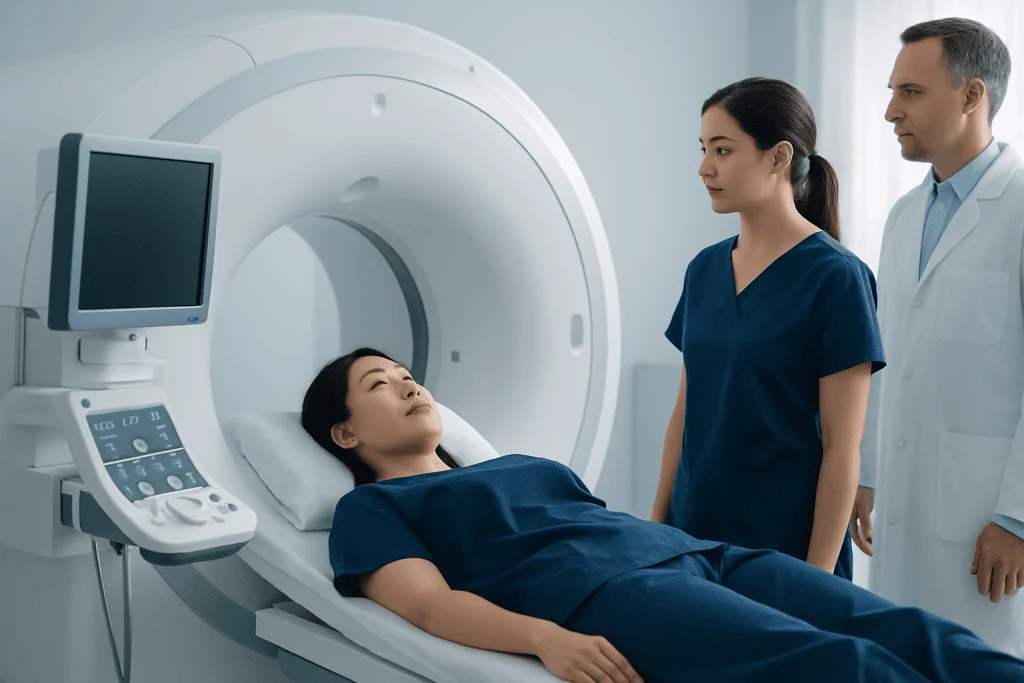
Evaluation usually begins with a detailed medical history and physical examination. The doctor asks about symptoms, smoking history, workplace exposures, prior cancers, and overall health. Imaging is central to the next step. A chest X-ray may detect an abnormality, but a chest CT scan gives much more detailed information about the tumor’s size, shape, location, and whether nearby lymph nodes appear involved.
If imaging suggests possible cancer, doctors may order additional tests such as PET-CT to look for areas of high metabolic activity and to help assess spread beyond the lung. Brain imaging may be recommended in some cases, especially if there are neurological symptoms or if a more advanced cancer is suspected. Pulmonary function tests can also be important, particularly if surgery is being considered, because they show how well the lungs are working.
Confirming the diagnosis usually requires a biopsy. This may be done with bronchoscopy if the tumor is near the airways, with a CT-guided needle biopsy if it is closer to the outer lung, or through a surgical procedure in selected cases. The tissue sample is examined by a pathologist to determine the cell type. For many tumors, doctors also request molecular testing and biomarker analysis, which can identify targets for newer medicines and support a more personalized treatment plan.
Staging and What the Results Mean
Once a biopsy confirms cancer, the next step is staging. Staging describes how large the tumor is, whether it has grown into nearby tissues, whether lymph nodes are involved, and whether it has spread to distant organs. This information is important because treatment choices for an early-stage tumor can be very different from those for more advanced disease.
Doctors may use CT, PET-CT, MRI, bronchoscopy-based sampling of chest lymph nodes, or other procedures to complete staging. In some people, minimally invasive procedures help assess lymph nodes in the center of the chest before surgery. The stage does not predict everything about a person’s outcome, but it gives the care team a common framework for planning therapy and discussing goals.
Test results also help determine whether a tumor appears operable and whether the patient is likely to tolerate treatment safely. For example, a small localized tumor in a person with good lung function may be approached differently from a larger tumor in someone with severe chronic lung disease. These decisions are often best made by a multidisciplinary team that includes chest physicians, thoracic surgeons, medical oncologists, radiation oncologists, radiologists, and pathologists.
Treatment Options
Treatment for cancerous lung tumors depends on the tumor type, stage, molecular features, and the patient’s general health. Surgery may be an option for some early-stage cancers that have not spread widely. Operations can range from removing a small part of the lung to a larger resection, depending on the tumor’s location and extent. In suitable cases, lung cancer treatment may combine surgery with chemotherapy, immunotherapy, or radiation.
Radiation therapy can be used alone, after surgery, or together with other treatments. It may be especially helpful when surgery is not the best option or when a tumor is in a location that makes an operation difficult. Systemic treatments include chemotherapy, targeted therapy, and immunotherapy. These are selected based on the exact cancer type and, increasingly, on molecular test results from the tumor.
Supportive care is also an important part of treatment. This may include help with breathing symptoms, pain control, nutrition, smoking cessation, and emotional support. In some situations, doctors use procedures such as endobronchial ultrasound-guided evaluation to assess lymph nodes, or thoracic surgery to diagnose or remove tumors. Near the end of the treatment pathway, patients may wish to know that Acibadem International’s multidisciplinary specialists in JCI-accredited hospitals evaluate and treat lung tumors for international patients using coordinated respiratory, imaging, surgical, and oncology care.
Prevention, Follow-up, and When to See a Doctor
The most effective way to lower the risk of cancerous lung tumors is not to smoke, or to stop smoking if currently smoking. Avoiding secondhand smoke and reducing exposure to workplace hazards are also important. In some people at higher risk, doctors may recommend low-dose CT screening for early detection. Screening is not for everyone, so it should be discussed with a qualified physician.
After a suspicious tumor is found, follow-up matters. Some small nodules are monitored with repeat imaging over time to see whether they change. Others need more urgent biopsy or treatment. Keeping imaging appointments and specialist visits helps prevent delays and allows doctors to compare changes accurately.
A person should see a doctor if they have a cough that does not improve, unexplained shortness of breath, chest pain, recurrent lung infections, coughing up blood, or unexplained weight loss. These symptoms are not specific to cancer, but they should not be ignored. Prompt medical advice offers the best chance of identifying the cause and starting the right care plan early.
Frequently asked questions
Are all lung tumors cancerous?
No. Some lung tumors or nodules are benign and may be caused by old infections, inflammation, or noncancerous growths. Doctors use imaging, follow-up scans, and often a biopsy to determine whether a tumor is cancerous.
What is the difference between a lung nodule and a lung mass?
A lung nodule is generally a smaller round spot seen on imaging, while a lung mass is larger and may be more concerning for cancer. Size alone does not make the diagnosis, but larger lesions usually need closer evaluation.
How do doctors confirm that a lung tumor is cancer?
A tissue sample is usually needed to confirm the diagnosis. This is often obtained through bronchoscopy, needle biopsy, or surgery, and then examined under a microscope by a pathologist.
Can cancerous lung tumors be found before symptoms start?
Yes. Some are discovered incidentally on scans performed for other reasons, and some are found through screening in people at higher risk. This is one reason early evaluation of imaging findings is important.
Is surgery always needed for a cancerous lung tumor?
No. Surgery is most often used for selected early-stage tumors and for patients who are fit enough for an operation. Many patients are treated with radiation, chemotherapy, immunotherapy, targeted therapy, or a combination of these approaches.
What happens after a lung cancer diagnosis is confirmed?
Doctors usually complete staging tests to see whether the cancer is localized or has spread. They also review lung function, overall health, and sometimes tumor biomarkers to build an individualized treatment plan.
References
- World Health Organization
- National Cancer Institute
- American Cancer Society
- American Lung Association
- National Comprehensive Cancer Network
This article is for general information only and is not a substitute for professional medical advice. Please consult a qualified doctor about your individual situation.
Oncology care in Turkey — second opinion and treatment plan
JCI-accredited · board-certified surgeons · reply within 24h
Add us as a Preferred Source to see more of our trusted health content across Google Search, AI Overviews and Discover.

More from the Health Library



Related Specialists

Prof. Dr. İlkan Dünder
Gynecology & Obstetrics
Dr. Alper Koçak
Gynecology & Obstetrics
Dr. Ayfer Pepekal Kükrer
Gynecology & Obstetrics
Prof. Dr. Şafak Kıziltaş
Gastroenterology