PRP Treatment: How Platelet-Rich Plasma Therapy Works

PRP treatment uses concentrated platelets from the patient’s own blood. It may help support healing in some tendon, joint, skin, and scalp conditions.
Key Takeaways
- PRP treatment uses concentrated platelets from the patient’s own blood.
- It may help support healing in some tendon, joint, skin, and scalp conditions.
- The procedure usually involves a blood draw, centrifugation, and targeted injection.
- Results vary by condition, technique, and individual response.
- PRP is generally well tolerated, but it is not suitable for everyone.
- A specialist can help decide whether PRP is appropriate or whether other treatments are better.
PRP treatment, or platelet-rich plasma therapy, uses a concentrated portion of a person’s own blood to support tissue repair and healing. It is used in selected orthopedic, sports medicine, skin, and hair-related conditions, usually as a minimally invasive office-based procedure.
Overview of PRP treatment
PRP treatment stands for platelet-rich plasma treatment. It is a medical procedure that uses a concentrated sample of platelets taken from the patient’s own blood. Platelets are best known for helping blood clot, but they also contain growth factors and signaling proteins that may support tissue repair. For this reason, PRP therapy is used in a range of fields, including orthopedics, sports medicine, dermatology, and hair restoration.
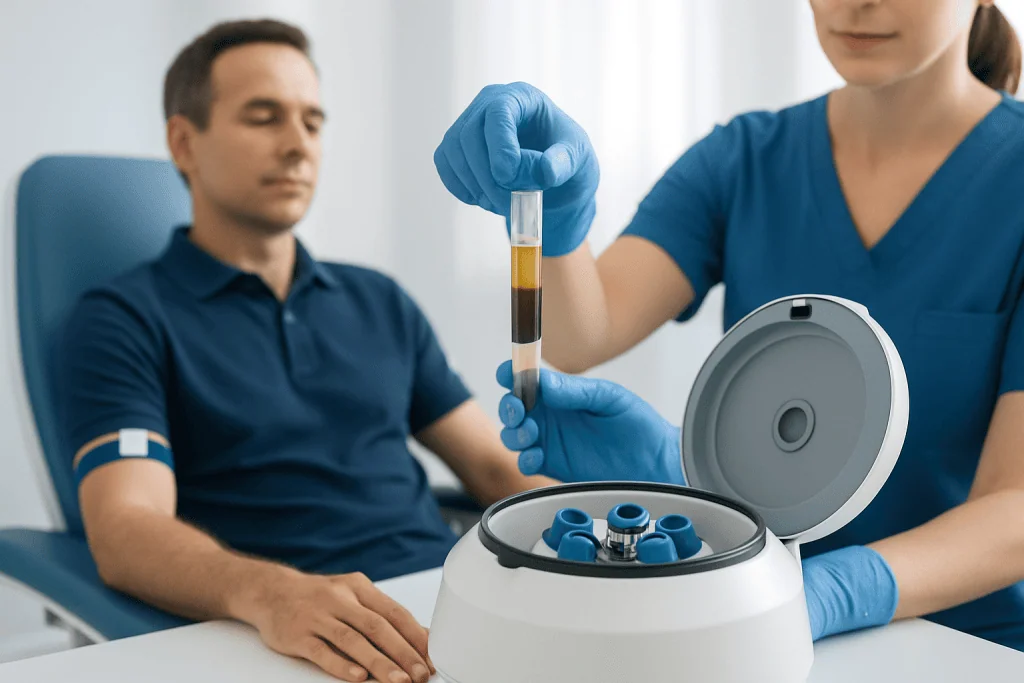
The basic idea is simple. A small amount of blood is drawn, processed in a machine called a centrifuge, and separated so that the platelet-rich portion can be collected. This concentrated plasma is then injected into a targeted area, such as an injured tendon, a painful joint, the scalp, or the skin. Because the material comes from the patient’s own body, the risk of allergic reaction is generally low.
PRP is not a cure-all, and it does not work the same way for every person or every condition. In some cases, it may help reduce symptoms and improve function; in others, the benefit may be limited or uncertain. The best results are usually seen when PRP is used for carefully selected conditions and combined with a wider treatment plan, such as physical therapy, activity modification, or other medical care.
How platelet-rich plasma therapy works
Platelet-rich plasma therapy is based on the body’s natural healing response. When tissues are injured, platelets gather at the site and release substances that help coordinate repair. These include growth factors that influence inflammation, blood vessel formation, and the activity of nearby cells involved in healing. PRP aims to deliver a higher concentration of these platelets to a specific area that may be healing slowly.
After the blood sample is processed, the concentration and composition of PRP can vary depending on the system used and the treatment goal. Some preparations contain more white blood cells, while others are designed to be more purely platelet-based. This is one reason PRP results can differ across clinics and medical studies. Technique matters, and many specialists use ultrasound guidance when injecting PRP into tendons or joints to improve placement.
PRP does not replace damaged tissue instantly. Instead, it is intended to stimulate biological processes that develop over time. Some people notice improvement within a few weeks, while others may take longer. For skin and hair uses, repeated sessions are often recommended because the goal is gradual support of tissue quality or hair growth rather than immediate change.
When PRP may be used

Doctors may recommend PRP treatment for selected musculoskeletal problems, especially when symptoms have lasted for some time and conservative treatment has not provided enough relief. PRP is commonly discussed for tendon injuries such as tennis elbow, certain Achilles tendon problems, patellar tendinopathy, and some ligament or muscle injuries. It may also be considered for mild to moderate joint symptoms, including selected cases of knee osteoarthritis.
In dermatology and aesthetic medicine, PRP may be used to support skin rejuvenation and to help improve the appearance of fine lines, texture, and healing after procedures. It is also used for some forms of hair thinning, especially androgenetic hair loss, where it may help support existing hair follicles. Patients exploring PRP for cosmetic or scalp concerns may also be assessed alongside options such as hair transplant treatment or other dermatologic therapies.
PRP is sometimes used as part of a broader treatment plan rather than on its own. For example, a person with chronic tendon pain may also benefit from physical therapy and rehabilitation to improve strength, mobility, and movement patterns. In orthopedic care, PRP may be considered before or after other interventions depending on the diagnosis, severity of symptoms, and the patient’s goals.
Not every condition is a good fit for PRP. It is less likely to help when tissue damage is severe, when there is major structural instability, or when symptoms are caused by problems that require different treatment, such as advanced arthritis, significant tears, infection, or nerve-related pain. A proper diagnosis is essential before deciding on PRP.
What happens during the procedure
PRP treatment is usually performed in an outpatient setting. The visit often begins with a review of symptoms, medications, previous treatments, and imaging if needed. A blood sample is taken from a vein in the arm, much like a routine blood test. This sample is then placed in a centrifuge, which spins the blood to separate its components and isolate the platelet-rich plasma.
Once the PRP is prepared, the doctor cleans the treatment area and may use local numbing measures depending on the site and technique. The PRP is then injected into the target tissue. For joints, tendons, and some soft-tissue areas, imaging guidance such as ultrasound may be used to improve accuracy. The procedure itself is usually fairly quick, although the total appointment takes longer because of the preparation steps.
After the injection, mild soreness, fullness, or temporary swelling can occur. This often settles over a few days. Doctors usually provide instructions about activity, pain relief, and follow-up. Some people are advised to avoid anti-inflammatory medicines around the time of treatment because PRP relies on the body’s healing response, but medication guidance should always come from the treating clinician.
Benefits, limitations, and possible side effects
The main attraction of PRP treatment is that it uses the patient’s own blood and is minimally invasive. For the right problem, it may help reduce pain, improve function, and support healing without surgery. It can also be an option for people who want to explore treatments between basic conservative care and more invasive procedures. In some fields, PRP is used alongside other therapies, such as regenerative medicine approaches or structured rehabilitation, although suitability depends on the diagnosis and evidence for that use.
At the same time, PRP has limitations. Scientific evidence is stronger for some conditions than for others, and treatment protocols are not fully standardized. Differences in platelet concentration, injection technique, number of sessions, and patient selection can all affect outcomes. This means one person may experience noticeable benefit while another may have only modest improvement or none at all.
Side effects are usually mild and local. They may include pain at the injection site, bruising, swelling, or a temporary increase in symptoms shortly after treatment. Because PRP comes from the patient’s own blood, allergic reactions are uncommon, but any injection carries a small risk of infection, bleeding, or injury to nearby structures. Serious complications are uncommon when the procedure is performed by trained professionals under appropriate sterile conditions.
PRP may not be appropriate for people with certain blood disorders, active infections, severe anemia, low platelet counts, or those taking medicines that significantly affect platelet function. Pregnancy, cancer history, autoimmune disease, or recent steroid injections may also influence whether PRP is advisable. A full medical review helps clarify safety and likely benefit.
Recovery, aftercare, and expected results
Recovery after PRP treatment depends on the body area treated. Many people can return home the same day and resume light activities soon after, but the treated area may need relative rest for a short period. For orthopedic injections, clinicians often advise avoiding intense exercise, heavy loading, or impact activities at first. A graduated return to normal activity is usually recommended, often with supervised rehabilitation.
Improvement is typically gradual rather than immediate. In tendon and joint conditions, symptoms may briefly flare before settling and then improve over several weeks or months. For hair and skin uses, benefits may require a series of sessions and maintenance treatments. It helps to have realistic expectations: PRP aims to support healing or tissue quality, not necessarily to reverse all underlying damage.
Follow-up appointments are important so the doctor can assess progress, function, and whether additional sessions or other treatments are needed. If PRP does not bring enough improvement, the care plan may be adjusted. Depending on the diagnosis, alternatives might include medications, bracing, rehabilitation, minimally invasive procedures, or surgery. In selected orthopedic cases, PRP may be discussed alongside options such as knee replacement surgery when joint damage is advanced and symptoms are severe.
Who should consider PRP and when to see a doctor
PRP may be worth discussing with a doctor when symptoms have not improved with rest, exercise therapy, or other standard treatments, and when there is a clear diagnosis that may respond to regenerative support. It can be especially relevant for chronic tendon pain, selected early joint degeneration, and some hair or skin concerns. The best candidates are usually people who understand that PRP is one option within a broader care plan and that results cannot be guaranteed.
A medical assessment is important before treatment. The doctor may examine the affected area, review blood-thinning or anti-inflammatory medications, and request imaging or laboratory tests if necessary. This helps rule out conditions that need different treatment, such as fractures, major tears, infection, inflammatory disease, or advanced structural damage. It also helps identify people who may not be suitable for PRP for safety reasons.
People should seek medical advice promptly if they have persistent joint swelling, sudden weakness, severe pain, fever, redness, numbness, major loss of function, or an injury that prevents normal weight-bearing or use of a limb. These features may point to a problem that needs urgent evaluation rather than elective injection therapy. For international patients, Acibadem International’s multidisciplinary specialists in JCI-accredited hospitals evaluate PRP candidacy and related treatment options as part of individualized care.
Frequently asked questions
What is PRP treatment used for?
PRP treatment is used in selected bone, joint, tendon, skin, and hair conditions. Common examples include chronic tendon pain, some mild to moderate joint problems, and certain types of hair thinning. Whether it is appropriate depends on the diagnosis and the quality of evidence for that specific use.
How long does it take for PRP to work?
PRP usually works gradually rather than immediately. Some people notice changes within a few weeks, while others may need several months to feel the full effect. Hair and skin treatments often require multiple sessions before benefits become more noticeable.
Is PRP treatment painful?
Most people find PRP treatment tolerable, though some discomfort can happen during the blood draw and injection. Mild soreness or swelling afterward is common and usually short-lived. The level of discomfort often depends on the treatment area and the injection technique.
How many PRP sessions are needed?
The number of sessions varies by condition, severity, and the doctor’s treatment plan. Some musculoskeletal problems may be treated with a single injection, while skin or hair concerns often involve a series of sessions. Follow-up helps determine whether more treatment is likely to be useful.
Are PRP injections safe?
PRP injections are generally considered safe when performed by qualified clinicians using sterile technique. Because the plasma comes from the patient’s own blood, allergic reactions are uncommon. However, there are still small risks such as infection, bleeding, bruising, or temporary worsening of pain.
Who should avoid PRP therapy?
PRP may not be suitable for people with active infection, certain blood disorders, very low platelet counts, severe anemia, or some medication-related bleeding risks. Other medical conditions may also affect candidacy. A doctor should review the person’s health history before treatment is planned.
References
- American Academy of Orthopaedic Surgeons
- National Institute for Health and Care Excellence
- American Academy of Dermatology
- Mayo Clinic
- U.S. Food and Drug Administration
This article is for general information only and is not a substitute for professional medical advice. Please consult a qualified doctor about your individual situation.
Hair transplant in Turkey — costs, graft counts & a free assessment
JCI-accredited · board-certified surgeons · reply within 24h
Add us as a Preferred Source to see more of our trusted health content across Google Search, AI Overviews and Discover.

More from the Health Library



Related Specialists

Dr. Selin Alponat
Breast Clinic Clinical Service
Dr. Özgün Barış Çolak
Physical Medicine & Rehabilitation
Prof. Dr. Yaşar Ünlü
Otorhinolaryngology
Dr. Sena Arıcı
Internal Medicine