

Knee Replacement in Turkey: Recovery Timeline and Aftercare

Knee replacement in Turkey can relieve pain and improve mobility. This guide explains options, recovery, travel planning, and aftercare in Istanbul.
This guide explains knee replacement in Turkey, including who it may help, treatment options, hospital stay, recovery timeline, aftercare, travel planning, and what to expect before and after surgery. It is designed to help you make a well-informed decision with practical information for international patients.
At a glance
- Procedure type: Major orthopedic surgery
- Purpose: To reduce knee pain, improve function, and restore mobility when the joint is severely damaged
- Anesthesia: Usually spinal or general anesthesia, depending on your health and surgical plan
- Hospital stay: Typically a few days, depending on recovery progress and rehabilitation needs
- Estimated recovery: Early recovery in weeks, with continued improvement over several months
- Return to daily life: Light daily activities often resume within weeks, with gradual return based on mobility and rehabilitation
- Final result timeline: Improvement continues for months as strength, flexibility, and walking pattern recover
- Suitable department: Orthopedics and Traumatology
- International patient support: Interpreter services, transfer coordination, accommodation guidance, and remote follow-up support
What is this treatment?
Knee replacement, also called knee arthroplasty, is an operation used to replace damaged joint surfaces in the knee with artificial components. It is most often considered when knee cartilage has worn away due to arthritis, age-related degeneration, previous injury, or other joint conditions, leading to persistent pain, stiffness, and difficulty walking.
The goal is not simply to change the joint on an X-ray. The main aim is to help you move more comfortably, reduce pain that affects sleep or daily activities, and improve your quality of life. Depending on the pattern of damage, your surgeon may recommend replacing the whole knee joint or only the affected part.
For international patients, knee replacement in Turkey is usually planned as a coordinated pathway that includes specialist assessment, imaging review, surgery, in-hospital recovery, physiotherapy, and follow-up. At Acibadem International, orthopedic care is supported by multidisciplinary teams and international patient services to help you navigate each step with clarity.
When is it recommended?
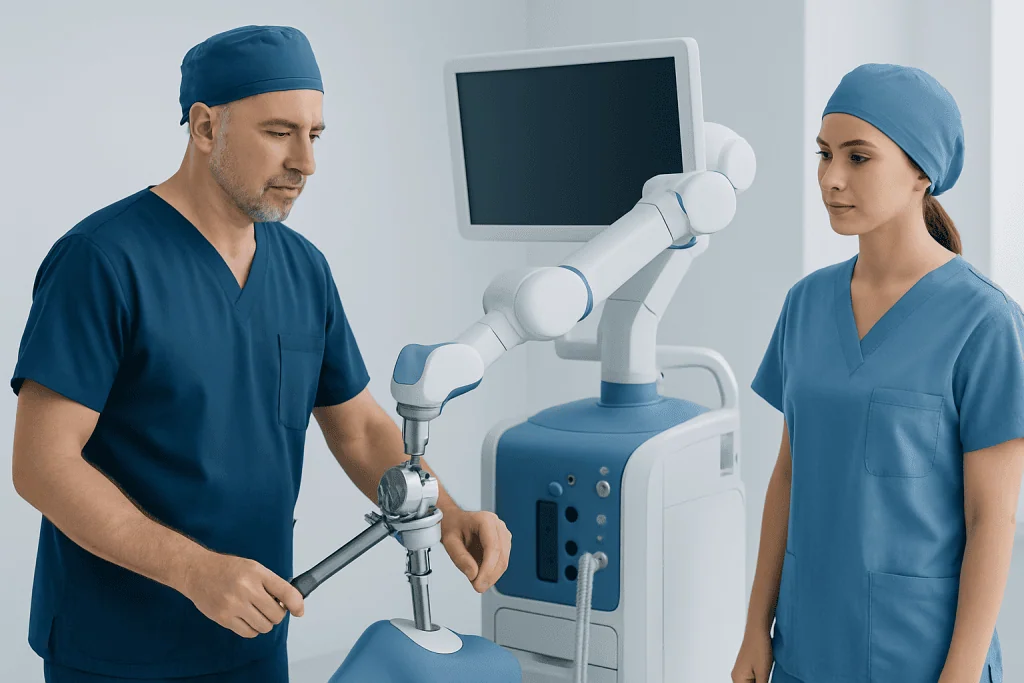
Knee replacement is generally recommended when knee pain and stiffness have become significant enough to affect your daily routine and when non-surgical measures no longer give enough relief. This may include difficulty walking, climbing stairs, standing for long periods, getting up from a chair, or sleeping because of pain.
It is commonly considered in advanced osteoarthritis, rheumatoid arthritis, post-traumatic arthritis, or major cartilage loss and joint deformity. Your doctor may also assess whether your knee is unstable, whether there is a bowing or alignment problem, and how much the condition is affecting your independence.
Before recommending surgery, your orthopedic specialist usually reviews your symptoms, examination findings, imaging, current medications, and previous treatments such as injections, physiotherapy, weight management, braces, or pain relief strategies. The decision is based on your overall function and expectations, not only on scan findings.
Who is a good candidate?
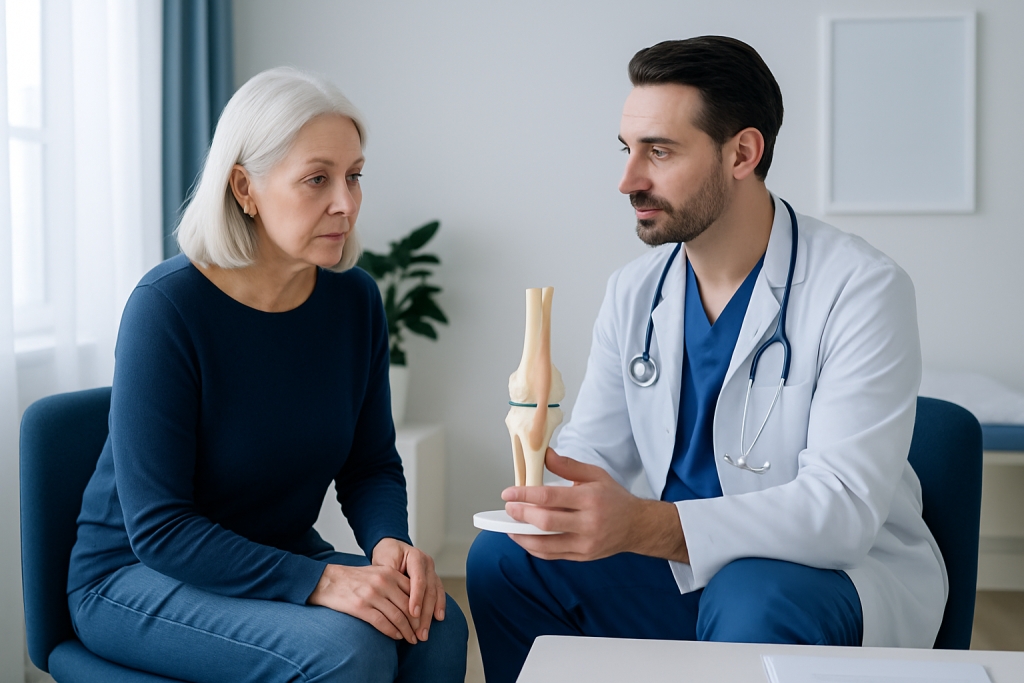
You may be a good candidate if you have ongoing knee pain, stiffness, or limited mobility that has not improved enough with non-surgical treatment. Many suitable patients find that their knee problem now interferes with work, basic household activities, walking distance, or enjoyment of everyday life.
Good candidates are also people who are medically fit enough for surgery and rehabilitation. Your orthopedic surgeon and anesthesia team will review your general health, including heart and lung conditions, diabetes, circulation, previous blood clot history, body weight, infection risk, and any other factors that may affect healing or surgical safety.
Motivation matters as well. Knee replacement recovery depends heavily on physiotherapy, movement, and regular exercises after surgery. If you are prepared to take an active role in rehabilitation and you have realistic expectations about gradual improvement, you are more likely to benefit from the procedure.
Treatment options
The right option depends on where the joint damage is located, how severe it is, your age, your activity level, the alignment of your knee, and your general health. Your orthopedic specialist will explain whether surgery is the best next step or whether further non-surgical treatment is still reasonable.
Common options may include:
- Total knee replacement: the entire knee joint surface is replaced. This is often recommended when arthritis affects multiple parts of the knee.
- Partial knee replacement: only the damaged compartment is replaced. This may be suitable if the disease is limited to one part of the knee and the ligaments are functioning well.
- Revision knee replacement: this is performed when a previous knee replacement has worn out, loosened, become unstable, or developed another complication.
- Non-surgical management: in selected cases, medication, injections, physiotherapy, or lifestyle changes may still be considered before surgery.
Your surgeon will also decide on details such as implant type, fixation method, and surgical approach based on your anatomy and medical needs. The most appropriate plan is always individualized after specialist review and imaging assessment.
Online evaluation before travel
If you are traveling from abroad, an online evaluation can help determine whether knee replacement in Turkey may be suitable before you make travel arrangements. You are usually asked to share your medical history, current symptoms, previous treatments, medication list, and recent imaging such as knee X-rays or MRI scans if available.
Photographs or videos showing how you walk, bend the knee, or any visible deformity may occasionally be useful. Based on the information you send, the medical team can provide a preliminary review and advise whether further tests are likely to be needed after arrival.
This stage is helpful for planning, but it does not replace an in-person examination. Final decisions about suitability, surgical method, and timing are made only after your orthopedic consultation and any required pre-operative tests in Turkey.
Before the treatment
Before surgery, you will have a detailed orthopedic consultation and a pre-anesthesia assessment. Your doctor will review your symptoms, examine your knee, confirm the diagnosis with imaging, and discuss what surgery can and cannot realistically achieve. This is the right time to talk openly about your goals, pain level, walking limitations, and any concerns about travel or recovery.
Pre-operative tests commonly include blood tests, heart assessment when needed, and sometimes additional imaging. If you have chronic conditions such as diabetes, high blood pressure, heart disease, or lung disease, these should be reviewed carefully so your care can be planned as safely as possible.
You may be advised about medication adjustments before surgery, especially if you take blood thinners, diabetes medication, or immune-related treatments. Smoking cessation, nutrition support, and infection prevention are also important. Your team will explain when to stop eating and drinking before the procedure and what to bring for your hospital stay.
What happens during the treatment
On the day of surgery, you will be admitted, prepared by the nursing team, and seen by your surgeon and anesthesia team. Knee replacement is usually performed under spinal or general anesthesia, depending on your health status and the surgical plan. Pain control is planned carefully and may include several methods to support early movement after surgery.
During the operation, the damaged surfaces of the knee joint are removed and replaced with artificial components designed to recreate the joint surface and improve function. The surgeon checks alignment, stability, and movement before closing the incision. The exact length of the procedure varies depending on whether the operation is total, partial, or revision surgery.
After surgery, you are monitored in recovery and then transferred to your room. Early movement is encouraged as soon as it is safe. In many cases, physiotherapy begins shortly after the procedure to help you stand, start walking with support, and begin gentle exercises.
Hospital stay and discharge
Most patients stay in hospital for several days after knee replacement. During this time, your team monitors pain control, wound condition, circulation, mobility, and overall recovery. You will usually be helped to sit, stand, and walk early, often with a walker or other support, depending on your progress.
Physiotherapy is a key part of the hospital phase. You will be guided through walking practice, bending and straightening exercises, and safe techniques for sitting, standing, and using stairs when appropriate. Swelling, discomfort, and fatigue are common in the early days, but the care plan is designed to help you move safely and steadily.
You are discharged when your medical team is satisfied that you are recovering appropriately, your pain is reasonably controlled, and you can manage essential movement safely. You will receive instructions about medication, wound care, activity, exercises, blood clot prevention, and your next follow-up appointment before you leave the hospital.
Recovery timeline
Recovery after knee replacement is gradual and individual. It is normal to have swelling, stiffness, and discomfort in the early phase, and progress often comes step by step rather than all at once. Regular exercise, walking practice, and following your medical team’s advice are central to your recovery.
The timeline below gives a general idea of what many patients experience, but your own recovery may be faster or slower depending on your health, age, muscle strength, the condition of your knee before surgery, and whether you had a primary or revision procedure.
| Timeframe | What to expect |
|---|---|
| First 24 hours | Monitoring in hospital, pain control, assisted standing or short walking if appropriate, and early physiotherapy guidance. |
| First week | Walking with support, swelling and bruising around the knee, daily exercises, gradual increase in knee movement, and discharge planning. |
| Weeks 2-4 | Continued physiotherapy, improving confidence with walking, ongoing swelling and stiffness, and gradual return to basic home activities. |
| Months 1-3 | Better walking tolerance, improving strength and joint motion, reduced pain for many patients, and increasing independence in daily life. |
| Final result | Ongoing improvement over several months as strength, balance, flexibility, and walking pattern continue to recover. |
Your surgeon will advise when it is reasonable to travel, return to office work, drive, or resume more demanding activities. International patients should plan their stay in Turkey to allow for early review and travel clearance before flying home.
What to avoid after treatment
In the early recovery period, avoid doing too much too soon. Although walking and exercises are encouraged, overexertion can increase pain and swelling. Your rehabilitation should be progressive and structured, with rest periods built in.
You should also avoid high-impact activities until your surgeon says they are safe. Twisting movements, heavy lifting, sudden kneeling, or unsupported stair use may place stress on the healing knee in the early phase. If you have been given a walker, crutches, compression measures, or medication for clot prevention, use them exactly as instructed.
Do not ignore wound care advice or stop medication early without medical guidance. Long periods of immobility are also best avoided, especially when traveling, because movement and circulation are important after orthopedic surgery. If you are unsure whether an activity is appropriate, ask your care team before doing it.
Risks and possible complications
As with any major surgery, knee replacement has potential risks and complications. These may include bleeding, infection, blood clots, wound healing problems, stiffness, persistent swelling, nerve or blood vessel injury, anesthesia-related issues, or pain that improves less than expected.
Joint-specific complications can also occur, such as implant loosening, instability, limited range of motion, ongoing discomfort, or wear over time. In some situations, further procedures or revision surgery may eventually be needed. This does not happen to everyone, but it is important to understand that knee replacement is a major intervention and not a guaranteed perfect outcome.
Your surgical team works to reduce risk through careful patient selection, pre-operative planning, sterile technique, blood clot prevention, pain management, and early rehabilitation. A full consultation is essential so you understand both the potential benefits and the limitations in your own case.
Warning signs: when to contact a doctor
After knee replacement, some swelling, pain, and stiffness are expected. However, certain symptoms may suggest a complication and should not be ignored, especially if they are worsening rather than improving.
Contact your doctor or seek urgent medical help if you notice any of the following:
- Fever or chills, especially with worsening knee pain or wound problems
- Increasing redness, warmth, swelling, or discharge from the incision
- Sudden or severe calf pain, marked leg swelling, or tenderness in the lower leg
- Chest pain, shortness of breath, or sudden breathing difficulty
- Pain that becomes significantly worse rather than gradually better
- New inability to move the knee or bear weight after initial progress
- Persistent vomiting, fainting, confusion, or signs of dehydration
- Any concern that the wound has opened or the dressing is heavily soaked
If you are an international patient and have already returned home, you should contact both your local doctor and the treating team for guidance. Keeping your discharge documents available can make remote follow-up easier and faster.
Results and expectations
For many patients, knee replacement can bring meaningful pain relief and improved mobility, but recovery takes time and patience. Most people notice improvement in walking and daily function as healing progresses, especially if they follow their physiotherapy plan consistently.
It is important to have realistic expectations. An artificial knee may not feel exactly like your original knee, and some stiffness, clicking sensations, numbness near the scar, or awareness of the joint can occur. Activities often become easier, but not every movement or sport is advisable after surgery.
Your final result depends on many factors, including the condition of the knee before surgery, your general health, body weight, muscle strength, rehabilitation effort, and whether this is a first-time or revision procedure. In some cases, symptoms may not disappear completely, and further evaluation may be needed if recovery is not progressing as expected.
International patient travel planning
If you are coming to Turkey for knee replacement, it helps to plan your trip around both surgery and early rehabilitation. Because this is a major orthopedic procedure, you should expect to remain in Turkey long enough for pre-operative assessment, surgery, inpatient recovery, early physiotherapy, and a follow-up review before your return journey.
Bring loose, comfortable clothing, supportive footwear, and any walking aids if your team has advised this. You should also prepare for reduced mobility during the first part of your stay. If possible, travel with a companion who can assist you after discharge, especially during airport transfers or hotel stays.
Acibadem International supports international patients with appointment coordination, interpreter services, transfer assistance, and guidance around accommodation and follow-up planning. Before flying home, your doctor will assess whether travel is appropriate and may advise you on mobility during the journey, medication use, and when to seek local medical review after arrival.
Cost and package information
The cost of knee replacement in Turkey can vary depending on several medical and practical factors. These commonly include whether you need total, partial, or revision surgery; the complexity of your case; the type of implant selected; the length of hospital stay; the need for additional tests or consultations; and whether extra rehabilitation or medical support is required.
For international patients, a treatment package often includes core hospital services such as the surgeon’s fee, anesthesia, operating room use, standard inpatient stay, and routine in-hospital care. It may also include certain pre-operative tests, airport-hospital transfers, interpreter support, and scheduled follow-up visits, depending on the plan provided to you.
Items that are not always included can involve flights, hotel accommodation outside the hospital stay, companion expenses, extended rehabilitation, extra imaging, treatment for unrelated medical conditions, unexpected additional procedures, or costs arising from a longer-than-planned recovery. The most reliable way to understand what is included and excluded is to request a personalized written quotation after medical review.
Why choose Acibadem
If you are considering knee replacement in Turkey, coordinated care can make a major difference to your experience. Acibadem International brings together orthopedic surgeons, anesthesia teams, radiology, physiotherapy, nursing, and international patient services so your care pathway is organized clearly from evaluation to follow-up.
Acibadem hospitals are JCI-accredited, and international patients benefit from structured support that can include medical record review before travel, interpreter services, transfer coordination, and guidance through hospital processes. This can be especially helpful when planning a major procedure abroad and trying to balance medical needs with travel logistics.
Equally important, your treatment plan is individualized. The aim is not to fit you into a standard package, but to assess your joint condition, general health, and recovery goals carefully so that surgery is recommended only when appropriate and planned with realistic expectations.
Medical review and disclaimer
This guide has been medically reviewed by the Acibadem International medical team. It is intended to give you general, practical information about knee replacement in Turkey and what the treatment journey may involve for international patients.
It does not replace a personal consultation, physical examination, imaging review, or advice from a qualified physician. Every patient is different, and the right treatment, timing, expected recovery, and travel suitability can only be confirmed after full medical evaluation.
If you are considering knee replacement, you should seek an individualized assessment from an orthopedic specialist. Suitability for surgery, anesthesia, and travel must always be determined by your treating doctors based on your complete medical picture.
Step by step
- Initial contact. You reach out to Acibadem International and share that you are considering knee replacement in Turkey.
- Medical record / photo submission. You send your medical history, symptom summary, medication list, previous reports, and relevant imaging such as knee X-rays or MRI scans.
- Preliminary medical review. The orthopedic team reviews your records to assess whether knee replacement may be appropriate and whether further information is needed.
- Treatment plan and quotation. You receive a preliminary treatment plan, expected care pathway, and a personalized quotation showing what is typically included.
- Travel planning. Your travel dates, airport transfers, and accommodation preferences are coordinated with the international patient team.
- Arrival. On arrival in Turkey, your local logistics are organized so you can focus on your appointments and preparation.
- In-person consultation. You meet your orthopedic surgeon for physical examination, imaging review, and confirmation of the surgical recommendation.
- Pre-operative tests. You complete blood tests, anesthesia assessment, and any additional checks needed to confirm fitness for surgery.
- Treatment. Your knee replacement is performed according to the agreed surgical plan.
- Hospital stay. You recover in hospital with pain management, nursing care, and early physiotherapy to support safe mobility.
- First control. Your team reviews your wound, walking progress, pain control, and rehabilitation plan after the operation.
- Discharge / travel clearance. You receive discharge instructions and are advised when it is medically appropriate to travel home.
- Remote follow-up. After returning home, you can continue follow-up by sharing updates, reports, and questions with the care team.
Your checklist
- Valid passport and travel documents
- Brief medical history, including chronic conditions
- List of current medications and supplements
- Known allergies or previous reactions to medicines or anesthesia
- Details of previous surgeries or hospitalizations
- Description of current knee symptoms and mobility limits
- Recent knee X-rays, MRI, or other relevant imaging if available
- Previous orthopedic consultation notes or treatment records
- Recent blood test results or cardiac reports if available
- Contact details for your regular doctor and emergency contact
Key takeaways
- Knee replacement may suit you if severe knee arthritis or joint damage is limiting your daily life despite non-surgical treatment.
- You will usually need a hospital stay of several days and should plan enough time in Turkey for surgery, early rehabilitation, and follow-up.
- Recovery is gradual: walking often starts early, but swelling, stiffness, and strength recovery can continue for months.
- Physiotherapy and home exercises are a central part of your result after knee replacement.
- You should watch for warning signs such as fever, increasing wound redness, severe calf pain, chest symptoms, or sudden worsening pain.
- A full orthopedic evaluation is necessary to confirm whether knee replacement is the right option for you.
Frequently asked questions
Who is usually suitable for knee replacement?
Knee replacement is usually considered for people with significant knee pain, stiffness, and loss of function that have not improved enough with medication, physiotherapy, injections, or other non-surgical options. Final suitability depends on your joint condition, overall health, imaging findings, and an orthopedic specialist's evaluation.
How long should I stay in Turkey for knee replacement?
Because knee replacement is a major orthopedic procedure, you should plan enough time for consultation, pre-operative tests, surgery, hospital recovery, early physiotherapy, and at least one follow-up review. The exact length of stay varies from patient to patient and should be confirmed by your treating team.
Will I be able to walk after surgery?
Many patients begin standing or walking with assistance relatively early after surgery, depending on their condition and the surgeon's plan. You will usually use a walker or similar support at first, and walking ability improves gradually with physiotherapy.
How painful is recovery after knee replacement?
Some pain, swelling, and stiffness are expected after surgery, especially in the first days and weeks. Your care team will use pain management strategies to make recovery more comfortable, but rehabilitation still requires effort and patience.
When can I return to normal daily activities?
Light daily activities often resume gradually over the first weeks, but full recovery takes longer. The timing depends on your strength, balance, wound healing, pain control, and progress in physiotherapy, so your surgeon will guide you based on your own recovery.
Is physiotherapy really necessary after knee replacement?
Yes, physiotherapy is a central part of recovery. The operation addresses the damaged joint, but your walking pattern, strength, flexibility, and confidence improve through structured rehabilitation and regular exercises.
What factors affect the cost of knee replacement in Turkey?
The overall cost can vary depending on whether you need total, partial, or revision surgery, the complexity of the case, implant choice, hospital stay, tests, rehabilitation needs, and package inclusions. A personalized quotation after medical review is the best way to understand your specific plan.
Is knee replacement in Turkey safe?
Safety depends on proper patient selection, experienced orthopedic and anesthesia teams, hospital standards, and good follow-up planning. A full review of your medical history and current health is essential before confirming that surgery and international travel are appropriate for you.
Will my artificial knee feel completely natural?
Not always. Many patients are pleased with reduced pain and better function, but an artificial knee may feel different from a natural joint, and some awareness, stiffness, or numbness around the scar can remain.
Can I fly home soon after knee replacement?
Travel timing should only be decided by your treating doctor after reviewing your recovery, mobility, wound status, and clot prevention plan. Since this is major surgery, you should not assume immediate travel is suitable without medical clearance.
Add us as a Preferred Source to see more of our trusted health content across Google Search, AI Overviews and Discover.
More Patient Guides

Day Surgery in Turkey: Can You Leave Hospital the Same Day?
Day surgery in Turkey often lets you go home the same day if your procedure and recovery are suitable and your doctor…
11 min read
General Anesthesia in Turkey: How to Prepare and What Happens Before You Sleep
General anesthesia in Turkey helps you sleep safely through surgery. Learn preparation, recovery, risks, and travel planning in Istanbul.
11 min read
Choosing Between Outpatient and Inpatient Treatment in Turkey: What Affects the Decision
Choosing Between Outpatient and Inpatient Treatment in Turkey depends on your procedure, health, recovery needs and travel plans.
11 min read