

Dental Insurance for Implants and Crowns: What May Be Covered

Coverage for implants and crowns varies widely by insurer and plan type. Some plans cover diagnostic visits, X-rays, and crowns more often than the implant itself.
Key Takeaways
- Coverage for implants and crowns varies widely by insurer and plan type.
- Some plans cover diagnostic visits, X-rays, and crowns more often than the implant itself.
- Waiting periods, annual maximums, missing-tooth clauses, and frequency limits are common restrictions.
- Pre-treatment estimates can clarify expected benefits before care begins.
- Good records and clear communication with the dental office can reduce billing surprises.
Dental insurance for implants and crowns can help with some costs, but coverage is often partial and depends on the plan’s rules. Understanding deductibles, annual maximums, waiting periods, and exclusions can help patients estimate out-of-pocket expenses more accurately.
Overview
Dental insurance for implants and crowns is often more limited than patients expect. Many plans were originally designed around preventive and basic restorative care, such as cleanings, fillings, and simple extractions. Because implants are sometimes classified as a major or elective restoration, coverage may be partial, delayed by waiting periods, or excluded altogether.
Crowns are more commonly covered than implants, especially when they are needed to restore a damaged or root canal-treated tooth. Even so, a plan may only pay a percentage of the cost, require proof of medical necessity, or limit how often a crown can be replaced. The exact benefit depends on the policy wording, the insurer’s fee schedule, and whether the dentist is in network.
It also helps to know that implant treatment is usually made up of several billable parts rather than one single charge. These can include an examination, imaging, tooth extraction if needed, bone grafting, implant placement, the abutment, and the final crown. One part may be covered while another is not, so patients benefit from reviewing each step carefully.
What May Be Covered
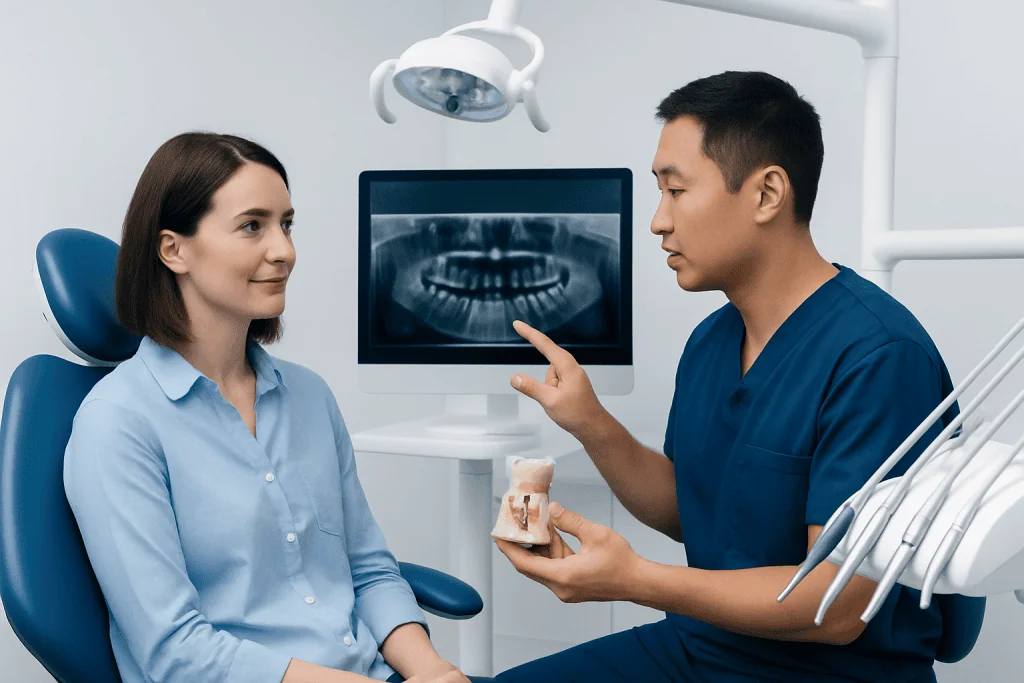
Coverage is usually strongest for diagnostic and preventive services. Many plans help pay for oral exams, panoramic X-rays, or other imaging used to assess the mouth before treatment. Some also contribute to the extraction of a severely damaged tooth and to periodontal care if gum disease must be managed first through general dental care.
For crowns, insurance may cover a percentage of the restoration when a tooth is structurally weakened, badly broken, or restored after root canal therapy. If a tooth needs treatment inside the root before a crown is placed, the insurer may separately process endodontic treatment and the crown. Plans often distinguish between crowns on natural teeth and crowns attached to implants, so patients should check both categories.
Implant coverage can be more complex. Some policies contribute to the surgical placement of the implant, some pay only toward the implant crown, and some exclude the implant fixture but cover related services such as the extraction or temporary restoration. If jawbone support is limited, medically necessary bone grafting may or may not be included, depending on the policy and clinical documentation.
- Initial consultation and examination
- Dental X-rays or advanced imaging
- Tooth extraction before replacement
- Crowns on natural teeth
- Parts of implant treatment, such as the crown or abutment
- Occasionally, full implant treatment including dental implants
Common Limits and Exclusions

Several policy rules can significantly affect what the insurer pays. Annual maximums are one of the most important. Even when a procedure is covered, the total yearly benefit may be too low to cover more than a small part of implant treatment. Once the annual maximum is reached, the remaining cost is generally the patient’s responsibility unless another benefit period applies.
Waiting periods are also common for major restorative procedures. A patient may need to be enrolled for several months before a crown qualifies for benefits, and the wait for implants can be even longer. Some plans also include a missing-tooth clause, which means they will not cover replacement of a tooth that was already missing before the policy began.
Frequency limits can affect crowns in particular. A plan may only allow crown replacement after a certain number of years, and it may deny payment if the existing crown is considered repairable. Cosmetic exclusions matter too: if a procedure is judged to improve appearance rather than restore function, coverage may be reduced or denied. These distinctions are especially relevant when a patient is comparing a crown with a dental bridge or implant-based option.
Factors That Influence Coverage
Whether care is considered medically necessary is often central to coverage decisions. A crown placed to protect a tooth weakened by decay, fracture, or root canal treatment is more likely to receive benefits than a crown intended mainly to improve appearance. Similarly, an implant replacing a lost tooth because of trauma, infection, or advanced structural damage may be viewed differently than treatment chosen from several acceptable alternatives.
Network status can also change the final cost. In-network dentists usually accept contracted rates, which may lower the amount billed and reduce out-of-pocket expenses. Out-of-network care may still be covered, but reimbursement is often based on the insurer’s allowed amount rather than the dentist’s actual fee. That can leave a larger balance for the patient to pay.
The condition of the mouth before treatment matters as well. Untreated gum disease, bruxism, active infection, or insufficient bone can affect the treatment plan and the insurance submission. A dentist may need to document the health of the surrounding tissues, treat related concerns such as bleeding gums, or recommend supportive therapies before implant placement or crown work can proceed safely.
How to Check Benefits Before Treatment
Before starting treatment, patients often benefit from asking the dental office to submit a pre-treatment estimate, sometimes called a preauthorization or predetermination. This is not always a guarantee of payment, but it can show how the insurer expects to process each procedure code. It may also reveal whether waiting periods, annual maximums, or exclusions apply.
When reviewing a policy, patients should look at the deductible, coinsurance percentage, annual maximum, and whether implants are listed specifically. It is also wise to ask if the final implant crown is processed under the crown benefit, under implant benefits, or not at all. Clarifying each stage of treatment can make budgeting more realistic.
Helpful questions include:
- Is the dentist in network for this plan?
- Is there a waiting period for crowns or implants?
- Does the plan cover bone grafting, abutments, or temporary crowns?
- Is there a missing-tooth clause?
- What is the annual maximum, and how much has already been used?
- Will the insurer require X-rays, chart notes, or photos to support the claim?
Ways to Manage Out-of-Pocket Costs
Even with insurance, many patients will have some personal expense for implant and crown treatment. Planning can help. Some people spread care over more than one benefit year so that separate annual maximums can be used, if the clinical timeline allows. Others use a health savings account or flexible spending arrangement when available, though eligibility depends on local regulations and personal plan details.
It can also help to compare treatment options with the dentist. In some situations, a crown may preserve a tooth that can still be restored. In other cases, extraction followed by an implant may offer the better long-term approach. The best choice depends on oral health, bone support, function, appearance goals, and overall dental history rather than insurance alone.
If a claim is denied, patients can ask for the reason in writing and discuss whether an appeal is appropriate. Supporting records, including X-rays and clinical notes, sometimes help when medical necessity was not fully clear in the initial submission. A detailed treatment coordinator or billing team can often guide patients through the process in a practical, step-by-step way.
When to Speak With a Dentist or Insurance Provider
Patients should contact a dentist promptly if they have a cracked tooth, persistent tooth pain, swelling, trouble chewing, or a missing tooth affecting daily function. Delaying care can allow a problem to worsen and may limit simpler, more affordable treatment choices. Early assessment also gives more time to check insurance benefits before a procedure becomes urgent.
It is equally sensible to contact the insurance provider before major dental work begins. Speaking with both the insurer and the dental office helps confirm how benefits may be applied and what portion is likely to remain out of pocket. If implant reconstruction involves several stages, asking for a written treatment plan can make the sequence and estimated costs easier to follow.
For patients seeking care abroad or coordinating complex restorative treatment, a center with multidisciplinary dental specialists may be helpful. Acibadem International’s JCI-accredited hospitals support international patients with diagnosis and treatment planning for restorative and implant dentistry, working across specialties when needed.
Frequently asked questions
Does dental insurance usually cover implants?
Sometimes, but not always. Some plans cover part of implant treatment, such as the crown, exam, or extraction, while others exclude the implant fixture itself. The exact answer depends on the policy terms, waiting periods, and annual maximum.
Are crowns more likely to be covered than implants?
In many plans, yes. Crowns are often covered when they restore a damaged natural tooth, especially after major decay or root canal treatment. Coverage is still usually partial, and plans may limit how often a crown can be replaced.
What is a missing-tooth clause?
A missing-tooth clause means the insurer may not pay to replace a tooth that was already missing before the policy started. This rule is important for implant claims and sometimes for bridges as well. Patients should check for this clause before committing to treatment.
Why would an implant claim be denied?
Claims may be denied because the procedure is excluded, the waiting period has not been met, the annual maximum is exhausted, or required documentation was missing. Sometimes the insurer classifies the treatment differently than expected. Asking for the denial reason in writing can help clarify next steps.
Can a pre-treatment estimate guarantee coverage?
Not usually. A pre-treatment estimate shows how the insurer expects to process the claim based on the information submitted, but final payment can still depend on eligibility and policy status at the time of treatment. Even so, it is one of the best tools for avoiding unexpected costs.
Will insurance cover bone grafting for an implant?
It may, but coverage is often inconsistent. Some plans help when bone grafting is considered necessary for function and long-term support, while others exclude it or classify it separately. The dentist’s clinical notes and imaging may influence the decision.
References
- American Dental Association
- National Institute of Dental and Craniofacial Research
- Centers for Disease Control and Prevention
- American Academy of Implant Dentistry
This article is for general information only and is not a substitute for professional medical advice. Please consult a qualified doctor about your individual situation.
Explore treatments in Turkey — costs, top hospitals & a free quote
JCI-accredited · board-certified surgeons · reply within 24h
Add us as a Preferred Source to see more of our trusted health content across Google Search, AI Overviews and Discover.

Dental & Oral Health
Full-scope dental care from implants and aesthetics to oral and maxillofacial surgery.
158 specialists in this unitRelated Treatments
More from the Health Library



Related Specialists

Assoc. Prof. Dr. Ferit Bayram
Oral & Dental Health
Assoc. Prof. Dr. Yeliz Çavuşoğlu Yüce
Oral & Dental Health
Assoc. Prof. Dr. Mutlu Keskin
Oral & Dental Health
Prof. Dr. Ülkü Noyan
Oral & Dental Health