Sleepwalking in Children: Causes, Safety Risks, and When to See a Doctor

Sleepwalking usually happens during deep non-REM sleep, most often in the first part of the night. Many children outgrow sleepwalking as their nervous system matures.
Key Takeaways
- Sleepwalking usually happens during deep non-REM sleep, most often in the first part of the night.
- Many children outgrow sleepwalking as their nervous system matures.
- Good sleep habits and a safe bedroom environment are central parts of care.
- Parents should not try to startle a sleepwalking child awake; gentle guidance back to bed is usually best.
- Medical advice is important if episodes are frequent, dangerous, unusual, or linked with snoring, breathing pauses, or daytime problems.
Sleepwalking in children is a common sleep behavior in which a child gets up or appears active while still asleep. It is often temporary and not a sign of a serious problem, but families should understand safety risks, triggers, and when medical evaluation is needed.
Overview
Sleepwalking in children is a type of parasomnia, which means an unusual behavior that happens during sleep. A child may sit up, walk around, open doors, talk, or seem confused while not fully awake. In most cases, the child has little or no memory of the episode the next morning.
Sleepwalking usually occurs during deep non-rapid eye movement sleep, often within the first few hours after falling asleep. Because the brain is partly asleep and partly active, a child can move around without being fully aware of what is happening. This can be surprising for families, but it is often more unsettling to witness than it is medically dangerous.
Many children experience sleepwalking occasionally, and most improve with age. Episodes may happen only once in a while or appear in clusters during times of tiredness, illness, stress, or changes in routine. Understanding the pattern can help parents respond calmly and reduce risks.
Symptoms and What an Episode Looks Like
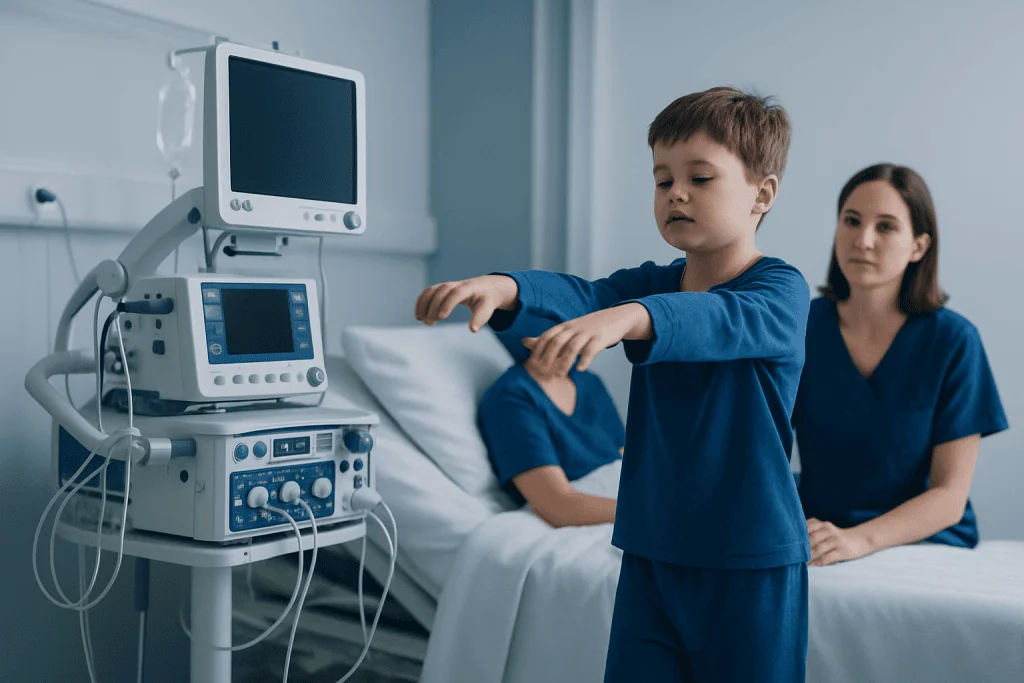
During a sleepwalking episode, a child may get out of bed, walk through the room or house, stare blankly, mumble, or perform simple actions such as rearranging objects or going to the bathroom. The child may seem awake because the eyes can be open, but thinking and awareness are still impaired.
Children who are sleepwalking are often difficult to fully wake. If they do respond, they may sound confused or disoriented. Episodes can last from a few minutes to longer, and they usually end when the child returns to bed or is gently guided there by an adult.
Some children have related sleep behaviors as well. These can include sleep talking, sitting up in bed, or episodes sometimes called sleep terrors, where the child may cry out or appear frightened without fully waking. Although these events can happen together, they are not the same as nightmares, which occur in a different sleep stage and are usually remembered.
- Blank stare or glassy-eyed appearance
- Sitting up, walking, or wandering while asleep
- Slow or confused responses
- Little or no memory of the event the next day
- Episodes that happen most often in the first third of the night
Causes and Risk Factors

The exact cause of sleepwalking in children is not always clear, but it is thought to result from partial arousal out of deep sleep. In simple terms, the body wakes up enough to move, while the mind is still mostly asleep. This is one reason why sleepwalking is more common in childhood, when sleep patterns and brain development are still maturing.
Family history plays an important role. Children are more likely to sleepwalk if a parent or sibling has had sleepwalking or another parasomnia. Episodes can also be triggered by sleep deprivation, irregular bedtimes, fever, stress, sleeping in a new place, or noise that disrupts deep sleep.
Sometimes sleepwalking is associated with other sleep or health issues. These may include snoring and sleep apnea, restless sleep, certain medications, or conditions that fragment sleep. Less often, events that look like sleepwalking may actually reflect another neurological or medical issue, which is why persistent or unusual episodes deserve attention.
Safety Risks at Home
Although sleepwalking itself is often benign, the main concern is injury. A child who is not fully aware may trip, bump into furniture, try to go downstairs, or attempt to leave the home. Even familiar surroundings can become unsafe when judgment and coordination are reduced during sleep.
Parents can lower risk by making the sleep environment safer. Bedroom windows and exterior doors should be secured, stairways should be blocked if needed, and sharp or fragile objects should be kept out of reach. Bunk beds are usually best avoided for a child who sleepwalks regularly, since falls are a preventable hazard.
It is also helpful to keep a calm plan for what to do during an episode. In most cases, the best approach is to gently guide the child back to bed with minimal stimulation. Shaking, shouting, or trying to force the child fully awake can increase confusion and distress, even though it usually does not cause harm.
- Clear floors of toys, cords, and clutter
- Use safety gates near stairs if appropriate
- Lock doors and secure windows
- Keep keys, sharp items, and dangerous objects out of reach
- Consider gentle alarms on bedroom or house doors if wandering is frequent
How Sleepwalking Is Diagnosed
Doctors usually diagnose sleepwalking based on the child’s symptoms, age, sleep pattern, and family observations. Parents may be asked when episodes occur, what the child does, how long they last, and whether there are any triggers such as illness, stress, or missed sleep. A video recorded safely at home can sometimes help describe the event more clearly.
A physical examination and review of the child’s medical history may be recommended, especially if there are signs of another sleep problem. Snoring, gasping, pauses in breathing, unusual jerking movements, bedwetting with new onset, severe daytime sleepiness, or developmental or behavioral concerns may point to a related issue that needs assessment.
Most children do not need extensive testing. However, a doctor may suggest further evaluation if episodes are frequent, violent, start suddenly in an older child, or are hard to distinguish from seizures or other sleep disorders. In selected cases, referral to a sleep specialist, neurologist, or an overnight sleep study such as a sleep study may be appropriate.
Treatment and Management
Treatment for sleepwalking in children usually focuses on reducing triggers and keeping the child safe rather than using medication. Because many children outgrow sleepwalking, simple measures are often enough. The first goal is to improve sleep quality and avoid overtiredness, which is one of the most common triggers.
Regular bedtimes, a calming bedtime routine, and enough sleep for the child’s age can make a real difference. Parents may also help by limiting stimulating activities close to bedtime and addressing stress in a supportive way. If episodes tend to happen around the same time each night, a doctor may suggest scheduled awakenings, which means gently waking the child shortly before the usual episode time.
When another sleep condition is contributing, treating that condition can reduce sleepwalking. For example, enlarged tonsils, chronic snoring, or breathing-related sleep disruption may need evaluation by a specialist, and some children may benefit from pediatric ENT assessment or broader pediatric neurology evaluation if symptoms are complex. Medication is not routinely needed and is generally reserved for selected cases under medical supervision.
Prevention, Self-care, and When to See a Doctor
Parents can support a child with sleepwalking by tracking patterns and strengthening healthy sleep habits. A simple sleep diary may note bedtime, wake time, stress, illness, and the timing of episodes. Over time, this can reveal triggers and help a doctor decide whether further evaluation is needed.
It is wise to seek medical advice if episodes happen often, lead to injury, involve leaving the house, or significantly disturb the child’s sleep or daytime functioning. Evaluation is also important if the child snores loudly, has breathing pauses, has unusual stiffening or shaking, or develops sleepwalking for the first time in adolescence or adulthood. These features can suggest a different or additional condition.
Families should also ask for help if the behavior causes anxiety, sleep loss, or safety concerns at home. Reassurance matters: in most children, sleepwalking becomes less common over time. If specialist care is needed, Acibadem International’s multidisciplinary specialists in JCI-accredited hospitals evaluate and treat sleep disorders in children and international patients with an individualized approach.
Frequently asked questions
Is sleepwalking in children normal?
Sleepwalking is relatively common in childhood and is often not a sign of serious illness. Many children have occasional episodes and outgrow them as they get older.
Should a parent wake a child who is sleepwalking?
It is usually better not to try to abruptly wake a sleepwalking child. Instead, a parent can calmly guide the child back to bed and make sure the environment is safe.
What triggers sleepwalking in children?
Common triggers include not getting enough sleep, irregular bedtimes, fever, stress, and sleeping in an unfamiliar place. Sometimes another sleep problem, such as snoring or disrupted breathing, may contribute.
Can sleepwalking be dangerous?
The main risk is accidental injury rather than the sleepwalking itself. A child may fall, bump into objects, go downstairs, or try to leave the house, so home safety steps are important.
When should parents worry about sleepwalking?
Parents should seek medical advice if episodes are frequent, severe, or involve dangerous behavior. A doctor should also evaluate sleepwalking linked with loud snoring, breathing pauses, unusual movements, or daytime sleepiness.
Do children remember sleepwalking episodes?
Most children remember little or nothing about a sleepwalking episode the next day. This is because the event happens during partial arousal from deep sleep rather than full wakefulness.
References
- American Academy of Pediatrics
- American Academy of Sleep Medicine
- National Health Service
- National Institute of Neurological Disorders and Stroke
This article is for general information only and is not a substitute for professional medical advice. Please consult a qualified doctor about your individual situation.
Explore treatments in Turkey — costs, top hospitals & a free quote
JCI-accredited · board-certified surgeons · reply within 24h
Add us as a Preferred Source to see more of our trusted health content across Google Search, AI Overviews and Discover.

More from the Health Library



Related Specialists

Dr. Cem Öncüloğlu
Gynecology & Obstetrics
Prof. Dr. Erkan Kaba
Thoracic Surgery
Dr. Özgün Oktay
Ophthalmology
Prof. Dr. İbrahim Tuncay
Orthopedic Surgery & Traumatology