Neuropsychological Testing for Memory Problems: What the Results Can Show

Neuropsychological testing measures several thinking skills, not memory alone. The results can help distinguish normal aging from mild cognitive impairment, dementia, depression, or other conditions.
Key Takeaways
- Neuropsychological testing measures several thinking skills, not memory alone.
- The results can help distinguish normal aging from mild cognitive impairment, dementia, depression, or other conditions.
- Testing does not usually diagnose a cause by itself; it is interpreted alongside medical history, examination, and sometimes brain imaging or lab tests.
- A person's performance is compared with expected ranges for age, education, and background.
- The findings can guide treatment, safety planning, daily strategies, and follow-up over time.
Neuropsychological testing for memory problems is a detailed evaluation of thinking skills such as memory, attention, language, and problem-solving. Its results can help doctors understand the pattern of cognitive changes, look for possible causes, and plan the next steps in care.
Overview: What Neuropsychological Testing Is
Neuropsychological testing for memory problems is a structured assessment of how the brain is functioning in everyday thinking tasks. It looks at memory, attention, language, visual-spatial skills, processing speed, and executive functions such as planning, organization, and judgment. The goal is not simply to label a symptom, but to understand the pattern of strengths and weaknesses behind it.
This type of evaluation is often recommended when a person or family has noticed forgetfulness, confusion, word-finding difficulty, changes in work or daily functioning, or concerns about aging-related cognitive decline. It can be helpful for older adults, but it may also be used for younger adults when memory concerns follow a medical, neurological, or emotional issue.
Neuropsychological testing is usually performed by a neuropsychologist or another clinician trained in cognitive assessment. The process may include an interview, paper-and-pencil tasks, spoken questions, and computer-based measures. Results are then reviewed in the context of the person’s medical history, education, language, culture, mood, sleep, and medications.
Importantly, testing is one part of a broader evaluation. A doctor may combine it with a neurological examination, blood tests, and imaging such as MRI or CT scanning when needed. This broader approach helps clarify whether symptoms are linked to normal aging, Alzheimer’s disease, vascular changes, anxiety, depression, sleep problems, medication effects, or other causes.
What the Test Can Show About Memory and Thinking

The results can show whether memory is working within the expected range or whether there is evidence of impairment. Just as importantly, they can show what kind of memory difficulty is present. For example, some people have trouble learning new information, while others can learn it but struggle to retrieve it later. This distinction may help doctors think about different possible causes.
Testing also reveals whether memory concerns are occurring alone or as part of a wider pattern. A person may have reduced attention and slowed processing speed, which can make memory seem worse even when storage of information is not severely affected. Others may show difficulties with language, visual-spatial skills, or executive function, which can point toward a more specific neurological pattern.
Another important feature is comparison. Test scores are interpreted against norms for people of similar age and, when possible, educational and cultural background. This helps clinicians decide whether a result reflects expected variation, possible mild cognitive impairment, or a more significant decline affecting independence.
Finally, neuropsychological testing can provide a baseline. If symptoms change over time, repeat testing may help show whether thinking skills are stable, improving, or declining. This can be especially useful when monitoring recovery after illness, assessing the effects of treatment, or following conditions that may progress gradually.
Common Reasons Doctors Recommend Testing
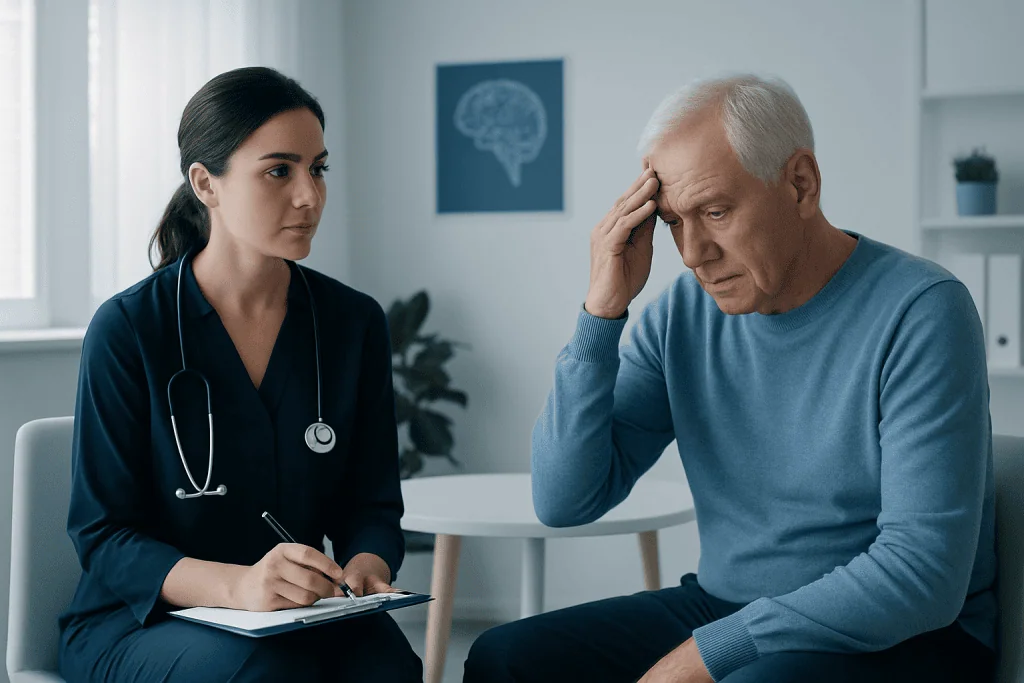
Doctors may suggest neuropsychological testing when memory complaints are persistent, worsening, or beginning to affect daily life. Examples include missing appointments, repeating questions, mismanaging finances, getting lost in familiar places, forgetting important conversations, or struggling with tasks that were previously routine.
Testing may also be helpful when the cause of cognitive symptoms is unclear. Memory problems can be related to many different issues, including neurodegenerative disease, stroke, head injury, depression, anxiety, poor sleep, chronic pain, thyroid disorders, vitamin deficiencies, alcohol use, or side effects of medication. A detailed cognitive profile can help narrow the possibilities.
In some situations, the evaluation is used to answer practical questions rather than to establish a diagnosis alone. Families and clinicians may want to understand whether a person is safe to drive, can manage medications independently, return to work, or would benefit from extra support at home.
Neuropsychological testing is also commonly used when doctors are considering conditions such as Parkinson’s disease with cognitive changes or other neurological disorders that can affect thinking. In these cases, the test results can support treatment planning and rehabilitation goals, sometimes together with services such as neurological rehabilitation.
What to Expect During the Evaluation
The evaluation usually begins with a conversation about symptoms, medical history, education, occupation, language background, mood, sleep, and daily functioning. A family member or caregiver may sometimes be asked to share observations, because changes in memory or behavior may be easier for others to notice over time.
The testing itself often lasts several hours, though the exact length varies depending on the reason for referral and the person’s stamina. Tasks may include remembering words or stories, naming objects, drawing figures, solving problems, following instructions, and answering questions that measure attention and mental flexibility. Breaks are usually offered, especially for older adults or anyone who tires easily.
Preparation is generally simple. It helps to get a good night’s sleep, eat normally unless instructed otherwise, bring glasses or hearing aids, and carry a list of medications. People are encouraged to answer as honestly and calmly as they can. The aim is not to “pass” or “fail,” but to understand current functioning as accurately as possible.
Some people worry that testing will be stressful or embarrassing. In practice, many find it manageable, especially when they know that occasional mistakes are expected and informative. The clinician considers effort, fatigue, language, mood, pain, and sensory issues when interpreting performance, so the results are never judged in isolation.
How Results Are Interpreted
After testing, the clinician analyzes the pattern of scores rather than relying on one single result. A person may perform well in some areas and poorly in others, and that pattern can be more meaningful than an overall impression. For example, a profile with strong attention but poor delayed recall may suggest something different from a profile with broad slowing across many tasks.
Interpretation also takes personal context into account. Education level, first language, cultural background, vision or hearing problems, mood symptoms, and pre-existing learning differences can all affect test performance. For that reason, neuropsychological testing is most useful when interpreted by a qualified professional who understands both the tests and the person being tested.
Results may suggest that memory changes are consistent with normal aging, mild cognitive impairment, dementia, depression-related cognitive symptoms, or another condition affecting the brain. However, the findings are not always definitive on their own. Doctors often combine them with physical examination, laboratory studies, and imaging to reach a diagnosis.
The written report commonly includes practical recommendations as well as diagnostic impressions. These may cover communication strategies, memory aids, home safety, medication management, work or driving considerations, emotional support, and when follow-up testing should be considered. In many cases, the report is just as valuable for planning daily life as it is for diagnosis.
How Testing Helps Guide Treatment and Daily Care
One of the main benefits of neuropsychological testing is that it helps tailor care to the individual. If the results show reduced attention, a person may benefit from simplifying tasks and limiting distractions. If the main issue is retrieving information, strategies such as cueing, written reminders, calendars, or smartphone alerts may be especially useful.
When the testing pattern raises concern for a neurological disorder, the results can help doctors decide what to investigate next and which treatments may be appropriate. Depending on the situation, care may involve medication review, treatment of sleep or mood problems, management of blood pressure or diabetes, rehabilitation, counseling, or referral to a memory clinic. Some people may also be evaluated with PET/CT or other specialized studies if clinically appropriate.
The findings are also helpful for family education. Loved ones often want to know whether forgetfulness is likely due to stress, aging, or a more significant problem, and how much support may be needed. A clear explanation of the results can reduce uncertainty and make it easier to plan routines, safety measures, and future care.
Near the end of the diagnostic process, some patients seek care at centers with coordinated neurological, psychiatric, geriatric, and rehabilitation expertise. Acibadem International’s multidisciplinary specialists and JCI-accredited hospitals diagnose and treat memory-related conditions for international patients when advanced evaluation is needed.
Limits of Testing and Factors That Can Affect Results
Although neuropsychological testing is very useful, it has limits. It does not directly show what the brain looks like, and it cannot always identify one exact cause of memory problems. Two people with similar test scores may have different underlying medical explanations, which is why a full clinical assessment remains important.
Performance can also be influenced by factors that are temporary or treatable. Poor sleep, anxiety, depression, pain, infections, medication side effects, alcohol use, hearing loss, and vision problems can all reduce concentration and memory on the day of testing. In some cases, addressing these issues may improve cognitive performance.
Language and culture matter as well. A person tested in a non-native language, or with educational experiences different from the test norms, may not be accurately represented by standard scores alone. Skilled clinicians try to minimize these issues, but patients and families should understand that interpretation is not purely mechanical.
For these reasons, results are best viewed as one important piece of a larger picture. If the findings do not seem to match everyday experience, or if symptoms change significantly, follow-up with the treating doctor is appropriate. Sometimes repeat testing after treatment or over time provides the clearest answers.
When to See a Doctor for Memory Problems
Occasional forgetfulness can happen to anyone, especially during periods of stress, poor sleep, or illness. However, medical advice is important when memory problems are becoming more frequent, interfering with work or home life, or noticed by family members in addition to the person experiencing them.
Warning signs include repeating the same questions, getting lost in familiar places, difficulty managing bills or medications, missing important appointments, trouble finding common words, changes in judgment, or confusion about time and place. A doctor should also assess memory changes that appear suddenly, as sudden confusion can signal an urgent medical problem.
Early evaluation can be helpful even when symptoms seem mild. Some causes of memory difficulty are treatable, and some progressive conditions can be managed better when identified sooner. A timely assessment also gives patients and families a chance to understand what is happening and plan support before problems become more disruptive.
People should seek prompt medical attention for sudden confusion, new weakness, speech difficulty, severe headache, fever, or major changes in alertness. These symptoms may point to an emergency rather than a gradual memory disorder.
Frequently asked questions
Is neuropsychological testing the same as a memory screening?
No. A brief memory screening is a short check used to look for possible cognitive problems, while neuropsychological testing is a more detailed evaluation of several thinking skills. It usually provides a deeper understanding of the pattern and severity of any changes.
Can neuropsychological testing diagnose dementia?
It can strongly support or argue against a diagnosis, but it does not usually diagnose dementia by itself. Doctors interpret the results together with medical history, physical examination, daily function, lab tests, and sometimes brain imaging.
How long does neuropsychological testing take?
The length varies, but many evaluations take a few hours and may be split into more than one session if needed. The timing depends on the person’s symptoms, endurance, and the number of areas being assessed.
Should a family member come to the appointment?
Often, yes. A family member or caregiver can provide helpful information about changes in memory, behavior, and daily functioning that the patient may not fully notice. This can improve the accuracy and usefulness of the evaluation.
Can anxiety or depression affect the results?
Yes. Mood symptoms can reduce concentration, motivation, sleep quality, and mental speed, all of which may affect test performance. That is one reason clinicians ask about emotional health and interpret results in a broader medical context.
What happens after the results are ready?
The clinician usually explains the findings and provides recommendations tailored to the person’s needs. These may include further medical evaluation, treatment of contributing conditions, memory strategies, safety planning, and follow-up over time.
References
- National Institute on Aging
- Alzheimer's Association
- American Academy of Neurology
- National Institute of Neurological Disorders and Stroke
- World Health Organization
This article is for general information only and is not a substitute for professional medical advice. Please consult a qualified doctor about your individual situation.
Explore treatments in Turkey — costs, top hospitals & a free quote
JCI-accredited · board-certified surgeons · reply within 24h
Add us as a Preferred Source to see more of our trusted health content across Google Search, AI Overviews and Discover.