How Memory Testing Works for Dementia and Cognitive Decline

Memory testing for dementia includes medical history, cognitive screening, physical and neurological exams, and often blood tests or brain imaging. Testing does not rely on one score alone; doctors consider symptoms, daily functioning, mood, medications, and overall health.
Key Takeaways
- Memory testing for dementia includes medical history, cognitive screening, physical and neurological exams, and often blood tests or brain imaging.
- Testing does not rely on one score alone; doctors consider symptoms, daily functioning, mood, medications, and overall health.
- Not all memory loss means dementia, and some causes of cognitive decline can be treated or improved.
- Early assessment can help with planning, safety, treatment decisions, and support for patients and families.
- A specialist may recommend more detailed neuropsychological testing when symptoms are subtle or the cause is unclear.
Memory testing for dementia is a step-by-step medical evaluation used to understand changes in memory, thinking, language, and daily function. It helps doctors look for dementia, mild cognitive impairment, depression, medication effects, and other treatable causes of cognitive decline.
Overview: What Memory Testing for Dementia Means
Memory testing for dementia is a structured evaluation used when a person develops concerns about forgetfulness, confusion, word-finding problems, or changes in judgment and daily functioning. The goal is not simply to measure memory in isolation. Doctors look at several areas of thinking, including attention, language, problem-solving, orientation, and the ability to manage everyday tasks such as finances, medications, driving, and personal care.
This process helps distinguish normal age-related changes from Alzheimer’s disease, mild cognitive impairment, vascular cognitive problems, medication side effects, depression, sleep disorders, vitamin deficiencies, or other neurological conditions. Because many different health issues can affect thinking, evaluation usually involves more than one type of test.
In many cases, memory testing starts with a primary care doctor, geriatrician, or neurologist. If needed, the person may be referred for a more detailed assessment by specialists in geriatrics, neurology, psychiatry, or neuropsychology. The final diagnosis is based on the whole clinical picture rather than one test result alone.
When Testing Is Recommended
Testing may be recommended when memory changes begin to interfere with work, home life, social interactions, or personal safety. Family members often notice repeated questions, missed appointments, difficulty following conversations, getting lost in familiar places, or trouble handling bills and medications. Sometimes the person themselves recognizes that thinking feels slower or less reliable than before.
Doctors may also suggest evaluation when cognitive symptoms appear suddenly, worsen quickly, or occur along with other neurological signs such as balance problems, tremor, speech changes, personality changes, or new confusion. These patterns can point to causes that need urgent attention, including stroke, infection, head injury, medication toxicity, or metabolic problems.
Even mild symptoms can be worth assessing. Early evaluation can identify mild cognitive impairment, which does not always progress to dementia but does deserve follow-up. It can also reveal reversible factors, allowing treatment to begin sooner and helping patients and families make informed decisions about future care.
What Happens During the First Evaluation

The first visit usually begins with a detailed conversation about symptoms. The doctor asks when memory problems started, how they have changed over time, and whether they affect cooking, shopping, finances, driving, medication use, hygiene, or communication. Information from a family member or close friend is often very helpful because they may notice changes that the patient does not recognize.
Medical history is an important part of the assessment. The clinician reviews past illnesses, stroke risk factors, sleep quality, hearing and vision problems, alcohol use, head injuries, mood symptoms, and all current medications. Some medicines, especially those that cause sedation or have anticholinergic effects, can worsen memory and attention. Depression and anxiety can also strongly affect concentration and recall.
A physical and neurological examination helps identify clues to the cause. The doctor may check blood pressure, gait, balance, reflexes, eye movements, muscle strength, and signs of Parkinsonism or stroke. This broad approach is important because dementia is a clinical syndrome with many possible underlying causes, not a single disease measured by one simple test.
Common Memory and Cognitive Tests
Brief cognitive screening tests are commonly used during clinic visits. These may include questions or tasks that assess orientation to time and place, immediate and delayed recall, attention, naming, language, drawing, and following instructions. Well-known examples include short office-based screening tools that help doctors see whether further assessment is needed.
These tests are useful, but they are not a stand-alone diagnosis. Scores can be influenced by education level, language, cultural background, hearing or vision loss, anxiety, fatigue, and pain. A person with high educational attainment may score within a normal range despite meaningful early decline, while someone with limited literacy may score lower without having dementia.
When symptoms are subtle, complex, or inconsistent, a doctor may recommend formal neuropsychological testing. This is a longer, more detailed evaluation performed by a trained specialist. It measures multiple cognitive domains in depth and can help distinguish between normal aging, mild cognitive impairment, Alzheimer’s disease, vascular patterns of impairment, depression-related cognitive changes, and other conditions.
In some cases, a patient may also undergo tests that assess function rather than memory alone. These may include questionnaires about daily living skills, mood, behavior, and caregiver observations. Together, cognitive scores and functional information give a more accurate picture of whether a person has cognitive decline and how much support they may need.
Blood Tests, Brain Imaging, and Other Diagnostic Tools
Memory testing for dementia often includes laboratory studies to look for treatable medical causes of cognitive symptoms. Common tests may check thyroid function, vitamin B12 levels, blood sugar, liver and kidney function, blood counts, and markers of infection or inflammation when appropriate. Depending on the situation, the doctor may order additional tests based on age, symptoms, and medical history.
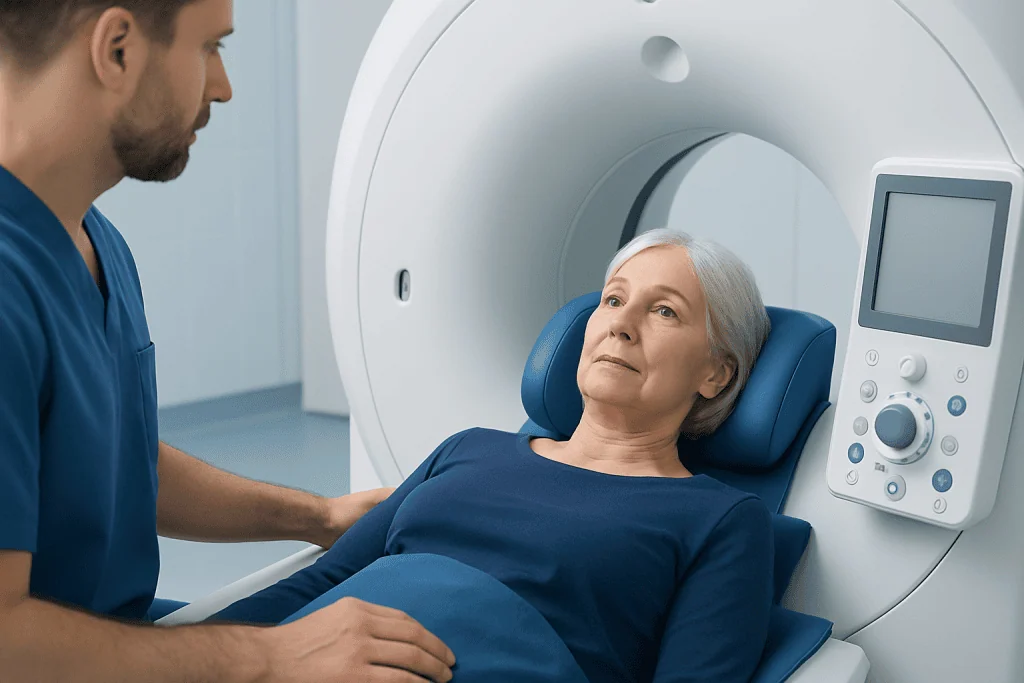
Brain imaging is also commonly used, especially when symptoms are new, unusual, rapidly progressing, or accompanied by neurological changes. A brain MRI can help identify strokes, tumors, hydrocephalus, bleeding, brain shrinkage patterns, or other structural causes. When MRI is not suitable, a CT scan may be used to look for major structural abnormalities.
Additional tests may be recommended in selected cases. Sleep evaluation may be needed if sleep apnea is suspected. Hearing testing can be important because untreated hearing loss may worsen communication and cognitive performance. In specialist settings, more advanced studies may be used to investigate specific dementia syndromes, although these are not necessary for every patient.
If symptoms suggest seizures or unexplained episodes of confusion, a doctor may order an EEG to assess brain electrical activity. The exact testing plan depends on the person’s symptoms and the clinical questions that need to be answered.
How Doctors Interpret the Results
Doctors interpret results by combining several pieces of information: the history of symptoms, test scores, neurological examination, daily functioning, laboratory findings, and brain imaging. A diagnosis of dementia usually requires evidence that thinking problems are significant enough to interfere with independence in everyday activities. If changes are measurable but independence is largely preserved, the diagnosis may be mild cognitive impairment rather than dementia.
The pattern of deficits can also offer clues about the underlying cause. Memory-predominant problems may suggest one process, while prominent language difficulty, slowed thinking, executive dysfunction, visual-spatial problems, or fluctuating attention may suggest another. The clinician also looks for signs that symptoms could be explained by depression, delirium, medication effects, sleep problems, or systemic illness.
It is important to know that testing may not always provide a final answer in one visit. Some people need follow-up over months to see whether symptoms progress, stabilize, or improve. Repeating cognitive testing over time can be very helpful in understanding the course of the condition and in adjusting the care plan.
What Happens After Diagnosis
After evaluation, the doctor discusses the findings in clear terms and explains whether the symptoms fit normal aging, mild cognitive impairment, dementia, or another condition. If dementia is diagnosed, treatment focuses on the underlying type when possible, management of symptoms, safety, and maintaining quality of life. This may include reviewing medicines, treating mood or sleep problems, managing vascular risk factors, and considering rehabilitation or supportive therapies.
Some people may benefit from neurology care for ongoing assessment and management, especially when the diagnosis is uncertain or symptoms are progressing. Occupational therapy, cognitive support strategies, hearing correction, exercise guidance, and caregiver education may also be part of the plan. Legal and practical planning, including driving, medication supervision, and advance care preferences, is often discussed early and gently.
Families play a key role in care. They may help monitor changes, support routines, attend appointments, and notice side effects or safety concerns. A calm, structured environment, written reminders, regular sleep, physical activity, and social engagement can all support daily functioning.
For international patients who need multidisciplinary assessment, Acibadem International’s specialists in geriatrics, neurology, imaging, and rehabilitation, working in JCI-accredited hospitals, diagnose and treat cognitive disorders with individualized care plans.
Preparing for a Memory Assessment and When to Seek Medical Advice
Before an appointment, it helps to bring a list of symptoms, all medications and supplements, major medical conditions, and examples of recent changes in daily life. A family member or trusted friend can provide useful details and support communication during the visit. Patients should also mention sleep problems, depression, hearing loss, recent infections, falls, alcohol use, or episodes of confusion, as these may affect the evaluation.
Medical advice should be sought if memory loss becomes persistent, worsens over time, or affects safety and independence. Evaluation is also important when changes in thinking appear alongside personality changes, difficulty speaking, disorientation, poor judgment, hallucinations, or trouble walking. Sudden confusion, new weakness, severe headache, or abrupt speech problems need urgent medical attention because they may signal a stroke or another acute illness.
People should feel reassured that asking for help is a positive step. Many causes of cognitive symptoms are manageable, and even when a progressive condition is found, early diagnosis can open the door to treatment, support, planning, and practical ways to preserve quality of life for as long as possible.
Frequently asked questions
What is the difference between normal aging and dementia?
Normal aging may involve occasional forgetfulness, such as misplacing items or taking longer to recall a name. Dementia causes a more significant decline in memory and thinking that interferes with daily independence, communication, judgment, or safety.
Does failing a memory test mean a person has dementia?
No. A low score on a screening test does not by itself diagnose dementia. Doctors interpret results together with medical history, daily function, mood, medications, examination findings, and sometimes blood tests or brain imaging.
Can memory problems be caused by something treatable?
Yes. Memory and concentration problems can be linked to depression, medication side effects, sleep apnea, thyroid disease, vitamin deficiencies, infections, or hearing loss. That is why a full medical evaluation is important before making conclusions.
How long does memory testing for dementia take?
A brief office screening may take only a few minutes, while a full specialist assessment can take much longer. Formal neuropsychological testing may last several hours because it examines multiple areas of thinking in detail.
Why is a family member often asked to attend the appointment?
Family members or close friends may notice changes in memory, behavior, or daily function that the patient does not fully recognize. Their observations can help the doctor understand when symptoms began, how they have changed, and how much support is needed.
Is brain imaging always necessary in a dementia evaluation?
Not every person needs the same tests, but brain imaging is commonly used when doctors need to look for strokes, tumors, hydrocephalus, or other structural causes. The decision depends on the symptoms, examination findings, and overall medical history.
References
- World Health Organization
- National Institute on Aging
- Alzheimer's Association
- Centers for Disease Control and Prevention
- American Academy of Neurology
This article is for general information only and is not a substitute for professional medical advice. Please consult a qualified doctor about your individual situation.
Dementia in Turkey — costs, top hospitals & a free quote
JCI-accredited · board-certified surgeons · reply within 24h
Add us as a Preferred Source to see more of our trusted health content across Google Search, AI Overviews and Discover.
Check your numbers in seconds
BMI, calories, due date, blood pressure and 30+ more clinical calculators — free, instant, doctor-reviewed ranges.

Neurology
Diagnosis and treatment of disorders of the brain, spinal cord, nerves and muscles.
51 specialists in this unit