ACL Reconstruction: Surgery Steps, Graft Choices, and Return to Sport
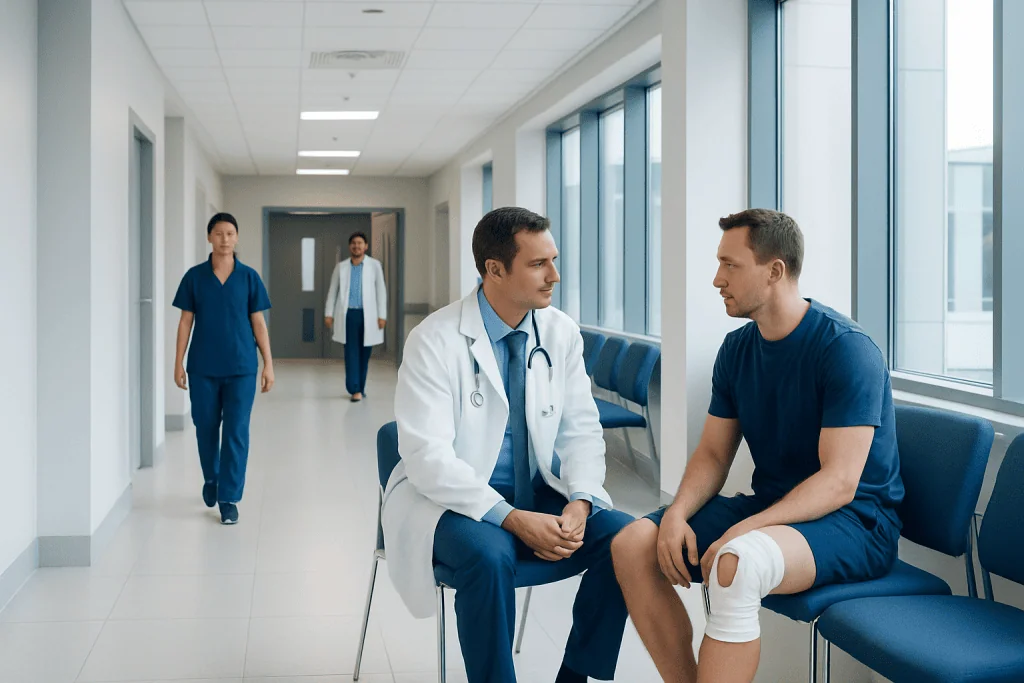
ACL reconstruction replaces a torn ACL with a graft rather than stitching the ligament back together. Not every ACL tear needs surgery; the decision depends on instability, activity level, associated injuries, and personal goals.
Key Takeaways
- ACL reconstruction replaces a torn ACL with a graft rather than stitching the ligament back together.
- Not every ACL tear needs surgery; the decision depends on instability, activity level, associated injuries, and personal goals.
- Common graft choices include patellar tendon, hamstring tendon, quadriceps tendon, and donor tissue, each with advantages and trade-offs.
- Successful recovery depends heavily on structured rehabilitation, not just the operation itself.
- Return to sport usually happens gradually after strength, balance, movement control, and knee function have been carefully assessed.
ACL reconstruction is a common knee surgery used to restore stability after a torn anterior cruciate ligament, especially in active people or those with ongoing knee instability. Understanding how the procedure works, which graft options are available, and what recovery involves can help patients make informed decisions with their orthopedic team.
Overview of ACL Reconstruction
The anterior cruciate ligament, or ACL, is one of the main ligaments that helps stabilize the knee. It helps control forward movement and rotation of the shinbone under the thighbone. ACL tears often happen during sports that involve sudden stopping, cutting, pivoting, or landing from a jump, but they can also occur in falls or traffic injuries.
ACL reconstruction is a surgical procedure that replaces a torn ACL with a piece of tendon called a graft. In most cases, the surgeon does not repair the torn ligament directly because it usually does not heal strongly enough on its own. Instead, the graft is placed in the knee to act as a new ligament while the body gradually incorporates it.
This surgery is commonly recommended for people who have repeated episodes of the knee giving way, want to return to pivoting sports, or have other knee damage such as meniscus injury. However, ACL reconstruction is not necessary for every person with an ACL tear. Some people do well with rehabilitation alone, especially if their daily activities do not involve high-demand twisting movements.
Symptoms of an ACL Tear and When Surgery May Be Considered
An ACL tear often causes a sudden popping sensation, immediate pain, and swelling within the first few hours. Many people feel that the knee becomes unstable, especially when turning or changing direction. Some are unable to continue the activity that caused the injury, while others can walk but later notice weakness or a feeling that the knee may buckle.
After the initial swelling improves, ongoing symptoms may include repeated giving way, reduced confidence in the knee, difficulty returning to sports, and discomfort with pivoting movements. If the knee is unstable, there is also a higher chance of additional injuries over time, particularly to the meniscus or cartilage.
Surgery may be considered when instability affects daily life, work, or sports participation. It is also often discussed for younger or more active patients, those with combined knee injuries, and people who have not improved enough with physical therapy. The decision is individualized and should take into account age, activity level, occupation, symptoms, and personal goals.
Causes, Risk Factors, and Who May Need Reconstruction
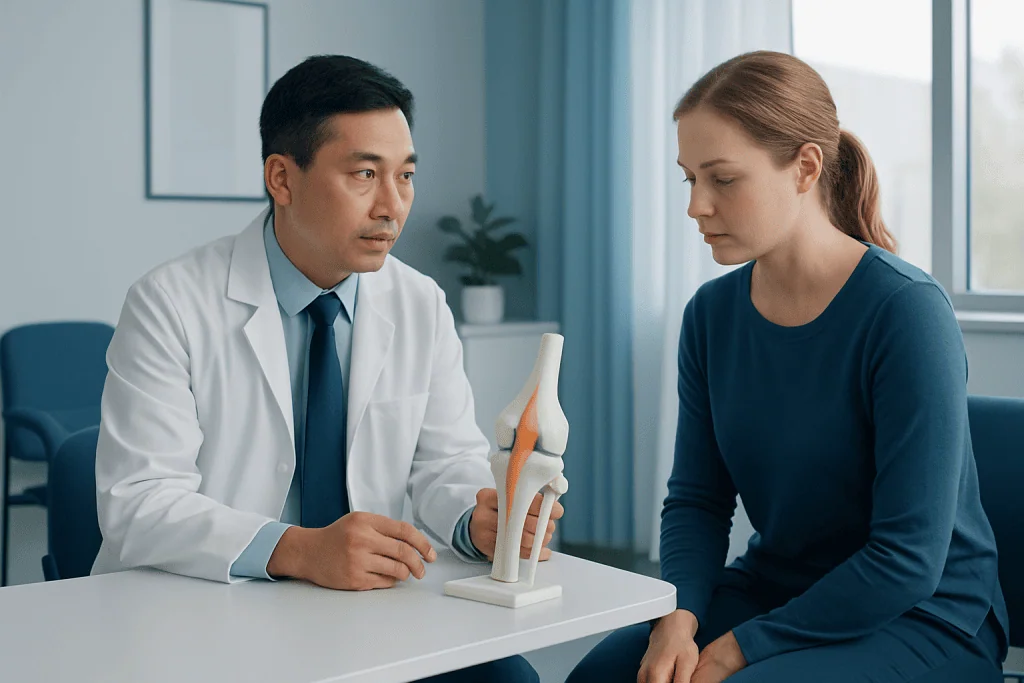
Most ACL tears happen without direct contact. A quick change of direction, awkward landing, sudden deceleration, or twisting on a planted foot can put excessive force on the ligament. Direct contact to the knee, especially in football or similar sports, can also tear the ACL.
Risk factors include participation in pivoting sports such as soccer, basketball, skiing, and tennis. Poor landing mechanics, muscle imbalance, fatigue, previous knee injury, and some anatomical differences can increase risk. Women may have a higher risk of ACL injury in certain sports because of a combination of movement patterns, strength differences, and anatomy, though injury prevention training can help.
Not everyone with an ACL tear needs reconstruction. A person may be more likely to benefit from surgery if the knee remains unstable despite rehabilitation, if there are associated injuries such as a torn meniscus, or if they hope to return to high-demand sports. People with lower activity demands or stable knees may choose nonoperative treatment with supervised rehabilitation and activity modification.
Diagnosis and Preoperative Assessment
Diagnosis begins with a medical history and physical examination. A doctor asks how the injury happened, what symptoms followed, and whether the knee feels unstable. During the exam, specific tests help assess ACL integrity and check for meniscus, cartilage, or other ligament injuries.
Imaging is usually used to confirm the diagnosis and look for associated damage. Magnetic resonance imaging, or MRI, is especially helpful because it shows ligaments, menisci, bone bruising, and cartilage in detail. X-rays may also be ordered to rule out fractures or evaluate knee alignment.
Before ACL reconstruction, the knee is often prepared with a period of rehabilitation called prehabilitation. The goal is to reduce swelling, restore near-normal range of motion, and improve quadriceps control before surgery. Starting surgery with a stiff, swollen knee can increase the risk of postoperative stiffness, so timing matters.
The preoperative discussion also covers graft choice, expected recovery, work and sports goals, and any medical conditions that may affect anesthesia or healing. A patient may also be evaluated for other procedures that could be done at the same time, such as meniscus repair or treatment for cartilage injury.
How ACL Reconstruction Surgery Is Performed
ACL reconstruction is usually performed arthroscopically through small incisions around the knee. A camera is inserted into the joint so the surgeon can see the structures clearly. Damaged tissue is assessed, and any associated injuries may be treated during the same operation, including selected knee arthroscopy procedures on the meniscus or cartilage.
The surgeon first prepares the graft, either from the patient or from donor tissue. Small tunnels are then created in the thighbone and shinbone at the natural ACL attachment points. The graft is passed through these tunnels and secured with fixation devices such as screws, buttons, or other implants designed to hold it in place while healing occurs.
The operation itself replaces the torn ligament with a new structure, but the graft still needs time to incorporate into the body and remodel. Because of this biological healing process, even when pain improves early, the knee is not ready for full sports activity right away. Recovery continues over months and depends on both healing and rehabilitation.
In many centers, ACL reconstruction is done as a day procedure or with a short hospital stay, depending on the patient and whether other repairs are performed. After surgery, a rehabilitation program begins early to restore motion, reduce swelling, and rebuild strength in a controlled way.
Graft Choices: Benefits and Trade-Offs
One of the most important choices in ACL reconstruction is the graft. The main options are autograft, which comes from the patient’s own tissue, and allograft, which comes from donor tissue. The best choice depends on age, activity level, sport, anatomy, previous surgeries, and the surgeon’s experience.
Common autografts include the patellar tendon, hamstring tendon, and quadriceps tendon. Patellar tendon grafts are often valued for strong fixation and are frequently used in athletes, but they may be associated with more pain at the front of the knee or discomfort when kneeling. Hamstring grafts use smaller incisions and may cause less kneeling pain, though hamstring weakness can occur during recovery. Quadriceps tendon grafts are increasingly used and may offer a useful balance for some patients.
Allografts avoid taking tissue from the patient’s own knee or leg, which can reduce early donor-site pain and shorten operative time. However, in younger or highly active people, donor grafts may have a higher risk of re-tear compared with some autograft choices. For that reason, allografts are often selected more carefully, especially in patients returning to high-level pivoting sports.
There is no single graft that is best for everyone. A thoughtful discussion with an orthopedic surgeon should consider sporting goals, occupation, previous knee pain, and any history of prior surgery. In some situations, treatment planning also includes addressing related injuries such as meniscus tear or other forms of knee ligament injury.
Recovery, Rehabilitation, and Return to Sport
Rehabilitation is essential after ACL reconstruction and is one of the biggest factors in a successful outcome. Early goals include controlling pain and swelling, regaining full knee extension, improving bending, and activating the quadriceps muscle. Later phases focus on strength, balance, movement control, and sport-specific training.
Recovery does not follow exactly the same timeline for every patient. Progress depends on graft type, associated injuries, whether a meniscus was repaired, baseline fitness, and adherence to rehabilitation. Some patients return to office work relatively quickly, while physically demanding jobs may require more time and restrictions.
Return to sport should be gradual and based on function rather than the calendar alone. Doctors and physical therapists often assess strength symmetry, hop performance, balance, confidence, and quality of movement before clearing an athlete. Many patients need several months of rehabilitation, and some benefit from advanced physical therapy and rehabilitation to safely resume cutting and pivoting sports.
Even after formal rehabilitation ends, ongoing conditioning and injury prevention exercises remain important. These may include strengthening the hips and legs, neuromuscular training, jump-landing practice, and flexibility work. Such habits can reduce reinjury risk and support long-term knee health.
Possible Risks, Self-care, and When to See a Doctor
ACL reconstruction is generally safe, but like any surgery it has possible risks. These include infection, bleeding, blood clots, stiffness, persistent pain, graft failure, numbness around the incision, and difficulty returning to previous performance levels. Some patients may also develop ongoing instability or later knee arthritis, especially if there was additional cartilage or meniscus damage at the time of injury.
Self-care after surgery usually includes following weight-bearing instructions, using ice as advised, doing prescribed exercises, protecting the incisions, and attending follow-up appointments. Patients should not rush back to sport before the knee is ready. Good sleep, balanced nutrition, and tobacco avoidance can also support recovery.
A doctor should be contacted promptly for fever, increasing redness or drainage from the incision, severe calf pain, chest symptoms, marked swelling, or sudden loss of knee function. It is also important to seek review if the knee repeatedly gives way during rehabilitation or if progress stalls. People considering treatment may also discuss related options in orthopedic rehabilitation programs that support safe recovery.
For patients seeking specialist care, Acibadem International’s multidisciplinary teams in JCI-accredited hospitals evaluate ACL injuries and provide surgical and rehabilitation planning for international patients. Individual recommendations are based on knee stability, activity goals, imaging findings, and overall health.
Frequently asked questions
What is ACL reconstruction?
ACL reconstruction is a surgery that replaces a torn anterior cruciate ligament with a tendon graft. The new graft is positioned in the knee to restore stability while the body gradually incorporates it over time.
Does every ACL tear need surgery?
No. Some people can manage an ACL tear with physical therapy, muscle strengthening, and activity changes, especially if their knee feels stable and they do not participate in pivoting sports. Surgery is more often considered when instability continues or when activity goals are higher.
Which graft is best for ACL reconstruction?
There is no single best graft for everyone. Patellar tendon, hamstring tendon, quadriceps tendon, and donor tissue each have benefits and trade-offs, so the right choice depends on age, activity level, anatomy, symptoms, and sport goals.
How long does recovery take after ACL reconstruction?
Recovery varies from person to person and depends on the graft used, associated injuries, and rehabilitation progress. Many patients improve steadily over several months, but safe return to sport usually requires a structured program and careful assessment rather than simply waiting a set number of weeks.
When can someone return to sport after ACL reconstruction?
Return to sport happens gradually after the knee has recovered enough strength, control, balance, and confidence. Clearance is usually based on functional testing and the advice of the surgeon and physical therapist, not only on time since surgery.
Can an ACL graft tear again?
Yes, a reconstructed ACL can tear again, especially with early return to high-risk sports or another major knee injury. Consistent rehabilitation, proper movement training, and a careful return-to-sport plan can help lower the risk.
References
- American Academy of Orthopaedic Surgeons
- National Institute of Arthritis and Musculoskeletal and Skin Diseases
- American Orthopaedic Society for Sports Medicine
- American Physical Therapy Association
- OrthoInfo
This article is for general information only and is not a substitute for professional medical advice. Please consult a qualified doctor about your individual situation.
ACL Reconstruction in Turkey — costs, top hospitals & a free quote
JCI-accredited · board-certified surgeons · reply within 24h
Add us as a Preferred Source to see more of our trusted health content across Google Search, AI Overviews and Discover.

Orthopedics & Spine
Care for bones, joints and the musculoskeletal system, including joint replacement, sports injuries and trauma.
125 specialists in this unitMore from the Health Library


Related Specialists

Prof. Dr. Ferda Özdemir
Physical Medicine & Rehabilitation
Prof. Dr. Yavuz Baykal
Internal Medicine
Prof. Dr. Tarik Zafer Nursal
General Surgery
Dr. Halit Altunköse
Emergency Service