IIH Headaches: When Pressure-Related Pain Needs Neuro-Ophthalmology Care

IIH headaches are caused by raised pressure around the brain, not by a brain tumor in most cases. Headache may come with blurred vision, brief visual dimming, double vision, or a whooshing sound in the ears.
Key Takeaways
- IIH headaches are caused by raised pressure around the brain, not by a brain tumor in most cases.
- Headache may come with blurred vision, brief visual dimming, double vision, or a whooshing sound in the ears.
- Diagnosis usually involves an eye exam, brain imaging, and a lumbar puncture to measure pressure.
- Treatment focuses on protecting vision, lowering pressure, and addressing contributing factors such as weight gain or certain medicines.
- Ongoing follow-up is important because symptoms and vision changes can return or worsen over time.
IIH headaches are linked to idiopathic intracranial hypertension, a condition in which pressure around the brain is elevated without another obvious cause. Because vision can be affected, timely assessment by neurology and neuro-ophthalmology is important.
Overview of IIH headaches
IIH headaches happen in idiopathic intracranial hypertension, often shortened to IIH. In this condition, the pressure of the fluid around the brain is higher than normal, but brain imaging does not show another clear reason such as a mass, bleeding, or infection. The headache can feel similar to migraine or tension-type headache, which is one reason IIH may be overlooked at first.
The term “idiopathic” means the exact cause is not always clear. Even so, doctors understand that IIH is a real neurological condition that needs careful assessment. The main concern is not only pain, but also the possibility of pressure-related swelling at the back of the eyes, called papilledema, which can threaten vision if it is not treated.
Many people with IIH describe a daily or near-daily headache that may be worse in the morning, with coughing, straining, or lying flat. Some also notice brief episodes of blurred or dim vision, double vision, nausea, or a pulse-synchronous whooshing sound in the ear called pulsatile tinnitus. When these features appear together, a neuro-ophthalmology evaluation is often needed.
Symptoms and warning signs
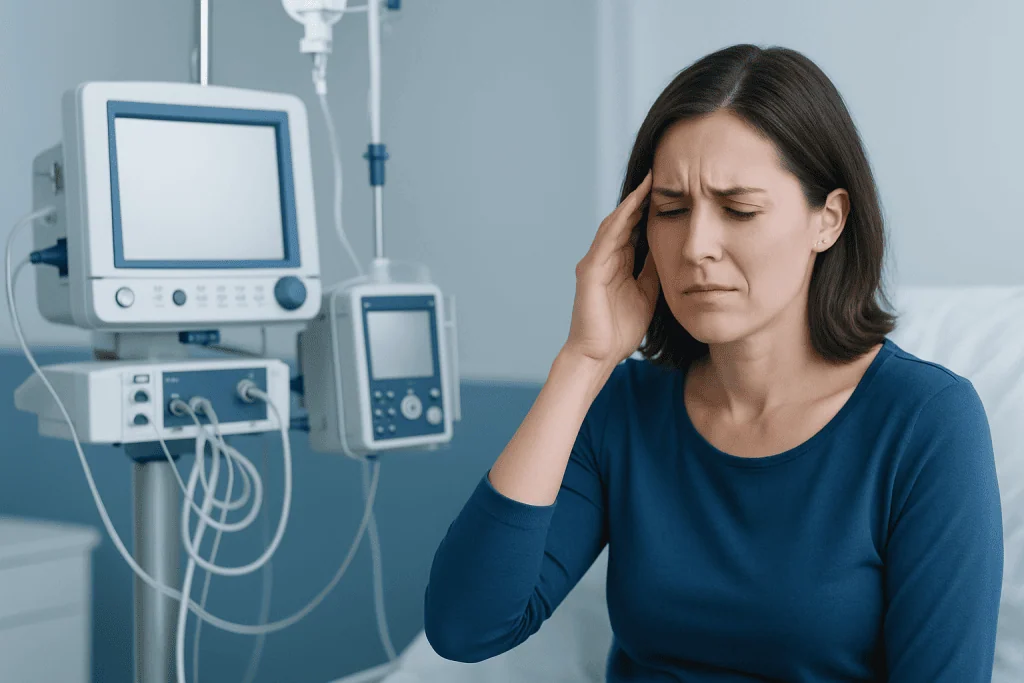
IIH headaches can vary from person to person. The pain may be pressure-like, throbbing, or diffuse, and it may affect the whole head or be strongest behind the eyes. Because it can resemble other headache disorders, the associated eye and ear symptoms often provide important clues.
Symptoms that may occur with IIH include:
- Headache that is frequent, persistent, or worse on waking
- Temporary episodes of blurred, gray, or dim vision
- Double vision, especially from weakness of a nerve that controls eye movement
- Pulsatile tinnitus, often described as hearing a heartbeat or whooshing noise
- Nausea, neck discomfort, or pain with eye movement
- Difficulty seeing clearly to the side, due to peripheral vision loss
Some people have mild visual changes at first, while others notice only headache. That is why eye examination is so important. Swelling of the optic nerve may be present even when the person has not recognized major vision problems yet.
Urgent medical attention is needed if vision is rapidly worsening, double vision is new, or a severe headache is accompanied by confusion, weakness, fever, or other unusual neurological symptoms. Those features may suggest a different condition that also needs prompt care.
Causes and risk factors

Doctors diagnose IIH when intracranial pressure is elevated and other causes have been excluded. The condition is thought to involve altered handling of cerebrospinal fluid, the fluid that cushions the brain and spinal cord. In many cases, no single trigger is found, but several risk factors are recognized.
IIH is more common in women of childbearing age, especially when there has been recent weight gain or obesity. However, it can also affect men, children, and people outside this age group. Having an atypical profile does not rule it out, particularly if visual symptoms and papilledema are present.
Some medicines are associated with increased intracranial pressure in certain people. These may include vitamin A derivatives, tetracycline-class antibiotics, growth hormone, and some other treatments. Doctors also consider hormone-related factors, sleep apnea, and conditions that may mimic IIH, such as brain tumors or cerebral venous sinus problems, which is why proper testing matters.
IIH is not simply “just a headache.” It is a pressure disorder with potential effects on the optic nerves. A person with new persistent headache plus visual symptoms should not assume it is migraine alone without an eye and neurological assessment.
How IIH is diagnosed
Diagnosis usually starts with a detailed history and neurological examination, followed by a careful eye exam. The doctor checks vision, color vision, side vision, and the optic nerves for papilledema. Visual field testing is often used to detect subtle loss of peripheral vision and to monitor whether treatment is working.
Brain imaging is an important next step. MRI is commonly used to look for other causes of raised pressure and to identify features that may support the diagnosis of IIH. In some cases, doctors also request venous imaging to assess the veins that drain blood from the brain. This helps exclude clots or narrowing that may contribute to symptoms. Imaging such as MRI scan can be part of this assessment.
A lumbar puncture, sometimes called a spinal tap, is often needed to measure opening pressure and analyze the cerebrospinal fluid. This test helps confirm that pressure is elevated and that the fluid does not show signs of infection or inflammation. The diagnosis is based on the overall pattern: symptoms, eye findings, imaging results, and lumbar puncture findings together.
Because IIH can overlap with other neurological or eye conditions, coordinated assessment is helpful. Some patients may first be evaluated for migraine or other headache disorders before papilledema or pressure-related changes are recognized.
Treatment options and neuro-ophthalmology care
The main goals of treatment are to protect vision, lower intracranial pressure, and reduce headache burden. Treatment is tailored to the severity of symptoms and the degree of optic nerve involvement. People with significant papilledema or worsening vision usually need close follow-up by neuro-ophthalmology and neurology.
Medicines that reduce cerebrospinal fluid production are commonly used. Doctors may also review current medications and stop any that could be contributing, when medically appropriate. If headache features overlap with migraine, additional headache-directed treatment may be considered, but reducing pressure and monitoring vision remain central.
Weight management is often part of care when relevant, because even modest, medically supervised weight loss can improve pressure in many patients. For selected people with severe or rapidly progressive visual loss, procedures may be needed. These may include lumbar puncture for diagnostic and sometimes temporary symptomatic relief, optic nerve sheath fenestration, venous sinus stenting in carefully selected cases, or neurosurgical treatment such as cerebrospinal fluid shunting.
Follow-up is essential. Symptoms can improve while visual fields still need monitoring, or headaches may continue even after pressure is better controlled. Near the end of the care pathway, some patients may benefit from multidisciplinary evaluation; Acibadem International’s multidisciplinary specialists and JCI-accredited hospitals diagnose and treat neurological and eye conditions for international patients.
Prevention and self-care
There is no guaranteed way to prevent IIH, but reducing modifiable risks can help. If weight gain has played a role, a realistic plan for gradual weight loss under medical guidance may be recommended. Crash diets are not necessary and may be hard to sustain; steady lifestyle changes are usually more helpful.
Self-care also includes recognizing symptom patterns and avoiding delay when vision changes appear. Keeping a headache and vision diary can help track how often headaches occur, whether they are positional, and whether symptoms like pulsatile tinnitus or temporary visual dimming are changing over time.
People being treated for IIH should take medicines exactly as prescribed and attend regular eye and neurology appointments. They should also tell their doctor about all medicines and supplements they use, since some agents may worsen intracranial pressure in susceptible individuals.
Good sleep, hydration, and management of coexisting conditions such as sleep apnea can also support recovery. Self-care is valuable, but it does not replace medical follow-up because protecting vision requires objective eye testing.
When to see a doctor
A person should arrange medical evaluation if a headache is new, persistent, or clearly different from usual patterns, especially when it is paired with blurred vision, double vision, or a heartbeat-like sound in the ears. These symptoms do not always mean IIH, but they do warrant proper assessment.
Prompt care is especially important when symptoms are getting worse over days or weeks. Vision that briefly blacks out when standing, bending, or coughing can be a clue to raised intracranial pressure. Even if those episodes last only seconds, they should be mentioned to a doctor.
Emergency care is needed for sudden major vision loss, a very severe headache unlike previous headaches, or neurological symptoms such as weakness, confusion, fainting, seizure, or fever. These can point to conditions other than IIH that require urgent treatment.
Specialist care is often useful because IIH sits at the overlap of headache medicine, neurology, and ophthalmology. Neuro-ophthalmology care helps ensure that both the pain and the effect on the optic nerves are followed carefully over time.
Frequently asked questions
What does IIH stand for?
IIH stands for idiopathic intracranial hypertension. It describes a condition in which pressure around the brain is elevated without another obvious cause found on standard testing.
Are IIH headaches the same as migraines?
Not exactly. IIH headaches can resemble migraines, but IIH is a pressure disorder that may also affect the optic nerves and vision. Some people with IIH also have migraine features, which can make diagnosis more complex.
Can IIH cause vision loss?
Yes, it can. Raised pressure may cause papilledema, which can damage the optic nerves over time if it is not recognized and treated. That is why eye examinations and visual field testing are so important.
How is IIH confirmed?
Doctors usually confirm IIH through a combination of eye examination, brain imaging, and a lumbar puncture that measures opening pressure. They also make sure there is no other explanation such as infection, bleeding, or a structural problem.
Does losing weight help IIH?
For many people, medically supervised weight loss can reduce intracranial pressure and improve symptoms. The plan should be realistic and safe, and it is best discussed with a doctor rather than trying extreme diets.
Can IIH go away completely?
It can improve significantly, and some people go into remission. However, symptoms may return, especially if risk factors persist, so ongoing follow-up is important even when someone feels better.
References
- National Eye Institute
- National Institute of Neurological Disorders and Stroke
- American Academy of Ophthalmology
- American Headache Society
- UpToDate
This article is for general information only and is not a substitute for professional medical advice. Please consult a qualified doctor about your individual situation.
Heart care in Turkey — expert evaluation and treatment
JCI-accredited · board-certified surgeons · reply within 24h
Add us as a Preferred Source to see more of our trusted health content across Google Search, AI Overviews and Discover.