Da Vinci Surgery vs Traditional Laparoscopy: Key Differences for Patients
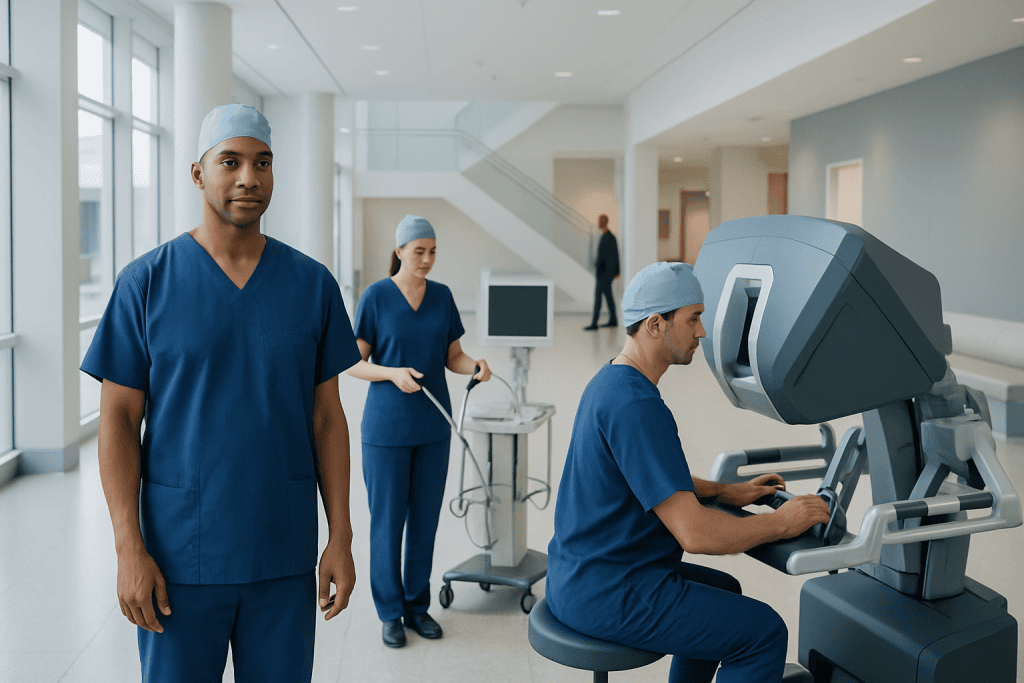
Both approaches are minimally invasive and often aim to reduce pain, blood loss, and recovery time compared with open surgery. Traditional laparoscopy uses long handheld instruments, while Da Vinci surgery uses robotic arms controlled by the surgeon from a console.
Key Takeaways
- Both approaches are minimally invasive and often aim to reduce pain, blood loss, and recovery time compared with open surgery.
- Traditional laparoscopy uses long handheld instruments, while Da Vinci surgery uses robotic arms controlled by the surgeon from a console.
- Da Vinci systems provide a magnified 3D view and wristed instruments that may help with complex or delicate movements.
- The best option depends on the patient's condition, anatomy, surgeon experience, and the type of operation needed.
- Patients should ask about expected benefits, risks, alternatives, recovery, and whether the surgical team has experience with the chosen technique.
Da Vinci surgery and traditional laparoscopy are both minimally invasive techniques that use small incisions instead of one large cut. The main difference is the technology used to perform the operation, which can affect precision, visualization, surgeon comfort, and suitability for certain procedures.
Overview: What these two surgical approaches mean
Da Vinci surgery and traditional laparoscopy are two ways of performing minimally invasive surgery. In both methods, the surgeon operates through several small incisions using a camera and slim instruments, rather than making one larger incision as in open surgery. For many patients, this approach can mean less postoperative discomfort, shorter hospital stays, and a faster return to daily activities, although recovery varies depending on the operation and the person’s overall health.
Traditional laparoscopy has been used for many years in specialties such as general surgery, gynecology, and urology. The surgeon stands beside the patient and directly manipulates long instruments while watching a video monitor. Da Vinci surgery is a type of robot-assisted surgery. The surgeon still performs the operation, but does so from a nearby console that controls robotic arms equipped with surgical instruments and a high-definition camera.
It is important for patients to know that the robot does not act on its own. Every movement of the instruments is guided by the surgeon in real time. The purpose of the robotic platform is to translate the surgeon’s hand movements into very precise instrument actions inside the body. In this way, Da Vinci surgery is best understood as an advanced tool for minimally invasive surgery, not as an automated procedure.
How traditional laparoscopy works
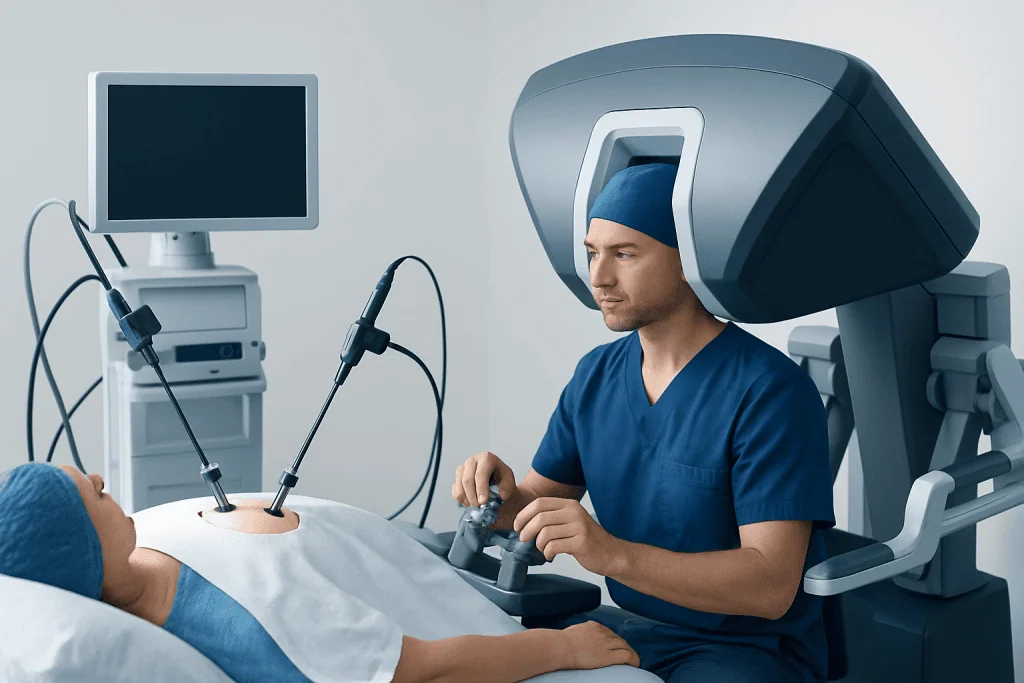
In traditional laparoscopy, the surgeon makes a few small incisions and inserts ports called trocars. A laparoscope, which is a thin tube with a camera and light, is placed through one of these ports to show the inside of the body on a screen. The surgeon uses the other ports to introduce instruments for cutting, grasping, suturing, or removing tissue.
To create working space, the abdomen is often gently inflated with carbon dioxide gas. The surgeon then performs the operation while standing at the operating table, moving the instruments by hand. This approach is widely used for procedures such as gallbladder removal, hernia repair, some colorectal operations, and many gynecologic surgeries.
Traditional laparoscopy remains highly effective and is often the standard approach for many operations. It is generally well established, broadly available, and supported by a long history of surgical experience. In many cases, it offers excellent outcomes without the need for more advanced equipment.
How Da Vinci surgery works
Da Vinci surgery also uses small incisions, a camera, and specialized instruments, but the setup is different. After the ports are placed, the robotic system is positioned at the operating table. The surgeon then sits at a console nearby and controls the robotic arms using hand controls and foot pedals while viewing the surgical field on a magnified three-dimensional screen.
One of the major technological differences is the design of the instruments. Robotic instruments can bend and rotate with a wider range of motion than standard rigid laparoscopic instruments. This can make fine dissection and suturing easier in tight spaces. The system can also filter out natural hand tremor and scale movements, which may support precision during delicate parts of an operation.
Robot-assisted surgery is used in selected procedures across specialties, including some operations in urology, gynecology, colorectal surgery, and thoracic surgery. Patients considering robotic surgery may hear it discussed alongside other minimally invasive options. Whether it is appropriate depends on the planned procedure, the surgeon’s training, and the equipment available at the hospital.
Key differences patients should understand
The main differences between Da Vinci surgery and traditional laparoscopy relate to visualization, instrument movement, and surgeon ergonomics. Da Vinci systems typically provide a high-definition, magnified 3D view, while traditional laparoscopy often uses a 2D monitor, although 3D laparoscopic systems also exist in some centers. The robotic platform’s wristed instruments can improve dexterity, especially when operating in narrow or deep areas of the body.
Traditional laparoscopy, however, is highly effective and may be simpler to set up for many routine procedures. It usually involves fewer technology-related steps in the operating room. In experienced hands, traditional laparoscopy can achieve outcomes that are similar to robotic surgery for many operations. This is why the surgeon’s expertise with a specific technique is often more important than the tool itself.
From the patient’s perspective, both methods may offer benefits associated with minimally invasive surgery, such as smaller incisions and less scarring than open surgery. However, patients should not assume that robotic surgery is always better. For some procedures, there may be little practical difference in recovery or results. For others, especially complex reconstructive work or surgery in confined spaces, the robotic platform may offer technical advantages.
- Traditional laparoscopy: surgeon directly holds instruments at the bedside
- Da Vinci surgery: surgeon controls robotic instruments from a console
- Visualization: robotic systems often provide magnified 3D imaging
- Instrument motion: robotic instruments can allow greater flexibility
- Suitability: depends on the procedure, anatomy, and surgical team experience
Benefits, limitations, and possible risks
Both approaches are designed to reduce the impact of surgery on the body compared with open operations. Potential advantages can include smaller incisions, less blood loss, lower postoperative pain, and shorter recovery times. Some patients are able to return to normal movement and light activities sooner, but recovery still depends on what operation was done and whether any complications occur.
Da Vinci surgery may be especially helpful when an operation requires careful suturing, detailed dissection, or work in a limited space. Traditional laparoscopy may be an excellent choice for many common procedures and is often more widely available. It is also important to remember that not every patient is a good candidate for minimally invasive surgery. Previous operations, scar tissue, obesity, bleeding risk, tumor extent, or emergency conditions can influence the safest approach.
As with any surgery, there are risks with both techniques. These may include bleeding, infection, injury to nearby organs, blood clots, anesthesia-related problems, or the need to convert to an open procedure for safety. The chance of a complication depends more on the type of surgery, the patient’s health, and the complexity of the case than on the name of the technology alone. Conditions such as hernia or endometriosis may be treated using different minimally invasive techniques depending on individual circumstances.
How doctors decide which option is best
Choosing between Da Vinci surgery and traditional laparoscopy is a shared decision based on medical need and surgical judgment. Doctors consider the diagnosis, the exact procedure planned, the patient’s anatomy, prior surgeries, body weight, and any underlying conditions such as heart or lung disease. They also think about whether the operation is straightforward or technically complex.
Another key factor is the surgeon’s training and experience. A well-performed traditional laparoscopic operation may be preferable to a robotic operation done by a team with limited experience, and the reverse may also be true. Patients can reasonably ask how often the surgeon performs the recommended procedure, what outcomes are typically expected, and whether there are important alternatives.
In some situations, a surgeon may recommend a minimally invasive approach but explain that the final decision can change during the operation. If visibility is poor, there is unexpected bleeding, or the anatomy is different than anticipated, the surgeon may need to change techniques or convert to open surgery for safety. This is not necessarily a complication; it is sometimes the safest and most responsible decision.
What patients can expect before and after surgery
Before surgery, patients usually have a preoperative evaluation that may include blood tests, imaging, medication review, and anesthesia assessment. They may be asked to stop certain medicines, avoid food and drink for a period before surgery, and follow procedure-specific instructions. Understanding the surgical plan can help reduce anxiety, so it is helpful to ask about incision sites, expected hospital stay, pain control, and recovery milestones.
After either Da Vinci surgery or traditional laparoscopy, it is common to have some soreness around the incision sites, temporary fatigue, and discomfort related to the gas used during surgery. Many patients are encouraged to walk soon after the procedure to support circulation and recovery. The healthcare team will provide guidance on wound care, bathing, lifting, driving, diet, and when to return to work or exercise.
Patients should seek medical advice promptly if they develop fever, worsening pain, increasing redness or drainage from the incisions, shortness of breath, chest pain, persistent vomiting, or difficulty passing urine or stool when instructed to monitor these symptoms. For selected operations, related options such as laparoscopic surgery or general surgery may be discussed as part of treatment planning. Near the end of the care journey, some international patients choose centers such as Acibadem International, where multidisciplinary specialists in JCI-accredited hospitals evaluate and treat patients using appropriate surgical techniques.
Questions to ask the surgeon
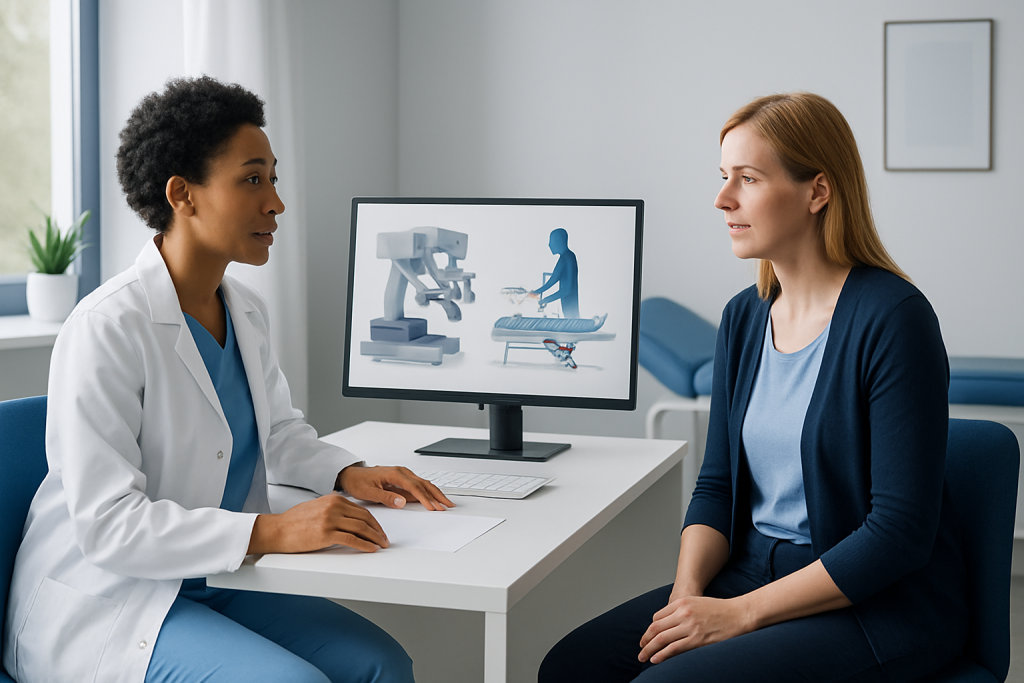
Patients often feel more confident when they understand why a particular approach is being recommended. A surgical consultation is a good time to ask clear, practical questions. The goal is not to choose the most advanced-sounding technology, but to understand which option is most suitable for the individual case.
Helpful questions may include whether the surgery can be done minimally invasively, whether robotic assistance offers a meaningful advantage for that specific operation, and what recovery is likely to look like. Patients can also ask about possible alternatives, including non-surgical treatment when appropriate, and what signs after surgery should prompt urgent medical attention.
- Why do you recommend Da Vinci surgery or traditional laparoscopy for this procedure?
- How many times have you performed this specific operation with this technique?
- What are the expected benefits and limitations in this case?
- What risks should be considered, including conversion to open surgery?
- How long is the expected hospital stay and recovery period?
- Are there any non-surgical or alternative surgical options?
Bottom line for patients
Da Vinci surgery and traditional laparoscopy are both important forms of minimally invasive surgery. The difference is not simply that one is new and one is old, or that one is always better. Instead, each has strengths, limitations, and ideal uses depending on the procedure and the person being treated.
For patients, the most useful focus is not only the technology, but also the quality of decision-making around it. A thoughtful recommendation considers the condition being treated, the surgeon’s skill, the hospital’s resources, and the expected recovery. An informed conversation with a qualified surgeon is the best way to understand which approach is safest and most appropriate.
When questions arise, patients should feel comfortable asking for a clear explanation in everyday language. Good surgical care includes helping the patient understand the plan, the alternatives, and what to expect before, during, and after the operation.
Frequently asked questions
Is Da Vinci surgery better than traditional laparoscopy?
Not always. Da Vinci surgery may offer technical advantages in some complex procedures, especially where fine suturing or work in tight spaces is needed, but traditional laparoscopy also provides excellent results for many operations. The best choice depends on the procedure, the patient's needs, and the surgeon's experience.
Does a robot perform the surgery on its own?
No. In Da Vinci surgery, the surgeon controls every movement of the robotic instruments from a console. The system does not make decisions or operate independently.
Are recovery times different between the two methods?
Recovery can be similar because both are minimally invasive approaches that use small incisions. In some cases, one technique may offer a practical advantage, but recovery is influenced more by the type of operation, the patient's health, and whether complications occur.
Is robotic surgery safer than laparoscopy?
Safety depends on many factors, including the operation being performed, the patient's medical condition, and the skill of the surgical team. Robotic surgery can support precision in selected cases, but it is not automatically safer in every situation. Patients should discuss the specific risks and benefits for their own procedure.
Can every minimally invasive surgery be done with the Da Vinci system?
No. Not all procedures require robotic assistance, and not all patients are suitable candidates for it. Some surgeries are better suited to traditional laparoscopy, while others may need open surgery for the safest outcome.
What should patients ask before choosing a surgical approach?
Patients can ask why a certain technique is recommended, how often the surgeon performs that procedure, what benefits are expected, and what the possible risks are. It is also helpful to ask about alternatives, the chance of conversion to open surgery, and what recovery will involve.
References
- World Health Organization
- American College of Surgeons
- Society of American Gastrointestinal and Endoscopic Surgeons
- American College of Obstetricians and Gynecologists
- National Institute for Health and Care Excellence
This article is for general information only and is not a substitute for professional medical advice. Please consult a qualified doctor about your individual situation.
Explore treatments in Turkey — costs, top hospitals & a free quote
JCI-accredited · board-certified surgeons · reply within 24h
Add us as a Preferred Source to see more of our trusted health content across Google Search, AI Overviews and Discover.