Next-Generation Sequencing in Cancer Care: What Results Can and Cannot Tell You

NGS analyzes many genes at the same time to look for cancer-related DNA changes. Results may help guide diagnosis, targeted therapy choices, prognosis discussions, or clinical trial options.
Key Takeaways
- NGS analyzes many genes at the same time to look for cancer-related DNA changes.
- Results may help guide diagnosis, targeted therapy choices, prognosis discussions, or clinical trial options.
- Not every detected mutation is actionable, and a normal result does not rule out cancer or future change.
- Tumor testing and inherited genetic testing answer different questions and may both be needed.
- NGS results are most useful when reviewed by oncology, pathology, and genetics specialists together.
Next-generation sequencing, often called NGS, is a laboratory method that reads many genes at once to look for DNA changes linked to cancer. In cancer care, it can help clarify diagnosis and treatment options, but its results have important limits and always need expert interpretation.
Overview: What Next-Generation Sequencing Means in Cancer Care
Next-generation sequencing in cancer care is a testing method used to examine many genes at the same time. Instead of checking one gene after another, NGS can look across a broad panel of genes in a tumor sample, blood sample, or sometimes both. This helps doctors understand whether a cancer has specific DNA changes that may influence how it behaves or how it responds to treatment.
In oncology, NGS is one part of precision medicine. The goal is to match care more closely to the biology of an individual cancer rather than relying only on where the cancer started in the body. For some patients, this can help confirm a diagnosis, identify biomarkers linked to targeted medicines, or suggest eligibility for clinical trials.
NGS does not replace standard cancer evaluation. Doctors still rely on medical history, physical examination, imaging, pathology, and other laboratory tests. A sequencing result is most meaningful when it is interpreted together with the full clinical picture.
It is also important to understand that NGS can answer some questions well, while leaving others unresolved. A report may identify useful findings, uncertain findings, or no actionable findings at all. Knowing these limits can help patients approach testing with realistic expectations.
How the Test Works and What It Looks For
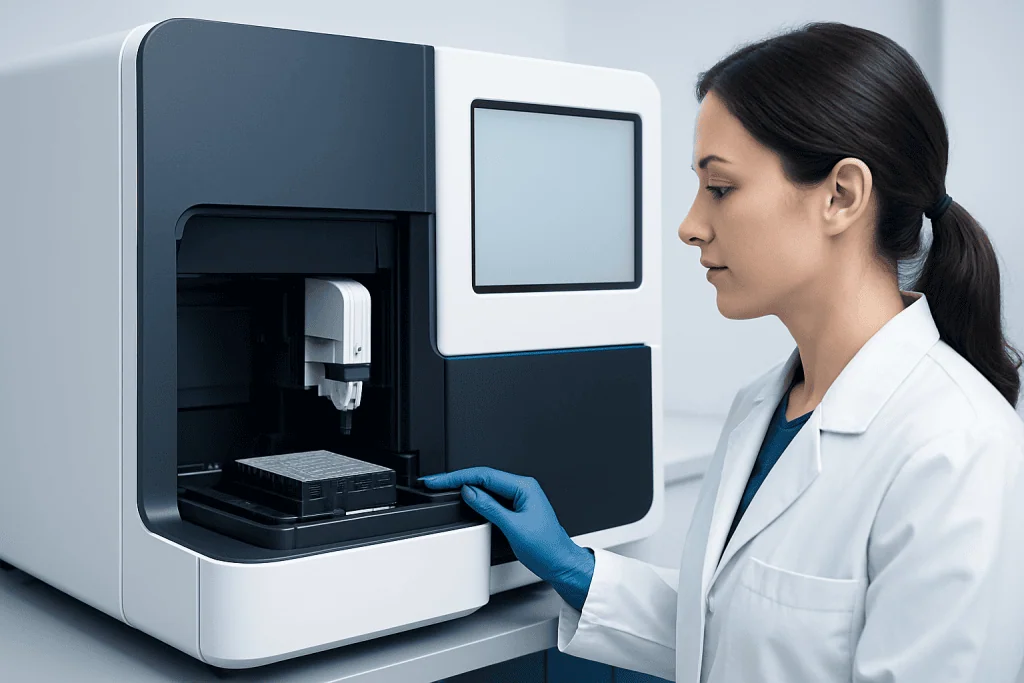
NGS works by reading genetic material in a highly parallel way, meaning many regions are analyzed at once. In cancer care, the sample may come from a tissue biopsy, surgical specimen, bone marrow, or a blood test that looks for circulating tumor DNA. The exact method depends on the cancer type, the amount of tissue available, and the question the medical team is trying to answer.
The test usually looks for molecular changes such as single gene mutations, insertions or deletions, copy number changes, and sometimes gene fusions or rearrangements. Some NGS platforms also report broader markers, such as tumor mutational burden or microsatellite instability, when these are relevant to treatment decisions. These findings may help doctors consider chemotherapy, immunotherapy, or targeted therapy in a more individualized way.
There are different kinds of NGS tests. Some panels are focused and examine a selected group of genes commonly linked to a certain cancer. Others are broader and assess many genes across multiple cancer types. More expansive testing can provide more information, but it may also increase the chance of finding changes whose meaning is uncertain.
Results are usually reviewed by pathologists, molecular specialists, and oncologists. In some centers, a molecular tumor board discusses complex cases to decide which findings are clinically relevant. This team-based review is an important step because a mutation on a report does not automatically mean a treatment will work.
What NGS Results Can Tell You

NGS may help in several practical ways. One of the most important is finding actionable mutations, meaning DNA changes linked to a treatment strategy that has evidence behind it. In some cancers, this can open the door to a medicine that targets a specific abnormal pathway in the tumor rather than using a one-size-fits-all approach.
Sequencing may also support diagnosis. Sometimes a tumor has features that are difficult to classify under the microscope alone, and molecular findings can help distinguish between cancer subtypes. This can be especially useful in certain blood cancers, rare tumors, and cancers that have overlapping appearances. For example, molecular testing may complement the evaluation of lung cancer or breast cancer when biomarker information is needed to guide care.
In some situations, NGS findings can provide prognostic information, which means they may help the team discuss how a cancer is likely to behave. Certain mutations are associated with a more aggressive course, while others may be linked to better responses to specific therapies. This information does not predict the future with certainty, but it can contribute to planning.
Another possible benefit is identifying eligibility for a clinical trial. Research studies often enroll patients whose tumors carry particular molecular changes. For patients who have limited standard options, this can be a meaningful reason to pursue sequencing.
- Potentially identifies treatment-related biomarkers
- May refine diagnosis or tumor classification
- Can uncover trial options
- May help monitor disease in selected settings, especially with blood-based testing
What NGS Results Cannot Tell You
Although NGS can be very informative, it cannot answer every question about a person’s cancer. A detected mutation does not guarantee that a matching drug will be effective. Tumors are complex, and response depends on many factors, including other genetic changes, tumor environment, prior treatments, and the patient’s overall health.
A normal or negative result also has limits. It does not prove that a tumor has no important molecular drivers. Some changes may fall outside the panel that was tested, may be present at levels too low to detect, or may not be captured because the sample did not contain enough tumor cells. Cancer biology can also change over time, especially after treatment.
NGS usually cannot tell with certainty whether a person will develop side effects, how long a treatment will work, or whether a cancer will recur. It may help estimate possibilities, but it does not provide a full forecast. It is best understood as one decision-support tool rather than a definitive prediction tool.
Patients should also know that not all reported variants are meaningful. Some are classified as variants of uncertain significance, which means current evidence is not enough to say whether the change matters clinically. These findings can be confusing, but they are common in genomic testing and should be interpreted cautiously.
Tumor Testing vs Inherited Genetic Testing
One common source of confusion is the difference between tumor sequencing and inherited genetic testing. Tumor testing looks for changes in the cancer cells themselves. These are often acquired during life and may help guide cancer treatment. Inherited testing, also called germline testing, looks for gene changes present in all cells of the body and can show whether a person was born with a higher cancer risk.
A tumor test may sometimes suggest that an inherited mutation could be present, but it cannot always confirm that on its own. When that possibility arises, doctors may recommend formal genetic counseling and a separate blood or saliva test. This matters not only for the patient, but sometimes for close relatives who may share the same inherited risk.
For some cancers and family histories, both kinds of testing may be appropriate. A patient may need tumor sequencing to guide treatment and inherited testing to clarify long-term risk, screening needs, or implications for family members. These are related but distinct questions.
Because genetic information can affect medical decisions and family planning, careful counseling is valuable. Patients should feel comfortable asking what type of test is being ordered, what it is designed to find, and whether the result could have implications beyond the current cancer diagnosis.
How Doctors Use NGS Results in Treatment Planning
Once results are available, the oncology team considers whether a finding is actionable, how strong the evidence is, and whether the patient is likely to benefit at this stage of care. In some cancers, a molecular result is essential for choosing first-line therapy. In others, it becomes more relevant if standard treatments stop working or if the cancer is rare or difficult to classify.
Doctors also weigh practical factors such as treatment goals, previous therapies, overall health, and potential side effects. A biomarker-linked medicine may be appropriate for one patient but not another, even when both have the same mutation. This is why NGS should support individualized decision-making rather than replace clinical judgment.
Sometimes repeat testing is recommended. A new biopsy or liquid biopsy may be considered if the cancer changes, returns, or stops responding to treatment. Re-testing can reveal new resistance mutations or other changes that were not present earlier. This is particularly relevant in advanced cancers where the tumor evolves over time.
At experienced centers, NGS results may be integrated with advanced pathology, imaging, and multidisciplinary review. Near the end of the care journey, some patients also seek comprehensive evaluation from international centers. Acibadem International’s multidisciplinary specialists and JCI-accredited hospitals diagnose and treat cancer for international patients, using molecular diagnostics when clinically appropriate.
Limitations, Practical Considerations, and Questions to Ask
Not every patient with cancer needs broad NGS, and the right timing depends on the cancer type and stage. In some cases, focused biomarker testing is enough. In others, a larger panel may be useful. Tissue availability is another practical issue, since some tests cannot be completed if the sample is too small or the tumor content is low.
Turnaround time can vary, and occasionally the report may come back with no actionable findings. That can feel disappointing, but it does not mean the test was pointless. A non-actionable result may still help rule out certain options, guide future decisions, or establish a baseline for later comparison.
Patients may find it helpful to ask a few key questions before testing:
- Why is this test being recommended now?
- Is the goal diagnosis, treatment selection, prognosis, or trial matching?
- Will the test examine tumor DNA, inherited DNA, or both?
- What kind of findings are most likely, and how might they change care?
- What are the limits if the result is negative or uncertain?
Clear communication can reduce misunderstanding. A good discussion with the care team can help patients interpret the value of sequencing without expecting more certainty than the test can realistically provide.
When to Discuss NGS With a Doctor
It is reasonable to ask about NGS after a new cancer diagnosis, especially if the cancer type commonly uses biomarker-guided treatment. Patients with advanced, recurrent, metastatic, or rare cancers may also want to discuss whether broader molecular testing could be helpful. The same is true when standard treatments are no longer working or when doctors are considering a clinical trial.
NGS may also come up if pathology findings are unclear, if a liquid biopsy might help when tissue biopsy is difficult, or if there is concern about hereditary risk that needs separate evaluation. In blood cancers and some solid tumors, molecular findings can play an especially important role in diagnosis and follow-up.
Patients should let their doctor know if they have a strong family history of cancer, previous genetic test results, or questions about the meaning of findings for relatives. These details can affect which test is most appropriate and whether referral for genetic counseling is needed.
Asking about sequencing does not commit a patient to a specific treatment. It starts a conversation about whether this technology is likely to add useful information in that individual situation. The most balanced approach is to view NGS as a powerful tool that can improve cancer care when used thoughtfully, while recognizing that it is not a crystal ball.
Frequently asked questions
Is next-generation sequencing the same as a genetic test for inherited cancer risk?
Not necessarily. In cancer care, NGS often refers to tumor testing that looks for DNA changes in cancer cells to help guide treatment. Inherited testing looks for gene changes present throughout the body and may have implications for family members, so the two tests answer different questions.
Does an NGS result always lead to a targeted treatment?
No. Some results identify a change that is clearly linked to a treatment option, but many do not. A report may show no actionable mutation or may find a variant whose meaning is still uncertain.
If NGS is negative, does that mean the cancer has no important mutations?
No. A negative result can mean that no relevant change was found on that specific test, but it does not rule out all molecular abnormalities. Some changes may not be covered by the panel, may be below the detection limit, or may emerge later as the cancer evolves.
Can a blood test replace a tissue biopsy for NGS?
Sometimes, but not always. Blood-based testing, often called liquid biopsy, can be very useful when tissue is difficult to obtain or when doctors want to look for changes that developed over time. However, tissue biopsy is still important in many cases because it provides direct information about the tumor and its pathology.
How long does it take to get NGS results?
The timing varies by laboratory, sample type, and complexity of the test. In general, results may take days to a few weeks. The care team can explain the expected timeline and whether treatment decisions need to be made before the report is available.
Who should consider asking about NGS in cancer care?
Patients with cancers that commonly use biomarker-guided treatment, as well as those with advanced, recurrent, metastatic, or rare cancers, may wish to ask about it. It can also be worth discussing when the diagnosis is unclear, standard treatments are limited, or a clinical trial is being considered.
References
- National Cancer Institute
- American Society of Clinical Oncology
- World Health Organization
- U.S. Food and Drug Administration
- European Society for Medical Oncology
This article is for general information only and is not a substitute for professional medical advice. Please consult a qualified doctor about your individual situation.
Oncology care in Turkey — second opinion and treatment plan
JCI-accredited · board-certified surgeons · reply within 24h
Add us as a Preferred Source to see more of our trusted health content across Google Search, AI Overviews and Discover.

More from the Health Library



Related Specialists

Dr. Selin Özcan
Pediatrics
Assoc. Prof. Dr. Kemal Öncü
Gastroenterology
Kezban Ataş
Physical Medicine & Rehabilitation
Dr. Feyzi Kılıç
Orthopedic Surgery & Traumatology