

What Is a Neurophysiology Test? How to Prepare and What Happens at the Appointment
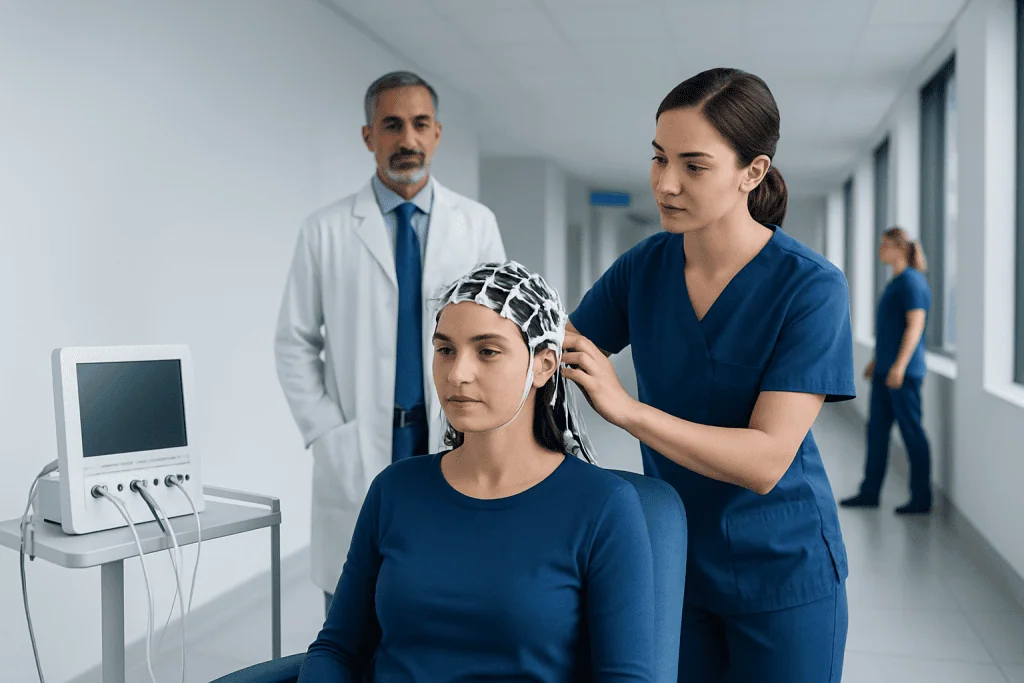
A neurophysiology test helps evaluate the function of nerves, muscles, and the brain rather than showing structure alone. Common tests include EEG, EMG, nerve conduction studies, and evoked potentials.
Key Takeaways
- A neurophysiology test helps evaluate the function of nerves, muscles, and the brain rather than showing structure alone.
- Common tests include EEG, EMG, nerve conduction studies, and evoked potentials.
- Preparation varies by test but may include clean skin or hair, avoiding certain products, and reviewing current medicines with the doctor.
- Most neurophysiology tests are outpatient procedures and are generally safe, though some may cause brief discomfort.
- Results are interpreted together with symptoms, examination findings, and imaging or laboratory tests when needed.
A neurophysiology test measures how the nervous system is working by recording electrical activity in the brain, spinal pathways, nerves, or muscles. These tests help doctors understand symptoms such as weakness, numbness, seizures, pain, dizziness, or changes in movement and sensation.
Overview: What Is a Neurophysiology Test?
A neurophysiology test is a diagnostic test that measures how the nervous system functions. Instead of mainly looking at body structures, as scans do, neurophysiology focuses on electrical signals traveling through the brain, spinal cord, peripheral nerves, and muscles. This can help a doctor understand whether symptoms are related to how nerves send messages, how muscles respond, or how brain activity is organized.
These tests are often requested when a person has unexplained symptoms such as tingling, numbness, weakness, muscle cramps, tremor, blackout episodes, seizures, balance problems, or chronic pain. They may also be used to monitor known neurological conditions or to help guide treatment planning.
There is not just one neurophysiology test. The term includes several different procedures, each designed to answer a specific question. Common examples are electroencephalography, also called an EEG, electromyography or EMG, nerve conduction studies, and evoked potential tests. A doctor chooses the most suitable test based on the person’s symptoms, medical history, and examination findings.
For many patients, it is reassuring to know that most neurophysiology tests are done as outpatient appointments. They usually do not require general anesthesia, and many are completed within the same day. While some tests involve mild or brief discomfort, they are generally considered safe and provide valuable information that may not be available from scans alone.
Types of Neurophysiology Tests
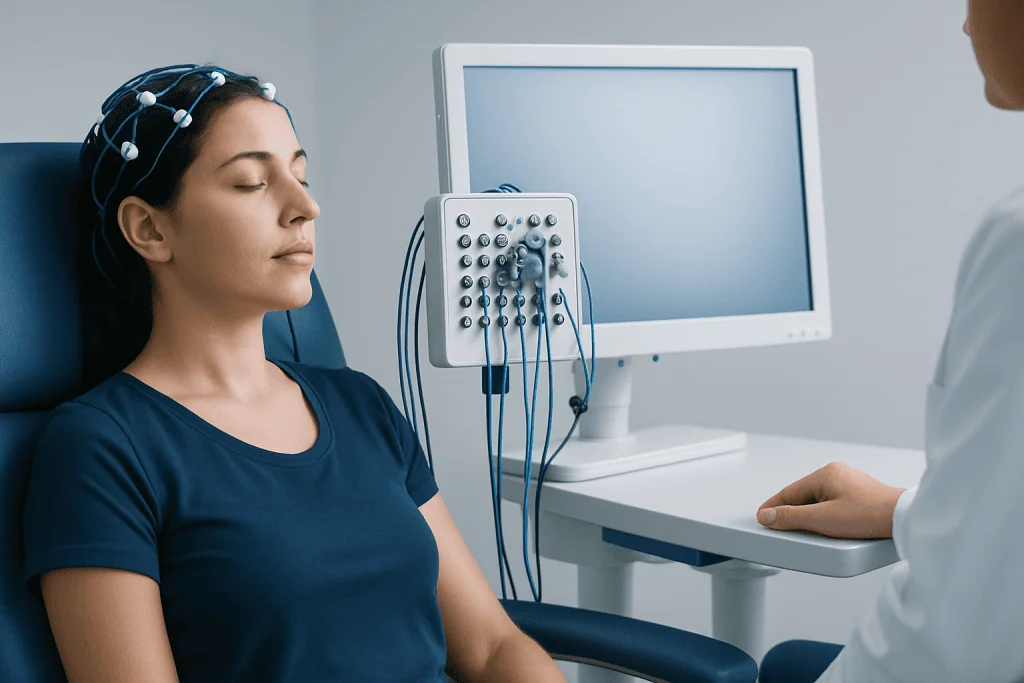
Different neurophysiology tests examine different parts of the nervous system. An EEG records electrical activity in the brain through small sensors placed on the scalp. It is often used to assess seizures, blackout episodes, sleep-related concerns, and other symptoms that may be linked to brain activity.
An EMG evaluates how muscles and the nerves controlling them are functioning. During this test, a specialist places a very fine needle electrode into selected muscles to record electrical activity. EMG is often performed together with a nerve conduction study, which uses small surface electrodes and gentle electrical impulses to measure how quickly and effectively signals travel along nerves.
Evoked potential tests measure how the brain responds to sensory stimulation, such as visual, sound, or touch signals. These tests can help assess pathways that carry information from the eyes, ears, or skin to the brain. Depending on the clinical picture, doctors may also request more specialized neurophysiology testing.
Each test has a distinct purpose, and sometimes more than one is needed for a complete assessment. For example, a patient with hand numbness and weakness may benefit from both an EMG and a nerve conduction study, while a patient with episodes of altered awareness may need an EEG assessment. The specialist explains which test is planned and what information it is expected to provide.
Why a Doctor May Recommend One
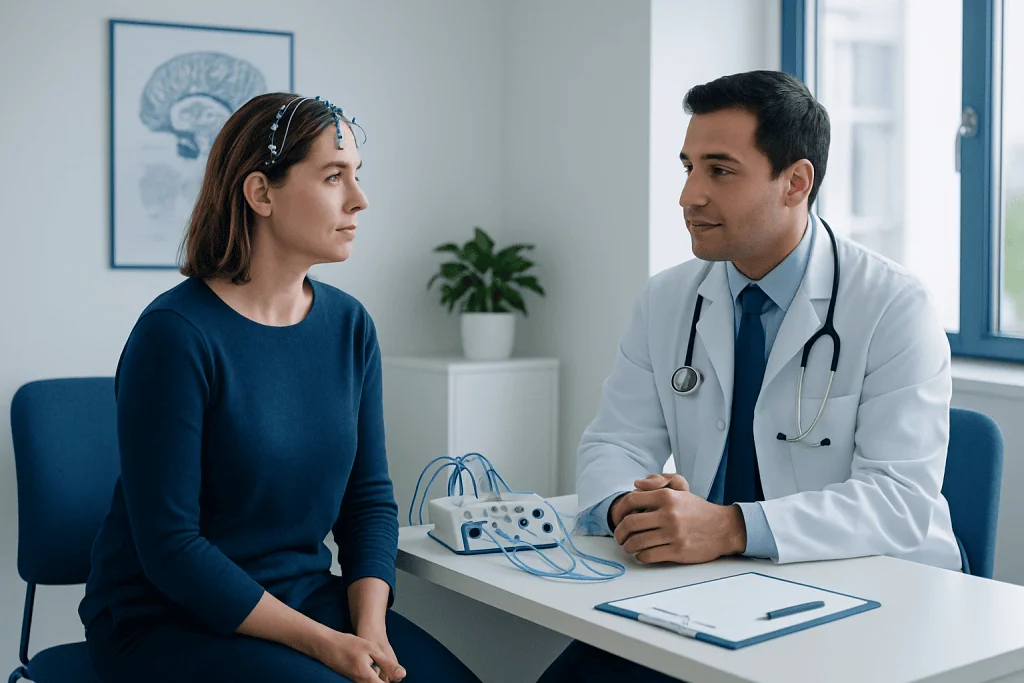
A neurophysiology test may be recommended when symptoms suggest that the brain, nerves, or muscles are not communicating normally. Doctors commonly request these tests for numbness, burning pain, weakness, muscle twitching, coordination difficulties, unexplained falls, facial symptoms, or suspected seizure-like events.
These tests can help investigate a wide range of conditions. They may support the diagnosis of nerve compression syndromes, peripheral neuropathy, muscle disorders, epilepsy, and some disorders affecting communication between nerves and muscles. In some cases, testing also helps distinguish whether symptoms are coming from the brain, spinal cord, nerve root, peripheral nerve, or muscle itself.
Neurophysiology is also useful after a diagnosis has already been made. A doctor may repeat testing to monitor progression, evaluate recovery after injury, or assess the effect of treatment. For example, nerve testing may help track change after surgery or rehabilitation, while EEG testing can help guide follow-up in people with seizure disorders.
Importantly, a neurophysiology test is only one part of the diagnostic process. Results are interpreted alongside the person’s story, neurological examination, imaging findings, and blood tests where appropriate. This broader approach helps reduce uncertainty and supports a more accurate diagnosis.
How to Prepare for the Appointment
Preparation depends on which neurophysiology test is being performed. In general, patients are advised to follow the instructions given by their doctor or the testing department carefully, since small details can improve the quality of the recording. If anything is unclear, it is best to ask before the appointment rather than guess.
For an EEG, hair should usually be clean and dry, without hairspray, gels, oils, or heavy styling products. Some patients may be asked to reduce sleep before the test if a sleep-deprived EEG is planned. It is also helpful to bring a list of current medicines, because some treatments can influence brain activity and may be relevant when the results are interpreted.
For an EMG or nerve conduction study, the skin should be clean and free from lotions, creams, or oils because these can interfere with electrodes. Comfortable, loose-fitting clothing is often a good choice. Patients should tell the doctor if they have a pacemaker, a bleeding disorder, take blood-thinning medication, or have a skin infection near the area to be tested.
In most cases, eating and drinking normally is allowed unless other instructions are given. Patients should also be ready to describe their symptoms clearly, including when they started, what makes them better or worse, and whether they affect sleep, work, walking, or daily tasks. This information helps the specialist focus the test on the most relevant areas.
What Happens During the Test
What happens during the appointment depends on the type of neurophysiology test. For an EEG, a technician places small electrodes on the scalp using a paste or adhesive. The patient then sits or lies comfortably while brain activity is recorded. They may be asked to open and close their eyes, breathe deeply for a short time, or look at flashing lights, depending on the test plan.
During a nerve conduction study, surface electrodes are placed on the skin over specific nerves and muscles. Small electrical pulses are delivered to the nerve, and the response is recorded. These pulses can feel unusual or briefly uncomfortable, but they are very short and are carefully controlled by trained staff.
During an EMG, the specialist inserts a very fine needle electrode into selected muscles to record their electrical activity at rest and during gentle movement. Some people describe this as mildly uncomfortable, similar to a quick pinprick or muscle ache, but the sensation usually passes quickly. The number of muscles tested depends on the symptoms and the clinical question.
Evoked potential tests use electrodes placed on the scalp and body while the patient responds to visual, sound, or touch stimuli. Most neurophysiology appointments take from about 30 minutes to a couple of hours depending on the complexity of the test. Afterward, many patients can return home and resume their usual activities unless they have been given specific instructions.
Understanding the Results
Results from a neurophysiology test are interpreted by a trained specialist, often a clinical neurophysiologist or neurologist. The report looks at patterns of electrical activity and whether signals are traveling with normal speed, timing, and strength. Abnormal findings may suggest irritation, damage, dysfunction, or delayed transmission somewhere in the nervous system.
However, an abnormal result does not automatically point to one single diagnosis. Several conditions can sometimes produce similar test patterns, and the significance of a finding depends on the person’s symptoms and examination. In the same way, a normal result can still be helpful because it may rule out certain problems and guide the doctor toward other explanations.
Patients are sometimes surprised if the specialist says a test is “supportive” rather than “diagnostic.” This is normal. Neurophysiology often adds important evidence, but doctors usually combine it with other information such as MRI, laboratory testing, or consultation in neurology care to reach the clearest conclusion.
If the results suggest a specific nerve or muscle problem, treatment recommendations may follow. For example, the next steps could include medication review, physical therapy, splinting, further imaging, or more targeted investigations. If symptoms suggest a broader nerve disorder, additional evaluation for neuropathy or related conditions may be discussed.
Risks, Side Effects, and Safety
Most neurophysiology tests are considered low risk. An EEG is noninvasive and usually painless, though some people find the scalp paste inconvenient or may feel tired if sleep deprivation is part of the preparation. If flashing lights or hyperventilation are used, they are done under controlled conditions by trained staff.
Nerve conduction studies may cause brief discomfort from the electrical stimulation, but they do not usually lead to lasting problems. EMG may leave temporary soreness or a small bruise in the tested muscle. Significant bleeding or infection after EMG is uncommon, but patients should mention bleeding disorders, blood thinners, or implanted devices before the test.
Patients should also tell the clinician if they are pregnant, have epilepsy, have a pacemaker or other implanted electrical device, or are worried about pain. This does not always prevent testing, but it helps the team plan safely and tailor the appointment to the individual’s needs.
In specialist centers, neurophysiology tests are performed with attention to patient comfort, hygiene, and clear communication. Near the end of the diagnostic pathway, some international patients choose centers such as Acibadem International, where multidisciplinary specialists in JCI-accredited hospitals assess and treat neurological conditions using coordinated care.
After the Test and When to Follow Up
After most neurophysiology tests, patients can return to their normal routine right away. If paste was used on the scalp during an EEG, hair can usually be washed afterward. If an EMG was performed, mild muscle tenderness may settle within a short time, and simple rest is often enough unless the doctor advises otherwise.
Follow-up is important because the test itself is only part of the process. Patients should attend the review appointment to discuss what the results mean, whether more tests are needed, and which treatment options may help. For some people, this next step may include rehabilitation, medication changes, or more focused investigations such as EMG testing in additional muscles or nerves if symptoms evolve.
Medical advice should be sought promptly if new or severe symptoms develop after the appointment, such as unusual swelling, persistent bleeding, increasing pain, or symptoms unrelated to the expected temporary discomfort of testing. These problems are not common, but it is always sensible to ask for guidance if something does not feel right.
Patients should also arrange medical review if neurological symptoms are worsening, especially progressive weakness, repeated blackout episodes, new seizures, trouble speaking, or sudden changes in balance or sensation. Early assessment can help clarify the cause and support timely treatment.
Frequently asked questions
Is a neurophysiology test painful?
Most neurophysiology tests are not painful, though some can cause brief discomfort. EEG is usually painless, while nerve conduction studies may feel like short electrical taps and EMG may cause temporary discomfort from fine needle electrodes.
How long does a neurophysiology test take?
The length depends on the type of test and how many areas need to be assessed. Some appointments take around 30 minutes, while more detailed studies may last one to two hours or longer.
Can I eat or take my usual medicines before the test?
Many patients can eat normally and take usual medicines, but this depends on the test and the reason it is being done. It is important to follow the instructions provided by the doctor and to bring an up-to-date medication list to the appointment.
What should I wear to a neurophysiology appointment?
Comfortable, loose-fitting clothing is usually best, especially if the arms or legs may be tested. For EEG, hair should generally be clean and free from styling products so the electrodes can be attached properly.
Will I get the results immediately?
Sometimes the specialist can give a brief impression on the day, but a full interpretation often takes more time. Results are usually reviewed together with symptoms, examination findings, and any other relevant tests.
Is a neurophysiology test the same as an MRI scan?
No. MRI mainly shows the structure of the brain, spine, or other tissues, while a neurophysiology test assesses how nerves, muscles, or brain pathways are functioning electrically.
References
- National Institute of Neurological Disorders and Stroke
- National Institute for Health and Care Excellence
- American Association of Neuromuscular & Electrodiagnostic Medicine
- International Federation of Clinical Neurophysiology
- NHS
This article is for general information only and is not a substitute for professional medical advice. Please consult a qualified doctor about your individual situation.
Neurophysiology in Turkey — costs, top hospitals & a free quote
JCI-accredited · board-certified surgeons · reply within 24h
Add us as a Preferred Source to see more of our trusted health content across Google Search, AI Overviews and Discover.

More from the Health Library



Related Specialists

Prof. Dr. Ersin Özaslan
Medical Oncology
Assoc. Prof. Dr. Emre Karabay
Urology
Dt. Emrah Özmutlu
Oral Dental & Maxillofacial Surgery
Asst. Prof. Dr. M. Erkan Ekicibaşı
Cardiology