What Does a Neurophysiologist Do? Training, Expertise, and When You May Need One

A neurophysiologist focuses on the function of the nervous system rather than surgery. They commonly use EEG, EMG, nerve conduction studies, evoked potentials, and sleep-related tests.
Key Takeaways
- A neurophysiologist focuses on the function of the nervous system rather than surgery.
- They commonly use EEG, EMG, nerve conduction studies, evoked potentials, and sleep-related tests.
- Neurophysiologists often help diagnose epilepsy, neuropathy, muscle disorders, and some sleep conditions.
- Patients may be referred when they have seizures, numbness, weakness, tingling, muscle twitching, or unexplained blackouts.
- Most neurophysiology tests are outpatient procedures and are designed to guide accurate treatment planning.
A neurophysiologist is a specialist who evaluates how the brain, spinal cord, nerves, and muscles work. They help diagnose conditions that affect electrical activity in the nervous system, often using tests such as EEG, EMG, and nerve conduction studies.
Overview: What Is a Neurophysiologist?
A neurophysiologist is a physician who specializes in how the nervous system functions. This includes the brain, spinal cord, peripheral nerves, muscles, and the electrical signals that allow them to communicate. Rather than focusing mainly on brain structure, a neurophysiologist looks at how well these systems are working in real time.
In everyday practice, this specialist helps diagnose conditions that may affect nerve signaling, muscle activity, consciousness, or sleep. They often work closely with neurologists, neurosurgeons, rehabilitation specialists, sleep physicians, and other doctors to build a clear picture of a patient’s condition.
Clinical neurophysiology is especially useful when symptoms are difficult to explain through a physical exam alone. If someone has seizures, fainting episodes, numbness, tingling, weakness, muscle spasms, or unusual movements, neurophysiological testing can provide important clues. These tests help doctors understand whether symptoms are related to the brain, nerves, muscles, or the pathways between them.
Training and Expertise
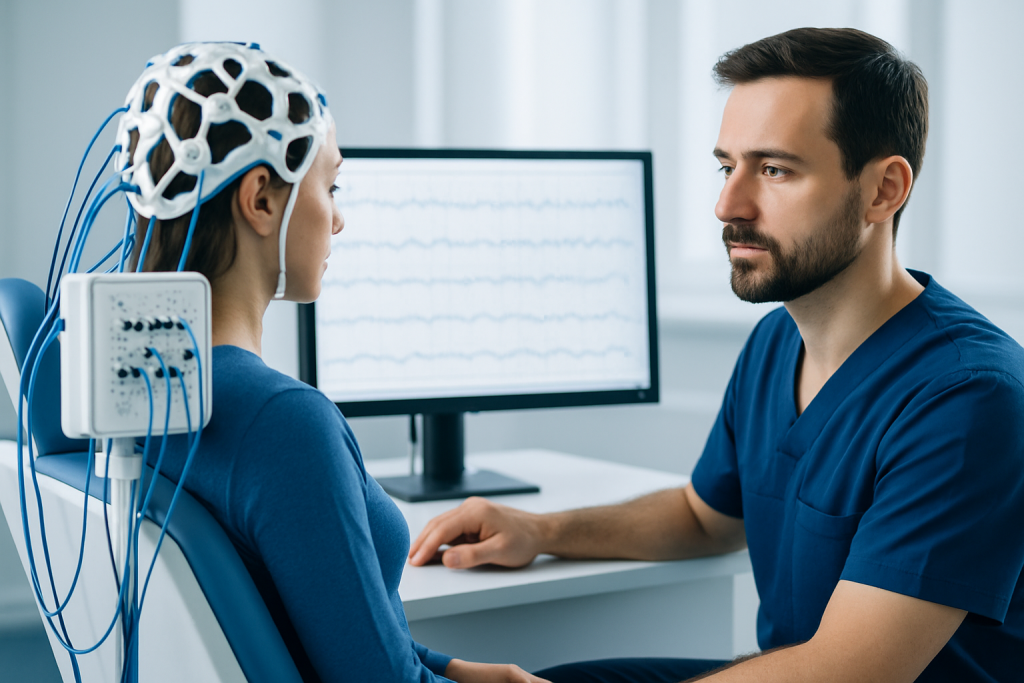
A neurophysiologist first completes medical school and then specialist training, usually in neurology or a closely related field, followed by advanced education in clinical neurophysiology. This training develops expertise in interpreting electrical signals from the nervous system and correlating them with symptoms, physical findings, and imaging results.
Because the field is highly technical, neurophysiologists are trained to perform and interpret specialized tests with precision. They learn to distinguish normal patterns from abnormal ones and to recognize findings linked to conditions such as epilepsy, peripheral neuropathy, radiculopathy, neuromuscular disorders, movement disorders, and some sleep-related conditions.
Their role is both diagnostic and advisory. In many cases, they do not provide surgery; instead, they help identify the cause of symptoms and guide the next steps in care. This may include recommending medication, monitoring, rehabilitation, further imaging, or referral for treatments such as epilepsy surgery or deep brain stimulation when those options are appropriate.
What Does a Neurophysiologist Do Day to Day?

A neurophysiologist sees patients with symptoms that suggest a problem in nerve or brain function. They take a detailed medical history, review previous test results, and decide which neurophysiology studies may be most helpful. Their goal is to match the right test to the right question, rather than ordering tests routinely.
Common areas of practice include evaluating seizures and episodes of loss of awareness, investigating numbness or tingling in the hands and feet, assessing weakness or muscle fatigue, and helping identify the source of neck or back-related nerve symptoms. They may also assess sleep-related electrical activity or monitor brain and nerve function during certain operations.
Many neurophysiologists are involved in hospital-based care as well as outpatient clinics. In the hospital, they may help evaluate acute neurological symptoms, monitor critically ill patients, or perform intraoperative neurophysiological monitoring during surgery. In outpatient settings, they often interpret tests that help clarify whether a patient has conditions such as epilepsy or peripheral neuropathy.
Common Tests a Neurophysiologist Uses
Neurophysiologists use several specialized tests to measure electrical activity in the nervous system. The exact test depends on symptoms and the part of the nervous system being evaluated. Most tests are performed without the need for hospital admission, although some forms of monitoring may require a longer stay.
Common tests include:
- Electroencephalogram (EEG): records electrical activity in the brain and is often used to assess seizures, blackouts, confusion, and some sleep disorders.
- Electromyography (EMG): evaluates muscle activity and can help detect muscle disease or nerve-to-muscle problems.
- Nerve conduction studies (NCS): measure how quickly and effectively electrical signals travel along nerves, often used for numbness, tingling, weakness, or suspected nerve compression.
- Evoked potentials: assess how the brain responds to visual, auditory, or sensory stimulation.
- Sleep studies with neurophysiological monitoring: may be used when sleep-related movement or neurological symptoms are suspected.
These tests provide functional information that complements MRI, CT, and laboratory work. For example, imaging may show whether there is a structural change, while neurophysiology can show whether that change is affecting nerve signaling. In some situations, a patient may also be referred for video EEG monitoring or EMG and electromyography evaluation to clarify symptoms more accurately.
When Someone May Need a Neurophysiologist
A patient may be referred to a neurophysiologist when symptoms suggest that the nervous system is not functioning normally. This does not always mean there is a serious disease, but it does mean that more precise testing may help identify the cause and support an appropriate treatment plan.
Reasons for referral can include repeated seizures, fainting or unexplained loss of consciousness, persistent numbness or tingling, burning sensations in the feet or hands, muscle weakness, cramps, twitching, balance problems, or symptoms that suggest nerve compression such as carpal tunnel syndrome. Some people are also referred after a stroke, spinal problem, head injury, or suspected neuromuscular disorder.
Children and adults may both need neurophysiology testing. In children, EEG may be used for suspected seizures or developmental events that need clarification. In adults, common referrals include peripheral nerve symptoms, suspected radiculopathy, and episodes that could be seizures but are not yet fully understood. The purpose of the referral is usually to narrow the diagnosis and make treatment more targeted.
How Diagnosis and Treatment Planning Work
Neurophysiology does not replace a full neurological assessment; it adds objective information to it. A neurophysiologist interprets test results alongside a patient’s symptoms, physical examination, medical history, medications, and imaging studies. This combined approach helps distinguish between different possible causes of similar symptoms.
For example, weakness may come from a muscle disorder, a peripheral nerve problem, a pinched nerve root in the spine, or a condition affecting the brain. EMG and nerve conduction studies can help separate these possibilities. Likewise, an EEG may help determine whether episodes of staring, shaking, or brief confusion are related to seizure activity or another cause.
Once the likely diagnosis is clearer, the neurophysiologist usually works with the referring doctor to guide next steps. Treatment may involve medicines, physical rehabilitation, lifestyle adjustments, follow-up monitoring, or referral to another specialist. If surgery is being considered for selected neurological conditions, neurophysiological findings can help with planning and risk assessment.
What to Expect During a Neurophysiology Appointment
During the visit, the specialist typically asks detailed questions about symptoms, when they started, how often they happen, and what makes them better or worse. Patients may also be asked about past illnesses, injuries, medications, family history, and any previous brain or nerve tests. Bringing a list of symptoms and prior reports can be helpful.
The tests themselves vary. EEG usually involves small electrodes placed on the scalp to record brain activity. Nerve conduction studies use mild electrical stimulation on the skin, while EMG may involve a very fine needle electrode inserted into certain muscles to record activity. Some tests can cause temporary discomfort, but they are generally well tolerated and are designed to provide important diagnostic information.
Preparation depends on the test. A patient may be asked to wash their hair before an EEG, avoid heavy skin lotions before EMG or nerve studies, or adjust sleep before certain recordings. The care team explains what to expect in advance so the process is as smooth and comfortable as possible.
When to Seek Medical Advice
It is sensible to seek medical advice for persistent or unexplained symptoms involving sensation, movement, consciousness, or muscle control. Numbness, tingling, weakness, episodes of blacking out, repeated falls, or unusual jerking movements should be assessed by a qualified doctor, especially if symptoms are new, worsening, or interfering with daily life.
Urgent medical attention is important for symptoms such as a first seizure, sudden weakness on one side, sudden speech difficulty, severe confusion, or loss of consciousness. These symptoms can have several causes, and prompt assessment helps ensure safe and timely care.
For ongoing symptoms, a referral to a neurophysiologist may help clarify the diagnosis and reduce uncertainty. Near the end of the care pathway, patients may also benefit from coordinated evaluation in specialized centers. Acibadem International’s multidisciplinary specialists and JCI-accredited hospitals diagnose and treat neurological and neurophysiological conditions for international patients when this level of assessment is needed.
Frequently asked questions
Is a neurophysiologist the same as a neurologist?
Not exactly. A neurologist diagnoses and treats disorders of the nervous system more broadly, while a neurophysiologist has special expertise in tests that measure nerve, muscle, and brain function. Many neurophysiologists are neurologists who have completed additional specialized training.
What conditions can a neurophysiologist help diagnose?
A neurophysiologist can help diagnose conditions such as epilepsy, peripheral neuropathy, nerve compression syndromes, radiculopathy, some muscle disorders, and certain sleep-related neurological problems. They are especially helpful when symptoms involve abnormal sensation, weakness, twitching, blackouts, or seizures.
Are EEG, EMG, and nerve conduction studies painful?
Most people tolerate these tests well, although some parts can be uncomfortable. EEG is usually painless because it records signals from electrodes on the scalp. Nerve conduction studies use brief electrical impulses, and EMG may cause temporary discomfort because it uses a fine needle electrode in selected muscles.
Do neurophysiology tests give a diagnosis on their own?
Usually, they are one part of the diagnostic process rather than the only answer. Results are interpreted together with symptoms, examination findings, scans, and laboratory tests. This combined approach helps doctors reach a more accurate diagnosis.
Why would someone be referred after numbness or tingling?
Numbness and tingling can come from many causes, including compressed nerves, peripheral neuropathy, vitamin deficiencies, or spinal nerve root irritation. A neurophysiologist may use nerve conduction studies and EMG to help identify where the problem is and how severe it may be.
Can a neurophysiologist help with seizures?
Yes. Neurophysiologists often play an important role in evaluating suspected seizures by using EEG and, when needed, longer-term monitoring. These tests can help determine whether an event is related to abnormal electrical activity in the brain and can support treatment decisions.
References
- World Health Organization
- National Institute of Neurological Disorders and Stroke
- American Clinical Neurophysiology Society
- International League Against Epilepsy
- National Institute for Health and Care Excellence
This article is for general information only and is not a substitute for professional medical advice. Please consult a qualified doctor about your individual situation.
Joint and spine care in Turkey — expert assessment & treatment
JCI-accredited · board-certified surgeons · reply within 24h
Add us as a Preferred Source to see more of our trusted health content across Google Search, AI Overviews and Discover.