CAR-T Cells: How They Are Made and Used in Treatment

CAR-T cell therapy uses a patient’s own T cells, which are collected, modified in a laboratory, and returned to the body. It is mainly used for certain blood cancers, including some leukemias, lymphomas, and multiple myeloma.
Key Takeaways
- CAR-T cell therapy uses a patient’s own T cells, which are collected, modified in a laboratory, and returned to the body.
- It is mainly used for certain blood cancers, including some leukemias, lymphomas, and multiple myeloma.
- Treatment usually involves several steps: evaluation, cell collection, laboratory engineering, chemotherapy preparation, infusion, and close monitoring.
- CAR-T therapy can be very effective for selected patients, but it can also cause serious side effects that require expert care.
- Not every cancer or every patient is suitable for CAR-T therapy, so specialist assessment is essential.
CAR-T cells are specially engineered immune cells used to treat some blood cancers. This personalized therapy can help the immune system better recognize and attack cancer cells when other treatments may not have worked well enough.
Overview of CAR-T Cells
CAR-T cells are immune cells that have been changed in a laboratory to better recognize and attack cancer. The term CAR-T stands for chimeric antigen receptor T-cell therapy. In this treatment, doctors collect T cells, a type of white blood cell, from the patient’s blood. These cells are then genetically modified so they can find a specific marker on cancer cells more easily.
After the modified cells are multiplied in the laboratory, they are infused back into the patient. Once in the body, CAR-T cells can seek out and destroy cancer cells that carry the target marker. This makes CAR-T therapy a highly personalized form of cancer treatment and one of the most important advances in modern immunotherapy.
CAR-T cell therapy is used most often for certain blood cancers rather than solid tumors. It may be considered when cancer has returned after treatment or has not responded well to standard options. Because it is complex and can cause significant side effects, CAR-T therapy is usually given in specialized centers with experienced multidisciplinary teams.
How CAR-T Cells Are Made

The process begins with a detailed medical evaluation. Doctors confirm the cancer type, review previous treatments, and assess whether the patient is healthy enough for CAR-T therapy. Blood tests, imaging, bone marrow studies, and infection screening may all be part of this preparation.
The next step is collecting T cells through a procedure called leukapheresis. During leukapheresis, blood is removed through a vein, the T cells are separated out, and the rest of the blood is returned to the body. This is usually done over several hours and does not involve surgery.
After collection, the T cells are sent to a laboratory. There, specialists insert genetic instructions that allow the T cells to produce a chimeric antigen receptor, or CAR, on their surface. This receptor acts like a highly specific sensor, helping the T cells recognize a target protein on cancer cells. The modified cells are then grown in larger numbers until there are enough for treatment.
Before the CAR-T cells are infused, patients usually receive a short course of chemotherapy. This is called lymphodepleting chemotherapy. Its purpose is not to treat the cancer directly but to make space in the immune system so the CAR-T cells can expand and work more effectively. The engineered cells are then infused into the bloodstream, where they begin their task of finding and attacking cancer cells.
Which Cancers Can CAR-T Therapy Treat?
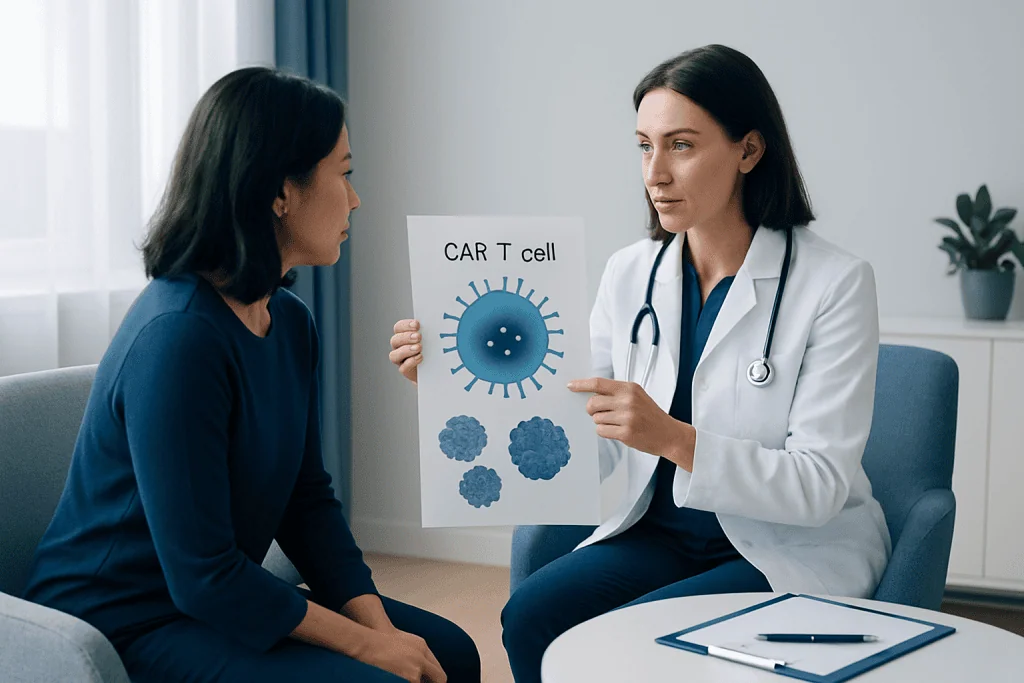
CAR-T cell therapy is mainly used for selected blood cancers. These include certain forms of B-cell <a href="https://acibademinternational.com/diseases/acute-lymphoblastic-leukemia/”>acute lymphoblastic leukemia, some types of non-Hodgkin lymphoma, and some cases of multiple myeloma. In many situations, it is used when the disease has relapsed or has been refractory, meaning it did not respond adequately to earlier treatment.
The exact type of CAR-T treatment depends on which target is present on the cancer cells. Different CAR-T products are designed to recognize different proteins, such as CD19 or BCMA. This is why careful laboratory testing is essential before treatment is planned.
Research is ongoing to expand CAR-T therapy into more cancers and earlier stages of treatment. Scientists are also studying ways to improve safety, reduce resistance, and help CAR-T cells work better in solid tumors. While this field is progressing quickly, CAR-T is still not suitable for every cancer diagnosis.
Patients who are being assessed for relapsed blood cancers may also need expert review for related conditions such as leukemia or lymphoma, as treatment planning often depends on the exact disease subtype and prior therapy history.
Benefits and Possible Risks
The main benefit of CAR-T therapy is that it can produce meaningful responses in some patients whose cancer has been difficult to control with other treatments. Because the treatment uses the patient’s own immune cells and targets a specific marker, it offers a different approach from standard chemotherapy. For some people, it can lead to deep and lasting remission.
However, CAR-T therapy also has important risks. One of the best known is cytokine release syndrome, an inflammatory reaction that can cause fever, low blood pressure, difficulty breathing, and other symptoms. Another possible complication is neurologic toxicity, which may lead to confusion, sleepiness, speech problems, tremor, or seizures in some patients. These side effects can range from mild to serious and need prompt medical attention.
Other risks may include infection, low blood counts, fatigue, and a period of weakness during recovery. Some patients need hospital care for monitoring after infusion, especially in the first days or weeks. For this reason, CAR-T treatment should be delivered only in centers that can recognize and manage complications quickly.
Even when treatment works well, ongoing follow-up is important. Doctors monitor the patient’s blood counts, signs of infection, response of the cancer, and any delayed side effects. Families and caregivers often play an important supportive role during this period.
What to Expect During Treatment and Recovery
CAR-T treatment usually happens in stages rather than all at once. After evaluation and cell collection, there is often a waiting period while the cells are being manufactured. During this time, some patients may need temporary treatment to keep the cancer under control. This is sometimes called bridging therapy.
When the CAR-T cells are ready, the patient receives lymphodepleting chemotherapy over a few days, followed by the infusion. The infusion itself is generally straightforward and may feel similar to receiving other intravenous treatments. What matters most is the close observation afterward, because side effects often occur in the first days to weeks after treatment.
Recovery varies from person to person. Some patients feel tired for several weeks, and activity may need to be limited for a time. Many centers advise patients to stay close to the treatment hospital and have a responsible adult with them during the early recovery period. Driving and returning to work may also need to be delayed, depending on symptoms and the care team’s advice.
Because CAR-T is often part of a broader cancer care plan, patients may also discuss related therapies such as bone marrow transplant or other forms of immunotherapy depending on their diagnosis, treatment response, and long-term goals.
Who May Be a Candidate for CAR-T Therapy?
Being a candidate for CAR-T therapy depends on several factors. These include the exact cancer diagnosis, whether the cancer has relapsed or resisted standard treatment, the patient’s age and general health, organ function, and the presence of infections or other medical conditions. Doctors also consider how quickly the disease is progressing, since cell manufacturing takes time.
Eligibility is not based on one factor alone. A patient may have the right cancer type but still need further evaluation to confirm that CAR-T is the safest and most appropriate option. In some cases, another treatment may be recommended first, or CAR-T may be used later in the treatment pathway.
Shared decision-making is an important part of planning. Patients and families benefit from understanding the possible advantages, side effects, practical demands, and expected follow-up. Questions about hospital stay, caregiver support, travel, costs, and recovery should all be discussed openly with the specialist team.
At experienced centers, care is coordinated by hematologists, oncologists, transplant and cellular therapy specialists, nurses, pharmacists, and intensive care teams when needed. Acibadem International’s multidisciplinary specialists and JCI-accredited hospitals diagnose and treat patients who may be candidates for advanced cellular therapies, including CAR-T, with coordinated support for international patients.
When to Speak With a Doctor
Patients should speak with a doctor if they have a blood cancer that has returned after treatment or has not responded as expected. A specialist can explain whether CAR-T therapy might be appropriate and what other options may also be available. Early referral can be helpful, especially when planning advanced therapies takes time.
Anyone who has already received CAR-T treatment should seek urgent medical advice if they develop fever, confusion, severe weakness, breathing difficulty, dizziness, or any sudden change in condition. These symptoms do not always mean a serious problem, but they need prompt assessment because some CAR-T side effects can worsen quickly.
Routine follow-up is also important, even when a patient feels well. Ongoing monitoring helps detect infection, low blood counts, relapse, or delayed treatment effects. Regular communication with the care team supports safer recovery and better long-term planning.
For patients exploring options beyond standard care, a consultation in a center that offers hematology care and advanced cancer therapies can help clarify whether CAR-T fits into the overall treatment strategy.
Frequently asked questions
Is CAR-T cell therapy the same as chemotherapy?
No. CAR-T cell therapy is a type of immunotherapy that uses modified immune cells to target cancer, while chemotherapy uses drugs that kill fast-growing cells. CAR-T may still involve a short course of chemotherapy beforehand, but the two treatments work in different ways.
How long does it take to make CAR-T cells?
The process usually takes several weeks from cell collection to infusion, although timing can vary by treatment center and manufacturing process. During that period, some patients may need temporary treatment to control their cancer.
Are CAR-T cells made from the patient or a donor?
Most approved CAR-T treatments use the patient’s own T cells. The cells are collected, modified in a laboratory, and then returned to the same patient. Researchers are also studying donor-based approaches, but these are not the standard for most current treatments.
Can CAR-T therapy cure cancer?
CAR-T therapy can lead to deep remission in some patients, and for some it may provide long-lasting disease control. However, results vary, and not every patient responds in the same way. A doctor can best explain the likely goals of treatment for an individual case.
What are the most common side effects after CAR-T treatment?
Common or important side effects can include fever, fatigue, low blood counts, infections, and inflammation-related reactions such as cytokine release syndrome. Some patients may also develop neurologic symptoms like confusion or difficulty speaking. Because these effects can be serious, close monitoring is essential.
Is CAR-T therapy used for all cancers?
No. At present, CAR-T therapy is mainly used for certain blood cancers, such as some leukemias, lymphomas, and multiple myeloma. Research is underway to expand its use, but it is not yet a standard treatment for most solid tumors.
References
- National Cancer Institute
- American Cancer Society
- U.S. Food and Drug Administration
- European Society for Medical Oncology
- Leukemia & Lymphoma Society
This article is for general information only and is not a substitute for professional medical advice. Please consult a qualified doctor about your individual situation.
Oncology care in Turkey — second opinion and treatment plan
JCI-accredited · board-certified surgeons · reply within 24h
Add us as a Preferred Source to see more of our trusted health content across Google Search, AI Overviews and Discover.
Check your numbers in seconds
BMI, calories, due date, blood pressure and 30+ more clinical calculators — free, instant, doctor-reviewed ranges.