What Is the Prostate? Function, Location, and Health

The prostate is located below the bladder and surrounds part of the urethra. Its main function is to produce fluid that nourishes and protects sperm.
Key Takeaways
- The prostate is located below the bladder and surrounds part of the urethra.
- Its main function is to produce fluid that nourishes and protects sperm.
- Common prostate conditions include prostatitis, benign enlargement, and prostate cancer.
- Urinary changes, pelvic discomfort, or blood in urine or semen should be assessed by a doctor.
- Evaluation may include a medical history, physical exam, urine tests, PSA testing, and imaging when needed.
- Many prostate conditions are manageable, especially when diagnosed early.
The prostate is a small gland in the male reproductive system that helps make semen and sits just below the bladder. Understanding its role, location, and common health concerns can help people recognize symptoms early and seek appropriate care.
Overview of the Prostate
The prostate is a small gland found in people assigned male at birth. It is part of the reproductive system and is usually about the size of a walnut in younger adults, although its size can change with age. While it is small, it has an important role in fertility and urinary function.
The gland sits just below the bladder and in front of the rectum. The urethra, the tube that carries urine out of the body, passes through the center of the prostate. Because of this location, changes in the size or health of the prostate can affect urination.
The prostate often receives attention because it can be involved in several common health conditions, especially later in life. These include inflammation, non-cancerous enlargement, and cancer. Learning the basics about the prostate helps people better understand symptoms, screening discussions, and treatment options.
What Does the Prostate Do?
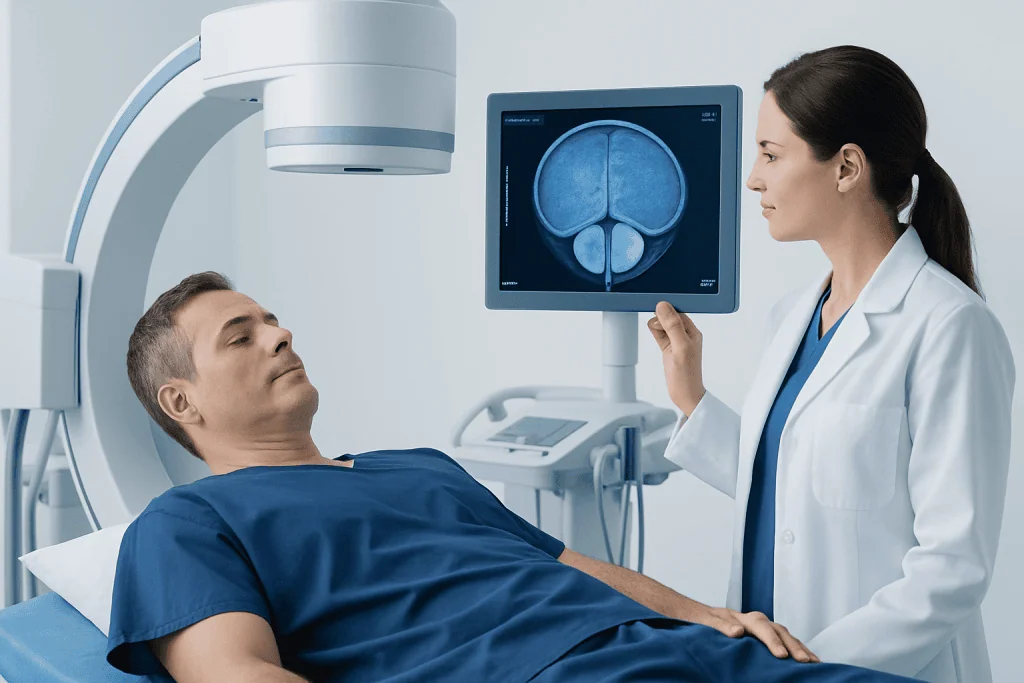
The main function of the prostate is to produce some of the fluid that makes up semen. This fluid helps nourish sperm, supports their movement, and helps protect them as they travel through the reproductive tract. During ejaculation, the prostate contracts and helps move this fluid into the urethra, where it mixes with sperm and fluid from other glands.
The prostate’s activity is influenced by hormones, especially testosterone and its related forms. These hormones help the prostate develop during puberty and continue to affect its size and function throughout adult life. Because the gland depends on hormones, hormone-related changes can also influence prostate disease.
Although the prostate is primarily a reproductive gland, its close relationship with the urinary tract explains why prostate conditions often cause urinary symptoms. A healthy prostate usually goes unnoticed, but inflammation, enlargement, or tumors may place pressure on the urethra and interfere with urine flow.
Where Is the Prostate Located?
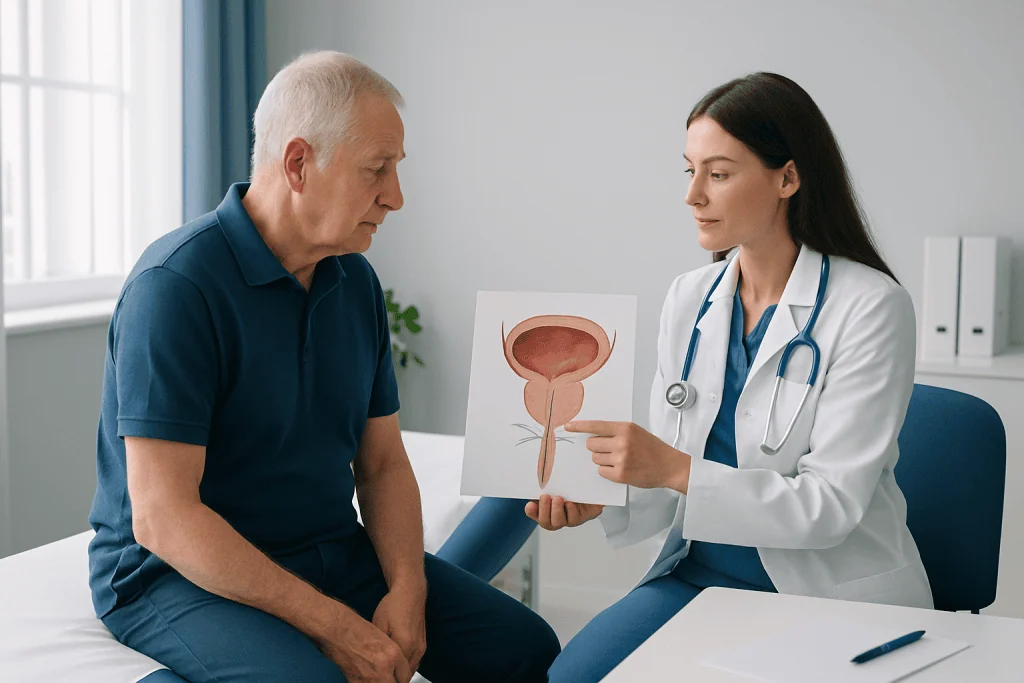
The prostate is located in the pelvis, directly below the bladder. It surrounds the first part of the urethra, which is the passage that carries urine from the bladder to the outside of the body. Behind the prostate is the rectum, which is why doctors can often feel the back of the gland during a digital rectal exam.
This location helps explain many symptoms linked to prostate problems. If the gland becomes swollen or enlarged, it can squeeze the urethra and make it harder to urinate. A person may notice a weak stream, difficulty starting urination, frequent urination, or a feeling that the bladder does not empty fully.
Its position also matters for diagnosis and treatment. Imaging tests such as ultrasound or MRI can help assess the gland when needed, and some procedures are performed through the urethra or guided by ultrasound. Understanding where the prostate sits can make it easier to understand why certain symptoms occur and why some exams are recommended.
Common Prostate Conditions and Symptoms
Several conditions can affect the prostate. One is prostatitis, which means inflammation of the prostate. It may be caused by infection or occur without a clear infection. Symptoms can include pelvic pain, painful urination, discomfort with ejaculation, and sometimes fever or chills if an infection is present.
Another common issue is benign prostatic hyperplasia, also called an enlarged prostate. This is a non-cancerous increase in prostate size that becomes more common with aging. It can lead to urinary symptoms such as frequent urination, especially at night, urgency, weak urine flow, straining, or a stop-and-start stream. Some people may wish to learn more about benign prostatic hyperplasia.
Prostate cancer can also develop in the gland, often without symptoms in its early stages. When symptoms do appear, they may overlap with those of non-cancerous conditions and can include urinary changes, blood in the urine or semen, or persistent pain in the pelvis or back. Because symptoms are not always specific, medical assessment is important. Readers seeking more information may also explore prostate cancer.
- Frequent urination, especially at night
- Difficulty starting or stopping urine flow
- Weak urine stream
- Pain or burning with urination
- Pelvic, groin, or lower back discomfort
- Blood in urine or semen
Causes and Risk Factors
Different prostate conditions have different causes. Prostatitis may be linked to bacterial infection, irritation, pelvic floor muscle tension, or other factors that are not always fully understood. Benign enlargement is strongly associated with aging and hormonal changes over time. Prostate cancer is influenced by a combination of age, genetics, hormone exposure, and environmental factors.
Age is one of the most important risk factors for prostate problems in general. Family history can also matter, particularly for prostate cancer. A person may have a higher risk if a close relative has had prostate cancer, especially at a younger age. Some inherited genetic changes can also raise risk.
Other possible contributors include lifestyle and overall health. Obesity, low physical activity, and certain dietary patterns may play a role in some individuals, although these factors do not cause every case. It is also important to remember that having risk factors does not mean someone will definitely develop a prostate condition, and some people develop prostate disease without any obvious risk factors.
How Prostate Problems Are Diagnosed
Diagnosis usually begins with a medical history and physical examination. A doctor will ask about urinary symptoms, pain, fever, sexual symptoms, medications, and family history. In many cases, the evaluation includes a digital rectal exam, which allows the doctor to assess the back surface of the prostate for tenderness, enlargement, or irregular areas.
Additional tests depend on the suspected problem. Urine tests may help look for infection or blood. A prostate-specific antigen, or PSA, blood test may be used as part of the evaluation for prostate cancer or other prostate conditions, although PSA levels can rise for several reasons and do not by themselves confirm cancer.
If more information is needed, doctors may recommend imaging such as ultrasound or MRI, urine flow studies, or referral to a urologist. When cancer is suspected, further assessment can include a targeted biopsy. In selected cases, advanced imaging such as MR fusion biopsy may help doctors sample areas of concern more precisely.
Treatment Options for Prostate Conditions
Treatment depends on the diagnosis, symptom severity, age, overall health, and personal preferences. Some mild conditions can be monitored over time, while others require medication or procedures. For prostatitis, treatment may involve antibiotics when a bacterial infection is present, along with pain relief, hydration, and supportive measures. Noninfectious prostatitis may need a different approach focused on symptom management.
For enlarged prostate, treatment can range from watchful waiting and lifestyle adjustments to medications that relax the muscles around the prostate or help shrink the gland. If symptoms are more significant or complications occur, procedures may be recommended to remove or reduce obstructing tissue. Depending on the case, options may include water vapor therapy for enlarged prostate or HoLEP surgery.
Treatment for prostate cancer varies widely. Some slow-growing cancers may be managed with active surveillance, while others may require surgery, radiation therapy, hormone therapy, or a combination of treatments. For some patients, robotic prostatectomy may be considered as part of care. Near the end of the care pathway, patients may also seek support from experienced centers; Acibadem International’s multidisciplinary specialists and JCI-accredited hospitals diagnose and treat prostate conditions for international patients.
Prevention, Self-care, and When to See a Doctor
There is no guaranteed way to prevent every prostate condition, but healthy habits may support overall prostate and urinary health. These include staying physically active, maintaining a healthy weight, drinking enough fluids, and following a balanced diet rich in vegetables, fruits, and whole foods. Avoiding smoking and discussing alcohol or caffeine intake with a doctor may also help if urinary symptoms are troublesome.
People with urinary symptoms should not ignore them, even if the symptoms seem mild or develop gradually. A doctor should assess symptoms such as painful urination, repeated nighttime urination, urgency, weak stream, pelvic pain, or difficulty emptying the bladder. Early evaluation can identify whether symptoms are caused by infection, enlargement, or another condition.
Urgent medical attention is important if a person cannot urinate at all, develops fever with urinary symptoms, has severe pain, or notices significant blood in the urine. Regular checkups can also be a good time to discuss prostate health, especially for people with a family history of prostate cancer or other concerns about screening.
Frequently asked questions
Is the prostate only important for reproduction?
The prostate’s main role is reproductive because it helps make seminal fluid that supports sperm. However, its location around the urethra means it also affects urination when it becomes inflamed, enlarged, or otherwise diseased.
At what age do prostate problems usually start?
Prostate conditions can occur at different ages depending on the problem. Prostatitis may affect younger and middle-aged adults, while benign enlargement and prostate cancer become more common as people get older.
Do all urinary symptoms mean prostate cancer?
No, many urinary symptoms are caused by non-cancerous conditions such as infection or benign prostate enlargement. Because symptoms can overlap, a doctor should evaluate persistent or new urinary changes to find the cause.
What is a PSA test?
PSA stands for prostate-specific antigen, a protein made by prostate tissue. A blood test can measure PSA levels, but higher values do not automatically mean cancer, because inflammation, enlargement, and other factors can also raise PSA.
Can prostate enlargement be treated without major surgery?
Yes, many people with enlarged prostate are treated first with lifestyle measures or medication. When a procedure is needed, there are several minimally invasive and surgical options, and the best choice depends on the gland size, symptoms, and overall health.
When should someone talk to a doctor about the prostate?
A person should seek medical advice if they notice frequent urination, difficulty passing urine, pelvic pain, blood in urine or semen, or pain with urination or ejaculation. It is also wise to discuss prostate health during routine checkups, especially when there is a family history of prostate cancer.
References
- National Cancer Institute
- American Cancer Society
- National Institute of Diabetes and Digestive and Kidney Diseases
- European Association of Urology
- Urology Care Foundation
This article is for general information only and is not a substitute for professional medical advice. Please consult a qualified doctor about your individual situation.
IVF & fertility treatment in Turkey — success rates and costs
JCI-accredited · board-certified surgeons · reply within 24h
Add us as a Preferred Source to see more of our trusted health content across Google Search, AI Overviews and Discover.