Headaches in Older Adults: When a Geriatric Neurology Evaluation Is Important

A new headache after age 50 should be assessed more carefully than a long-standing stable headache. Warning signs include sudden severe pain, confusion, weakness, vision changes, fever, or headache after a fall.
Key Takeaways
- A new headache after age 50 should be assessed more carefully than a long-standing stable headache.
- Warning signs include sudden severe pain, confusion, weakness, vision changes, fever, or headache after a fall.
- In older adults, headaches may be linked to medications, high blood pressure, temporal arteritis, stroke, sleep problems, or other medical conditions.
- Diagnosis may include a neurological exam, blood tests, and brain imaging depending on symptoms and risk factors.
- Treatment depends on the cause and should consider other illnesses, medicines, and fall or side-effect risks.
Headaches in older adults are often caused by common problems such as tension, dehydration, or medication effects, but a new or changing headache later in life deserves careful attention. A geriatric neurology evaluation can help identify the cause, rule out urgent conditions, and guide safe treatment.
Overview
Headaches in older adults are common, but they are approached a little differently than headaches in younger people. Many are still caused by familiar conditions such as tension-type headache, migraine, poor sleep, dehydration, or medication effects. However, a headache that starts for the first time later in life is more likely to need medical assessment because it can sometimes be a sign of an underlying health problem.
A geriatric neurology evaluation looks at headache symptoms in the context of aging, memory, balance, circulation, vision, and other medical conditions. Specialists pay close attention to how the headache began, whether it has changed, and whether there are symptoms such as weakness, confusion, jaw pain, fever, or visual changes. This more tailored approach helps distinguish a primary headache disorder from a secondary headache caused by another condition.
Most headaches do not turn out to be life-threatening, and many causes can be treated effectively. The goal of evaluation is not to create fear, but to make sure important warning signs are not missed and to choose treatment that is safe for an older adult’s overall health.
Symptoms and Warning Signs
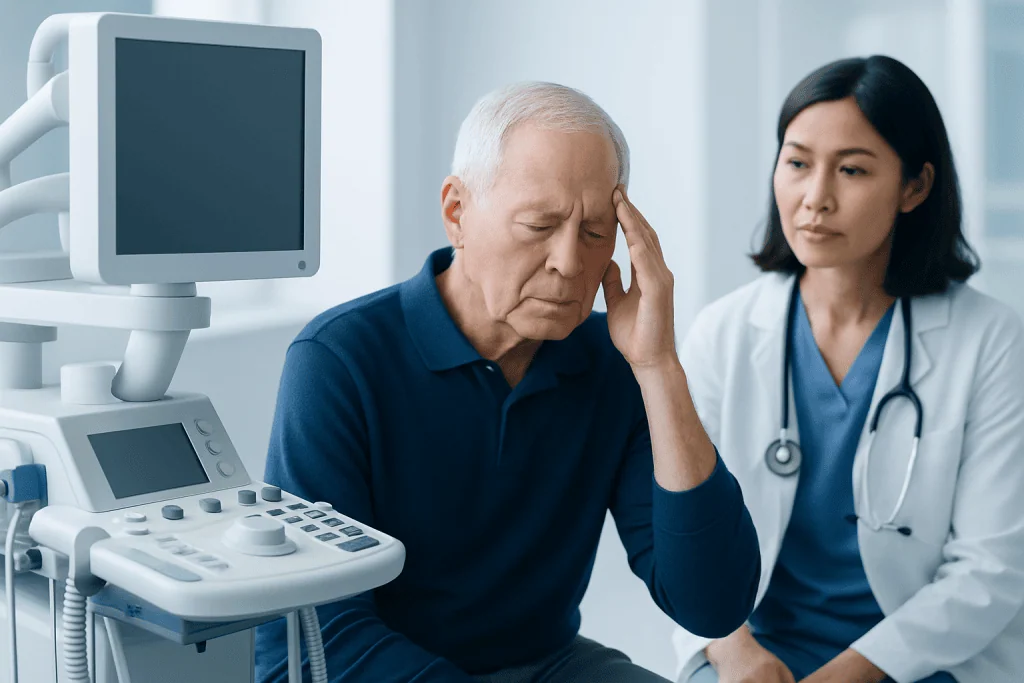
Headaches can feel different from person to person. Some are dull and pressure-like, often described as a tight band around the head. Others may throb, affect one side more than the other, or come with light sensitivity, nausea, neck discomfort, or scalp tenderness. In older adults, headaches may also be harder to describe if memory changes, hearing problems, or communication difficulties are present.
Certain symptoms suggest that a headache needs prompt medical attention. These are often called red flags because they can point to conditions that need urgent testing or treatment.
- A new headache after age 50
- A sudden, very severe headache that reaches maximum intensity quickly
- Headache with confusion, fainting, weakness, numbness, or trouble speaking
- Headache with vision loss, double vision, or eye pain
- Headache with fever, stiff neck, or new rash
- Headache after a fall or head injury
- Headache that is steadily worsening or different from usual
- Headache with jaw pain while chewing or scalp tenderness
Older adults and family members should also note changes in daily function. If the person becomes less steady, more sleepy, forgetful, or less able to carry out normal activities, these changes may be as important as the headache itself. A clinician may then consider problems such as stroke, bleeding, infection, or inflammation of blood vessels.
Common Causes and Risk Factors

Not every headache in later life is dangerous. Common causes include tension headaches related to stress or muscle strain, migraine that has continued from earlier years, dehydration, skipped meals, poor sleep, eye strain, sinus irritation, and neck arthritis. Medication overuse can also trigger frequent headaches, especially when pain relievers are used often. In older adults, side effects or interactions between several medicines may contribute as well.
Doctors are especially alert to secondary causes of headache in seniors. These can include very high blood pressure, stroke, bleeding around the brain, sleep apnea, infections, glaucoma, and inflammation of the temporal arteries, also called giant cell arteritis. Temporal arteritis is important because it can cause headache, scalp tenderness, jaw pain, fatigue, and visual symptoms, and it needs urgent treatment to help protect vision.
Risk factors that may increase concern include cancer, immune system problems, blood-thinning medicines, recent head trauma, a history of vascular disease, and new neurological symptoms. Memory decline or difficulty managing medications can also raise the chance that headaches are being affected by missed doses, overuse of pain medicines, or untreated conditions such as high blood pressure or diabetes.
Sometimes the evaluation overlaps with conditions that affect brain function more broadly. For example, headache accompanied by confusion or cognitive decline may prompt assessment for Alzheimer's disease or other causes of memory impairment, especially when symptoms have developed gradually over time.
How a Geriatric Neurology Evaluation Helps
A geriatric neurology evaluation is designed for the needs of older adults. The doctor reviews the headache pattern in detail, including when it started, where it is felt, how long it lasts, what makes it better or worse, and whether it is associated with dizziness, weakness, or visual symptoms. The consultation usually includes a review of all prescription drugs, over-the-counter pain relievers, supplements, and any recent changes in dose.
The neurological exam checks strength, sensation, reflexes, coordination, walking, speech, and mental status. Blood pressure and general medical history are also important because circulation problems, heart disease, sleep disorders, and endocrine issues can all influence headache symptoms. Family members or caregivers may be asked to describe changes they have noticed, especially if the patient has memory problems or difficulty recalling events.
This type of assessment is helpful because treatment in later life often requires extra caution. A medicine that is commonly used in younger adults may not be ideal in someone with kidney disease, a history of falls, stomach problems, or multiple medications. The evaluation therefore aims not only to identify the cause, but also to reduce side effects and support independence and quality of life.
Diagnosis and Tests
Diagnosis begins with the medical history and examination, and many people do not need extensive testing. When the headache is long-standing, unchanged, and the neurological exam is normal, a doctor may be able to identify a common primary headache pattern. If the headache is new, changing, or accompanied by warning signs, further tests are more likely to be recommended.
Blood tests may be used to look for inflammation, infection, anemia, dehydration, thyroid problems, or metabolic imbalance. In a person with headache, scalp tenderness, and jaw pain, blood tests that support a diagnosis of temporal arteritis are especially important. Eye examination may be needed if there are visual symptoms or concern about glaucoma.
Brain imaging is often considered in older adults with a first-time headache, neurological symptoms, recent trauma, or a change in headache pattern. Depending on the situation, the doctor may request an MRI scan or a CT scan to look for bleeding, stroke, mass lesions, or other structural causes. In selected cases, tests such as vascular imaging, sleep assessment, or monitoring for seizures may also be helpful.
If symptoms suggest a disorder affecting the brain’s blood vessels, balance, or cognition, the evaluation may expand to look for related neurological conditions. This helps ensure that headache is understood in the context of the person’s overall brain health rather than as an isolated complaint.
Treatment Options
Treatment depends entirely on the cause. For common primary headaches, management may include improving hydration, regular meals, sleep support, posture and neck care, stress reduction, and careful use of pain-relieving medicine. If migraine is diagnosed, treatment may involve avoiding triggers and using medications chosen with the person’s age, heart health, kidney function, and other prescriptions in mind.
When a secondary cause is found, treating that cause is the priority. For example, temporal arteritis needs prompt medical treatment, while infection, glaucoma, uncontrolled blood pressure, bleeding, or stroke require condition-specific care. Some people may need referral for stroke treatment or specialist care if the headache is linked to a vascular event or new neurological deficit.
In older adults, doctors often try to reduce medicines that can worsen headaches or increase side effects. This may include limiting frequent use of over-the-counter analgesics, reviewing sedatives, and adjusting drugs that affect blood pressure or sleep. For patients with recurrent or complex symptoms, treatment may also involve physical therapy, sleep evaluation, or support for mood symptoms such as anxiety and depression.
Near the end of the care pathway, coordinated follow-up matters. Acibadem International’s multidisciplinary specialists in JCI-accredited hospitals evaluate and treat neurological conditions in international patients, including headache disorders that require age-specific assessment.
Prevention and Self-care
Prevention begins with simple, steady habits. Older adults may benefit from drinking enough fluids, eating regular meals, keeping a consistent sleep schedule, and avoiding long periods without rest. Good lighting, updated eyeglasses, and attention to posture can also help reduce strain-related headaches.
A headache diary can be useful, especially if headaches are recurring. Tracking the time of day, severity, associated symptoms, recent foods, sleep, stress, and medication use may reveal patterns. This record can help the doctor distinguish migraine, tension headache, medication overuse, and headaches related to blood pressure or poor sleep.
It is also important to use medicines carefully. Taking pain relievers too often can make headaches more frequent over time. Older adults should check with a doctor or pharmacist before combining prescription drugs, over-the-counter products, and supplements, particularly if they take blood thinners or have kidney, liver, or stomach problems.
If headaches are accompanied by snoring, daytime sleepiness, or morning fatigue, sleep-related causes may need attention. In some cases, the doctor may recommend an assessment linked to sleep apnea treatment because poor sleep and breathing disturbances can contribute to morning headaches and cognitive symptoms.
When to See a Doctor
An older adult should see a doctor for any new headache, a headache that is becoming more frequent, or a headache that feels different from previous ones. Medical review is also important if the headache begins after starting a new medicine, follows a fall, or interferes with sleep, appetite, balance, or everyday activities.
Urgent medical care is needed for sudden severe headache, headache with weakness, facial droop, trouble speaking, confusion, fainting, seizure, fever, stiff neck, or loss of vision. These symptoms do not always mean a serious diagnosis, but they should be checked quickly because early treatment can make a major difference.
Family members and caregivers play an important role. If an older person seems unusually drowsy, forgetful, unsteady, or unable to explain symptoms clearly, it is wise not to wait. A timely geriatric neurology evaluation can clarify the cause, ease uncertainty, and guide safe treatment.
Frequently asked questions
Are headaches common in older adults?
Yes, headaches can occur at any age, including later life. Many are caused by common issues such as tension, dehydration, poor sleep, or medication effects, but a new headache after age 50 deserves more careful evaluation.
Why is a new headache after age 50 more concerning?
A first-time headache in later life is more likely than in younger adults to be linked to another medical condition. It does not mean something serious is definitely present, but it does mean a doctor should look more closely for causes such as vascular problems, inflammation, medication effects, or eye disease.
What symptoms mean an older adult should seek urgent help for a headache?
Urgent attention is needed for sudden severe headache, confusion, weakness, numbness, trouble speaking, fainting, seizure, fever, stiff neck, or vision loss. Headache after a fall or head injury should also be assessed promptly, especially in someone taking blood thinners.
Can medications cause headaches in seniors?
Yes. Some medicines can trigger headaches directly, and frequent use of pain relievers can lead to medication-overuse headache. Because older adults often take several medications, a full medication review is an important part of diagnosis and treatment.
What tests may be done during a geriatric neurology evaluation?
The evaluation usually starts with a medical history and neurological examination. Depending on the symptoms, the doctor may order blood tests, eye assessment, and brain imaging such as CT or MRI to rule out bleeding, stroke, inflammation, or other underlying causes.
Can migraine continue into older age?
Yes, some people who had migraine earlier in life continue to have it as they get older. However, the pattern may change with age, and any major change in symptoms should be discussed with a doctor to make sure another condition is not responsible.
References
- World Health Organization
- National Institute on Aging
- American Academy of Neurology
- National Institute of Neurological Disorders and Stroke
- Mayo Clinic
This article is for general information only and is not a substitute for professional medical advice. Please consult a qualified doctor about your individual situation.
Geriatric Neurology in Turkey — costs, top hospitals & a free quote
JCI-accredited · board-certified surgeons · reply within 24h
Add us as a Preferred Source to see more of our trusted health content across Google Search, AI Overviews and Discover.
Check your numbers in seconds
BMI, calories, due date, blood pressure and 30+ more clinical calculators — free, instant, doctor-reviewed ranges.

Neurology
Diagnosis and treatment of disorders of the brain, spinal cord, nerves and muscles.
51 specialists in this unit