What Bones Form the Shoulder Joint?
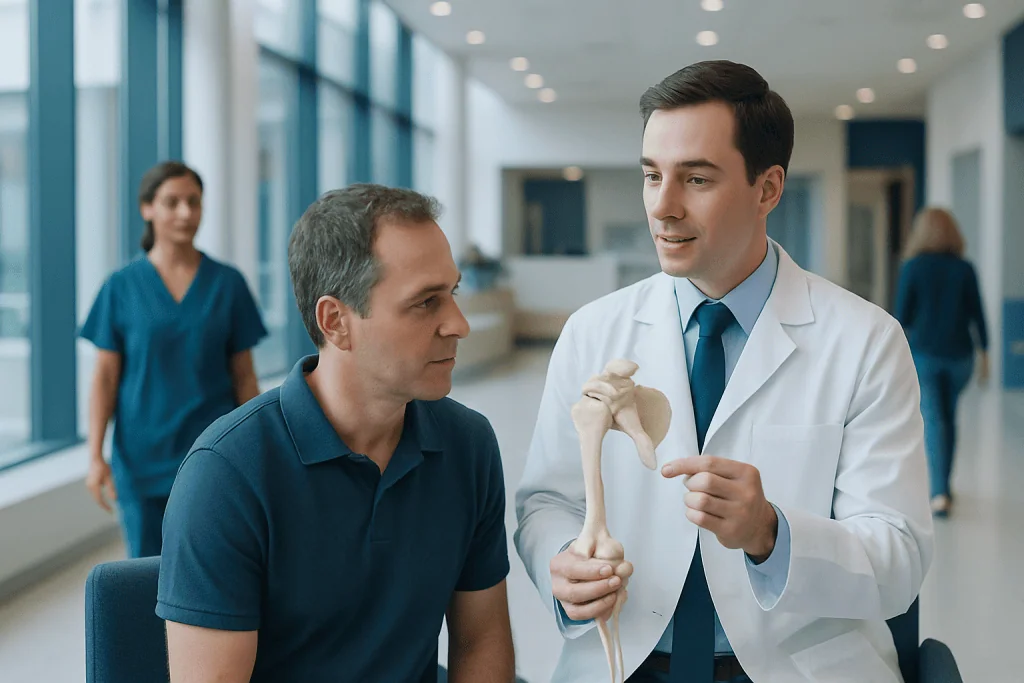
The main shoulder joint bones are the humerus, scapula, and clavicle. The glenohumeral joint is the ball-and-socket joint most people mean when they say “shoulder joint.”
Key Takeaways
- The main shoulder joint bones are the humerus, scapula, and clavicle.
- The glenohumeral joint is the ball-and-socket joint most people mean when they say “shoulder joint.”
- Other nearby joints, including the acromioclavicular and sternoclavicular joints, also help the shoulder move.
- The shoulder is highly mobile, which makes it useful for daily activities but also more prone to injury.
- Pain, weakness, instability, or limited motion may suggest a shoulder problem that needs medical assessment.
The shoulder joint is formed mainly by three bones: the humerus, scapula, and clavicle. Together with surrounding cartilage, ligaments, muscles, and tendons, these bones create a joint that allows a wide range of arm movement while maintaining stability.
Overview: Which Bones Form the Shoulder Joint?
When people ask what bones form the shoulder joint, the short answer is three bones: the humerus, scapula, and clavicle. The humerus is the upper arm bone, the scapula is the shoulder blade, and the clavicle is the collarbone. These bones meet in a coordinated way to support lifting, reaching, pushing, pulling, and rotating the arm.
The main joint of the shoulder is called the glenohumeral joint. This is the ball-and-socket joint between the rounded head of the humerus and a shallow part of the scapula called the glenoid. Because the socket is relatively shallow, the shoulder can move through a very large range of motion compared with many other joints in the body.
However, the shoulder is more than one single joint. The acromioclavicular joint, where the clavicle meets part of the scapula, and the sternoclavicular joint, where the clavicle meets the breastbone, also contribute to normal shoulder movement. For this reason, clinicians often talk about the “shoulder complex” rather than only one joint.
The Three Main Shoulder Bones Explained
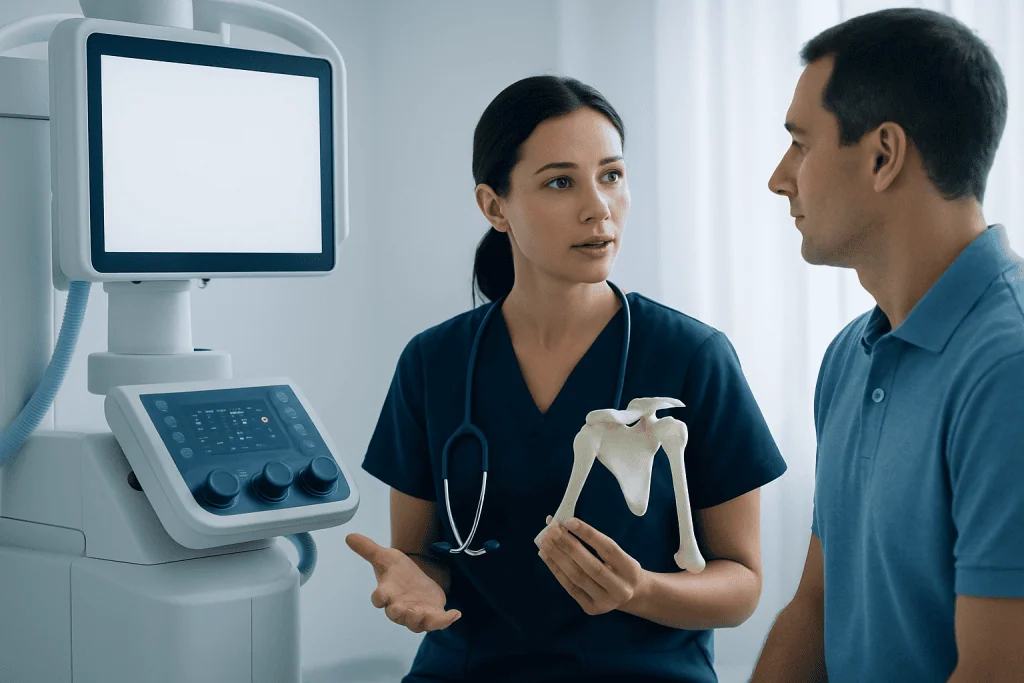
The humerus is the long bone of the upper arm. Its rounded top, called the humeral head, fits into the glenoid socket of the scapula. This arrangement forms the main moving part of the shoulder. The shape of the humeral head allows the arm to move forward, backward, outward, inward, and in rotation.
The scapula, or shoulder blade, is a flat triangular bone on the back of the upper chest. It provides the glenoid socket for the humerus and also has important bony projections, including the acromion and coracoid process, which serve as attachment points for muscles and ligaments. The scapula must move smoothly across the chest wall for the shoulder to function well.
The clavicle, or collarbone, acts like a strut that holds the shoulder away from the chest. This helps the arm move freely and gives support to the upper limb. The clavicle connects the arm and shoulder girdle to the rest of the skeleton through the sternoclavicular joint.
- Humerus: upper arm bone, forms the “ball” of the ball-and-socket joint
- Scapula: shoulder blade, forms the “socket” and supports muscle attachments
- Clavicle: collarbone, stabilizes the shoulder and links it to the chest
How the Shoulder Joints Work Together
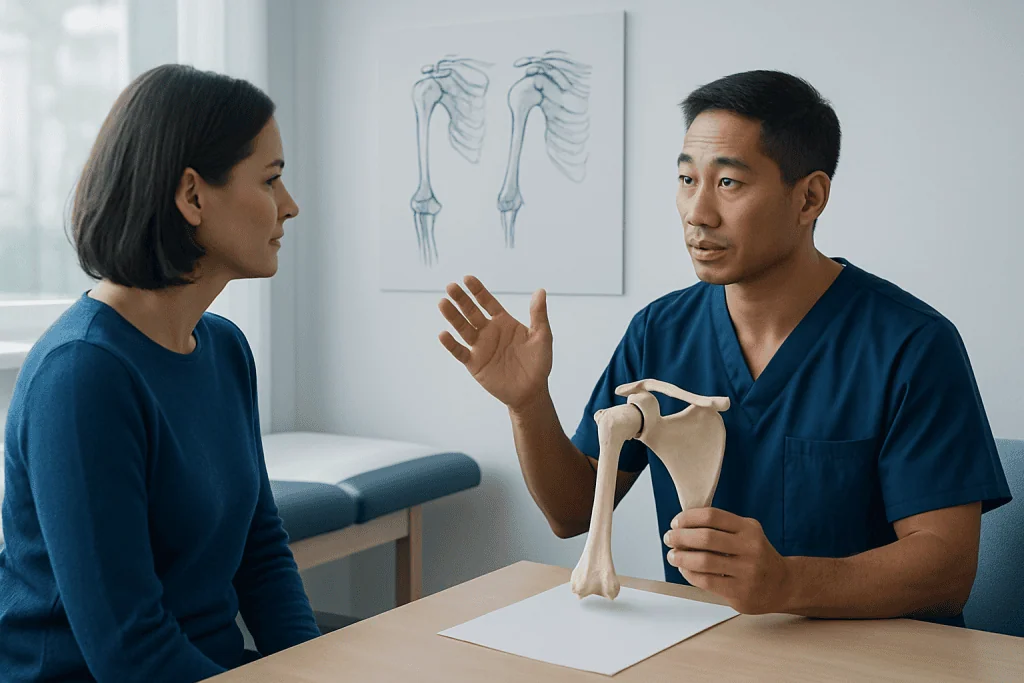
The shoulder’s impressive flexibility comes from several joints working together. The most recognized is the glenohumeral joint, but full arm elevation also depends on movement at the acromioclavicular joint, sternoclavicular joint, and the scapulothoracic articulation, which describes how the scapula glides over the rib cage. If one part is stiff or injured, the whole shoulder can feel painful or restricted.
This teamwork allows everyday actions such as combing hair, fastening clothing, reaching overhead, or lifting objects from a shelf. The shoulder’s mobility is especially important in sports and work activities that involve throwing, swimming, climbing, or repeated overhead motion.
Because the bony socket is shallow, the shoulder relies heavily on soft tissues for support. These include the labrum, capsule, ligaments, and muscles such as the rotator cuff. If those structures are strained or torn, symptoms may develop even if the bones themselves are normal. Problems such as rotator cuff tears can affect how the shoulder moves and feels.
Supporting Structures Around the Shoulder Bones
The bones of the shoulder do not work alone. A rim of cartilage called the labrum surrounds the glenoid socket and makes it deeper, helping the humeral head stay centered. The joint capsule and several ligaments add stability by limiting excessive movement. These structures are especially important because the shoulder is designed more for mobility than for tight bony stability.
Muscles also play a major role. The rotator cuff is a group of four muscles and their tendons that help keep the head of the humerus in the socket while the arm moves. Larger muscles such as the deltoid, trapezius, pectoral muscles, and serratus anterior also support movement and shoulder mechanics.
Small fluid-filled sacs called bursae reduce friction between tendons, muscles, and bones. When these structures become irritated, pain can occur with lifting or rotation. In some people, this may be related to shoulder impingement or inflammation around the joint rather than a problem with the bones themselves.
Common Problems Affecting the Shoulder Bones and Joint
Shoulder symptoms can arise from injuries, overuse, age-related wear, or inflammatory conditions. Common bony injuries include fractures of the clavicle, proximal humerus, or scapula, often after a fall or direct blow. The shoulder can also partially or fully dislocate when the humeral head moves out of the glenoid socket.
Joint-related conditions are also common. These may include arthritis, labral injuries, tendon irritation, bursitis, and instability. In some cases, the acromioclavicular joint becomes painful after a sprain or degeneration. The specific cause often depends on age, activity level, and how the symptoms began.
People may notice pain, swelling, weakness, clicking, a sense that the joint is slipping, or trouble lifting the arm overhead. If symptoms continue, a doctor may recommend assessment and imaging. In certain cases, advanced care such as shoulder arthroscopy may be used to diagnose or treat internal joint problems.
How Doctors Diagnose Shoulder Problems
Diagnosis usually begins with a medical history and physical examination. A doctor may ask when the pain started, whether there was an injury, where the pain is felt, and what movements make it worse. They will often assess range of motion, strength, joint stability, and tenderness around the clavicle, scapula, and upper arm.
Imaging may be helpful depending on the symptoms. X-rays are commonly used to look at the bones and can show fractures, alignment problems, or arthritis. Ultrasound and MRI are often better for tendons, muscles, bursae, and the labrum. CT scans may be useful for complex fractures or detailed bone assessment.
Not every shoulder problem requires extensive testing. Many mild strains improve with time and conservative care. Still, persistent pain, deformity, weakness, repeated dislocation, or inability to use the arm normally should be assessed by a qualified clinician, especially after trauma.
Treatment Options and Self-Care
Treatment depends on the cause of the problem. Many shoulder conditions improve with rest, temporary activity modification, ice, and guidance on safe movement. A doctor may also suggest pain-relieving or anti-inflammatory medicines when appropriate. Structured physical therapy and rehabilitation is often central to recovery because it can improve flexibility, strength, posture, and shoulder mechanics.
More specific treatment may be needed for some conditions. Fractures, repeated dislocations, severe arthritis, or major tendon tears may require procedures or surgery. Depending on the diagnosis, care may include joint repair, stabilization, or shoulder replacement for advanced joint damage.
Self-care also matters. Good posture, gradual warm-up before exercise, balanced shoulder and upper back strengthening, and avoiding sudden overload can all help support shoulder health. Near the end of the care pathway, some patients seek specialist evaluation at centers such as Acibadem International, where multidisciplinary teams in JCI-accredited hospitals assess and treat shoulder conditions for international patients.
When to See a Doctor
It is sensible to seek medical advice if shoulder pain lasts more than a few days, keeps returning, or interferes with sleep, work, or daily tasks. Medical assessment is also important if there is visible deformity, marked swelling, bruising after an injury, or loss of motion and strength.
Urgent evaluation is recommended after major trauma, a suspected dislocation, or if the arm cannot be moved normally. Sudden numbness, tingling, fever, or redness around the joint should also be checked promptly, as these may suggest a more serious issue.
Early diagnosis can help prevent stiffness, ongoing pain, or further injury. Even when the problem is not severe, a doctor or physiotherapist can explain which part of the shoulder is affected and guide safe recovery based on the bones, joints, and soft tissues involved.
Frequently asked questions
What three bones make up the shoulder?
The shoulder is mainly formed by the humerus, scapula, and clavicle. These are the upper arm bone, shoulder blade, and collarbone. Together they create the framework that allows the arm to move and the shoulder to stay supported.
Is the shoulder just one joint?
No, the shoulder is better understood as a group of joints working together. The main joint is the glenohumeral joint, but the acromioclavicular and sternoclavicular joints also help with normal movement. The scapula’s motion over the chest wall is also important.
Which bone forms the socket of the shoulder joint?
The socket is part of the scapula. It is called the glenoid, and it holds the rounded head of the humerus. Because this socket is shallow, the shoulder has a wide range of motion but depends strongly on soft tissues for stability.
Why is the shoulder so easy to injure?
The shoulder is designed for mobility, which means it does not have the same tight bony fit as some other joints. It relies on muscles, tendons, ligaments, and cartilage to stay stable. This makes it flexible and useful, but also more vulnerable to strains, dislocations, and overuse injuries.
Can collarbone problems affect the shoulder joint?
Yes, the clavicle plays an important role in shoulder support and movement. Injuries or arthritis at the collarbone can affect how the shoulder feels and functions. Pain near the top of the shoulder may sometimes come from the acromioclavicular joint rather than the main ball-and-socket joint.
How do doctors check for shoulder bone injuries?
Doctors usually begin with a physical examination and questions about symptoms and any injury. X-rays are often the first imaging test for suspected fractures or joint alignment problems. Other scans, such as MRI or CT, may be used when more detail is needed.
References
- American Academy of Orthopaedic Surgeons
- National Institute of Arthritis and Musculoskeletal and Skin Diseases
- MedlinePlus
- NHS
- Mayo Clinic
This article is for general information only and is not a substitute for professional medical advice. Please consult a qualified doctor about your individual situation.
Joint and spine care in Turkey — expert assessment & treatment
JCI-accredited · board-certified surgeons · reply within 24h
Add us as a Preferred Source to see more of our trusted health content across Google Search, AI Overviews and Discover.

More from the Health Library



Related Specialists

Dr. İlke Özer Aslan
Gynecology & Obstetrics
Assoc. Prof. Dr. Halenur Bozdağ
Gynecology & Obstetrics
Dt. Gülçin Doğusal İşgüder
Dentistry
Prof. Dr. Ceyda Erel Kirişoğlu
Pulmonology