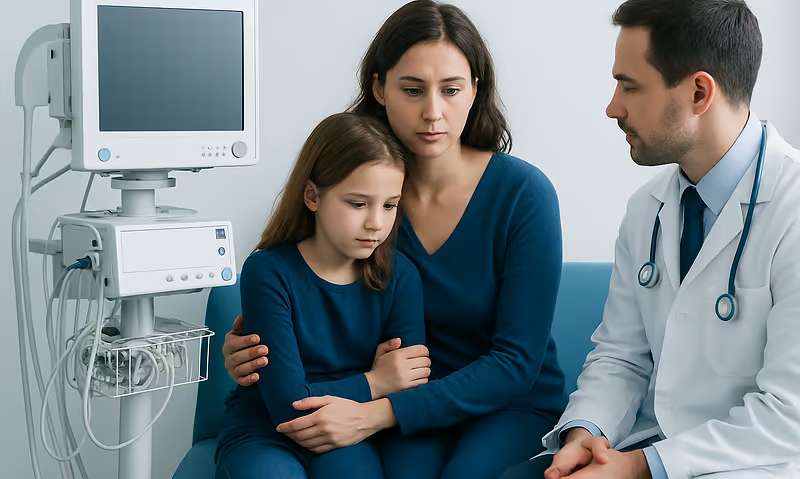
Brain Surgery in Turkey: How International Patients Can Evaluate Hospital Safety

Hospital safety for brain surgery depends on far more than cost or location. International patients should review accreditation, neurosurgeon expertise, ICU capacity, and emergency support.
Key Takeaways
- Hospital safety for brain surgery depends on far more than cost or location.
- International patients should review accreditation, neurosurgeon expertise, ICU capacity, and emergency support.
- Clear communication, written treatment plans, and aftercare arrangements are essential before travel.
- A suitable hospital should offer advanced imaging, multidisciplinary care, and strong infection-control practices.
- Patients should feel comfortable asking detailed questions about risks, outcomes, and recovery planning.
Brain surgery in Turkey may be considered by international patients when hospitals meet clear safety standards in neurosurgery, anesthesia, intensive care, and follow-up. A careful review of accreditation, specialist experience, imaging, infection prevention, and communication can help patients make a well-informed decision.
Overview: What hospital safety means for brain surgery
Brain surgery in Turkey may involve treatment for brain tumors, vascular conditions, epilepsy, trauma, hydrocephalus, or other neurological disorders. For international patients, choosing a hospital is not only about the operation itself. It also includes preoperative evaluation, anesthesia, intensive care, imaging support, infection prevention, rehabilitation, and clear postoperative follow-up.
Hospital safety in neurosurgery refers to the systems and expertise that reduce avoidable risk and support prompt treatment if complications arise. A safe center typically has experienced neurosurgeons, neuroradiologists, neuroanesthesiologists, intensive care specialists, operating room teams familiar with complex neurosurgical care, and access to advanced technology when needed.
Because every diagnosis is different, there is no single “best” hospital for every patient. The most appropriate center depends on the exact condition, the type of surgery proposed, the patient’s age and general health, and whether specialized techniques such as awake craniotomy, skull base surgery, or minimally invasive approaches are required. In many cases, the evaluation begins with a careful review of the underlying condition, such as a brain tumor or another structural brain disorder.
Which hospital features matter most
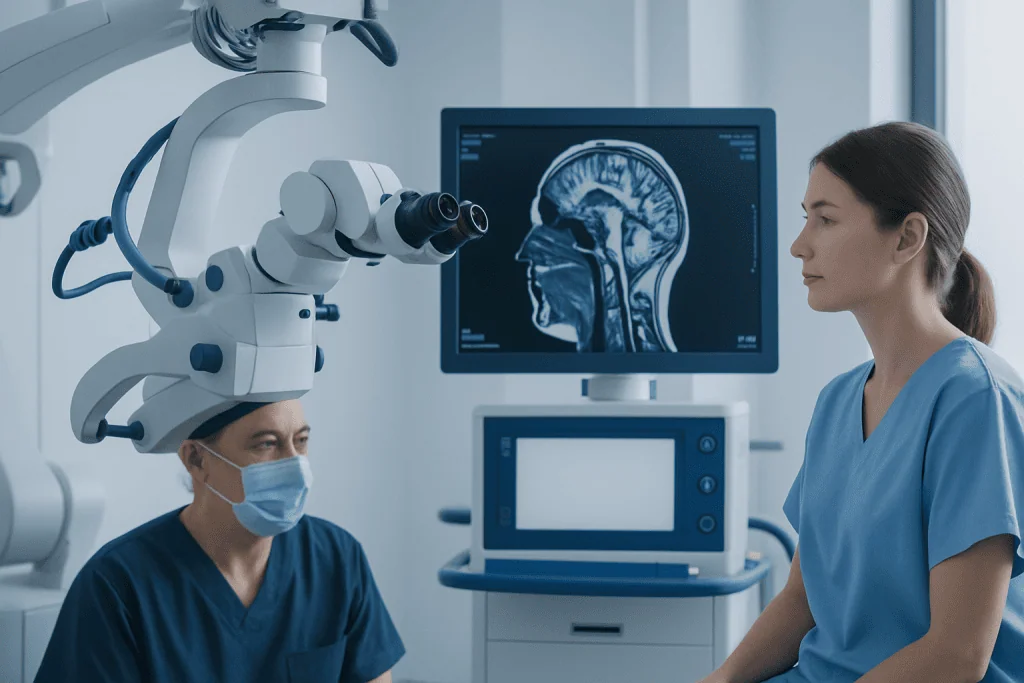
International patients can start by looking for recognized external accreditation and strong internal quality systems. Accreditation does not guarantee a perfect outcome, but it shows that a hospital has been assessed against defined standards in patient safety, medication management, infection control, documentation, and care processes. It is also helpful to ask whether the neurosurgical unit itself follows audited protocols and participates in case review or quality improvement meetings.
The hospital should have a dedicated neurosurgery service supported by 24-hour emergency care, advanced imaging, blood bank access, and intensive care. Brain surgery can require rapid decisions before, during, or after the operation. A center that can provide MRI, CT, angiography when appropriate, and urgent neurology or critical care consultation is better equipped to respond if the patient’s condition changes.
It is also reasonable to review the patient pathway from admission to discharge. A safe hospital usually offers coordinated preoperative assessment, anesthesia review, surgical planning, postoperative neurological monitoring, pain control, rehabilitation input, and discharge teaching. For some patients, treatment planning may also include related services such as brain tumor surgery or image-guided neurosurgical procedures, depending on the diagnosis.
- International or national accreditation status
- Dedicated neurosurgery and neuroanesthesia teams
- 24/7 ICU, emergency services, and imaging access
- Structured infection prevention and medication safety protocols
- Organized discharge planning and follow-up coordination
How to assess the surgical team and technology
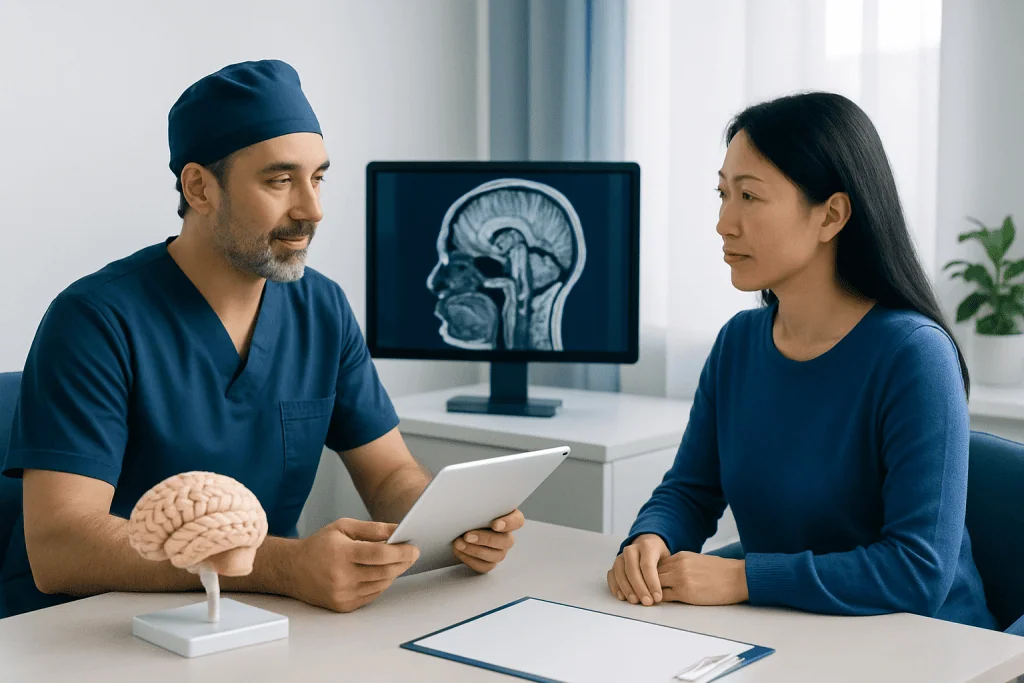
The expertise of the surgical team is one of the most important safety factors. Patients may ask whether the neurosurgeon regularly performs the exact procedure being recommended, not just general brain surgery. Experience in the relevant area matters, such as skull base surgery, vascular neurosurgery, epilepsy surgery, pediatric neurosurgery, or surgery for tumors located near critical brain structures.
Questions about multidisciplinary planning are equally valuable. Complex brain operations are often discussed by teams that may include neurosurgeons, neurologists, neuroradiologists, neuropathologists, oncologists, rehabilitation physicians, and intensive care specialists. This team-based approach can improve decision-making, especially when there are several treatment options or when surgery is only one part of care.
Technology can also support safety when used appropriately. Depending on the case, helpful tools may include neuronavigation, intraoperative neuromonitoring, operating microscopes, endoscopic systems, functional mapping, and high-quality MRI or CT imaging. These tools do not replace surgical judgment, but they can help define anatomy, preserve important brain functions, and guide a precise approach. In selected cases, related procedures such as Gamma Knife radiosurgery may be discussed as an alternative or complement to open surgery.
Questions international patients should ask before choosing a hospital
Patients and families should feel comfortable asking direct, practical questions. It is reasonable to request a clear explanation of the diagnosis, why surgery is recommended, what alternatives exist, and what the expected benefits and limitations are. The hospital should be able to explain possible risks in understandable language, including neurological deficits, bleeding, infection, seizures, cerebrospinal fluid leak, stroke, or the need for additional procedures when relevant.
Logistics are also part of safety. International patients may ask who reviews their medical records before travel, whether any tests can be done in their home country first, how urgently surgery is needed, and how many days they may need to stay in hospital and in Turkey after discharge. It is important to know whether an interpreter is available and whether written records, imaging reports, and discharge instructions will be provided in a language the patient understands.
Other useful questions include who will provide care overnight, how pain and nausea are managed, what the ICU experience is like, and how families receive updates during surgery. When surgery relates to a specific diagnosis, such as a pituitary adenoma, patients may also ask whether endocrinology, ophthalmology, or ENT support is available if needed. A hospital that answers questions clearly and transparently usually supports more confident decision-making.
Preoperative evaluation, diagnosis, and second opinions
A thorough preoperative assessment is a major part of hospital safety. Before travel, the care team should review the patient’s medical history, medications, allergies, previous surgeries, imaging studies, and pathology reports if available. They may also need information about heart or lung disease, blood-thinning medication, diabetes, seizure history, or other conditions that could affect anesthesia or recovery.
Once the patient arrives, additional tests may be recommended to confirm the diagnosis and plan the safest procedure. These may include updated MRI or CT scans, blood tests, cardiac evaluation, neurological examination, and in some cases vascular imaging or functional studies. For some disorders, a neurosurgeon may also discuss alternatives to open surgery, such as observation, medication, radiosurgery, or interventional approaches if clinically suitable.
Second opinions can be especially helpful when the recommended surgery is complex, urgent but not emergent, or associated with significant functional risk. A reputable hospital should not discourage patients from asking for another specialist review. If there is uncertainty, an independent second opinion may clarify whether surgery is necessary now, whether a different technique is preferable, or whether the same treatment can be performed closer to home.
Postoperative care, complications, and follow-up planning
Safety continues after the operation. Patients should ask where they will recover immediately after surgery, how often neurological checks are performed, and what signs of complications the team monitors. Depending on the procedure, postoperative care may include ICU observation, repeat imaging, seizure prevention strategies, pain control, wound care, mobilization, and assessment by physical, speech, or occupational therapy.
No center can remove all risk from brain surgery, so patients benefit from understanding how the hospital recognizes and manages complications. Important examples include bleeding, brain swelling, infection, blood clots, wound problems, new weakness, speech difficulty, confusion, or changes in hormone balance after pituitary surgery. What matters is that the hospital has rapid access to specialists, imaging, reoperation if needed, and intensive care support when complications occur.
Follow-up arrangements are especially important for international patients who will return home. Before discharge, there should be a written plan covering medications, warning signs, activity restrictions, wound care, timing of pathology results, and when follow-up imaging is needed. Some patients may also require additional therapies after surgery, including rehabilitation or radiation oncology services depending on the final diagnosis. Near the end of the care journey, patients may choose centers such as Acibadem International, where multidisciplinary specialists in JCI-accredited hospitals diagnose and treat complex neurosurgical conditions for international patients.
Practical travel and self-care considerations for international patients
Safe medical travel involves more than arranging flights and accommodation. Patients should understand whether they are fit to travel before surgery and when it is medically acceptable to fly after the procedure. They should also ask whether a companion is recommended, how long they may need support with walking, bathing, or communication, and whether rehabilitation services should be arranged before returning home.
Bringing complete medical records can make the evaluation smoother and safer. Helpful documents include imaging on disc or secure digital transfer, written radiology reports, pathology reports, medication lists, allergy information, and a summary from the referring physician. If a patient has a shunt, implant, or previous neurosurgical operation, records from that treatment are especially valuable.
After discharge, self-care usually focuses on rest, gradual activity, hydration, taking medicines exactly as directed, and watching for warning signs. Patients should avoid making changes to medication schedules without medical advice and should not ignore fever, worsening headache, increasing drowsiness, new weakness, wound leakage, or seizures. A plan for urgent contact, either with the treating hospital or a local doctor at home, is an important final safety step.
Frequently asked questions
How can a patient tell if a hospital in Turkey is safe for brain surgery?
A patient can start by checking accreditation, the presence of a dedicated neurosurgery department, ICU support, advanced imaging, and clear infection-control policies. It is also important to review the experience of the neurosurgeon and whether the hospital can explain its care pathway before and after surgery.
Is accreditation enough to choose a brain surgery hospital?
No. Accreditation is helpful, but it is only one part of the picture. Patients should also consider the surgeon’s expertise in the specific operation, the hospital’s emergency resources, communication quality, and the plan for postoperative monitoring and follow-up.
What questions should international patients ask before traveling for neurosurgery?
They should ask about the exact diagnosis, why surgery is recommended, what alternatives exist, the possible risks, and the expected recovery time. They should also ask who will provide follow-up care, when it is safe to fly home, and how to reach the team if problems arise after discharge.
Why is intensive care availability important after brain surgery?
Some patients need close neurological observation, breathing support, blood pressure control, or urgent imaging after surgery. A hospital with round-the-clock ICU care is better prepared to detect and manage complications quickly if they occur.
Should patients seek a second opinion before brain surgery in Turkey?
A second opinion can be useful, especially if the surgery is complex, the diagnosis is uncertain, or there are multiple treatment options. A reputable hospital should support informed decision-making and should not object to a careful specialist review.
What follow-up arrangements are important for international patients after brain surgery?
Patients should leave with written discharge instructions, medication guidance, warning signs to watch for, and a timeline for clinic review or follow-up imaging. It is also helpful to have a clear plan for coordination with doctors in the patient’s home country.
References
- World Health Organization
- Joint Commission International
- American Association of Neurological Surgeons
- National Institute for Health and Care Excellence
- U.S. National Institute of Neurological Disorders and Stroke
This article is for general information only and is not a substitute for professional medical advice. Please consult a qualified doctor about your individual situation.
Explore treatments in Turkey — costs, top hospitals & a free quote
JCI-accredited · board-certified surgeons · reply within 24h
Add us as a Preferred Source to see more of our trusted health content across Google Search, AI Overviews and Discover.