Ovarian Cyst Surgery: Laparoscopy, Recovery, and Fertility Considerations

Many ovarian cysts do not need surgery and can be monitored safely. Laparoscopy is often preferred because it usually involves smaller incisions and a faster recovery.
Key Takeaways
- Many ovarian cysts do not need surgery and can be monitored safely.
- Laparoscopy is often preferred because it usually involves smaller incisions and a faster recovery.
- The surgical plan depends on the cyst’s size, appearance, symptoms, age, and fertility goals.
- When possible, surgeons remove the cyst and preserve the ovary.
- Prompt medical care is important for severe pain, suspected rupture, or possible ovarian torsion.
Ovarian cyst surgery may be recommended when a cyst causes pain, becomes large, looks complex, or raises concern for complications. In many cases, minimally invasive laparoscopy can remove the cyst while aiming to preserve healthy ovarian tissue and protect future fertility.
Overview of Ovarian Cyst Surgery
Ovarian cyst surgery is a procedure used to remove a cyst from or around the ovary when it is causing symptoms, has concerning features on imaging, or may lead to complications. Ovarian cysts are common and many are harmless, especially those linked to the menstrual cycle. Because many cysts go away on their own, surgery is not automatically needed.
The main goals of surgery are to confirm the diagnosis, relieve symptoms, prevent complications, and preserve as much normal ovarian tissue as possible. For many patients, this means removing only the cyst, a procedure often called ovarian cystectomy. In some situations, removal of the entire ovary may be the safer option, especially if the ovary is badly damaged or the cyst appears suspicious.
Whenever appropriate, surgeons prefer minimally invasive techniques. Laparoscopy uses small incisions and a camera to guide the operation. Compared with open surgery, it often leads to less postoperative discomfort, a shorter hospital stay, and a quicker return to daily activities. However, open surgery may still be recommended for very large cysts, dense scar tissue, emergency situations, or concern about cancer.
When Surgery May Be Recommended
Doctors consider surgery when an ovarian cyst is painful, persistent, growing, or complex in appearance. Ultrasound findings are especially important. A simple fluid-filled cyst in a premenopausal patient may often be observed, while a cyst with solid areas, thick walls, or internal partitions may need closer evaluation.
Surgery may also be advised if the cyst causes pressure symptoms such as bloating, pelvic heaviness, painful intercourse, or changes in urination and bowel habits. Sometimes a cyst is discovered during an infertility workup or while investigating chronic pelvic pain. In these situations, treatment decisions are based on both symptoms and the likely type of cyst.
Urgent surgery may be needed if there is a complication such as rupture with significant bleeding or ovarian torsion, which happens when the ovary twists around its supporting tissues. Torsion can reduce blood flow and threaten the ovary if not treated quickly. Conditions such as ovarian cysts and endometriosis may overlap with pelvic pain, so careful evaluation helps determine whether an operation is likely to help.
- Persistent or enlarging cyst
- Severe or recurring pelvic pain
- Complex or suspicious imaging features
- Possible ovarian torsion or rupture
- Pressure symptoms or impact on fertility planning
Laparoscopy, Open Surgery, and What Happens During the Procedure
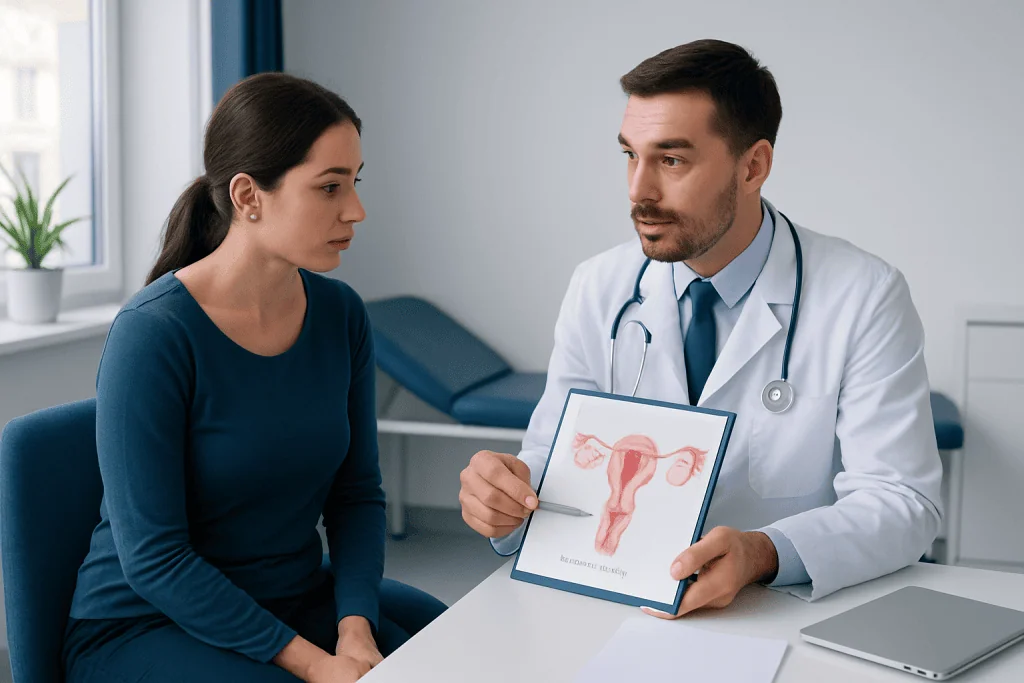
Laparoscopic ovarian cyst surgery is performed under general anesthesia. The surgeon makes a few small incisions, usually in the abdomen, and inserts a camera and fine instruments. The abdomen is gently inflated with gas to create space, allowing the surgeon to see the ovaries and surrounding organs clearly.
If possible, the surgeon carefully separates the cyst from healthy ovarian tissue and removes it while preserving the ovary. This is called cystectomy and is often the preferred choice for people who wish to maintain hormonal function or future fertility. If the cyst has replaced most of the ovary, if bleeding cannot be controlled safely, or if the tissue looks highly abnormal, removal of the ovary may be recommended.
Open surgery, also called laparotomy, involves a larger abdominal incision. It may be chosen when a cyst is very large, when cancer is a concern, or when there is extensive scar tissue from prior surgery or disease. In some cases, surgery begins laparoscopically and is converted to an open operation if that approach is safer. The removed tissue is usually sent to a laboratory for examination to confirm the diagnosis.
Depending on the findings, related procedures may sometimes be performed at the same time. For example, if pelvic pain is linked to endometriosis, a surgeon may evaluate whether endometriosis treatment is also appropriate. The exact plan should be discussed in advance whenever possible, while recognizing that the final decision during surgery depends on patient safety and what is found.
Recovery After Ovarian Cyst Surgery
Recovery varies according to the type of surgery, the size and nature of the cyst, and the patient’s overall health. After laparoscopy, many patients go home the same day or after a short hospital stay. Open surgery usually requires a longer stay and a slower recovery because of the larger incision.
In the first few days after laparoscopy, mild abdominal discomfort, bloating, tiredness, and shoulder-tip pain from the gas used during surgery are common. Light vaginal spotting may also occur. Most people can gradually return to walking and light daily activities soon after surgery, but heavy lifting and strenuous exercise should wait until the surgeon advises it is safe.
Recovery after open surgery generally takes longer. The abdominal incision may remain sore for several weeks, and return to work depends on the type of job and individual healing. The healthcare team usually gives instructions about wound care, bathing, pain management, activity, and follow-up appointments.
Patients should seek medical advice promptly if they develop fever, worsening pain, heavy bleeding, redness or discharge at the incision, persistent vomiting, chest symptoms, or trouble passing urine. Near the end of care planning, some international patients may choose centers such as Acibadem International, where multidisciplinary specialists in JCI-accredited hospitals diagnose and treat gynecologic conditions, including options such as ovarian cyst treatment when surgery is needed.
Fertility Considerations and Ovarian Preservation
Fertility is an important part of decision-making for many patients with ovarian cysts. In general, surgeons aim to preserve the ovary whenever this is safe and medically appropriate. Removing only the cyst can help maintain normal ovulation and hormone production, especially in younger patients and those planning pregnancy in the future.
The effect on fertility depends partly on the type of cyst. Functional cysts often do not affect long-term fertility. Endometriomas, dermoid cysts, and large or recurrent cysts may be more complex. Some cysts are linked to underlying conditions that themselves can affect fertility, so surgery is only one part of the overall picture.
Because any ovarian surgery can potentially reduce the amount of healthy ovarian tissue, surgeons use techniques designed to limit damage when possible. The balance between complete cyst removal and ovarian preservation is especially important in people with one ovary, recurrent cysts, or reduced ovarian reserve. If fertility concerns are significant, the care team may recommend consultation with specialists in IVF or reproductive medicine before or after surgery.
For patients trying to conceive, timing matters. A doctor may advise waiting until healing is complete before attempting pregnancy. If surgery reveals a condition such as severe endometriosis, the next steps may include fertility-focused treatment planning tailored to age, ovarian function, symptoms, and reproductive goals.
Risks, Benefits, and Possible Complications
Like any operation, ovarian cyst surgery has benefits and risks. The benefits may include pain relief, removal of a persistent or suspicious mass, prevention of rupture or torsion, and a clearer diagnosis through laboratory examination. For many patients, surgery also provides reassurance when imaging alone cannot fully explain what the cyst is.
General surgical risks include bleeding, infection, blood clots, reactions to anesthesia, and injury to nearby organs such as the bowel, bladder, ureter, or blood vessels. These complications are uncommon but important to discuss. Laparoscopy also carries a small risk related to entry into the abdomen and the use of gas for visualization.
There are also gynecologic considerations. These may include scar tissue formation, recurrence of cysts, or unplanned removal of part or all of the ovary if preserving it is not safe. Rarely, a cyst thought to be benign before surgery may turn out to be borderline or malignant after pathology review, which can change follow-up care.
Before surgery, patients should feel comfortable asking what type of cyst is suspected, whether cystectomy or ovary removal is more likely, how fertility may be affected, and what recovery to expect. A clear conversation with the surgeon can make decision-making more informed and less stressful.
Diagnosis, Monitoring, and Preparing for Surgery
The decision to operate usually follows a careful assessment. This often includes a medical history, pelvic examination, and ultrasound. Ultrasound helps determine whether a cyst is simple or complex, how large it is, and whether it appears to be arising from the ovary. In selected cases, additional imaging such as MRI may help clarify the diagnosis.
Blood tests may be used depending on age, symptoms, and imaging findings. These tests do not diagnose every ovarian cyst, but they may help estimate risk and support planning. In premenopausal patients, doctors also consider where a person is in the menstrual cycle, because some cysts are temporary and hormone-related.
Observation is often the first step when the cyst appears likely to be benign and the patient is stable. Repeat ultrasound over time may show that the cyst shrinks or disappears. This watchful approach can avoid unnecessary surgery while still keeping the patient safe.
If surgery is planned, preoperative preparation may include fasting instructions, medication review, and guidance about stopping certain drugs temporarily if advised by a doctor. Patients should mention any history of bleeding problems, prior abdominal surgery, allergies, or pregnancy possibility. Understanding the intended procedure and recovery plan in advance usually makes the experience easier to manage.
When to See a Doctor
Anyone with ongoing pelvic pain, bloating, pressure symptoms, painful periods, or pain during intercourse should arrange medical evaluation, especially if symptoms are new or worsening. Although many ovarian cysts are benign, persistent symptoms deserve assessment rather than self-diagnosis.
Urgent care is important for sudden severe lower abdominal pain, pain with nausea or vomiting, faintness, weakness, fever, or heavy vaginal bleeding. These symptoms can be caused by ovarian torsion, rupture, or another emergency that needs prompt treatment. Quick evaluation may help protect the ovary and reduce complications.
People who are pregnant, have a strong family history of ovarian or breast cancer, are past menopause, or are undergoing fertility treatment should discuss any newly discovered ovarian cyst with a qualified doctor. The best management plan depends on age, symptoms, imaging findings, and future reproductive goals.
Regular follow-up matters after diagnosis, even when surgery is not needed right away. A gynecologist can explain whether monitoring, medication, or surgery is the safest next step and help the patient choose an approach that fits both health needs and fertility plans.
Frequently asked questions
Do all ovarian cysts need surgery?
No. Many ovarian cysts are harmless and go away on their own, especially simple cysts related to the menstrual cycle. Surgery is usually considered only when a cyst is persistent, painful, large, complex, or causes concern for complications.
Is laparoscopy always possible for ovarian cyst surgery?
Not always. Laparoscopy is often preferred because it is minimally invasive, but open surgery may be safer for very large cysts, severe adhesions, emergencies, or suspected cancer. The final approach depends on imaging findings, symptoms, and what the surgeon believes is safest.
How long does recovery take after ovarian cyst surgery?
Recovery after laparoscopy is often shorter, with many people resuming light activities within days and returning more fully over the following weeks. Recovery after open surgery usually takes longer. The exact timeline varies from person to person and should follow the surgeon’s advice.
Can ovarian cyst surgery affect fertility?
It can, but many operations are planned specifically to preserve fertility whenever possible. Removing only the cyst may allow the ovary to keep functioning normally. The effect depends on the type of cyst, how much ovarian tissue is involved, and whether there is an underlying condition such as endometriosis.
Will the entire ovary be removed?
Not necessarily. If it is safe, surgeons usually try to remove the cyst and leave the ovary in place. Removal of the ovary may be needed if the ovary is severely damaged, if bleeding cannot be controlled, or if the cyst appears highly suspicious.
Can ovarian cysts come back after surgery?
Yes, some cysts can recur, depending on their type and the underlying cause. Surgery removes the current cyst, but it does not always prevent future cysts from forming. Follow-up care helps monitor symptoms and guide any further treatment if needed.
References
- American College of Obstetricians and Gynecologists
- Royal College of Obstetricians and Gynaecologists
- National Institute for Health and Care Excellence
- NHS
- Mayo Clinic
This article is for general information only and is not a substitute for professional medical advice. Please consult a qualified doctor about your individual situation.
Ovarian Cyst in Turkey — costs, top hospitals & a free quote
JCI-accredited · board-certified surgeons · reply within 24h
Add us as a Preferred Source to see more of our trusted health content across Google Search, AI Overviews and Discover.

Gynecology & Obstetrics
Women’s health across pregnancy, gynecologic surgery and high-risk pregnancy care.
187 specialists in this unit