

Medical Power Adapters and Device Charging in Turkey: Patient Guide
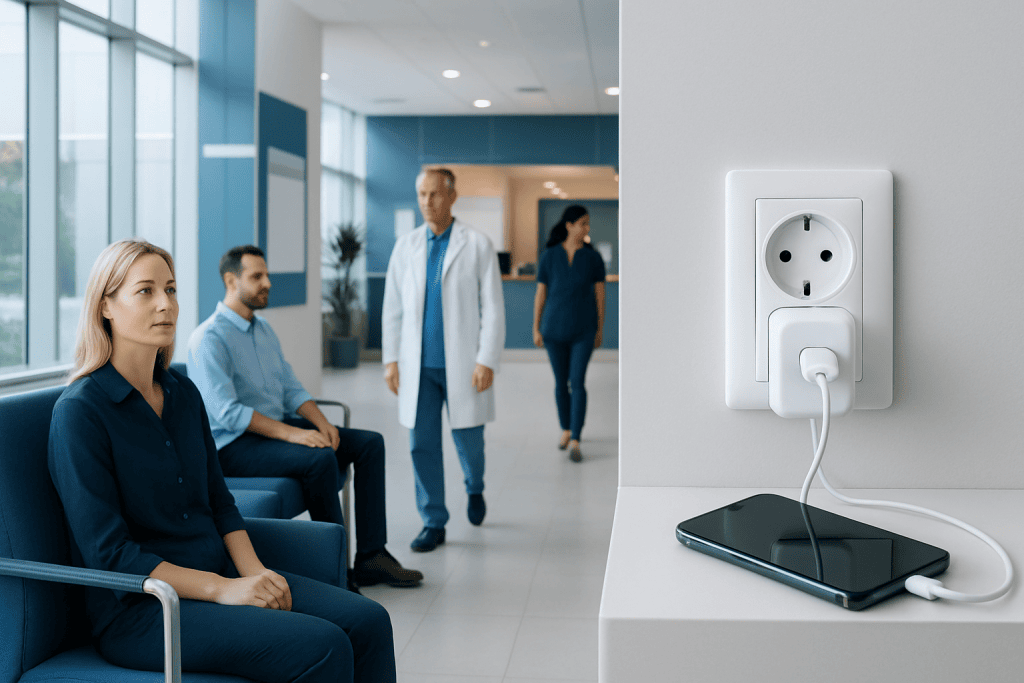
Medical power adapters and device charging in Turkey usually require Type C or F plugs and 220–240V power. Bring the right adapter and check your device…
If you are traveling to Turkey for treatment, planning how to power and charge your devices can make your stay much smoother. This guide helps you prepare for everyday charging needs and for important medical equipment you may rely on during your trip.
At a glance
- Plug types in Turkey: Type C and Type F
- Standard voltage: 220–240V
- Standard frequency: 50Hz
- Best to pack: Adapter, charger, cable, power bank, device labels
- Most important check: Confirm your device is compatible with 220–240V
What you need to know before you travel
Turkey uses Type C and Type F electrical outlets, with a standard supply of 220–240 volts and a frequency of 50Hz. If you are coming from a country with different plug shapes or lower voltage, you may need both a plug adapter and, in some cases, a voltage converter. For many phones, tablets, laptops, and modern chargers, a simple plug adapter is often enough because the charger itself can usually handle a wide voltage range.
The most important step is to check each device before you leave home. Look at the charger brick, power label, or user manual for wording such as “Input: 100–240V, 50/60Hz.” If you see that range, the device is typically dual-voltage and can usually be used in Turkey with the correct plug adapter only. If the label shows a single-voltage rating that does not include 220–240V, do not plug it in without expert guidance.
If you rely on a medical device such as a CPAP machine, feeding pump charger, mobility scooter charger, hearing aid charger, or portable oxygen-related accessory, plan earlier than you would for ordinary electronics. These devices are essential to your comfort and safety, so it is worth confirming compatibility directly with the manufacturer, your home care provider, or your clinical team before you travel.
Adapters, converters, and why the difference matters

A plug adapter changes the shape of the plug so it fits into a Turkish socket. It does not change the voltage. A voltage converter or transformer changes electrical voltage, but these are not suitable for every device and can be bulky or impractical for some medical equipment. That is why checking your device specifications first is so important.
For everyday items like phones and laptops, a good-quality travel adapter with USB or USB-C ports can be convenient, especially if you are bringing several devices. For medical equipment, it is usually better to use the original manufacturer charger whenever possible, along with the correct country adapter if needed. This can reduce the risk of poor connection, overheating, or charging errors.
Try to avoid buying the cheapest unbranded adapter at the last minute. A secure, well-made adapter is especially important if you will be charging overnight or powering a device you depend on daily. If you are staying in Istanbul or elsewhere in Turkey for treatment with Acibadem International, the international patient services team can often help you understand practical requirements before arrival, but it is still best to travel with your own tested setup.
Which devices deserve extra planning

Not every device carries the same level of risk if charging becomes difficult. A flat phone battery is inconvenient, but a problem with a medical device charger may affect your rest, communication, or routine care. Make a short list of devices you use every day and mark which ones are essential. This helps you pack more thoughtfully and decide what should stay in your hand luggage.
Common high-priority items include CPAP or BiPAP equipment, hearing aid chargers, communication devices, electric toothbrushes used after dental or oral procedures, temperature-sensitive medication cooling accessories, and chargers for mobility aids. Even if the main device runs on battery, you should know how long the battery lasts and how often it must be recharged.
For each important item, pack the original charger, one spare cable if possible, and a photo of the product label showing voltage and model number. If airport security, hotel staff, or patient coordinators need information quickly, having clear photos on your phone can be surprisingly helpful. It also makes replacement easier if a part is misplaced during travel.
- Keep life-essential equipment in your cabin bag, not checked luggage.
- Bring original charging accessories where possible.
- Label cables and plugs so they do not get mixed up in your room.
- Carry a printed or digital copy of device instructions.
Charging during your hospital stay or recovery
During treatment, your energy may be limited, so easy access to charging becomes more important than usual. Keep your phone charger, medical charger, and adapter together in a small pouch that is easy to reach from your bedside. A longer charging cable can also be useful, especially if the wall socket is not right next to your bed or chair.
If you are staying at an Acibadem International hospital, your care environment is designed for patient comfort, and international patient services can help with practical questions such as communication needs and day-to-day logistics. Still, outlet access, cable length, and charging routines vary from room to room, so it helps to keep your setup simple. If you use a medical device overnight, let your care team know early so they understand your routine and any practical needs.
Try to charge your key devices before appointments, scans, and transfers between locations. Even a short trip between the airport, hospital, hotel, or recovery apartment can use more battery than expected when you are using maps, translation apps, or messaging family. A fully charged phone and a small power bank can make the day feel much easier.
Hotels, apartments, and airport charging tips
If part of your stay is outside the hospital, check your accommodation details in advance. Most hotels and serviced apartments in Turkey will have standard Type C or Type F sockets, but the number and location of outlets can vary. If you need to run a device near the bed every night, ask in advance whether bedside outlets are available or whether an extension solution is permitted.
At airports, charging stations may be available, but you should not rely on them for a critical medical device. Airport seating with outlets can be crowded, and charging speeds can be slow. A fully charged power bank can help with your phone and tablet during transit, but remember that some medical devices cannot be powered safely by ordinary portable battery packs unless the manufacturer specifically allows it.
If you are coordinating treatment through Acibadem International, their support teams may also assist with practical travel and accommodation planning, particularly for international patients who want a smoother arrival. Even with this support, it remains wise to assume that your first 24 hours in Turkey should be manageable using the equipment and accessories you packed yourself.
Safety checks and when to ask for help
Before plugging anything in, take one last look at the label. Confirm the voltage range, inspect the cable for damage, and make sure the adapter fits firmly without wobbling. If a charger becomes unusually hot, makes a buzzing sound, or charges inconsistently, unplug it and stop using it until you can check it properly. Do not ignore signs that something is not working as expected.
If you are unsure whether a device can be used safely in Turkey, ask before trying it. Your device manufacturer, your treating clinician, your home medical equipment provider, or the international patient support team can all be useful points of contact. For patients at Acibadem International, interpreters and care coordinators can help you communicate practical concerns clearly, which is especially reassuring if the issue comes up during a busy treatment schedule.
Finally, have a backup plan. This might mean carrying a second phone cable, storing emergency numbers on paper, bringing spare hearing aid batteries if relevant, or knowing whether a companion can help manage your equipment. Small preparations reduce stress and help you focus more comfortably on your treatment and recovery.
Step by step
- Check every device label at home. Look for the voltage and frequency printed on the charger or device. If it says 100–240V and 50/60Hz, you will usually only need a plug adapter for Turkey.
- Separate essential medical equipment from ordinary electronics. Make a short list of what is critical for your health, comfort, or communication. Pack those items first and keep them in your hand luggage with their chargers and instructions.
- Pack the right adapter for Turkey. Turkey commonly uses Type C and Type F plugs, so choose a sturdy adapter that matches your device needs. For medical equipment, use the original charger whenever possible rather than a multi-use substitute.
- Test your setup before departure. Connect the adapter, charger, and device at home before your trip so you know everything fits and works. This simple test can prevent a stressful surprise after a long flight.
- Plan for your first day in Turkey. Charge your phone, medical devices, and power bank fully before boarding. That way, if you are delayed at the airport, hotel, or hospital, you still have enough battery for essential use.
- Tell your care team if you use overnight or routine equipment. If you rely on a device such as a CPAP machine or hearing aid charger, mention it early in your travel and admission planning. This helps everyone understand your daily needs and avoid last-minute practical issues.
- Use a backup plan for important items. Bring spare cables, extra batteries where appropriate, and written notes with model details. If something is lost or damaged, replacing the correct part becomes much easier.
Your checklist
- Turkey plug adapter for Type C or Type F outlets
- Original chargers for all essential devices
- One spare charging cable for your phone and key equipment
- Power bank for phone and tablet use during travel
- Photos of device labels showing voltage and model number
- Printed or digital user instructions for medical devices
- A small pouch to keep adapters and cables together
- Emergency contact numbers written down as well as stored on your phone
Key takeaways
- Turkey uses Type C and Type F plugs with 220–240V, 50Hz electricity.
- Many modern chargers are dual-voltage and need only a plug adapter, not a converter.
- Medical devices deserve extra planning, including checking compatibility and packing original chargers.
- Keep essential equipment in your hand luggage and test your charging setup before departure.
- If you are unsure, ask your device provider or international patient support team before use.
Frequently asked questions
What plug types are used in Turkey?
Turkey generally uses Type C and Type F plugs. The electricity supply is usually 220–240V at 50Hz, so you should check both plug shape and voltage compatibility before travel.
Do I need a voltage converter or just a plug adapter?
It depends on your device. If the charger label says 100–240V, you will usually only need a plug adapter. If the device is not compatible with 220–240V, do not use it without proper manufacturer guidance.
Can I use my CPAP machine or other medical device in Turkey?
Many medical devices can be used in Turkey, but you should confirm this well before departure. Check the device label, review the manual, and contact the manufacturer or your home equipment provider if anything is unclear.
Is it safe to charge devices in the hospital during my treatment stay?
In general, yes, but it is best to use your original charger and a secure adapter that fits properly. If a device is important to your routine, let your care team know so practical arrangements can be considered during your stay.
Should I carry my medical chargers in hand luggage?
Yes, absolutely. Essential medical devices, chargers, batteries, and small accessories should stay with you in your cabin bag in case checked luggage is delayed or misplaced.
Can I rely on a power bank for medical equipment?
Not always. Some medical devices should only be used with approved power sources, so a regular travel power bank may not be suitable. Check the manufacturer instructions before depending on a portable battery solution.
What if I forget my adapter after arriving in Istanbul or elsewhere in Turkey?
Adapters are often available in airports, hotels, and local shops, but quality can vary. For anything medically important, it is better not to rely on finding the right accessory after arrival, especially if your schedule is tight.
How can Acibadem International help with practical travel questions like this?
Acibadem International supports overseas patients with practical coordination around their care journey, including communication assistance and general travel-related guidance. Their international patient services and interpreter support can be especially helpful if you need to explain device-related needs clearly during your stay.
Add us as a Preferred Source to see more of our trusted health content across Google Search, AI Overviews and Discover.
More Patient Guides

How to Sleep Better in Turkey Before and After Treatment
Sleep better in Turkey before and after treatment with simple tips on timing, room comfort, routines and recovery planning in Istanbul.
9 min read
How to Plan Meals Around Surgery and Recovery in Turkey
Plan meals around surgery and recovery in Turkey with simple timing, hydration, shopping, and hotel tips for a smoother treatment trip.
9 min read
Medical Travel to Turkey During Ramadan: What Patients Should Plan Ahead
Medical travel to Turkey during Ramadan is manageable with early planning for appointments, meals, medicines, transport, and rest in Istanbul.
9 min read