Who Is a Candidate for Neurointervention?

Neurointervention uses tiny catheters and imaging guidance to treat selected neurological and vascular conditions without open surgery. Candidates often include people with stroke, brain aneurysm, arteriovenous malformation, carotid artery disease, or other blood vessel abnormalities.
Key Takeaways
- Neurointervention uses tiny catheters and imaging guidance to treat selected neurological and vascular conditions without open surgery.
- Candidates often include people with stroke, brain aneurysm, arteriovenous malformation, carotid artery disease, or other blood vessel abnormalities.
- Eligibility depends on the exact diagnosis, imaging findings, overall health, and how quickly treatment is needed.
- A multidisciplinary team typically reviews each case to decide whether neurointervention, surgery, medication, or observation is the best option.
- Early assessment is especially important in emergencies such as acute ischemic stroke or bleeding in the brain.
Neurointervention is a minimally invasive approach used to diagnose or treat certain conditions affecting the brain, spine, head, and neck blood vessels. A candidate for neurointervention is usually someone whose condition can be reached safely through blood vessels using specialized imaging-guided techniques.
Overview: What Neurointervention Means
Neurointervention, also called interventional neuroradiology or endovascular neurology in some settings, is a medical specialty that treats certain disorders of the brain, spinal cord, head, neck, and their blood vessels using minimally invasive techniques. Instead of making a large surgical opening, the specialist usually guides a thin catheter through a blood vessel, often starting from the wrist or groin, and uses advanced imaging to reach the treatment area.
These procedures may be used to remove a clot, close off an aneurysm, reduce abnormal blood flow, open a narrowed artery, or support diagnosis and treatment planning. Because the approach is highly targeted, it can reduce tissue disruption and may shorten recovery time for appropriately selected patients.
Not everyone with a neurological condition is a candidate for neurointervention. The decision depends on the type of disease, its location, the urgency of treatment, the person’s age and medical history, and what brain or vascular imaging shows. In many cases, neurointervention is considered alongside neurology, neurosurgery, stroke medicine, and critical care.
Who May Be a Candidate for Neurointervention
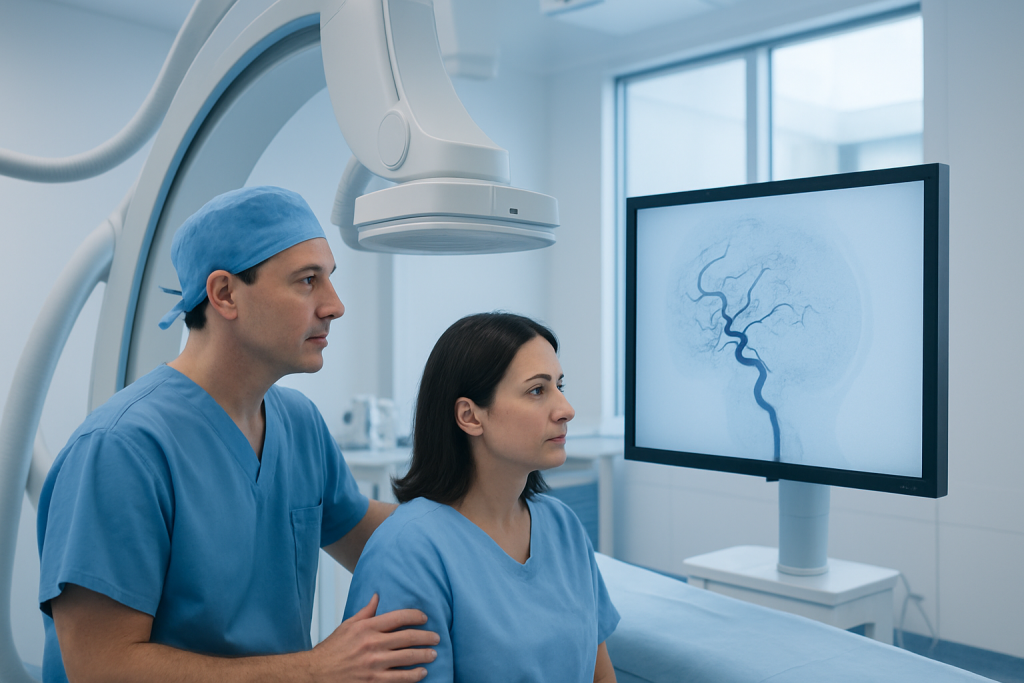
A candidate for neurointervention is generally a person with a condition that can be reached and treated safely from inside the blood vessels or with image-guided techniques. Common examples include acute ischemic stroke caused by a large artery blockage, brain aneurysms, arteriovenous malformations, dural arteriovenous fistulas, carotid or intracranial artery narrowing, and some cases of bleeding in the brain.
People with symptoms that suggest a vascular brain emergency may especially benefit from urgent assessment. Sudden weakness on one side, facial drooping, speech difficulty, severe unexplained headache, loss of vision, confusion, or reduced consciousness can all require immediate evaluation. In these situations, rapid imaging helps determine whether a minimally invasive treatment such as clot removal or aneurysm treatment is appropriate.
Some patients are evaluated even when there is no emergency. For example, a person may learn they have an unruptured aneurysm during a scan done for headaches or another reason. Others may have recurring transient ischemic attacks, pulsatile tinnitus, or symptoms from abnormal blood vessels. In these cases, the specialist weighs the potential benefit of treatment against the natural risk of the condition and the risks of the procedure.
- Acute ischemic stroke due to a large vessel blockage
- Brain aneurysm, especially if ruptured or considered high risk
- Arteriovenous malformation or dural arteriovenous fistula
- Carotid artery disease or intracranial stenosis in selected cases
- Certain tumors or spinal vascular abnormalities requiring embolization
Conditions Commonly Treated with Neurointervention

One of the best-known uses of neurointervention is emergency stroke care. In selected patients with acute ischemic stroke, specialists can perform minimally invasive stroke treatment to remove a clot and restore blood flow to the brain. This approach is most effective when the blocked vessel is large and the brain tissue may still be saved, which is why timing and imaging are so important.
Another major area is the treatment of brain aneurysms. Depending on the aneurysm’s size, shape, location, and risk of rupture, an endovascular approach may be used to close it from the inside of the blood vessel. In some cases, a person with bleeding around the brain from a ruptured aneurysm may need urgent treatment to prevent rebleeding.
Neurointervention can also help manage complex blood vessel disorders such as arteriovenous malformations and fistulas by reducing or blocking abnormal blood flow. Some patients with narrowed neck or brain arteries may be considered for angioplasty or stenting when appropriate. In selected situations, specialists may use endovascular aneurysm treatment or embolization procedures as part of a broader care plan developed with other experts.
How Doctors Decide Eligibility
Eligibility is based first on diagnosis. Doctors need to know exactly what problem is present and whether treating it through the blood vessels is likely to help. Brain imaging such as CT, MRI, CT angiography, MR angiography, and catheter angiography can show the size, shape, location, and severity of the abnormality. These details often determine whether neurointervention is feasible and safe.
The person’s overall health also matters. Specialists consider age, kidney function, bleeding risk, blood pressure, current medications, previous strokes, heart disease, pregnancy status, and any allergies to contrast material. The aim is to choose the approach with the best balance of benefit and risk for that individual patient.
Timing can be especially critical in emergencies. In stroke, treatment windows and imaging findings guide whether thrombectomy is likely to improve outcomes. In aneurysm rupture or significant vessel bleeding, urgent control of the abnormal blood flow may be necessary. For non-emergency conditions, doctors may recommend monitoring rather than immediate treatment if the risks of intervention outweigh the likely benefit.
Many hospitals use a multidisciplinary review process. Interventional neuroradiologists, neurologists, neurosurgeons, anesthesiologists, and intensive care teams may discuss the case together. This helps ensure that neurointervention is chosen only when it is the most suitable option compared with surgery, medication, or observation.
Tests and Evaluation Before a Procedure
Before neurointervention, patients usually undergo a clinical and imaging evaluation. The doctor asks about symptoms, when they began, past medical conditions, medications, and any prior procedures. A neurological examination helps identify which parts of the brain or nervous system may be affected and how urgent treatment may be.
Imaging is central to planning. CT scans can quickly detect bleeding, while MRI can show brain tissue injury in greater detail. Vascular imaging maps the arteries and veins and may reveal a clot, aneurysm, narrowed vessel, or abnormal connection. In some situations, catheter angiography provides the most precise view and may be done as part of diagnosis before treatment.
Routine blood tests may also be needed to check blood counts, kidney function, and clotting status. The team reviews whether blood thinners or antiplatelet medicines are being taken and whether they should be adjusted. Patients are also assessed for anesthesia or sedation, because some procedures are done with light sedation while others require general anesthesia.
Treatment Options and What the Procedure Involves
The exact procedure depends on the condition being treated. In stroke, a specialist may perform mechanical thrombectomy, which involves guiding devices through a catheter to remove a blood clot from a blocked artery. In aneurysms, coils, stents, or flow-diverting devices may be used to redirect blood flow and reduce the risk of rupture or rebleeding.
For arteriovenous malformations, fistulas, or some tumors, embolization can be used to block selected blood vessels. In narrowed arteries, angioplasty and sometimes stenting may improve blood flow in carefully chosen patients. These treatments are highly individualized, and not all techniques are suitable for every anatomy or every diagnosis.
Most procedures are performed in a specialized angiography suite using continuous imaging guidance. The catheter is usually inserted through a small puncture in the wrist or groin. After the procedure, patients are monitored closely for neurological changes, bleeding at the access site, blood pressure control, and any reaction to contrast material.
Recovery varies by condition. Some people return home within a short time after a planned procedure, while others need intensive monitoring, especially after stroke or brain hemorrhage. Follow-up imaging may be required to check whether the treatment has remained effective over time.
Benefits, Risks, and When It May Not Be Suitable
The main benefit of neurointervention is that it offers a targeted treatment option without open brain surgery in many cases. For the right patient, this can mean faster treatment, smaller incisions, and a shorter recovery. In emergencies such as stroke, it may also improve the chance of preserving brain function when performed promptly and appropriately.
Like any medical procedure, neurointervention carries risks. These can include bleeding, infection, damage to a blood vessel, stroke, reaction to contrast material, kidney strain, or recurrence of the treated problem. The exact risk depends on the condition, the complexity of the anatomy, and the patient’s overall health.
Neurointervention may not be suitable if the abnormality cannot be reached safely, if the expected benefit is low, or if another treatment is likely to work better. Some small unruptured aneurysms, for example, may be monitored rather than treated immediately. In other cases, open surgery or medical management may be recommended instead of an endovascular procedure.
When to Seek Specialist Care
Urgent medical attention is important for symptoms that could signal stroke or bleeding in the brain. Emergency care is needed for sudden weakness, numbness, trouble speaking, severe sudden headache, seizures, collapse, sudden vision loss, or confusion. These symptoms do not always mean a neurointerventional procedure will be needed, but they require rapid assessment.
Specialist consultation is also appropriate for people who have been told they have an aneurysm, abnormal blood vessel connection, carotid narrowing, or another cerebrovascular disorder. Questions about whether to monitor, treat, or seek a second opinion are common and reasonable. A thorough discussion with a qualified team can help clarify the options and expected outcomes.
For international patients, coordinated care can be especially helpful when a complex diagnosis involves multiple specialists. Acibadem International’s multidisciplinary specialists and JCI-accredited hospitals evaluate and treat neurovascular conditions, with care plans tailored to the patient’s imaging findings, symptoms, and overall health.
Frequently asked questions
What is neurointervention used for?
Neurointervention is used to diagnose and treat selected conditions affecting the brain, spine, and blood vessels of the head and neck. Common uses include treating certain strokes, aneurysms, abnormal vessel connections, and some narrowed arteries.
How do doctors know if someone is a candidate for neurointervention?
Doctors look at the exact diagnosis, imaging results, symptoms, timing, and overall health. They also consider whether a minimally invasive approach is likely to be safer or more effective than surgery, medication, or observation.
Is neurointervention the same as brain surgery?
No. Neurointervention is usually performed through a small catheter inserted into a blood vessel, often from the wrist or groin, rather than through an open surgical incision. However, some patients may still need neurosurgery depending on the condition.
Can all strokes be treated with neurointervention?
No. Neurointervention is mainly used for selected ischemic strokes caused by blockage in a large blood vessel and only when imaging shows that treatment may help. Some strokes are treated with medication alone, and bleeding strokes require a different approach.
What are the risks of neurointerventional procedures?
Risks can include bleeding, vessel injury, stroke, contrast reaction, or access-site complications. The level of risk varies from person to person, so the care team explains the expected benefits and possible complications before treatment whenever possible.
How long is recovery after neurointervention?
Recovery depends on the reason for the procedure and the patient’s condition before treatment. After a planned procedure, some people recover relatively quickly, while stroke or brain bleeding may require hospital monitoring, rehabilitation, and longer follow-up.
References
- World Stroke Organization
- American Stroke Association
- Society of NeuroInterventional Surgery
- National Institute of Neurological Disorders and Stroke
- European Society of Minimally Invasive Neurological Therapy
This article is for general information only and is not a substitute for professional medical advice. Please consult a qualified doctor about your individual situation.
Joint and spine care in Turkey — expert assessment & treatment
JCI-accredited · board-certified surgeons · reply within 24h
Add us as a Preferred Source to see more of our trusted health content across Google Search, AI Overviews and Discover.

Neurosurgery
Surgical treatment of the brain, spine and nervous system, including minimally invasive and functional procedures.
70 specialists in this unit