Living With Chronic Double Vision: Day-to-Day Tips and Treatment Options

Chronic double vision is a symptom, not a diagnosis, and it has many possible eye, nerve, muscle, or brain-related causes. A key first step is determining whether the double vision is monocular or binocular, because this helps guide diagnosis.
Key Takeaways
- Chronic double vision is a symptom, not a diagnosis, and it has many possible eye, nerve, muscle, or brain-related causes.
- A key first step is determining whether the double vision is monocular or binocular, because this helps guide diagnosis.
- Treatment may include prism glasses, eye patching, treatment of the underlying condition, eye muscle exercises in selected cases, or surgery.
- Sudden double vision, especially with headache, weakness, drooping eyelid, or trouble speaking, needs urgent medical attention.
- Simple day-to-day strategies can help with reading, screen use, mobility, and reducing eye strain while treatment is underway.
Chronic double vision, also called diplopia, can affect reading, driving, work, and balance in daily life. With a careful evaluation and the right treatment plan, many people can reduce symptoms and improve comfort, safety, and vision function.
Overview: What chronic double vision means
Chronic double vision means seeing two images of a single object for an extended period of time, usually for weeks or longer. Doctors call this symptom diplopia. The two images may appear side by side, one above the other, or slightly tilted. For some people, the problem is constant. For others, it comes and goes or becomes worse when they are tired, reading, or looking in a certain direction.
Double vision can happen when the eyes are not aligned properly, when the eye muscles or the nerves that control them are affected, or when a problem inside one eye distorts vision. This is why chronic double vision is considered a symptom rather than a disease itself. Finding the cause is important, because treatment depends on what is creating the visual mismatch.
Many people worry that living with diplopia means permanent vision loss. In reality, outcomes vary widely, and many causes are treatable or manageable. A neuro-ophthalmologist, ophthalmologist, or neurologist can help determine whether the problem is related mainly to the eye, the nerves, the brain, or the muscles that move the eyes.
Symptoms and how double vision affects daily life
The main symptom is seeing two images instead of one. The images may be equally clear or one may be fainter. Some people notice symptoms only when both eyes are open, while others still see double even when one eye is covered. This distinction matters because binocular double vision usually points to misalignment of the eyes, while monocular double vision often suggests a problem within the eye itself, such as the cornea, lens, or tear film.
Chronic double vision can affect more than sight alone. It may make reading slower, using stairs less comfortable, and walking in crowded places more difficult. People may develop headaches, eye strain, dizziness, nausea, or a sense of imbalance. Some begin turning or tilting the head in a certain direction to reduce the overlap of images, which can lead to neck discomfort over time.
Daily activities may become challenging, including driving, computer work, sports, and tasks that require depth perception. Emotional effects are also common. Frustration, reduced confidence, and anxiety about leaving home can develop when vision feels unreliable. Recognizing these practical effects is an important part of planning treatment and support.
Causes and risk factors

There are many possible causes of chronic double vision. Binocular double vision often results from an eye alignment problem called strabismus, weakness of one or more eye muscles, or a problem affecting the nerves that move the eyes. Causes can include long-standing childhood eye misalignment that returns later in life, thyroid eye disease, diabetes-related nerve palsy, myasthenia gravis, head injury, stroke, multiple sclerosis, and other neurological conditions.
Monocular double vision has a different set of causes. It may be related to dry eye, irregularities of the cornea, cataract, lens problems, or other conditions inside the eye. In these cases, treating the eye surface or the optical problem may improve the symptom. Some people with chronic double vision also have coexisting eye disorders such as cataract that contribute to blurred or split images.
Risk factors depend on the underlying cause but may include older age, diabetes, vascular disease, thyroid disease, autoimmune conditions, previous eye surgery, head trauma, and a history of strabismus. Some medications or severe fatigue can worsen an existing tendency toward double vision. Because the causes range from relatively simple to medically significant, a careful assessment is always worthwhile.
- Eye-related causes: cataract, corneal problems, dry eye, refractive errors
- Muscle and nerve causes: cranial nerve palsy, thyroid eye disease, myasthenia gravis
- Brain-related causes: stroke, multiple sclerosis, tumors, trauma
- Mechanical causes: orbital fracture, scarring, restricted eye movement
How doctors diagnose chronic double vision
Diagnosis begins with a detailed history. The doctor will ask when the double vision started, whether it is constant or intermittent, what directions of gaze make it worse, and whether covering one eye makes it go away. Associated symptoms such as drooping eyelid, headache, pain, weakness, numbness, trouble swallowing, or recent injury can provide important clues.
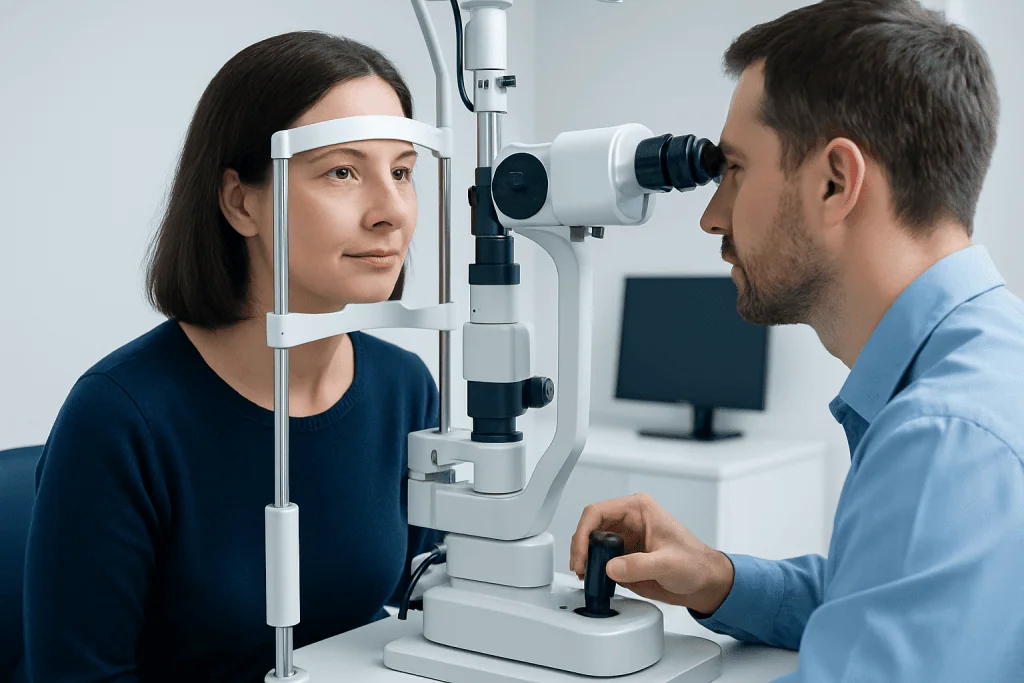
An eye and neurological examination usually follows. This may include visual acuity testing, refraction, pupil assessment, eyelid examination, and checking eye movements in different directions. Alignment tests help measure how much the eyes are out of line and whether the pattern changes with distance or gaze. The front of the eye and the retina are also examined to look for causes of monocular diplopia.
Additional tests depend on what the examination suggests. Blood tests may be used if thyroid disease, inflammation, or myasthenia gravis is suspected. Imaging such as MRI or other scans can be helpful when a nerve, muscle, orbit, or brain cause needs to be evaluated. In some cases, patients may also need a full neurological assessment to rule out conditions such as stroke or other brain disorders.
The goal of diagnosis is not only to name the cause but also to understand whether the condition is stable, improving, or progressive. That information guides treatment choices and helps determine whether temporary symptom relief or a more definitive correction is the best next step.
Treatment options: from symptom relief to cause-based care
Treatment for chronic double vision depends on the cause, duration, and severity of symptoms. In some cases, especially after a nerve palsy or illness, doctors may recommend observation for a period of time because the alignment can improve as the body heals. During this time, temporary symptom control can be very helpful.
Prism glasses are a common non-surgical option. Prisms bend light so that the two images line up better, reducing or eliminating double vision for some patients. They may be added temporarily with a stick-on prism or built into glasses once the misalignment is more stable. If symptoms are severe and prisms are not suitable, covering one eye with an eye patch or opaque lens can provide immediate relief, although it reduces depth perception.
Cause-based treatment is often the most important step. This may include managing diabetes and blood pressure, treating thyroid eye disease, addressing dry eye, or treating cataract when it is contributing to symptoms. Some patients may benefit from selected eye muscle exercises, while others may need medications aimed at the underlying neurological or autoimmune condition.
When the eye misalignment is stable and significant, procedures such as strabismus surgery can help realign the eyes. If another eye condition is part of the problem, treatment may also involve cataract surgery or management of the ocular surface. A personalized plan is important because the best approach differs depending on whether the problem is in the eye itself, the eye muscles, the nerves, or the brain.
Day-to-day tips for living with chronic double vision
Practical adjustments can make everyday life safer and more comfortable while treatment is being planned or while recovery is ongoing. Good lighting at home, especially on stairs and in hallways, can reduce visual confusion. Large-print reading materials, stronger contrast on digital devices, and regular screen breaks may also help ease eye strain.
If a doctor recommends patching or an opaque lens, people may find it useful for reading, watching television, or walking outdoors in busy environments. Those using a temporary patch should ask their clinician how and when to use it, because comfort and depth perception can vary. Some people also benefit from keeping frequently used items in fixed places to reduce reaching errors.
Driving deserves special caution. Chronic double vision can affect distance judgment and reaction time. Until the symptom is well controlled and a clinician confirms it is safe, avoiding driving is often the best choice. At work, simple changes such as a larger monitor, adjusted seating, and fewer visually demanding tasks during symptom flare-ups may be useful.
- Use good lighting and reduce glare
- Take frequent breaks during reading and screen work
- Ask about prism glasses or temporary patching
- Use handrails on stairs and move carefully in unfamiliar places
- Avoid driving unless vision is single and medically cleared
- Keep follow-up appointments so treatment can be adjusted
When to seek urgent care and when to arrange follow-up
Not all double vision is an emergency, but some situations need prompt medical attention. Sudden onset double vision should be assessed urgently, especially if it comes with severe headache, eye pain, drooping eyelid, unequal pupils, weakness, numbness, trouble speaking, confusion, or difficulty walking. These features can point to a neurological or vascular problem that should not wait.
Even when symptoms develop gradually, persistent double vision should not be ignored. An evaluation is recommended if the symptom lasts more than a short time, keeps returning, or begins interfering with reading, driving, work, or balance. Children with possible double vision or eye misalignment should also be evaluated promptly, because early assessment can protect visual development.
Regular follow-up matters because alignment can change over time. A treatment that helps initially may need adjustment later, particularly with prism prescriptions or after recovery from a nerve palsy. Near the end of the diagnostic or treatment journey, some patients choose care in a center with coordinated neuro-ophthalmology, neurology, and eye surgery services. Acibadem International’s multidisciplinary specialists and JCI-accredited hospitals diagnose and treat chronic double vision for international patients when advanced evaluation is needed.
Frequently asked questions
What is the difference between monocular and binocular double vision?
Monocular double vision remains when one eye is open by itself, which often suggests a problem within that eye, such as dry eye, corneal irregularity, or cataract. Binocular double vision disappears when either eye is covered and usually means the eyes are not aligned properly.
Can chronic double vision go away on its own?
Sometimes it can, depending on the cause. For example, some nerve-related cases improve over time, while others need prisms, treatment of the underlying disease, or surgery. A medical assessment is important because the outlook varies widely.
Are prism glasses a permanent solution?
Prism glasses can be very helpful, but they are not always permanent. Some people use them temporarily while healing occurs, while others use them long term if the eye misalignment is stable and well corrected by prism.
Is it safe to drive with chronic double vision?
Driving may be unsafe if double vision is present, because it can affect depth perception, lane judgment, and reaction time. A person should avoid driving until vision is adequately controlled and a qualified clinician advises that it is safe.
When is surgery considered for double vision?
Surgery is usually considered when the eye misalignment is stable, symptoms remain significant, and non-surgical options such as prisms are not enough. The goal is to improve eye alignment and reduce or eliminate double vision in primary positions of gaze.
Can stress or fatigue make double vision worse?
Yes. Fatigue, illness, or prolonged visual tasks can make underlying eye misalignment more noticeable. While stress alone is not usually the root cause, it can worsen symptoms and make day-to-day coping harder.
References
- American Academy of Ophthalmology
- National Eye Institute
- NHS
- Mayo Clinic
- Merck Manual Consumer Version
This article is for general information only and is not a substitute for professional medical advice. Please consult a qualified doctor about your individual situation.
Explore treatments in Turkey — costs, top hospitals & a free quote
JCI-accredited · board-certified surgeons · reply within 24h
Add us as a Preferred Source to see more of our trusted health content across Google Search, AI Overviews and Discover.