Eye Movement Problems: When a Neuro-Ophthalmology Exam Is Needed

Eye movement problems may cause double vision, blurred vision, eye strain, dizziness, or trouble following moving objects. A neuro-ophthalmology exam evaluates how the eyes, eye muscles, cranial nerves, and brain pathways work together.
Key Takeaways
- Eye movement problems may cause double vision, blurred vision, eye strain, dizziness, or trouble following moving objects.
- A neuro-ophthalmology exam evaluates how the eyes, eye muscles, cranial nerves, and brain pathways work together.
- Causes range from common and treatable conditions to neurological disorders that need prompt attention.
- Diagnosis may include a detailed eye exam, alignment testing, visual field testing, and sometimes imaging or blood tests.
- Treatment depends on the cause and may include prisms, eye patching, medication, vision support, or treatment of an underlying neurological condition.
- Sudden symptoms, severe headache, drooping eyelid, weakness, or new double vision should be assessed urgently.
Eye movement problems can affect how the eyes align, focus, or track objects, sometimes leading to double vision, dizziness, or reading difficulty. A neuro-ophthalmology exam helps determine whether the cause is in the eyes, nerves, brain, or muscles and supports the right treatment plan.
Overview
Eye movement problems describe a group of symptoms and signs that happen when the eyes do not move together in a smooth, accurate, coordinated way. This may affect side-to-side movement, upward or downward gaze, focusing on near objects, or the ability to track a moving target. Some people notice obvious double vision, while others mainly feel eye strain, blurred vision, poor depth perception, or discomfort when reading.
A neuro-ophthalmology exam is often recommended when the cause may involve not only the eyes, but also the nerves, brain pathways, or muscles that control eye movement. Neuro-ophthalmology is a specialized area that connects eye care and neurology. It helps explain symptoms that are not always visible on a routine eye exam alone.
These problems can affect children and adults. In some cases, the issue is temporary or related to fatigue, a minor imbalance, or a medication effect. In other cases, it may be linked to conditions such as nerve palsy, migraine, thyroid eye disease, myasthenia gravis, stroke, multiple sclerosis, or brain injury. Because the possible causes vary widely, a careful, structured assessment is important.
Symptoms of Eye Movement Problems
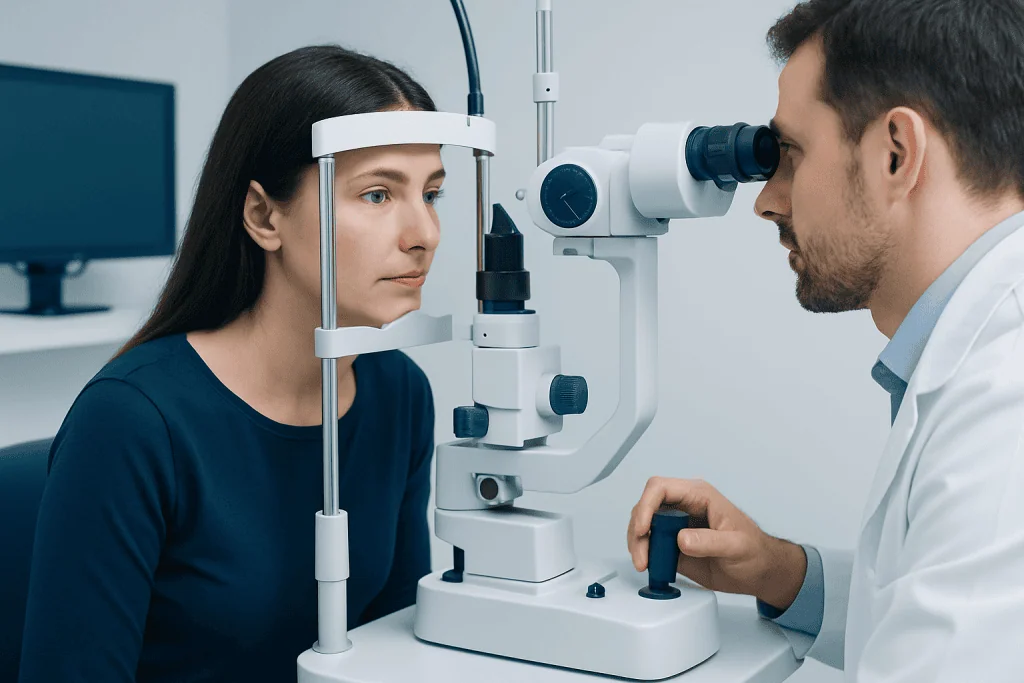
Symptoms depend on which eye movement system is affected. A person may feel that the eyes are not working together, especially when looking in certain directions or when switching focus from far to near. Some symptoms are constant, while others come and go or worsen later in the day.
Common symptoms include:
- Double vision, either side-by-side or one image above the other
- Blurred vision that improves when one eye is covered
- Trouble tracking moving objects
- Difficulty reading or losing place on a page
- Eye strain, headache, or fatigue with visual tasks
- Dizziness, unsteadiness, or motion sensitivity
- Abnormal head posture, such as tilting or turning the head to see more clearly
- A drooping eyelid or a feeling that one eye is not moving fully
Children may not always describe double vision clearly. Instead, they may squint, close one eye, tilt the head, avoid reading, or seem clumsy. Adults with new symptoms often notice them suddenly, especially if a nerve, muscle, or neurological pathway has been affected. Any sudden change in eye alignment or new double vision deserves medical attention.
Causes and Risk Factors

Normal eye movement depends on several systems working together: the eye muscles, the nerves that control them, the brainstem, the cerebellum, and higher brain centers involved in attention and coordination. A problem in any of these areas can disturb alignment or tracking. That is why a symptom such as double vision can have several possible causes.
Common causes include cranial nerve palsies, eye muscle restriction, inflammation, head injury, and age-related microvascular nerve problems associated with diabetes or high blood pressure. Thyroid eye disease can limit eye movement when tissues around the eye become swollen or scarred. Autoimmune conditions such as myasthenia gravis may cause fluctuating weakness of the eye muscles, often worsening with fatigue.
Neurological causes are also important. Stroke, brain tumors, demyelinating disease such as multiple sclerosis, migraine, and neurodegenerative disorders can all affect eye movement control. Some people develop involuntary eye movements such as nystagmus, in which the eyes drift and jerk rhythmically, leading to blurred or unstable vision.
Risk factors depend on the underlying condition but may include diabetes, hypertension, thyroid disease, autoimmune disease, recent infection, head trauma, smoking, and older age. However, eye movement problems can also occur in otherwise healthy people, so symptoms should not be dismissed simply because a person feels well overall.
When a Neuro-Ophthalmology Exam Is Needed
A neuro-ophthalmology exam is especially helpful when symptoms suggest that the problem may involve the nervous system or the connection between the eyes and the brain. This includes new double vision, unexplained abnormal eye movements, drooping eyelid with visual symptoms, pupils that seem unequal, difficulty moving one or both eyes, or visual symptoms that have not been explained by a standard eye exam.
The exam is also useful when symptoms are complex, fluctuating, or associated with other neurological features such as headache, facial numbness, weakness, imbalance, or changes in speech. In these situations, a specialist can look for patterns that point toward a nerve palsy, brainstem disorder, muscle weakness, or orbital disease.
Some patients are referred after a routine ophthalmology or optometry appointment, while others are evaluated after emergency care or neurological assessment. In practice, the goal is not only to confirm that eye movement is abnormal, but to identify exactly where the problem is coming from so treatment can be targeted and safe.
How Diagnosis Is Made
Diagnosis begins with a detailed history. The specialist usually asks when symptoms started, whether they are constant or intermittent, whether one eye closure relieves them, and whether there are associated symptoms such as pain, headache, eyelid drooping, imbalance, weakness, or recent trauma. Medical history, medication use, and conditions such as diabetes, thyroid disease, migraine, or autoimmune illness are also important.
The eye examination often includes visual acuity, pupil testing, eyelid assessment, eye alignment measurements, and evaluation of how the eyes move in different directions. The doctor may test saccades, smooth pursuit, convergence, and fixation, as well as the presence of nystagmus. Visual field testing and a full eye health examination may also be performed. In some cases, a dedicated neuro-ophthalmology evaluation helps distinguish between ocular and neurological causes.
Additional tests depend on what the examination shows. They may include blood tests for inflammation, infection, thyroid disease, or autoimmune conditions; imaging such as MRI or CT; and sometimes electrophysiology or lumbar puncture in selected cases. If a structural issue is suspected, MRI imaging may help assess the brain, orbit, cranial nerves, or extraocular muscles. The diagnosis process is tailored to the individual rather than using the same set of tests for everyone.
Treatment Options
Treatment depends entirely on the underlying cause. Some eye movement problems improve as the triggering condition resolves, while others need long-term management. The first priority is to identify any urgent neurological or vascular cause and treat it promptly. Once the cause is known, treatment can focus on relieving symptoms and supporting clear, single vision as much as possible.
For temporary or stable double vision, options may include patching one eye, prism lenses, or adjustments to glasses. In selected cases, medications are used to treat inflammation, autoimmune disease, migraine-related symptoms, or other contributing disorders. If there is thyroid eye disease, myasthenia gravis, or a nerve palsy, treatment is directed at that specific condition. Some people may need support from neurology, endocrinology, or rehabilitation specialists.
If a structural brain or nerve problem is found, further care may involve specialized management such as neurological evaluation and treatment or targeted procedures. In carefully chosen cases, eye muscle surgery can help improve alignment once the condition is stable, but surgery is not the first answer for every patient. The treatment plan usually balances comfort, vision quality, and the expected course of the underlying illness.
Near the end of the diagnostic journey, some patients benefit from coordinated care across specialties. Acibadem International provides multidisciplinary assessment for international patients, with neuro-ophthalmology, neurology, radiology, and related teams working together in JCI-accredited hospitals when eye movement disorders require broader evaluation.
Prevention and Self-Care
Not all eye movement problems can be prevented, especially when they arise from neurological or autoimmune conditions. Even so, general health measures may reduce risk for some causes. Good control of diabetes, blood pressure, and cholesterol can help lower the chance of small-vessel nerve problems. Managing thyroid disease, avoiding smoking, wearing seat belts, and seeking care after head injury are also sensible preventive steps.
Self-care focuses on safety and symptom relief while waiting for evaluation or during treatment. If double vision affects driving, reading, or walking on stairs, it is wise to avoid risky activities until a clinician advises that they are safe. Covering one eye temporarily may reduce disturbing double vision, but it should not replace a medical assessment if symptoms are new.
People with fluctuating symptoms may notice that fatigue makes the problem worse. Regular sleep, paced visual tasks, good lighting, and breaks from prolonged screen use can help reduce strain. However, persistent, worsening, or unexplained symptoms should not be managed only at home, because accurate diagnosis matters.
When to See a Doctor
A doctor should assess eye movement problems that are new, recurrent, or affecting daily life. Medical review is especially important if there is double vision, difficulty moving the eyes, a new head tilt, drooping eyelid, or symptoms that make reading, walking, or driving difficult. Even when symptoms seem mild, a specialist exam may reveal a treatable cause.
Urgent medical care is needed for sudden double vision, new eye movement limitation, severe headache, facial weakness, numbness, trouble speaking, loss of balance, or changes in consciousness. These symptoms may signal a neurological emergency and should not be delayed. Painful eye movement together with vision loss also needs prompt evaluation.
If symptoms are persistent but not emergent, a neuro-ophthalmology assessment can still be valuable. It helps clarify whether the issue is related to the eye muscles, cranial nerves, brain pathways, or another systemic condition, and it guides the next steps in care with more confidence.
Frequently asked questions
What does a neuro-ophthalmology exam check?
A neuro-ophthalmology exam checks how vision, eye movements, pupils, eyelids, and the nerves connecting the eyes and brain are functioning. It helps determine whether symptoms come from the eyes themselves, the eye muscles, cranial nerves, or the brain.
Are eye movement problems always serious?
Not always. Some causes are temporary or manageable, such as minor alignment problems, fatigue-related symptoms, or certain medication effects. However, some cases are linked to neurological or systemic conditions, so new or unexplained symptoms should be assessed.
Can eye movement problems cause dizziness?
Yes. When the eyes do not move together properly, the brain may receive conflicting visual information, which can lead to dizziness, motion sensitivity, or a feeling of imbalance. This is especially common when reading, walking, or tracking moving objects.
What is the difference between an ophthalmologist and a neuro-ophthalmologist?
An ophthalmologist diagnoses and treats eye diseases and vision problems broadly. A neuro-ophthalmologist has additional expertise in conditions where vision symptoms are related to the nervous system, including eye movement disorders, optic nerve conditions, and visual pathway problems.
Will imaging always be needed for double vision or abnormal eye movement?
No. Imaging is ordered when the history and examination suggest it would be helpful, such as when a neurological, orbital, or structural cause is suspected. Some patients can be diagnosed mainly through clinical examination, while others benefit from MRI or CT.
Can treatment fully correct eye movement problems?
Many patients improve significantly, but the outcome depends on the cause. Some conditions resolve on their own or respond well to treatment, while others need ongoing management to control symptoms and improve comfort and function.
References
- American Academy of Ophthalmology
- North American Neuro-Ophthalmology Society
- National Eye Institute
- National Institute of Neurological Disorders and Stroke
- Mayo Clinic
This article is for general information only and is not a substitute for professional medical advice. Please consult a qualified doctor about your individual situation.
Explore treatments in Turkey — costs, top hospitals & a free quote
JCI-accredited · board-certified surgeons · reply within 24h
Add us as a Preferred Source to see more of our trusted health content across Google Search, AI Overviews and Discover.
Check your numbers in seconds
BMI, calories, due date, blood pressure and 30+ more clinical calculators — free, instant, doctor-reviewed ranges.