Stroke Specialist vs Stroke Neurologist: Who Leads Treatment in an Emergency?

A stroke neurologist is a neurologist with focused expertise in diagnosing and treating stroke. The term stroke specialist may include stroke neurologists as well as other doctors involved in advanced stroke care.
Key Takeaways
- A stroke neurologist is a neurologist with focused expertise in diagnosing and treating stroke.
- The term stroke specialist may include stroke neurologists as well as other doctors involved in advanced stroke care.
- Emergency stroke treatment is team-based and may involve emergency physicians, neuroradiologists, neurosurgeons, and rehabilitation specialists.
- The lead doctor depends on the type of stroke, the hospital setup, and whether procedures such as clot removal are needed.
- Calling emergency services right away is more important than trying to identify the exact specialist.
In a stroke emergency, the doctor leading treatment is often a neurologist with specialized training in stroke care, sometimes called a stroke neurologist or stroke specialist. The exact team leader can vary by hospital, but rapid diagnosis, brain imaging, and time-sensitive treatment are always the priority.
Overview: Who leads stroke treatment in an emergency?
When people ask about “stroke specialist vs stroke neurologist,” they are usually trying to understand who takes charge when stroke symptoms begin suddenly. In many hospitals, the main physician directing immediate decisions is a neurologist with special training in stroke care, often called a stroke neurologist. This doctor evaluates symptoms, reviews brain imaging, determines whether the stroke is caused by a blocked or bleeding blood vessel, and helps guide urgent treatment.
The term “stroke specialist” is broader. It may refer to a stroke neurologist, but it can also include other doctors who are highly involved in stroke care, such as interventional neuroradiologists, neurosurgeons, neurocritical care physicians, or rehabilitation specialists. In practice, stroke emergencies are usually managed by a team rather than one doctor working alone.
The exact person leading care may vary from one hospital to another. In some centers, emergency physicians begin the first assessment and activate a stroke protocol, while a stroke neurologist joins immediately in person or by telemedicine. In comprehensive stroke centers, patients may also be evaluated quickly for procedures such as interventional neuroradiology treatment if a large artery is blocked.
What is the difference between a stroke specialist and a stroke neurologist?
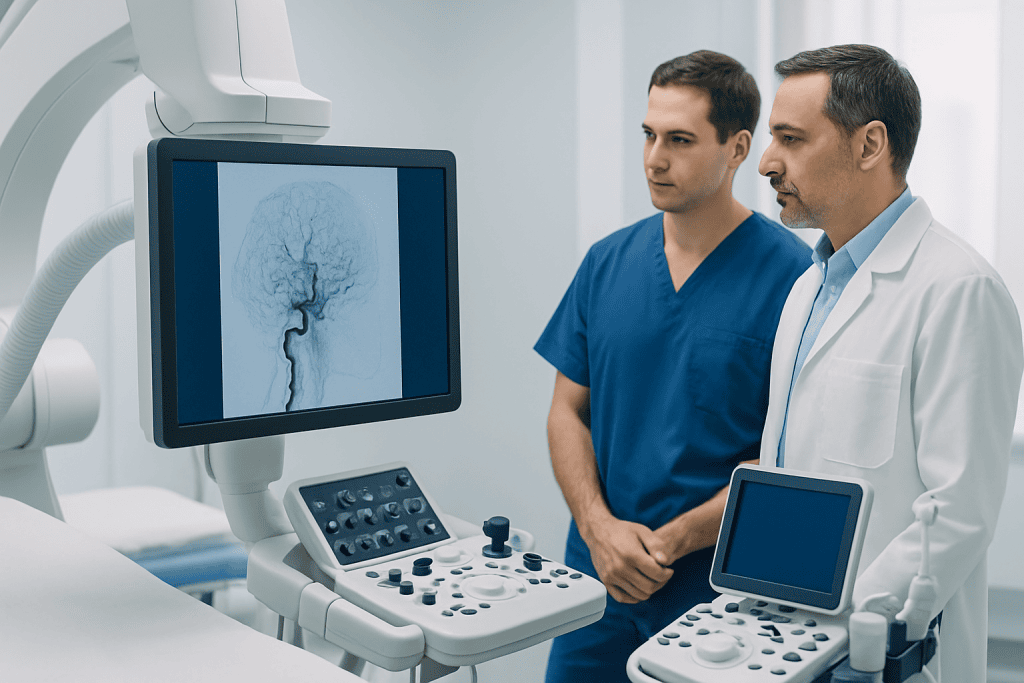
A stroke neurologist is a medical doctor trained in neurology who has additional expertise in stroke and cerebrovascular disease. This doctor focuses on conditions that affect blood flow to the brain, including ischemic stroke, hemorrhagic stroke, transient ischemic attack, and related complications. In many hospitals, this is the physician most directly associated with making fast treatment decisions in the first hours.
A stroke specialist is a less specific term. It often describes any doctor whose practice centers on stroke care. That can include a stroke neurologist, but it may also include physicians who perform clot-removal procedures, manage intensive care after severe stroke, or treat structural blood vessel problems that raise stroke risk.
For patients and families, the most helpful point is that these terms are not always used consistently. A hospital may say a patient is being seen by a “stroke specialist” even though that doctor’s formal title is vascular neurologist, interventional neuroradiologist, or neurosurgeon. What matters most is whether the hospital has a coordinated stroke pathway and rapid access to imaging and treatment.
Because stroke can take different forms, more than one expert may lead different parts of care at different times. A stroke neurologist may direct diagnosis and medication decisions, while a procedural expert may take over if the patient needs urgent neurology care combined with catheter-based clot retrieval or intensive monitoring.
How the stroke team works in the emergency department

Stroke care is highly time-sensitive. When a patient arrives with sudden weakness, trouble speaking, facial drooping, vision loss, severe dizziness, or a sudden severe headache, the emergency team moves quickly to determine whether this is a stroke and what type it is. The first steps usually include checking vital signs, blood sugar, a focused neurological exam, and urgent brain imaging.
The emergency physician often starts the process, but a stroke neurologist commonly joins early to assess whether the symptoms fit a stroke pattern and whether clot-busting medicine may be appropriate. Imaging specialists help interpret CT or MRI scans, and laboratory teams assist by identifying factors that may affect treatment safety.
If a large blood vessel is blocked, an interventional specialist may be called to perform a catheter-based procedure to remove the clot. If there is bleeding in or around the brain, a neurosurgeon or neurocritical care team may become central to treatment decisions. In this way, the “leader” can shift depending on what the patient needs most urgently.
After the emergency phase, additional professionals become essential, including nurses, physical therapists, occupational therapists, speech-language therapists, and rehabilitation physicians. This team approach is especially important because stroke treatment is not only about survival; it is also about preserving brain function and supporting recovery.
What conditions do these specialists treat?
Stroke neurologists and other stroke specialists treat several related conditions, not just major strokes. These include ischemic stroke, which happens when a blood vessel to the brain is blocked, and hemorrhagic stroke, which happens when a blood vessel bleeds. They also evaluate transient ischemic attack, sometimes called a “mini-stroke,” because it can be a warning sign of a future stroke.
Other conditions may involve narrowed carotid arteries, blood vessel malformations, clotting disorders, irregular heart rhythms that send clots to the brain, and inflammation affecting blood vessels. Some patients are referred after repeated unexplained neurological episodes to determine whether a stroke-like event was caused by migraine, seizure, infection, low blood sugar, or another condition that can mimic stroke.
Patients may hear related terms during evaluation, such as stroke or brain aneurysm, depending on imaging findings. In some cases, doctors also assess whether symptoms could reflect carotid artery disease or another vascular problem that increases future stroke risk.
Because many stroke risk factors develop silently over time, stroke specialists also help with prevention. They may look for high blood pressure, diabetes, high cholesterol, smoking, sleep apnea, heart disease, or lifestyle factors that contribute to blood vessel damage.
How doctors decide on emergency stroke treatment
The first and most important decision is whether the patient is having a stroke and, if so, whether it is caused by a blocked artery or bleeding. Brain imaging, usually with CT and sometimes MRI, is essential because the treatments are very different. A medicine that may help an ischemic stroke can be dangerous if the stroke is caused by bleeding.
If the stroke is ischemic and the patient arrives within the right time window, the team may consider clot-dissolving medication. Eligibility depends on several factors, including symptom onset time, imaging results, bleeding risk, recent medical history, and current medications. In selected patients with large-vessel blockage, a catheter-based clot retrieval procedure may also be considered.
If the stroke is hemorrhagic, treatment focuses on controlling bleeding, managing blood pressure, reducing brain pressure when needed, and identifying the cause of the hemorrhage. Some patients may require close monitoring in intensive care or a neurosurgical procedure. This is why a stroke neurologist often works side by side with neuroradiology and neurosurgery teams.
Even when symptoms improve quickly, doctors usually still recommend urgent evaluation. A transient ischemic attack or a brief stroke warning can carry a meaningful short-term risk of a larger stroke. Prompt testing and preventive treatment can make a major difference.
Why speed matters and what patients should do first
Stroke treatment is most effective when started as quickly as possible. Brain cells can be injured within minutes when blood flow is interrupted, so delays may reduce the chance of recovery. For that reason, patients and families should not wait to see whether symptoms pass on their own.
Common warning signs include sudden weakness or numbness on one side of the body, facial drooping, trouble speaking or understanding speech, sudden vision changes, severe imbalance, or a sudden severe headache unlike usual headaches. If these appear, the safest step is to call emergency services immediately rather than driving to the hospital whenever possible.
Emergency medical services can begin assessment on the way and may alert the hospital stroke team before arrival. That saves time for imaging and treatment. Families can help by noting when the person was last known well, gathering a medication list, and reporting blood thinner use, recent surgery, or a history of bleeding disorders if known.
Trying to decide whether a patient needs a “stroke specialist” or a “stroke neurologist” should never delay action. The emergency system is designed to connect the patient with the right specialist quickly once the stroke pathway is activated.
After emergency care: recovery, prevention, and follow-up
Once the immediate danger has passed, treatment shifts toward preventing another stroke and helping the patient recover function. Follow-up often includes identifying the underlying cause, such as uncontrolled blood pressure, heart rhythm problems, carotid narrowing, or a blood-clotting tendency. Medicines may be used to reduce clotting risk, control cholesterol, or manage blood pressure, but the exact plan depends on the stroke type and the patient’s overall health.
Rehabilitation is a key part of stroke care. Depending on the symptoms, patients may benefit from physical therapy for strength and mobility, occupational therapy for daily activities, and speech-language therapy for communication or swallowing problems. Recovery can continue for weeks to months, and progress is often gradual rather than immediate.
Lifestyle changes also matter. Doctors commonly recommend not smoking, limiting alcohol, staying physically active as advised, eating a heart-healthy diet, managing diabetes, and treating sleep apnea if present. Regular follow-up helps adjust treatment and monitor for recurrent symptoms.
For international patients seeking coordinated care, Acibadem International’s multidisciplinary specialists in JCI-accredited hospitals diagnose and treat stroke-related conditions, including emergency evaluation, stroke rehabilitation, and long-term prevention planning when appropriate.
When to see a doctor or seek emergency help
Possible stroke symptoms should be treated as a medical emergency, even if they seem mild or go away quickly. Patients should seek immediate emergency care for sudden trouble speaking, facial weakness, one-sided weakness or numbness, sudden confusion, sudden vision loss, severe new imbalance, or a sudden severe headache with no clear cause.
Patients should also seek urgent medical advice after a brief neurological episode that has resolved, because it may have been a transient ischemic attack. Follow-up is especially important for people with risk factors such as high blood pressure, atrial fibrillation, diabetes, high cholesterol, smoking, or prior stroke.
After discharge from hospital, medical review is important if symptoms return, medications cause side effects, swallowing becomes difficult, or there are new concerns about memory, mood, balance, or daily functioning. Ongoing support can improve safety and quality of life.
In short, the answer to “stroke specialist vs stroke neurologist” is that a stroke neurologist is often the key expert in emergency decision-making, while stroke care as a whole is led by a multidisciplinary team. The most important step for any suspected stroke is rapid emergency evaluation.
Frequently asked questions
Is a stroke neurologist the same as a stroke specialist?
Not always. A stroke neurologist is a neurologist with focused expertise in stroke, while stroke specialist is a broader term that may include several types of doctors involved in stroke care. In many hospitals, the stroke neurologist is the main doctor guiding early diagnosis and treatment.
Who usually sees a stroke patient first in the hospital?
The first doctor may be an emergency physician, especially when the patient arrives through the emergency department. That doctor usually starts the urgent evaluation and activates the stroke team. A stroke neurologist often joins very early, either in person or through telemedicine.
Can more than one specialist be involved in stroke treatment?
Yes. Stroke care is often team-based and may involve a stroke neurologist, emergency physician, radiologist, interventional specialist, neurosurgeon, intensive care doctor, and rehabilitation therapists. The exact team depends on the type of stroke and the treatments needed.
Do all strokes need surgery or a procedure?
No. Many strokes are treated with medication, monitoring, and supportive care rather than surgery. Some patients with a blocked large artery may need clot retrieval, and some patients with bleeding in the brain may need neurosurgical care. The treatment depends on imaging results and the patient’s condition.
What should a family member do if stroke symptoms start?
They should call emergency services right away and note the time the person was last known well. They should not wait for symptoms to improve or try to drive long distances if emergency transport is available. If possible, they should also gather the patient’s medication list and medical history.
What happens after the emergency phase of stroke care?
After urgent treatment, the medical team looks for the cause of the stroke and starts a prevention plan. Recovery may include physical, occupational, or speech therapy, depending on the symptoms. Follow-up care is important to lower the risk of another stroke and support daily function.
References
- World Stroke Organization
- American Stroke Association
- National Institute of Neurological Disorders and Stroke
- Centers for Disease Control and Prevention
- National Health Service
This article is for general information only and is not a substitute for professional medical advice. Please consult a qualified doctor about your individual situation.
Explore treatments in Turkey — costs, top hospitals & a free quote
JCI-accredited · board-certified surgeons · reply within 24h
Add us as a Preferred Source to see more of our trusted health content across Google Search, AI Overviews and Discover.