Pediatric Sleep Study: What It Shows and How to Prepare Your Child
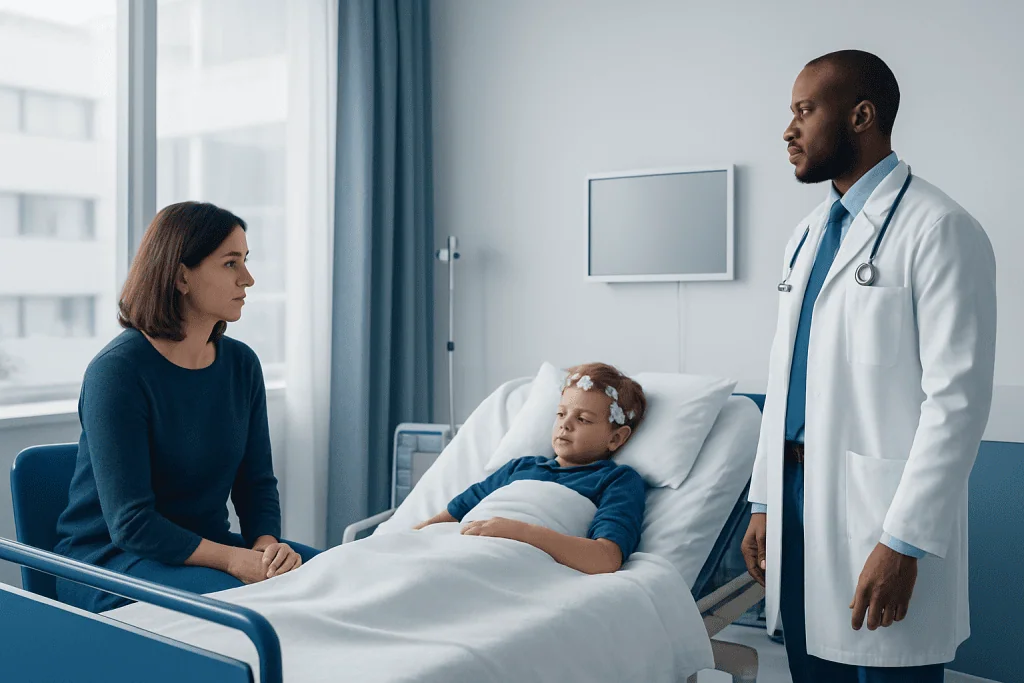
A pediatric sleep study is a safe, noninvasive test that records sleep, breathing, heart rate, oxygen levels, and body movements. It can help diagnose conditions such as obstructive sleep apnea, periodic limb movement disorder, and some nighttime seizure or behavior-related concerns.
Key Takeaways
- A pediatric sleep study is a safe, noninvasive test that records sleep, breathing, heart rate, oxygen levels, and body movements.
- It can help diagnose conditions such as obstructive sleep apnea, periodic limb movement disorder, and some nighttime seizure or behavior-related concerns.
- Parents usually stay with their child during the overnight study, which can make the experience more comfortable.
- Preparing familiar bedtime items, following usual routines, and explaining the test in simple terms can help reduce anxiety.
- Results are reviewed by a sleep specialist, who uses them together with symptoms and examination findings to plan next steps.
A pediatric sleep study is an overnight test that monitors how a child sleeps, breathes, and moves. It helps doctors find causes of symptoms such as snoring, pauses in breathing, restless sleep, daytime sleepiness, or unusual movements during the night.
Overview: What Is a Pediatric Sleep Study?
A pediatric sleep study, also called polysomnography, is a test that records several body functions while a child sleeps. It is usually done overnight in a sleep laboratory or hospital sleep center designed to be child-friendly. The test helps doctors understand whether a child’s sleep pattern is normal and whether there are signs of breathing problems, unusual movements, or other disturbances during sleep.
During the study, small sensors are placed on the scalp, face, chest, abdomen, and legs. These sensors measure sleep stages, breathing effort, airflow through the nose and mouth, heart rate, oxygen levels, and muscle activity. The test is noninvasive and painless, although some children may find the wires or stickers unfamiliar at first.
A pediatric sleep study is different from simply watching a child sleep at home. Many sleep-related conditions happen in brief episodes or only during certain stages of sleep, so careful monitoring is often needed to identify them. The study provides objective information that can guide diagnosis and treatment.
What a Pediatric Sleep Study Can Show
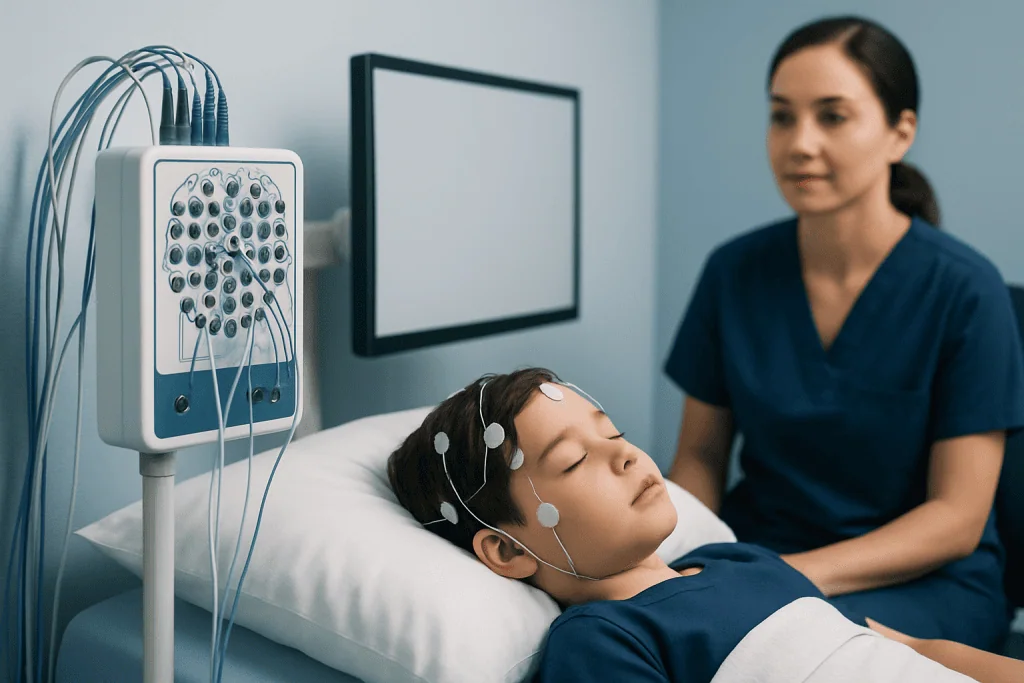
The main purpose of a pediatric sleep study is to see how well a child breathes and sleeps overnight. It can show whether breathing becomes partially or completely blocked during sleep, how often this happens, and whether it lowers oxygen levels or disrupts sleep quality. This is especially helpful when a child snores regularly, gasps, breathes through the mouth at night, or seems tired despite enough time in bed.
The test can also reveal how much time a child spends in different sleep stages, whether sleep is fragmented, and whether leg movements are frequent enough to disturb rest. In some cases, sleep specialists use the study to evaluate unusual nighttime events, such as repeated arousals, confusion episodes, or movements that may need to be distinguished from seizures.
Common conditions evaluated with a pediatric sleep study include:
- Obstructive sleep apnea
- Central sleep apnea
- Snoring with disrupted sleep
- Periodic limb movement disorder
- Some parasomnias, such as confusional arousals or sleepwalking
- Sleep-related breathing problems linked to neuromuscular or craniofacial conditions
Sometimes doctors may also recommend additional testing, depending on the child’s symptoms. The sleep study findings are interpreted together with the child’s medical history, growth, daytime behavior, and physical examination.
When Doctors Recommend a Sleep Study for a Child
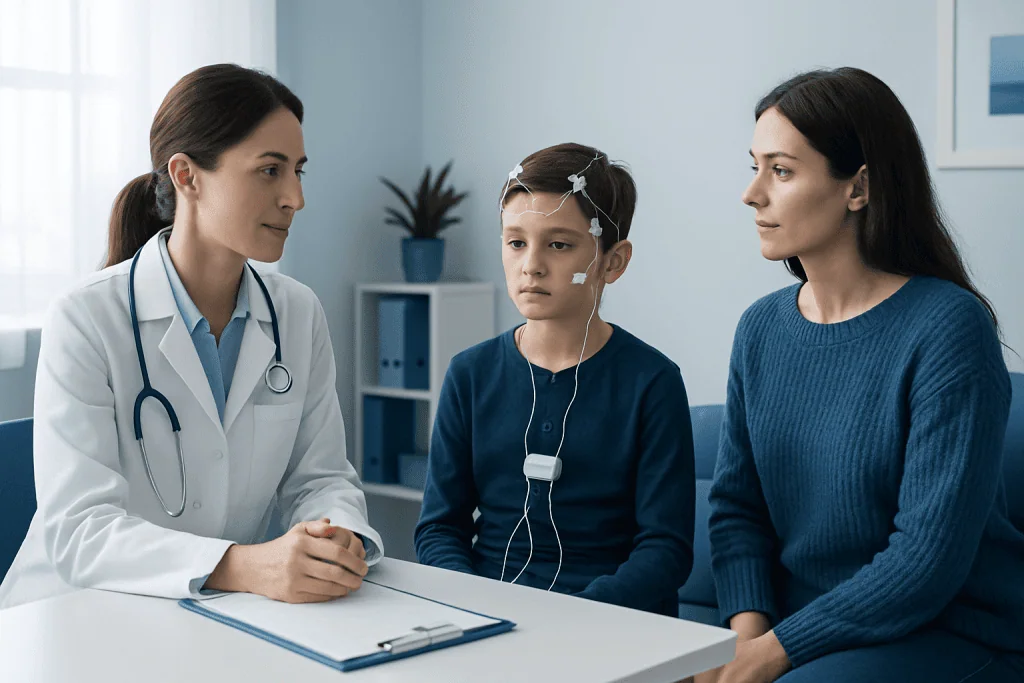
Doctors may suggest a pediatric sleep study when a child has symptoms that raise concern for a sleep-related breathing disorder or another sleep problem. Typical reasons include loud habitual snoring, pauses in breathing, restless sleep, unusual sleeping positions, sweating at night, bedwetting associated with snoring, or daytime problems such as irritability, trouble focusing, or sleepiness.
Children do not always show sleep problems in the same way adults do. Instead of obvious daytime fatigue, some may appear hyperactive, have behavioral changes, or struggle in school. Infants and younger children may show poor weight gain, difficulty feeding, or frequent nighttime awakenings.
A sleep study may also be recommended before or after treatment for certain airway problems. For example, a child with enlarged tonsils and adenoids may be evaluated if sleep apnea is suspected, or monitored afterward if symptoms continue. Children with obesity, Down syndrome, neuromuscular disorders, craniofacial differences, epilepsy, or chronic lung disease may also need a more detailed sleep evaluation because their risk of sleep-related breathing problems can be higher.
How the Test Is Done
Most pediatric sleep studies are done overnight. Families usually arrive in the evening, and the child has time to change into pajamas and settle into the room. A sleep technologist places the sensors using gentle adhesive or paste. These sensors do not give shocks or injections; they only record signals from the body while the child sleeps.
Throughout the night, the equipment tracks brain waves, eye movements, muscle tone, airflow, breathing effort, heart rhythm, oxygen saturation, and body position. A camera and microphone may also be used to observe movement and sounds during sleep. Parents are usually allowed to stay in the room, which can help the child feel safe and follow a more familiar bedtime routine.
In some cases, the study includes extra steps. If doctors suspect daytime sleepiness disorders such as narcolepsy, they may arrange a multiple sleep latency test the next day. If there is concern about nighttime seizures or complex behaviors, more detailed neurological monitoring may be added. The exact setup depends on the child’s symptoms and the question the medical team is trying to answer.
After the study, the sensors are removed in the morning, and the child can usually go home right away. The data then needs careful review by a qualified sleep specialist, so results are not usually given immediately.
How to Prepare Your Child
Preparation can make the experience much easier for both the child and the parent. It helps to explain the sleep study in simple, calm language that matches the child’s age. Many families describe the sensors as “special stickers” that help the doctor learn how the child sleeps. Honest reassurance is usually more helpful than promising that everything will feel completely normal.
Whenever possible, parents should keep the day of the study as routine as they can. Following the child’s normal meal times, play schedule, and bedtime habits may help the child settle more comfortably. Some sleep centers provide instructions about avoiding caffeine, certain medicines, or daytime naps, depending on the reason for testing, so it is important to follow the center’s specific guidance.
Useful items to bring often include:
- Comfortable pajamas
- A favorite blanket, stuffed toy, or pillow
- Any regular nighttime medicines, if approved by the doctor
- Diapers, bottles, or other supplies for infants and toddlers
- Toiletries and a change of clothes for parent and child
- Books or quiet activities for the evening
Washing the child’s hair beforehand and avoiding oils, sprays, or heavy hair products can help the scalp sensors stick well. If a child has sensory sensitivities or developmental needs, telling the sleep center in advance can be very helpful. Staff may be able to adapt the approach, allow extra time, or suggest ways to make the night less stressful.
Understanding the Results and Treatment Options
Sleep study results are interpreted by looking at the whole pattern of sleep and breathing, not just a single measurement. The report may describe how often breathing pauses happened, whether oxygen levels dropped, how often the child woke briefly, and whether leg movements or unusual behaviors were seen. A specialist then explains what these findings mean in the context of the child’s symptoms and health history.
If the study shows obstructive sleep apnea, treatment depends on the cause and severity. For many children, enlarged tonsils and adenoids are a major factor, so evaluation by an ear, nose, and throat specialist may be recommended. In some cases, doctors may discuss options such as adenotonsillectomy or, if needed, supportive breathing treatment such as CPAP therapy. Weight management, allergy treatment, or further airway assessment may also be part of care.
If the study suggests another issue, treatment is tailored accordingly. A child with significant restless sleep and frequent leg movements may need evaluation for contributing factors such as low iron stores. Children with unusual nighttime events may need further neurological or behavioral sleep assessment. When relevant, doctors may also evaluate related ear, nose, and throat problems such as tonsil disease or discuss whether tonsil and adenoid surgery is appropriate.
Near the end of the care pathway, families often benefit from coordinated follow-up with pediatricians, sleep specialists, neurologists, and ENT surgeons when needed. Acibadem International’s multidisciplinary specialists and JCI-accredited hospitals diagnose and treat sleep-related conditions in children, including international patients, when further evaluation or treatment is required.
Prevention, Sleep Habits, and Follow-Up
Not every sleep problem can be prevented, but healthy sleep habits can support better rest and make symptoms easier to recognize. Children benefit from a consistent bedtime routine, an age-appropriate sleep schedule, and a quiet, comfortable sleep environment. Limiting screens before bed and encouraging regular daytime activity may also improve sleep quality.
Parents can help by noticing patterns over time. Snoring on most nights, breathing pauses, mouth breathing, restless sleep, morning headaches, or daytime mood and attention changes are worth discussing with a doctor. A sleep diary or a short video of concerning nighttime sounds or behaviors may sometimes help during the medical visit, although it does not replace formal testing.
Follow-up is important after a sleep study, especially if treatment is started. Some children improve quickly after therapy, while others need ongoing monitoring as they grow. Repeat testing may occasionally be recommended if symptoms return, if a child has a high-risk medical condition, or if doctors need to check how well treatment is working.
When to See a Doctor
Parents should arrange a medical evaluation if a child snores loudly on a regular basis, seems to stop breathing during sleep, gasps, or struggles to breathe at night. Other reasons to seek advice include persistent restless sleep, frequent nighttime awakenings, unusual movements, daytime sleepiness, difficulty concentrating, behavioral changes, or poor growth.
More urgent assessment is appropriate if a child has labored breathing during sleep, bluish discoloration of the lips, severe daytime fatigue, or nighttime events that raise concern for seizures. Infants, children with complex medical conditions, and children with neuromuscular or craniofacial disorders should be evaluated promptly if sleep-related breathing problems are suspected.
A pediatrician can often make the first assessment and decide whether a child should be referred to a sleep specialist, ENT specialist, pulmonologist, or neurologist. Early evaluation can help identify treatable causes and support healthier sleep, behavior, growth, and daytime functioning.
Frequently asked questions
Is a pediatric sleep study safe?
Yes. A pediatric sleep study is considered safe and noninvasive because it only records body signals during sleep. The sensors may feel unfamiliar, but they do not hurt and do not send electricity into the body.
Will a parent stay with the child during the study?
In most sleep centers, a parent or caregiver can stay overnight with the child. This often helps the child feel more relaxed and allows the family to keep parts of the usual bedtime routine.
What if the child does not sleep normally that night?
It is common for children to sleep somewhat differently in a new environment. Even so, sleep specialists can often obtain enough information to interpret the study. If the recording is not adequate, the care team will explain whether repeat testing is needed.
Can a sleep study diagnose sleep apnea in children?
Yes. A pediatric sleep study is one of the main tests used to diagnose sleep apnea in children because it measures airflow, breathing effort, oxygen levels, and sleep disruption. It can also help show how severe the problem is.
How long does it take to get the results?
Results are usually not available the same morning because a specialist needs to review the full recording in detail. The exact timing varies by center, but families are often contacted at a follow-up visit or soon afterward to discuss the findings.
Does every child who snores need a sleep study?
Not always. Some children may first be evaluated with a history and physical examination, especially if symptoms are mild. A sleep study is more likely to be recommended when snoring is frequent, breathing pauses are suspected, daytime symptoms are present, or the child has conditions that increase the risk of sleep apnea.
References
- American Academy of Sleep Medicine
- American Academy of Pediatrics
- National Heart, Lung, and Blood Institute
- National Institute of Neurological Disorders and Stroke
- American Thoracic Society
This article is for general information only and is not a substitute for professional medical advice. Please consult a qualified doctor about your individual situation.
Hair transplant in Turkey — costs, graft counts & a free assessment
JCI-accredited · board-certified surgeons · reply within 24h
Add us as a Preferred Source to see more of our trusted health content across Google Search, AI Overviews and Discover.
Check your numbers in seconds
BMI, calories, due date, blood pressure and 30+ more clinical calculators — free, instant, doctor-reviewed ranges.