H. pylori Infection: Symptoms, Breath Testing, and Treatment Options

H. pylori is a common stomach bacterium that can lead to gastritis and peptic ulcers. Many people with H. pylori infection have no symptoms, while others develop upper abdominal discomfort, bloating, nausea, or ulcer symptoms.
Key Takeaways
- H. pylori is a common stomach bacterium that can lead to gastritis and peptic ulcers.
- Many people with H. pylori infection have no symptoms, while others develop upper abdominal discomfort, bloating, nausea, or ulcer symptoms.
- The urea breath test is a widely used, noninvasive way to diagnose H. pylori and to confirm that treatment has worked.
- Treatment usually includes a combination of antibiotics and acid-suppressing medicines prescribed by a doctor.
- Good hygiene, careful medication use, and medical follow-up help lower complications and support recovery.
H. pylori infection is a common bacterial infection of the stomach that may cause indigestion, gastritis, or ulcers, although many people have no symptoms at all. Diagnosis often includes a urea breath test, and treatment usually combines acid-reducing medicine with antibiotics.
Overview
Helicobacter pylori, often shortened to H. pylori, is a bacterium that can live in the protective lining of the stomach and the first part of the small intestine. It is one of the most common chronic bacterial infections worldwide. Many people carry it without knowing, because it often causes no symptoms.
In some people, however, H. pylori irritates the stomach lining and causes inflammation called gastritis. Over time, this can contribute to peptic ulcers and, less commonly, other stomach problems. For this reason, doctors may recommend testing when symptoms suggest a stomach-related cause or when a person has a history of ulcers.
H. pylori infection is treatable. Early diagnosis and the right combination of medicines can clear the infection, help symptoms improve, and reduce the risk of ulcer complications. A careful medical evaluation is important because stomach discomfort can also be caused by other digestive conditions.
Symptoms of H. pylori Infection

Many people with H. pylori infection feel completely well. When symptoms do occur, they are often related to gastritis or ulcers rather than to the bacteria itself. Common symptoms may come and go and can be mild or more bothersome depending on the degree of stomach irritation.
Possible symptoms include:
- Burning or aching pain in the upper abdomen
- Bloating or a feeling of fullness
- Nausea
- Frequent burping
- Loss of appetite
- Indigestion, especially after meals
If an ulcer develops, the pain may become more noticeable when the stomach is empty or during the night. Some people may also have black stools, vomiting blood, unexplained tiredness, or weight loss if there is bleeding or a more serious complication. These symptoms need prompt medical attention.
Because symptoms overlap with other conditions, H. pylori cannot be diagnosed based on symptoms alone. Similar complaints may also occur in acid reflux, functional dyspepsia, or gastritis, so formal testing is often the clearest next step.
Causes and Risk Factors
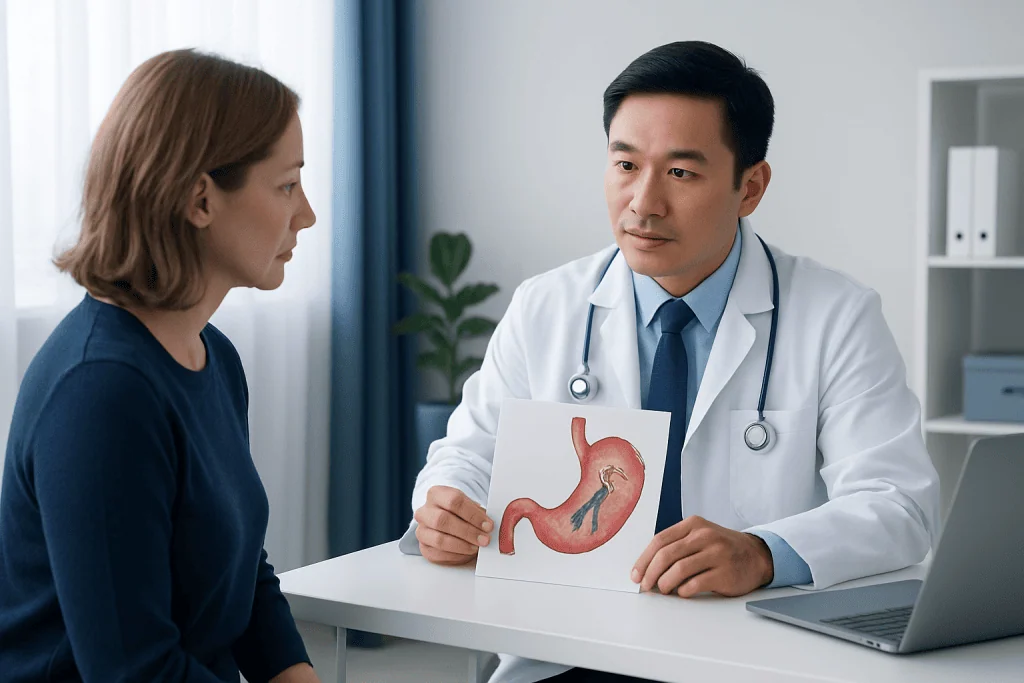
H. pylori spreads from person to person, most likely through close contact with saliva, vomit, stool, or contaminated food and water. The exact route is not always clear in an individual case. Infection often begins in childhood, but it may not be recognized until much later in life.
Risk can be higher in settings where people live in close quarters or where sanitation and clean water are limited. Having a family member with H. pylori may also increase the chance of exposure. Even so, infection can occur in many different environments and does not necessarily reflect poor personal habits.
Not everyone with H. pylori develops stomach problems. Factors that may increase the likelihood of symptoms or complications include smoking, frequent use of nonsteroidal anti-inflammatory drugs such as ibuprofen, a history of ulcers, and certain underlying health conditions. Doctors also consider age, family history, and the pattern of symptoms when deciding who should be tested.
How H. pylori Is Diagnosed
Doctors diagnose H. pylori using a combination of medical history, symptom review, and tests. One of the most common tests is the urea breath test, which is simple and noninvasive. During this test, the person drinks or swallows a harmless substance containing urea. If H. pylori is present, the bacteria break it down in a way that can be detected in the breath.
Other tests include stool antigen testing, which looks for signs of the bacteria in a stool sample, and blood antibody tests, although blood tests are less useful for confirming whether an infection is still active. In some situations, a doctor may recommend endoscopy to examine the stomach directly and, if needed, take a small tissue sample for testing.
Before breath or stool testing, certain medicines may need to be stopped temporarily because they can affect accuracy. These may include proton pump inhibitors, bismuth-containing products, or recent antibiotics. A doctor will explain what to stop and for how long, based on the person’s medications and symptoms.
Testing after treatment is also important. A repeat breath test or stool antigen test is often used several weeks after therapy to confirm that the infection has been cleared, especially in people with ulcers, persistent symptoms, or higher-risk findings.
Treatment Options
H. pylori treatment aims to eliminate the bacteria, allow the stomach lining to heal, and reduce the risk of ulcers returning. Treatment usually involves a combination of antibiotics together with acid-suppressing medicines, often for 10 to 14 days. The exact regimen depends on local antibiotic resistance patterns, prior antibiotic exposure, allergies, and individual medical history.
Acid-reducing medicines are commonly proton pump inhibitors, a group also used in reflux treatment and other upper digestive conditions. In some cases, bismuth-based medicine is added as part of a quadruple therapy approach. It is important to take the full course exactly as prescribed, even if symptoms improve early.
Side effects such as nausea, diarrhea, altered taste, bloating, or stomach upset can occur during treatment. These effects are often temporary, but they should be discussed with a doctor if they are severe or make it hard to continue treatment. Stopping treatment early can make the infection harder to cure.
If the first treatment does not work, doctors may choose a different antibiotic combination based on what has already been used. People with ulcers or persistent symptoms may also need follow-up evaluation, and some may undergo further assessment for related conditions such as stomach ulcer.
Prevention and Self-care
There is no vaccine in routine use for H. pylori, so prevention focuses on practical hygiene steps. Washing hands well after using the bathroom and before preparing or eating food is one of the simplest ways to reduce the spread of many infections. Drinking safe water and eating food prepared under hygienic conditions also helps.
For people receiving treatment, self-care supports healing but does not replace prescribed medicines. It may help to eat regular, balanced meals, avoid smoking, and limit alcohol if it worsens symptoms. Some people find that spicy foods, coffee, or very fatty meals increase discomfort, although triggers vary from person to person.
It is also wise to use pain relievers carefully. Frequent use of anti-inflammatory medicines can irritate the stomach lining and increase ulcer risk, especially in someone with H. pylori. A doctor or pharmacist can advise on safer options when pain relief is needed.
If symptoms continue despite treatment, further digestive evaluation may be recommended. Depending on the person’s symptoms and age, doctors may look for other causes of upper abdominal pain or indigestion, sometimes including gastroenterology evaluation.
When to See a Doctor
A doctor should be consulted if upper abdominal pain, persistent indigestion, nausea, bloating, or unexplained loss of appetite lasts more than a short time or keeps coming back. Medical review is also important for anyone with a personal history of ulcers, a close relative with stomach cancer, or frequent need for anti-inflammatory pain medicines.
Urgent medical attention is needed for black or tarry stools, vomiting blood, severe or sudden abdominal pain, fainting, marked weakness, or trouble swallowing. These symptoms do not always mean H. pylori is the cause, but they can signal bleeding or another problem that should be assessed without delay.
After treatment, follow-up testing is often recommended to make sure the infection has cleared. This matters because symptoms alone do not reliably show whether H. pylori is gone. Ongoing communication with a qualified doctor helps guide the next steps safely.
For people seeking care across borders, Acibadem International’s multidisciplinary specialists and JCI-accredited hospitals evaluate and treat digestive conditions, including H. pylori infection, with testing and follow-up tailored to the individual patient.
Frequently asked questions
What is H. pylori infection?
H. pylori infection is an infection caused by a bacterium that lives in the stomach lining. It is common worldwide and may cause no symptoms, but in some people it leads to gastritis or peptic ulcers.
What are the most common H. pylori symptoms?
Many people have no symptoms at all. When symptoms occur, they often include upper abdominal discomfort, bloating, nausea, frequent burping, and indigestion; ulcer-related pain may feel worse when the stomach is empty.
How does the H. pylori breath test work?
The urea breath test checks for chemicals produced when H. pylori breaks down a swallowed or drunk urea solution. It is noninvasive, widely used, and also helpful after treatment to confirm that the infection has been cleared.
Can H. pylori go away on its own?
In most cases, H. pylori is unlikely to clear reliably without targeted treatment. Because it can continue to irritate the stomach lining and contribute to ulcers, medical treatment is usually recommended when active infection is confirmed.
How is H. pylori treated?
Treatment usually combines two or more antibiotics with an acid-reducing medicine, and sometimes bismuth. The exact combination depends on the person’s medical history, allergies, and local antibiotic resistance patterns.
Is H. pylori contagious?
H. pylori can spread from person to person, likely through close contact or contaminated food and water. Good hand hygiene and safe food and water practices may help reduce transmission.
When should someone worry about H. pylori symptoms?
A doctor should assess symptoms that persist, return often, or interfere with eating and daily life. Urgent care is important for black stools, vomiting blood, severe abdominal pain, fainting, or signs of weakness that may suggest bleeding.
References
- World Health Organization
- National Institute of Diabetes and Digestive and Kidney Diseases
- American College of Gastroenterology
- National Health Service
- Mayo Clinic
This article is for general information only and is not a substitute for professional medical advice. Please consult a qualified doctor about your individual situation.
Persistent digestive symptoms? Get evaluated in Turkey
JCI-accredited · board-certified surgeons · reply within 24h
Add us as a Preferred Source to see more of our trusted health content across Google Search, AI Overviews and Discover.