Bruise from a scratch: Symptoms, Causes, and Treatment — Complete Patient Guide

A scratch can cause bruising if it breaks small blood vessels beneath the skin. Mild bruising often fades over 1 to 2 weeks with simple home care.
Key Takeaways
- A scratch can cause bruising if it breaks small blood vessels beneath the skin.
- Mild bruising often fades over 1 to 2 weeks with simple home care.
- Thin skin, aging, medications, and certain medical conditions can make bruising more likely.
- Warning signs include spreading redness, increasing pain, pus, fever, or bruising that happens easily or often.
- A doctor may check for skin injury, infection, or bleeding and clotting problems if bruising seems unusual.
A bruise from a scratch usually happens when the scratch damages tiny blood vessels under the skin, causing blood to collect and discolor the area. Most cases are minor and improve on their own, but larger, painful, frequent, or unexplained bruises may need medical attention.
Overview: Can a Scratch Cause a Bruise?
Yes. A bruise from a scratch can happen when the skin is scraped and the force also injures tiny blood vessels called capillaries underneath the surface. Blood then leaks into nearby tissue, creating a blue, purple, red, or brown mark around or near the scratch.
This does not always mean there is a serious problem. Many small bruises after scratching are minor and may be more noticeable in people with delicate skin, children, older adults, or anyone taking medicines that affect bleeding. The mark may look worse over the first day or two before gradually fading.
At the same time, a scratch with bruising deserves a little extra attention if it appears without much force, happens often, or is accompanied by swelling, warmth, pus, fever, or severe tenderness. In those situations, the bruise may be a sign of deeper tissue injury, skin infection, or a problem affecting normal blood clotting.
What a Bruise from a Scratch Looks and Feels Like

A simple bruise from a scratch often appears as a discolored patch around the broken skin. The area may begin red or pink, then turn bluish-purple, and later shift to green, yellow, or brown as the body clears the trapped blood. Mild tenderness is common, especially when the area is pressed.
The scratch itself may sting, while the bruise may feel sore, tight, or slightly swollen. A person may notice that the bruise seems larger than the visible scratch. This is because the blood can spread under the skin more widely than the surface injury.
Common features include:
- A visible scrape, line, or broken skin mark
- Blue, purple, red, or brown discoloration nearby
- Mild swelling or tenderness
- Temporary sensitivity when touched
- Gradual color change as healing progresses
If the area becomes hot, very swollen, increasingly painful, or drains fluid, the issue may be more than a routine bruise. In some people, scratches can also trigger irritation from eczema, allergies, or other skin conditions that make healing slower or scratching more intense.
Why It Happens: Common Causes and Risk Factors
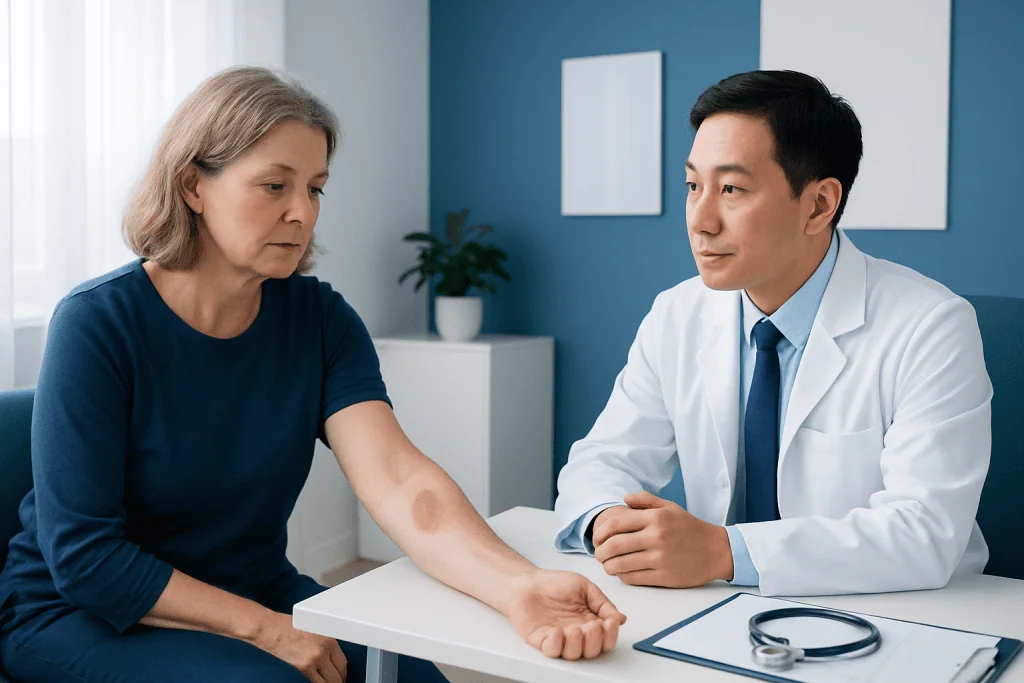
A scratch can bruise when enough friction or pressure is applied to injure the tissue beneath the skin. This may happen during accidental scraping against a rough surface, vigorous itching, scratching insect bites, rubbing a rash, or catching the skin with a fingernail. Even if the surface cut seems shallow, the small vessels below may still break.
Some people bruise more easily than others. Aging skin becomes thinner and loses some of its natural cushioning, making bruises more likely after minor trauma. People with fair or delicate skin may also notice bruises more clearly. Children are active and can get both scratches and bruises easily, while older adults often develop larger bruises from relatively small bumps or scratches.
Other factors can increase the chance of a bruise after scratching:
- Blood-thinning medicines or antiplatelet drugs
- Long-term steroid use, which can thin the skin
- Frequent scratching from dry skin, allergies, or rashes
- Nutritional deficiencies that affect skin or blood vessel health
- Bleeding or clotting disorders
- Liver disease or other systemic illnesses
If bruising occurs repeatedly with very minor contact, a clinician may consider whether an underlying blood-related issue is contributing. In some cases, evaluation may overlap with assessment for anemia or other causes of fatigue, pallor, or easy bruising, although many bruises are simply due to minor skin trauma.
How Doctors Evaluate a Scratch with Bruising
Most minor scratches and bruises do not need medical tests. A doctor usually begins by asking how the injury happened, when the discoloration started, whether the bruise is getting larger, and whether there are other symptoms such as fever, bleeding gums, nosebleeds, or unusual tiredness.
The physical examination focuses on the size and depth of the scratch, the color and spread of the bruise, and signs of infection or deeper injury. The clinician may also ask about medicines, supplements, and personal or family history of easy bruising or bleeding. If there are concerns about skin damage or a significant soft tissue injury, tests may be used selectively.
Depending on the situation, assessment may include:
- A careful skin and soft tissue exam
- Blood tests to check blood counts or clotting
- Evaluation for infection if the wound is warm, red, or draining
- Imaging when there is concern for deeper injury or a large hematoma
If needed, physicians may use MRI or other diagnostic imaging to look for deeper tissue damage, especially when pain is severe or the bruise is unusually extensive. These tests are not routine for small, straightforward scratches.
Treatment Options and Home Care
Treatment for a bruise from a scratch is usually simple and supportive. The main goals are to protect the skin, reduce swelling, ease discomfort, and watch for signs of infection. Most people can care for the area at home if the scratch is small and the bruise is mild.
Basic home care often includes gently washing the scratch with mild soap and water, then patting it dry. A clean bandage can help protect the area if the skin is open or likely to rub against clothing. A cold pack wrapped in cloth may be applied for short periods during the first 24 to 48 hours to reduce swelling and soreness. Elevating the area, if practical, may also help.
Helpful self-care steps include:
- Clean the scratch gently and keep it covered if needed
- Use a cold compress for brief intervals in the first 1 to 2 days
- Avoid further scratching or rubbing
- Wear loose clothing if friction is irritating the area
- Use doctor-approved pain relief if discomfort is bothersome
People should avoid putting harsh products on broken skin unless a clinician recommends them. If the injury is deeper, repeatedly reopens, or leaves concern for tissue damage, wound-focused care such as wound care may be advised. In more involved cases, Acibadem International’s multidisciplinary specialists in JCI-accredited hospitals assess and treat skin injuries and related concerns for international patients.
Healing Time, Prevention, and Self-Care
Most minor bruises from scratches begin improving within several days and clear over 1 to 2 weeks, though larger bruises can take longer. The scratch itself may heal sooner than the discoloration. During healing, the color often changes gradually, which is a normal sign that the trapped blood is being reabsorbed.
Prevention starts with reducing the chance of scratching hard enough to break the skin. Keeping fingernails trimmed, treating dry or itchy skin promptly, and using moisturizers can help. Insect bite prevention, gentle skin care, and avoiding rough friction against sensitive skin may also lower the risk.
People who bruise easily may benefit from reviewing their medicines with a doctor, especially if they take blood thinners or long-term steroids. It is also wise to protect fragile skin with sleeves, gloves, or padding during activities that may cause scrapes. If bruises happen often without clear injury, medical advice is important rather than relying only on home care.
When to Seek Medical Care
A bruise from a scratch is often harmless, but some situations should be checked by a doctor. Medical care is important if the bruise keeps enlarging, the pain becomes significant, or the skin around the scratch turns very red, hot, or swollen. These changes can point to infection, a deeper injury, or bleeding under the skin that needs assessment.
It is also wise to seek care if bruises appear often, happen after very light scratching, or occur along with other bleeding symptoms such as frequent nosebleeds, bleeding gums, or blood in urine or stool. People taking blood thinners, those with liver disease, and anyone with a known bleeding disorder should be especially cautious.
Urgent evaluation is needed if there is fever, pus, red streaks spreading away from the wound, numbness, limited movement, or signs of a large blood collection under the skin. In unusual cases, doctors may need hematology input when easy bruising suggests a blood or clotting problem rather than a simple skin injury.
Frequently asked questions
Is it normal to get a bruise from a scratch?
Yes, it can be normal if the scratch also damages tiny blood vessels under the skin. This is more likely with firm scratching, delicate skin, or medicines that increase bleeding. A small bruise that gradually fades is usually not a cause for concern.
How long does a bruise from a scratch take to heal?
A mild bruise often improves within a few days and may fade over 1 to 2 weeks. Larger bruises can last longer, especially on the legs or in older adults. The scratch itself may heal before the discoloration disappears.
Should a bruise from a scratch be iced or heated?
A cold pack is usually most helpful during the first 24 to 48 hours because it may reduce swelling and discomfort. It should be wrapped in cloth and used for short periods, not placed directly on the skin. Heat is generally not the first step for a fresh bruise.
When is a scratch with bruising a sign of infection?
Infection is more likely if the area becomes increasingly red, warm, swollen, or painful, or if it drains pus. Fever or red streaks spreading from the scratch are also warning signs. A doctor should assess these symptoms promptly.
Why do I bruise so easily after minor scratching?
Easy bruising can happen with thin or aging skin, blood-thinning medicines, steroid use, or frequent scratching due to itching. Sometimes low platelets, clotting problems, liver disease, or other medical issues play a role. Recurrent or unexplained bruising should be discussed with a healthcare professional.
Can a bruise from a scratch happen without much pain?
Yes. Some bruises look dramatic but cause only mild tenderness, especially if the surface scratch is shallow. The amount of discoloration does not always match the amount of pain.
References
- American Academy of Dermatology
- Mayo Clinic
- National Health Service
- MedlinePlus
- Merck Manual Consumer Version
This article is for general information only and is not a substitute for professional medical advice. Please consult a qualified doctor about your individual situation.
Explore treatments in Turkey — costs, top hospitals & a free quote
JCI-accredited · board-certified surgeons · reply within 24h
Add us as a Preferred Source to see more of our trusted health content across Google Search, AI Overviews and Discover.