Blood Pressure 116/84: Is It Normal? What This Reading Means for Your Health

A reading of 116/84 has a normal systolic value and a diastolic value that is slightly above the ideal level. According to common adult blood pressure categories, 116/84 may be considered elevated mainly because the lower number is in the 80–89 range.
Key Takeaways
- A reading of 116/84 has a normal systolic value and a diastolic value that is slightly above the ideal level.
- According to common adult blood pressure categories, 116/84 may be considered elevated mainly because the lower number is in the 80–89 range.
- One isolated reading does not confirm high blood pressure; repeated measurements over time matter more.
- Symptoms are often absent even when blood pressure is above the ideal range, so regular checks are important.
- Healthy sleep, physical activity, stress management, and limiting excess sodium can help support healthy blood pressure.
A blood pressure reading of 116/84 is generally close to normal, but the diastolic value of 84 is slightly above the ideal range. In most adults, this single reading is not an emergency, but it can be a useful prompt to check blood pressure correctly and follow overall heart-healthy habits.
Overview: What Does 116/84 Blood Pressure Mean?
A blood pressure reading of 116/84 means the heart is generating a systolic pressure of 116 mmHg when it beats and a diastolic pressure of 84 mmHg when it relaxes between beats. For most adults, the top number of 116 is in a healthy range. The lower number of 84 is slightly above the commonly accepted ideal diastolic range of less than 80.
In practical terms, 116/84 blood pressure is usually not a dangerous reading on its own. It does not automatically mean a person has hypertension, especially if it was taken during stress, after caffeine, after exercise, or with poor measurement technique. However, it can be a sign to pay attention to blood pressure trends over time rather than focusing on one result alone.
Doctors classify blood pressure using both numbers, and the higher category generally applies if the two numbers fall into different groups. That is why a reading with a normal systolic number but a mildly increased diastolic number may still be watched more closely. If readings like this happen regularly, a clinician may recommend home monitoring and lifestyle measures to reduce long-term cardiovascular risk.
Blood Pressure Classification Table
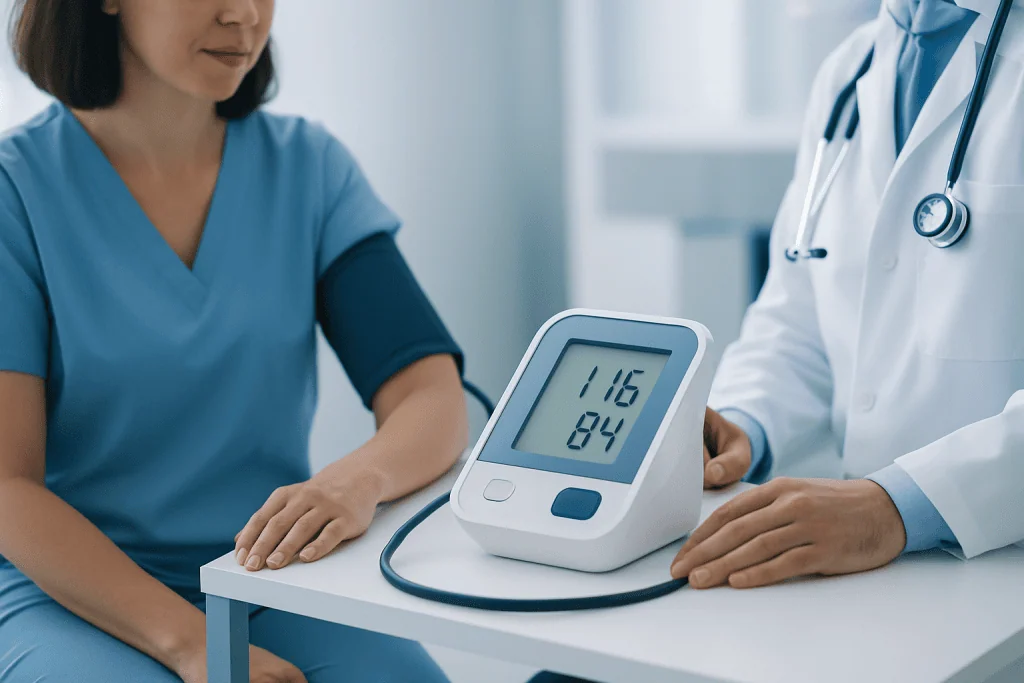
Blood pressure categories for adults are commonly based on guidance from major organizations such as the American Heart Association. These categories help show whether a reading is within the ideal range or whether follow-up may be needed.
When systolic and diastolic numbers fall into different categories, the higher category is typically used. For example, 116/84 has a normal systolic value but a diastolic value in the 80s, so it may be viewed as slightly above ideal and worth rechecking.
- Normal: systolic less than 120 and diastolic less than 80
- Elevated: systolic 120–129 and diastolic less than 80
- High blood pressure (Stage 1): systolic 130–139 or diastolic 80–89
- High blood pressure (Stage 2): systolic 140 or higher or diastolic 90 or higher
- Hypertensive crisis: systolic higher than 180 and/or diastolic higher than 120
Using this framework, 116/84 blood pressure may fall into a mild high blood pressure range because the diastolic number is 84. That said, diagnosis is not based on one reading. A doctor usually looks for consistent measurements taken on separate occasions, or may suggest ambulatory or home monitoring before drawing conclusions.
What 116/84 May Mean by Age Group

In younger adults, a reading of 116/84 is often reassuring overall, but the diastolic value may still deserve attention if it appears repeatedly. Younger people may develop isolated diastolic elevation, where the lower number is mildly high while the top number remains normal. This pattern can sometimes be linked to stress, excess weight, poor sleep, stimulant use, or family history.
In middle-aged adults, 116/84 is often interpreted as near-normal but not fully optimal. At this stage of life, doctors may look more closely at other risk factors, such as cholesterol, diabetes, smoking, kidney disease, or a strong family history of heart disease. If those risks are present, even mildly above-ideal blood pressure may matter more over time.
In older adults, the systolic number often becomes the more important concern because arteries naturally become stiffer with age. A reading of 116/84 may still be acceptable, especially if the person feels well and does not have dizziness, falls, or medication side effects. The wider health picture matters, including frailty, medications, hydration, and whether home readings are similar.
For children and teenagers, blood pressure is interpreted differently using age, sex, and height percentiles, so adult categories do not apply. If a young person has a reading similar to 116/84, it should be assessed in the appropriate pediatric context by a qualified clinician.
When 116/84 Is a Concern
For many adults, 116/84 is not an urgent problem. It becomes more relevant if the diastolic number stays in the 80s or rises higher on repeated checks. Persistently elevated blood pressure can gradually affect the heart, brain, kidneys, and blood vessels, even when there are no symptoms.
A reading like 116/84 may deserve closer review if the person already has conditions that increase cardiovascular risk, such as diabetes, chronic kidney disease, sleep apnea, obesity, or known heart disease. It may also matter more if there is a strong family history of hypertension or early heart attack or stroke.
Symptoms do not reliably show whether blood pressure is mildly high. Most people with early hypertension feel completely normal. However, if blood pressure changes are accompanied by chest pain, shortness of breath, severe headache, fainting, weakness, or vision changes, prompt medical assessment is important because these symptoms may point to another serious problem.
If repeated measurements trend upward, a doctor may recommend an evaluation for contributing causes and complications. In some cases, further cardiac assessment may be helpful, and tests such as echocardiography can be used when a clinician needs to look at heart structure and function.
How Blood Pressure Is Diagnosed and Measured Correctly
Blood pressure should not be diagnosed from a single number taken in isolation. Many factors can temporarily raise a reading, including anxiety, talking during the test, crossing the legs, a full bladder, caffeine, nicotine, recent exercise, or using the wrong cuff size. Because of this, clinicians usually rely on repeated office readings, home blood pressure logs, or 24-hour ambulatory monitoring.
To measure blood pressure as accurately as possible at home, the person should sit quietly for at least five minutes with the back supported and feet flat on the floor. The arm should rest at heart level, and the cuff should fit properly around the upper arm. It also helps to avoid caffeine, smoking, and exercise for about 30 minutes before the measurement.
Two or more readings, taken one minute apart, are often more useful than a single reading. Taking readings at the same times each day for several days can provide a clearer picture of the usual pattern. A doctor may ask the patient to bring the machine to the clinic to confirm that it is calibrated and being used correctly.
If repeated readings suggest a sustained elevation, the clinician may look for related conditions or consequences. Depending on symptoms and risk factors, evaluation may include blood tests, kidney assessment, or tests for associated cardiovascular conditions such as coronary artery disease.
Lifestyle Guidance for a Reading Like 116/84
When blood pressure is close to normal but not ideal, lifestyle steps are often the first and most effective approach. These measures support overall cardiovascular health and may help prevent a gradual rise in blood pressure over time. They are useful even for people who do not need medication.
Helpful strategies include regular physical activity, maintaining a healthy body weight, getting enough sleep, limiting tobacco exposure, and moderating alcohol intake. Reducing excess sodium and choosing a balanced eating pattern rich in vegetables, fruit, whole grains, beans, nuts, and lean proteins can also be beneficial.
Stress management may play a role as well, especially when readings rise during busy or anxious periods. Relaxation practices, steady routines, breathing exercises, and addressing sleep problems can all support healthier readings. If snoring, daytime sleepiness, or interrupted sleep are present, discussing possible sleep apnea with a doctor may be worthwhile.
Some people with persistent blood pressure elevation need formal treatment, especially if other cardiovascular risks are present. In selected cases, doctors may evaluate the broader circulation and heart health with services such as cardiology check-up or, when symptoms or test results indicate it, more advanced care including angiography.
When to Seek Medical Care
A person should arrange a routine medical visit if home or clinic readings repeatedly show a diastolic value of 80 or higher, even when the systolic number remains normal. This is especially important if there are other risk factors such as diabetes, kidney disease, high cholesterol, smoking, obesity, or a family history of cardiovascular disease.
Medical advice is also appropriate if blood pressure readings vary widely, if the person is unsure how to measure correctly, or if there are side effects from blood pressure medicines. A clinician can help determine whether the readings reflect true hypertension, white-coat effect, or another underlying issue.
Urgent medical care is needed for very high readings, especially if they occur with warning symptoms such as chest pain, shortness of breath, severe headache, confusion, weakness on one side, difficulty speaking, or sudden vision loss. These symptoms are not typical of a reading like 116/84, but they should never be ignored.
For people seeking evaluation abroad, Acibadem International’s multidisciplinary specialists and JCI-accredited hospitals diagnose and treat cardiovascular conditions for international patients. The goal is a clear assessment based on repeated measurements, overall risk, and personalized follow-up.
Frequently asked questions
Is 116/84 blood pressure normal?
It is close to normal, especially because the systolic number of 116 is healthy. The diastolic number of 84 is slightly above the ideal range, so the reading may be considered mildly elevated depending on the guideline used. One single reading is not enough to diagnose hypertension.
Is 116/84 dangerous?
For most adults, 116/84 is not dangerous on its own and is not a medical emergency. It becomes more important if similar readings happen repeatedly over time or if the person has other risk factors such as diabetes, kidney disease, or heart disease.
Why is my top number normal but my bottom number a little high?
This can happen for several reasons, including stress, poor sleep, excess sodium, weight gain, stimulants, or inherited tendency. It may also simply reflect a temporary variation. Repeated readings taken correctly are the best way to know whether it is a consistent pattern.
Should I start treatment for a blood pressure of 116/84?
Usually, treatment decisions are not based on one reading alone. Doctors first look for a pattern over time and consider the person’s overall cardiovascular risk. Many people with readings near this range are advised to focus on lifestyle measures and monitoring rather than medication.
How often should I recheck a 116/84 reading?
If the reading was unexpected, it is reasonable to repeat it after resting quietly and using proper technique. If similar numbers continue, checking at home over several days and sharing the results with a doctor can be helpful. The exact schedule depends on age, medical history, and risk factors.
Can anxiety or caffeine cause a reading of 116/84?
Yes. Caffeine, stress, recent exercise, nicotine, talking during the test, and even a full bladder can temporarily affect blood pressure. That is why readings are most useful when taken under calm, consistent conditions.
References
- American Heart Association
- Centers for Disease Control and Prevention
- National Heart, Lung, and Blood Institute
- European Society of Cardiology
- World Health Organization
This article is for general information only and is not a substitute for professional medical advice. Please consult a qualified doctor about your individual situation.
Explore treatments in Turkey — costs, top hospitals & a free quote
JCI-accredited · board-certified surgeons · reply within 24h
Add us as a Preferred Source to see more of our trusted health content across Google Search, AI Overviews and Discover.
Check your numbers in seconds
BMI, calories, due date, blood pressure and 30+ more clinical calculators — free, instant, doctor-reviewed ranges.