Lipoma vs cyst: A Complete Medical Guide for Patients
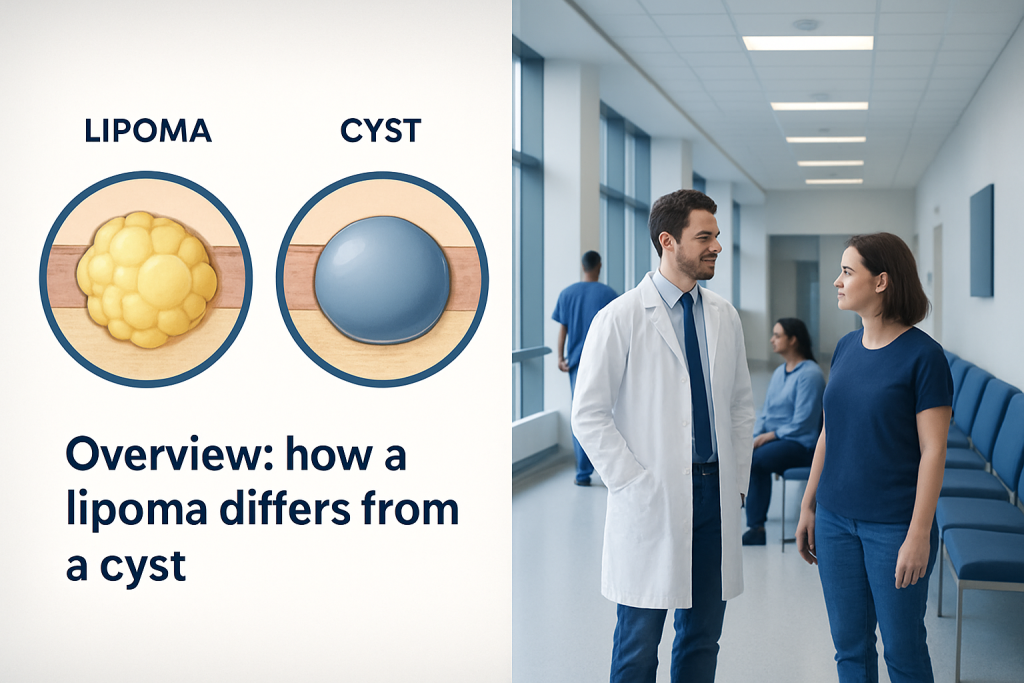
A lipoma is usually a soft, rubbery, slow-growing fatty lump beneath the skin. A cyst is a sac-like lump that may contain fluid, keratin, or debris and can become inflamed or infected.
Key Takeaways
- A lipoma is usually a soft, rubbery, slow-growing fatty lump beneath the skin.
- A cyst is a sac-like lump that may contain fluid, keratin, or debris and can become inflamed or infected.
- Lipomas are often painless and mobile, while cysts may have a visible central opening and can become tender, red, or swollen.
- A doctor can often tell the difference by examination, but imaging or biopsy may be needed in some cases.
- Do not squeeze or try to drain a lump at home; medical evaluation is the safest approach if the diagnosis is uncertain or the lump changes.
Lipoma vs cyst is a common question because both can appear as lumps under the skin. In general, a lipoma is a soft, movable growth made of fat, while a cyst is a sac filled with fluid, keratin, or other material; both are often benign, but they can look and feel different and may need different care.
Overview: how a lipoma differs from a cyst
When comparing lipoma vs cyst, the main difference is what the lump is made of. A lipoma is a benign growth of fat cells that develops under the skin. A cyst is a sac-like structure that can contain fluid, keratin, oil, or other material, depending on the type of cyst.
Both lipomas and cysts are common and are often harmless. They may appear on the neck, shoulders, back, scalp, arms, or torso, and many are found by chance during washing, dressing, or routine self-examination. Because both can form rounded lumps, patients sometimes use the terms interchangeably, even though they are not the same condition.
In many cases, a clinician can tell the difference by looking at the lump, touching it, and asking about symptoms. However, some lumps are not straightforward. Other conditions can mimic a lipoma or cyst, so a persistent, growing, painful, or unusual lump should be assessed by a qualified doctor rather than assumed to be harmless.
What a lipoma usually feels like compared with a cyst
A lipoma is typically soft, doughy, and easy to move slightly under the skin when pressed. It usually grows slowly over time and is often painless. Lipomas are most often found just beneath the skin, but they can occur deeper in the body as well. Many people have only one, while some develop several.
A cyst often feels more defined or round, and it may be firmer than a lipoma. Some cysts have a small visible pore or central punctum on the skin surface. Unlike lipomas, cysts are more likely to become inflamed, tender, or red, especially if they rupture internally or become infected.
These general patterns can help, but they are not perfect. For example, a small lipoma can feel firm, and some cysts can feel soft. If there is uncertainty, doctors may use imaging such as ultrasound or consider whether the lump is more consistent with other skin conditions, including skin cancer or other benign growths that can resemble a simple lump.
Common symptoms and warning signs

Most lipomas do not cause symptoms beyond the presence of a lump. They are usually painless unless they press on a nearby nerve, become irritated by clothing, or grow in a location where movement causes friction. A person may simply notice a soft bump that has been present for months or years.
Cysts can also be symptom-free, but they are more likely to cause local discomfort. Signs may include tenderness, swelling, warmth, redness, or drainage of thick material. If a cyst becomes inflamed or infected, it can become painful quickly and may feel more tense or swollen than before.
Features that deserve closer attention include rapid growth, hard fixation to deeper tissues, skin ulceration, bleeding, repeated infection, fever, or a lump that becomes painful without a clear reason. These signs do not necessarily mean a serious disease is present, but they do make medical evaluation more important.
- Lipoma: soft, mobile, slow-growing, usually painless
- Cyst: sac-like, sometimes firmer, may have a central opening, may drain
- Inflamed cyst: redness, warmth, tenderness, swelling
- Concerning lump: rapidly enlarging, very hard, fixed, or associated with systemic symptoms
Why they develop and who is more likely to get them
The exact reason a lipoma forms is not always known. Genetics may play a role, and some people seem more prone to developing multiple lipomas. They are generally benign and are not usually linked to lifestyle choices. Lipomas can occur in adults of many ages, most often in middle adulthood.
Cysts form for different reasons depending on the type. An epidermoid cyst, one of the most common skin cysts, may develop when skin cells move deeper into the skin instead of shedding normally. Blocked hair follicles, minor injury, inflammation, or acne-prone skin can also contribute. Some cysts are related to oil glands, while others arise in entirely different tissues.
It can also help to remember that not every lump is a lipoma or cyst. Enlarged lymph nodes, abscesses, hernias, benign skin tumors, and less commonly malignant tumors may enter the differential diagnosis. If a lump is deep, growing steadily, or appears in an unusual location, clinicians may investigate beyond the most common explanations.
How doctors diagnose a lipoma or cyst
Diagnosis usually begins with a medical history and physical examination. A doctor may ask how long the lump has been present, whether it has changed in size, whether it hurts, and whether there has been redness, drainage, or prior trauma. They will also examine how the lump feels, whether it moves, and whether the skin over it looks normal.
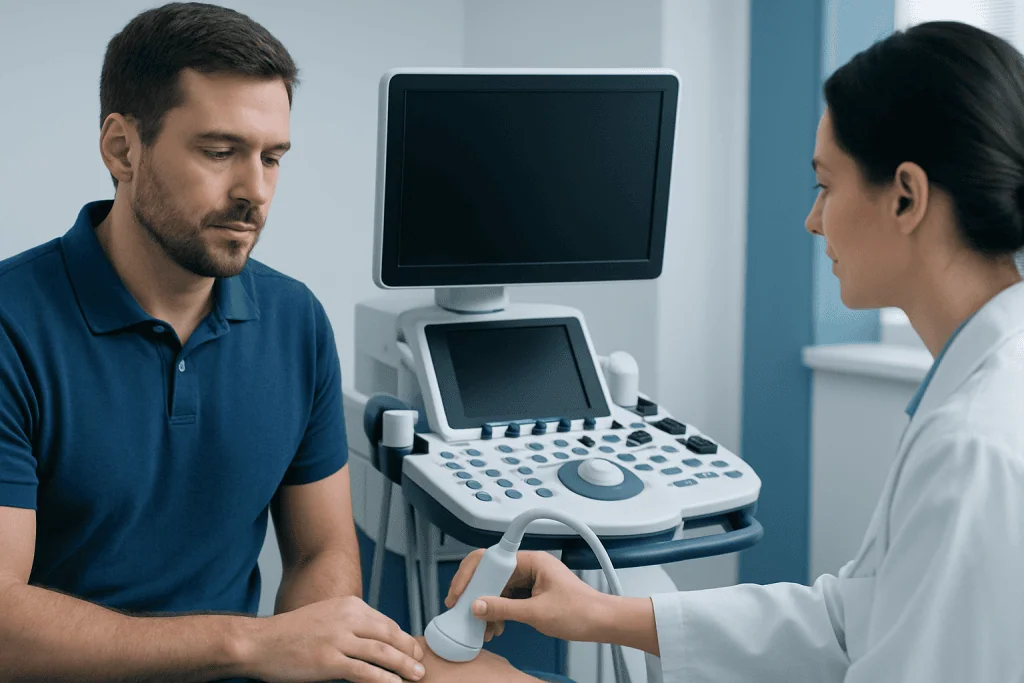
If the diagnosis is straightforward, no further testing may be needed right away. When the lump is large, deep, painful, rapidly growing, or difficult to classify, imaging can help. Ultrasound is often a useful first test because it can show whether a lump is solid, fatty, or fluid-filled. In some situations, MRI or other imaging may be recommended for more detail.
If there is concern about the nature of the lump, a biopsy or complete removal may be advised so the tissue can be examined under a microscope. This is especially important if the lump has atypical features or if there is any question about a diagnosis such as soft tissue sarcoma. Careful evaluation helps avoid both unnecessary worry and missed diagnoses.
Treatment options and when removal may be considered
Many lipomas and cysts do not need treatment if they are small, not causing symptoms, and clearly benign. In these cases, a doctor may simply recommend observation. Patients are often advised to monitor the lump for growth, pain, inflammation, or other changes and return if anything new develops.
Lipomas may be removed if they are painful, enlarging, bothersome, cosmetically unwanted, or uncertain in diagnosis. Cysts may also be removed if they recur, become inflamed repeatedly, drain, cause discomfort, or are difficult to distinguish from other lesions. Treatment depends on the type of lesion, its location, and whether infection or inflammation is present.
When removal is appropriate, this is often done with a minor procedure such as lipoma removal or cyst removal. If a cyst is inflamed or infected, a clinician may first manage the inflammation and then plan definitive treatment later, because removing an actively inflamed cyst can be more difficult. Some patients may also need imaging-guided evaluation or a biopsy if the diagnosis is uncertain.
It is not advisable to squeeze, puncture, or drain a lump at home. Doing so can introduce infection, increase inflammation, and make later diagnosis or treatment more difficult. A doctor can advise whether observation, drainage, medication, or removal is the safest next step.
Self-care, monitoring, and practical day-to-day advice
For a known lipoma or uncomplicated cyst that is being monitored, self-care mainly involves watching for change. It can be helpful to note the approximate size, location, and any symptoms over time. Some people take a simple dated photo for comparison, especially if the lump is in a visible area.
Try to avoid repeated rubbing, picking, or pressing on the area. Friction from clothing, shaving, or sports equipment can irritate the skin over a lump and make it more uncomfortable. Good general skin care can reduce irritation, particularly for cyst-prone areas such as the scalp, face, chest, or back.
Home remedies do not reliably remove lipomas or cysts. Warm compresses may sometimes ease discomfort from a mildly inflamed cyst, but they do not replace medical care if redness, pus, or significant pain develops. If a diagnosis is not confirmed, self-treatment should not delay professional assessment.
When to seek medical care
Medical care is appropriate whenever a new lump appears and its cause is unclear. A prompt review is especially sensible if the lump is growing, painful, repeatedly inflamed, or causing concern because of its location or appearance. A doctor can often provide reassurance quickly and identify when further testing is needed.
Urgent assessment is more important if the lump becomes red and hot, drains pus, is associated with fever, or grows rapidly over a short period. A hard lump that feels fixed to deeper tissue, a deep mass, or a lump that affects movement should also be examined without delay.
For international patients who need evaluation or treatment, Acibadem International’s multidisciplinary specialists in JCI-accredited hospitals diagnose and manage skin and soft-tissue lumps, including cases requiring imaging, biopsy, or minor surgery. The key point is not to assume all lumps are harmless: most are benign, but accurate diagnosis matters.
Frequently asked questions
How can someone tell lipoma vs cyst at home?
At home, a lipoma often feels soft, rubbery, and movable under the skin, while a cyst may feel more defined and can sometimes have a small central opening. However, these features are not always reliable. A doctor should assess any lump that is new, changing, painful, or uncertain.
Is a lipoma more dangerous than a cyst?
Most lipomas and common skin cysts are benign and not dangerous. The main concern is making sure the lump is correctly identified, because other conditions can look similar. If a lump grows quickly, feels hard or fixed, or causes significant symptoms, medical evaluation is important.
Can a cyst turn into a lipoma or a lipoma turn into a cyst?
No, a cyst does not turn into a lipoma, and a lipoma does not turn into a cyst. They are different types of growths with different structures. They may look alike on the surface, which is why confusion is common.
Do lipomas and cysts go away on their own?
Lipomas usually do not disappear on their own, although they may remain stable for long periods. Some cysts can drain or shrink, but many persist or return. If a lump is bothersome or keeps recurring, a clinician can discuss treatment options.
Should a person squeeze or pop a cyst or lump at home?
No. Squeezing or attempting to drain a lump at home can cause infection, inflammation, bleeding, or scarring. It can also make the lesion harder to diagnose and treat properly later.
When is imaging or a biopsy needed for a lump under the skin?
Imaging or biopsy may be needed if the lump is deep, large, rapidly growing, painful, unusually firm, or not clearly identifiable on examination. Ultrasound is often used first, and biopsy may be recommended if there is any uncertainty. These tests help guide safe and appropriate treatment.
References
- American Academy of Dermatology
- National Health Service
- Mayo Clinic
- MedlinePlus
- Cleveland Clinic
This article is for general information only and is not a substitute for professional medical advice. Please consult a qualified doctor about your individual situation.
Explore treatments in Turkey — costs, top hospitals & a free quote
JCI-accredited · board-certified surgeons · reply within 24h
Add us as a Preferred Source to see more of our trusted health content across Google Search, AI Overviews and Discover.