

How Much Does Limb Lengthening Surgery Cost in Turkey? 2026 Prices vs USA, UK & Germany

Published market ranges suggest Turkey is often more affordable than the USA, UK, and Germany for limb lengthening surgery. Final pricing follows a personal orthopedic assessment and cannot be confirmed from online estimates alone.
Key Takeaways
- Published market ranges suggest Turkey is often more affordable than the USA, UK, and Germany for limb lengthening surgery.
- Final pricing follows a personal orthopedic assessment and cannot be confirmed from online estimates alone.
- The main cost drivers are the bone segment treated, technique used, implant choice, hospital stay, imaging, and rehabilitation.
- A package may include surgery, hospital care, routine tests, and follow-up, but details vary by provider.
- Quality and safety matter as much as price, including surgeon expertise, infection control, and hospital accreditation.
- Anyone considering this procedure should ask for a written treatment plan and a clear list of what is and is not included.
Limb lengthening surgery cost Turkey is often lower than in the USA, UK, and Germany when looking at published market ranges, but the final quote depends on the person’s anatomy, goals, surgical method, implants, hospital stay, and rehabilitation needs. A careful consultation is essential because price alone does not show the full picture of safety, accreditation, surgeon experience, and aftercare.
Overview: What Does Limb Lengthening Surgery Cost in Turkey?
Limb lengthening surgery cost Turkey is commonly lower than the published market ranges seen in the USA, UK, and Germany. For many international patients, Turkey is considered because orthopedic surgery, hospital care, and travel-related planning may be more cost-efficient overall. However, there is no single fixed price, and reliable providers usually give a personalized quote only after reviewing scans, goals, bone health, and the expected treatment pathway.
As an indicative market view rather than a clinic-specific offer, published ranges often place limb lengthening surgery in Turkey broadly in the tens of thousands of US dollars, while figures in the USA, UK, and Germany may be considerably higher. These are not guaranteed fees, and they can change by year, exchange rate, technology used, and whether the case involves cosmetic stature lengthening or reconstruction after trauma, deformity, or scoliosis-related limb imbalance.
Because this operation involves more than the day of surgery, the total cost should be understood as a treatment journey. It may include pre-operative assessment, the operation itself, implants, imaging, inpatient care, rehabilitation, follow-up reviews, and at times treatment for complications or adjustment procedures. For that reason, comparing a headline number alone can be misleading.
Turkey vs USA, UK and Germany: Indicative Market Comparison
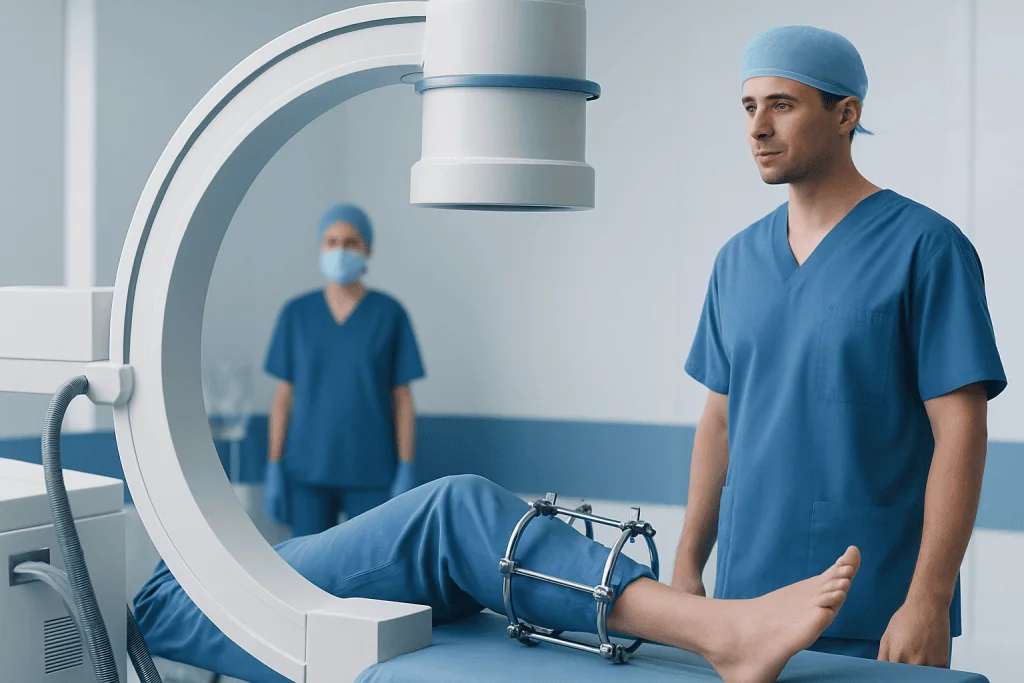
The table below gives broad, indicative market ranges often discussed publicly for self-pay limb lengthening surgery. These figures are included only to help readers understand relative differences among countries. They are not official tariffs, not an Acibadem quote, and not a substitute for an individual treatment plan.
- Turkey: often discussed in the lower published market range for international self-pay patients, commonly about USD 25,000 to 60,000 depending on method and inclusions
- USA: often discussed in a higher market range, commonly about USD 75,000 to 150,000 or more
- UK: often discussed around roughly USD 70,000 to 130,000 equivalent in private care settings
- Germany: often discussed around roughly USD 60,000 to 120,000 equivalent depending on center and complexity
Using these broad published ranges, Turkey may appear approximately 40% to 70% lower than some private-care price points in the USA, UK, or Germany. The exact difference depends on what is included. A lower starting price may not include extended physiotherapy, extra imaging, revision surgery, or a longer stay, so readers should compare like with like before drawing conclusions.
It is also helpful to ask whether the estimate covers internal lengthening nails, external fixators, anesthetic care, compression garments or supports, medications used during admission, and formal rehabilitation. In complex orthopedic planning, a transparent breakdown is often more useful than the lowest advertised number.
What a Limb Lengthening Package Typically Includes

For international patients, a treatment package may combine medical and logistical items. In many centers, the base package commonly includes the surgical fee, hospital room charges for the planned admission, anesthesia, routine blood work, standard imaging, and immediate post-operative nursing care. Some providers also include airport-hotel-hospital coordination or interpreter support, but this is not universal.
Follow-up services can vary greatly. Some packages include early outpatient checks, wound reviews, and routine X-rays during the first stage of recovery. Others quote surgery separately and add imaging, physiotherapy, mobility aids, or later adjustment procedures as extra charges. This is why patients benefit from asking for a written inclusions list before making travel decisions.
Because rehabilitation is a major part of recovery, many patients also ask whether the plan includes orthopedic physiotherapy or a referral for it. When discussing limb lengthening surgery, it is reasonable to request details on expected follow-up intervals, who monitors bone healing, and how concerns are handled after discharge or after returning home.
Patients should also clarify what is excluded. Common exclusions may include flights, visa costs, accommodation beyond the medical stay, private nursing outside the hospital, treatment of unexpected complications, and prolonged rehabilitation. A careful comparison helps avoid misunderstanding later.
What Moves the Price Up or Down?
The largest cost factors are usually the surgical technique and implant choice. Internal motorized lengthening nails may differ substantially in price from external fixation systems. Surgery on the femur, tibia, or both segments can also change the overall cost, as can the intended amount of lengthening and whether the procedure is done in one stage or more than one stage.
Case complexity matters. A person seeking cosmetic height increase may have a different pathway from someone needing reconstruction after trauma, congenital asymmetry, infection history, or previous orthopedic surgery. If deformity correction, rotational correction, or joint balancing is needed at the same time, the planning and operative workload can be greater. In some cases, related orthopedic needs such as leg length discrepancy or post-traumatic deformity may influence both approach and budget.
Hospital standards and aftercare also affect cost. JCI-accredited hospitals, advanced imaging access, experienced multidisciplinary teams, and structured infection-prevention protocols may increase overall pricing compared with basic service models. Even so, many patients consider these features important because they support safer surgery and more reliable recovery planning.
Finally, the total budget may change with length of stay, need for repeat X-rays, medication requirements, mobility aids, and formal physiotherapy. If a patient has underlying bone, endocrine, or circulation issues, extra pre-operative evaluation may also be necessary. These are not unnecessary add-ons; they are often part of responsible surgical planning.
Quality, Accreditation and Safety Considerations
Price is only one part of decision-making for limb lengthening. The procedure requires detailed pre-operative planning, precise surgery, regular imaging, and long-term follow-up. A provider should be able to explain candidly who is a good candidate, what method is advised, what the recovery demands are, and what complications are possible. Clear communication is a sign of quality.
Accreditation can help patients assess systems of care. Many international patients look for hospitals with recognized standards such as JCI accreditation because this may reflect established processes around patient safety, infection control, medication management, and coordinated care. Accreditation does not guarantee an outcome, but it can provide reassurance about institutional standards.
Patients may also want to ask about the orthopedic team’s experience with bone reconstruction, deformity correction, and rehabilitation support. In some situations, additional procedures such as physical therapy and rehabilitation are central to the success of the treatment journey and should not be treated as optional extras. Bone healing and joint motion need close monitoring over time.
Near the end of the decision process, some international patients choose to consult centers that combine orthopedic surgery, imaging, anesthesia, and rehabilitation in one system. Acibadem International’s multidisciplinary specialists and JCI-accredited hospitals diagnose and treat orthopedic conditions for international patients, with treatment planning based on individual consultation rather than fixed online pricing.
How the Consultation and Quote Process Usually Works
A proper quote usually begins with a medical review rather than a price list. The orthopedic team may request standing photographs, full-length leg X-rays, previous operation notes, and information about height goals, joint function, general health, and smoking status. This helps determine whether the person is a suitable candidate and which technique is most appropriate.
After review, the care team can usually outline the expected stages of treatment, likely length of hospital stay, rehabilitation needs, and a provisional cost estimate. If surgery is considered appropriate, the final quote may be refined after in-person examination and updated imaging. This is standard practice because operative details can change once the anatomy is assessed directly.
It is wise to ask practical questions during consultation, such as:
- Which method is recommended and why?
- What is included in the quoted package?
- How many follow-up visits and X-rays are expected?
- What rehabilitation plan is needed?
- How are complications, delayed healing, or revision needs billed?
- How long should the patient remain in Turkey before travel home?
Written answers to these questions can make comparing providers much easier. A consultation should support informed decision-making, not pressure a person into surgery.
When to Seek Medical Care
Anyone considering limb lengthening should seek specialist medical advice before making travel or financial arrangements. This is especially important for people with previous fractures, bone infection, joint disease, circulation problems, diabetes, smoking history, or concerns about bone density. A qualified orthopedic surgeon can explain whether surgery is appropriate and what alternatives may exist.
After surgery, prompt medical attention is important if there is fever, increasing redness or drainage from a wound, severe or worsening pain not improving as expected, sudden swelling, numbness, difficulty moving the limb, shortness of breath, or concerns about the device or implant. These symptoms do not always mean a serious problem, but they should be assessed without delay.
Patients should also arrange structured follow-up in their home country if they will not remain near the treating center for the full recovery period. Bone regeneration and alignment need monitoring, and rehabilitation is a key part of safe healing.
Frequently asked questions
Is limb lengthening surgery in Turkey cheaper than in the USA or UK?
Published market ranges often show lower self-pay costs in Turkey than in the USA or UK. However, the true comparison depends on what the price includes, such as implants, hospital stay, imaging, and rehabilitation. A personalized quote is the best way to compare providers fairly.
Can an exact price be given online?
Usually not. Limb lengthening is highly individualized, so the final price depends on anatomy, goals, technique, implant type, and follow-up needs. Reputable centers generally provide a tailored estimate after reviewing medical information and imaging.
What usually is not included in a package price?
Common exclusions may include flights, hotel stays beyond the medical plan, visa costs, extended physiotherapy, treatment of complications, and extra imaging or procedures not anticipated at the start. This varies by hospital and country. Patients should ask for a written inclusions and exclusions list.
Why can two quotes for the same surgery be very different?
The technique used, implant system, surgeon experience, accreditation level, rehabilitation plan, and case complexity can all change pricing. One quote may also include more services than another. A lower quote is not always a lower total treatment cost.
Does insurance usually cover limb lengthening surgery?
Coverage depends on the reason for surgery and the person’s insurance policy. Procedures performed for reconstruction or significant functional problems may be treated differently from cosmetic stature lengthening. Patients should confirm coverage directly with their insurer before proceeding.
How important is rehabilitation after limb lengthening surgery?
Rehabilitation is very important and is often a major part of overall treatment planning. It helps protect joint movement, muscle strength, walking ability, and recovery progress while the bone heals. Patients should understand the rehabilitation schedule before committing to surgery.
References
- American Academy of Orthopaedic Surgeons
- National Institute for Health and Care Excellence
- British Orthopaedic Association
- International Society of Limb Salvage
- Joint Commission International
This article is for general information only and is not a substitute for professional medical advice. Please consult a qualified doctor about your individual situation.
Limb Lengthening in Turkey — costs, top hospitals & a free quote
JCI-accredited · board-certified surgeons · reply within 24h
Add us as a Preferred Source to see more of our trusted health content across Google Search, AI Overviews and Discover.

More from the Health Library



Related Specialists

Dr. Funda Aybar Susur
Gynecology & Obstetrics
Prof. Dr. Meltem Vural
Physical Medicine & Rehabilitation
Assoc. Prof. Dr. Hasan Üstün
Medical Oncology
Dr. Feyyaz Kabadayi
Pulmonology