How Much Does a Kidney Stone Treatment Cost in Turkey? 2026 Prices vs USA, UK & Germany

The main driver of kidney stone treatment cost in Turkey is the procedure type, such as ESWL, ureteroscopy, or PCNL. Published market ranges suggest Turkey may be more cost-effective than the USA, UK, and Germany for many self-pay patients.
Key Takeaways
- The main driver of kidney stone treatment cost in Turkey is the procedure type, such as ESWL, ureteroscopy, or PCNL.
- Published market ranges suggest Turkey may be more cost-effective than the USA, UK, and Germany for many self-pay patients.
- A complete quote should clarify what is included, such as consultations, imaging, anesthesia, hospital stay, and follow-up.
- JCI-accredited hospitals and multidisciplinary urology teams can be important when comparing value, safety, and care coordination.
- Urgent symptoms such as fever, severe pain, vomiting, or reduced urine output need prompt medical attention, regardless of cost planning.
Kidney stone treatment cost Turkey generally depends on the type of procedure, hospital standards, imaging needs, length of stay, and whether the stone is urgent or complex. Published market ranges in Turkey are often lower than those seen in the USA, UK, and Germany, but a final price is only confirmed after medical review and a personal quote.
Overview: What is the kidney stone treatment cost in Turkey?
For people researching kidney stone treatment cost Turkey, the short answer is that costs vary widely by procedure and provider. In published private-market ranges, non-invasive or minimally invasive options in Turkey are often priced lower than in the USA, UK, and Germany, especially for self-pay international patients. However, there is no single fixed price because treatment depends on stone size, location, urgency, and the patient’s overall health.
Kidney stones are treated in different ways. Some people may need shock wave therapy, while others need endoscopic stone removal or, for larger stones, a more advanced procedure. This means a meaningful cost estimate usually starts with imaging and a urology review rather than a generic online figure.
As a practical guide, published market ranges in Turkey for private care are often discussed approximately as follows: extracorporeal shock wave lithotripsy (ESWL) may range from about USD 1,000 to 3,000; ureteroscopy with laser stone treatment may range from about USD 2,000 to 6,000; and percutaneous nephrolithotomy (PCNL) for larger or more complex stones may range from about USD 5,000 to 12,000. These are broad, indicative ranges only, not clinic-specific offers, and the final price follows personal consultation, review of scans, and a formal quote.
Patients comparing options may also wish to understand the condition itself. Helpful background can be found on kidney stones and common hospital-based treatments such as kidney stone treatment.
Turkey vs USA, UK and Germany: indicative comparison
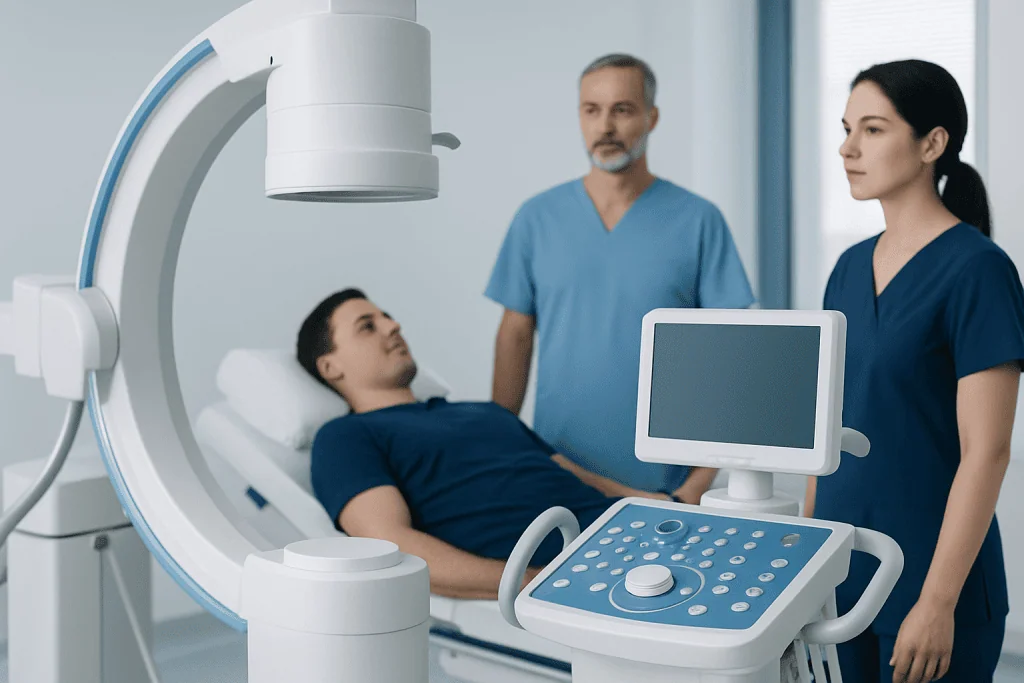
Many patients compare Turkey with other countries because out-of-pocket costs can differ substantially. The exact gap depends on the procedure, hospital type, surgeon experience, and whether the comparison is private self-pay care or a publicly funded health system pathway. For this reason, broad published ranges are more useful than isolated headline prices.
The table below uses indicative market ranges commonly discussed for private care. These figures are intended to support planning, not replace a personal medical quotation.
| Procedure | Turkey (USD) | USA (USD) | UK private (USD) | Germany (USD) | Indicative savings vs USA |
|---|---|---|---|---|---|
| ESWL | 1,000-3,000 | 6,000-15,000 | 3,500-8,000 | 3,000-7,000 | About 50%-90% |
| Ureteroscopy with laser | 2,000-6,000 | 10,000-25,000 | 6,000-12,000 | 5,000-10,000 | About 40%-90% |
| PCNL | 5,000-12,000 | 20,000-50,000+ | 10,000-20,000 | 9,000-18,000 | About 40%-85% |
These percentages are approximate because all countries show wide variation in billing practices and case complexity. In addition, exchange rates, insurance arrangements, implants or disposable devices, and the need for repeat sessions can all affect comparisons. The fairest approach is to compare like-for-like packages after a specialist has reviewed the patient’s imaging.
What a package typically includes

When reviewing kidney stone treatment cost Turkey, it helps to look beyond the headline number. A lower price may not represent lower overall spending if important items are excluded and billed later. Asking for an itemized estimate usually gives a clearer picture of value.
A typical package may include some or most of the following:
- Initial specialist consultation and treatment planning
- Pre-operative blood tests and urine testing
- Imaging such as ultrasound, X-ray, or CT when required
- Procedure fees, operating room use, and standard consumables
- Anesthesia and anesthesiologist charges
- Hospital stay, often same day or overnight depending on the procedure
- Routine medications used during the hospital stay
- Post-procedure review and discharge instructions
Some items are often excluded or vary by case, such as emergency assessment, treatment of infection before stone removal, stent placement or removal, extra nights in hospital, pathology or stone analysis, and additional imaging. Travel, accommodation, and translator services may or may not be part of an international patient package.
Patients considering endoscopic management may want to learn more about ureteroscopy, while people with larger stones may be advised about percutaneous nephrolithotomy (PCNL). If shock waves are suitable, ESWL may be discussed as a non-invasive option.
What makes the price go up or down?
The strongest factor is the type of treatment needed. Small stones in favorable locations may be managed with observation, medicines, or a less invasive procedure. Larger, harder, multiple, or obstructing stones often need more complex intervention, which usually increases cost.
Stone location matters as well. A kidney stone, ureter stone, or stone causing blockage can require different equipment, operating time, and follow-up. A case involving infection, a narrowed urinary tract, prior surgery, or a need for a temporary stent may also change the overall plan and expense.
Hospital-related factors are also important. Costs can differ by city, hospital accreditation, room category, use of advanced laser systems, and whether intensive monitoring is needed. The experience of the urologist, anesthesiology team, and access to 24-hour imaging and laboratory support may affect pricing but can also influence convenience and safety.
Finally, the total cost is not always the same as the procedure cost. Pre-travel evaluation, second-opinion review of scans, repeat treatment sessions, and post-treatment follow-up can all add to the final figure. This is why reputable centers usually confirm a personalized quote only after reviewing medical records and imaging.
Quality, accreditation and why they matter in cost planning
Cost is only one part of treatment planning. For kidney stone care, patients often benefit from choosing a center that can provide not only the procedure itself but also imaging, laboratory testing, anesthesia, and postoperative follow-up under one system. This can make care smoother and may reduce unexpected delays or fragmented billing.
JCI accreditation is one quality marker international patients often look for when comparing hospitals. While accreditation does not guarantee a particular outcome or a fixed price, it may reflect structured quality processes, patient safety standards, and coordinated care pathways. In urology, this can be particularly relevant when stones are complicated by obstruction, infection, or the need for staged procedures.
A multidisciplinary approach also adds value. Kidney stone treatment may involve urologists, radiologists, anesthesiologists, internal medicine specialists, and when needed, nephrology support. For patients with recurrent stones, the ideal plan may include evaluation of stone type, hydration advice, and prevention strategies to reduce future episodes.
Near the end of the decision process, some international patients choose centers able to organize diagnosis, treatment, and follow-up in one place. Acibadem International’s multidisciplinary specialists and JCI-accredited hospitals diagnose and treat kidney stone disease for international patients, with final treatment planning based on personal consultation and clinical review.
Diagnosis and treatment planning before a final quote
A reliable price estimate starts with diagnosis. Kidney stone symptoms can overlap with urinary infection, bladder problems, or other causes of abdominal and flank pain, so doctors usually confirm the diagnosis with imaging and urine tests. This helps determine whether a patient needs urgent relief of obstruction, infection control, or definitive stone removal.
Common tests include urinalysis, urine culture, blood tests for kidney function, and imaging such as ultrasound, plain X-ray, or CT scan. The results show the size, number, and location of stones, and whether there is swelling of the kidney or blockage of urine flow. These findings largely determine the treatment path and therefore the cost.
For example, a very small stone may pass with time and supportive care, while a larger stone in the ureter may be best treated with laser ureteroscopy. Stones that are too large for simpler methods may need PCNL. Some stones also require temporary drainage first, especially if there is infection or severe obstruction.
Because of these variables, patients should be cautious with any source promising a single guaranteed price without seeing scans or test results. The most dependable route is a specialist consultation followed by an itemized quote that states what is included, what might change the price, and what follow-up is expected.
When to seek medical care
Cost planning is useful, but urgent symptoms should never be ignored. Kidney stones can sometimes block urine flow or occur together with infection, and these situations may need prompt treatment. Seeking care quickly can protect kidney function and reduce the risk of complications.
Medical attention is especially important if a person has severe or persistent pain, fever, chills, nausea or vomiting that prevents drinking fluids, blood in the urine, difficulty passing urine, or little to no urine output. People with one kidney, known kidney disease, pregnancy, or significant dehydration should also be evaluated promptly.
Even when symptoms are milder, a doctor should be consulted if pain keeps returning, if a stone has not passed as expected, or if there are repeated stone episodes. Follow-up matters because prevention is an important part of long-term care and may include stone analysis, hydration guidance, and dietary review.
Patients traveling for treatment should confirm in advance how urgent assessments, after-hours support, and early postoperative concerns are handled. A clear pathway for emergency advice and follow-up can be as important as the procedure price itself.
Frequently asked questions
Is kidney stone treatment in Turkey cheaper than in the USA, UK, or Germany?
Published private-market ranges often suggest lower self-pay costs in Turkey than in the USA, UK, and Germany. However, the exact difference depends on the procedure, the hospital, the complexity of the stone, and what is included in the quote.
What is the main factor affecting kidney stone treatment cost in Turkey?
The biggest cost driver is usually the type of treatment required. ESWL, ureteroscopy, and PCNL differ in equipment, anesthesia, operating time, hospital stay, and follow-up needs, so prices can vary significantly.
Are flights and hotels usually included in the treatment price?
Not always. Some international patient packages may include coordination support, and sometimes accommodation or transfers, but many quotes focus only on medical services. Patients should ask for a written list of inclusions and exclusions before making plans.
Can a hospital give an exact price before seeing scans?
A rough estimate may be possible, but an exact or reliable final quote usually needs imaging and a specialist review. This is because stone size, location, blockage, infection, and the need for stents or extra procedures can change the plan.
How long does recovery take after kidney stone treatment?
Recovery depends on the treatment type and the patient’s overall condition. Some people go home the same day after less invasive procedures, while others need a short hospital stay and a longer recovery period after more complex stone removal.
What questions should patients ask when comparing quotes?
It helps to ask which tests, imaging, anesthesia, disposables, hospital nights, and follow-up visits are included. Patients should also ask whether stent placement or removal, repeat sessions, emergency care, and treatment of infection would cost extra.
References
- European Association of Urology
- American Urological Association
- National Institute for Health and Care Excellence
- National Kidney Foundation
- World Health Organization
This article is for general information only and is not a substitute for professional medical advice. Please consult a qualified doctor about your individual situation.
Explore treatments in Turkey — costs, top hospitals & a free quote
JCI-accredited · board-certified surgeons · reply within 24h
Add us as a Preferred Source to see more of our trusted health content across Google Search, AI Overviews and Discover.